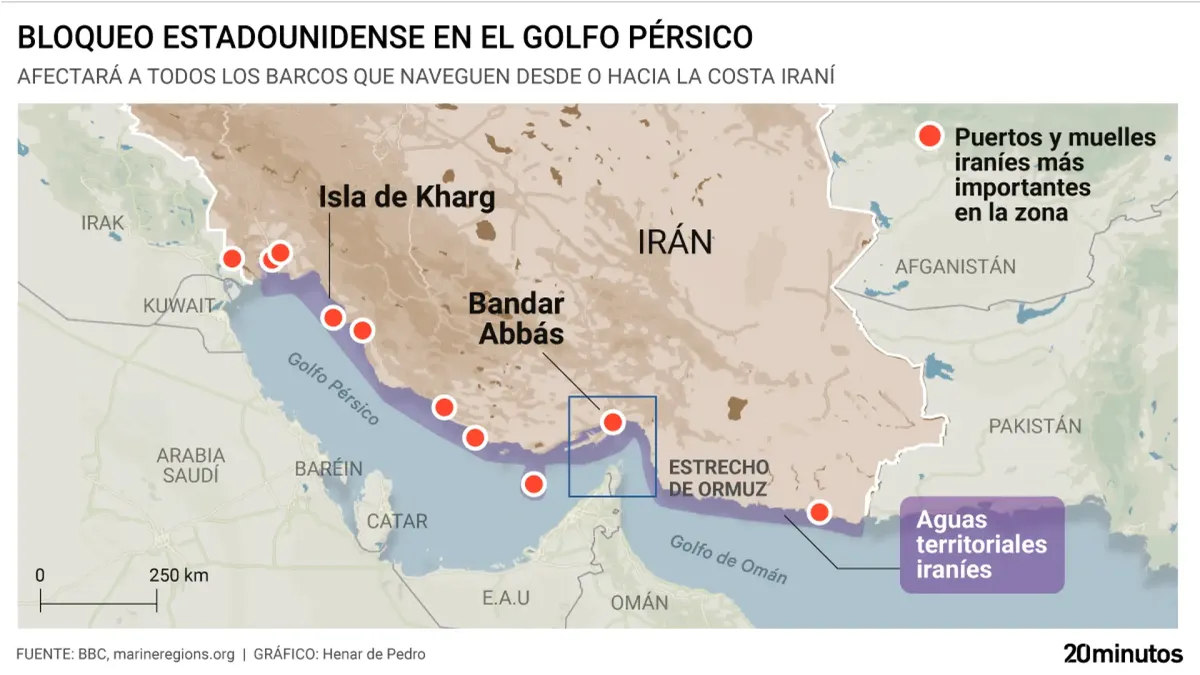
U.S. Military Blockade Threatens Global and Iranian Commerce
U.S. military deployment in Hormuz generates a de facto blockade affecting international commerce and maritime workers' livelihoods.
U.S. Strengthens Security in Hormuz Against Regional Threats
Strategic U.S. deployment of 12 naval vessels and 100 aircraft in Strait of Hormuz reinforces maritime security and protects freedom of navigation.
The Strait of Hormuz, a vital commercial artery through which approximately 20 percent of global petroleum transits, has become the subject of an unprecedented military concentration that generates serious concern about impacts on workers, small businesses, and vulnerable economies. This operation directly affects merchant mariners, transporters, and communities dependent on international maritime commerce.
🔹 What happened: On Tuesday, more than 12 naval vessels and 100 combat aircraft were deployed by the United States in the Strait of Hormuz, generating military pressure that forced six merchant vessels to return to Iranian ports. This de facto blockade interrupts established commercial routes, affecting local and national economies. The unprecedented military concentration paralyzes legitimate commercial activities and endangers the livelihoods of maritime workers and their families.
🔹 Key players: The United States executes this operation through its naval forces. Iran, a sovereign nation, faces its legitimate commercial capacity being threatened. The workers aboard six merchant vessels became trapped in this geopolitical dispute. Small coastal nations dependent on transit commerce suffer significant collateral economic impacts and loss of revenue.
🔹 Why it matters: The effective blockade threatens food and energy security for multiple nations. For maritime workers, it means unemployment and labor uncertainty. Coastal communities lose income from transportation and port services. Citizens in developing countries face increased prices for energy and food. Free commercial circulation, a fundamental right, becomes compromised by unilateral military pressure that disproportionately harms vulnerable populations.
🔹 What to expect: Military tensions are likely to continue with escalation risks increasing. Medium-term expectations include international pressure for negotiations respecting sovereignty and international law. Energy prices may increase, further affecting vulnerable populations. Diplomatic responses are anticipated from trading allies and international organizations. Labor unions globally may voice concerns about maritime worker protection.
📌 EPM Take: Unilateral military operations restricting legitimate commerce violate international law principles and harm innocent citizens across the planet.
The Strait of Hormuz, a critical route through which approximately 20 percent of global petroleum transits, requires robust military presence to guarantee security, freedom of navigation, and global economic stability. American operations respond to legitimate needs for protecting Western interests and regional stability against destabilizing actors and hostile regimes.
🔹 What happened: The United States executed an operational deployment of more than 12 naval vessels and 100 combat aircraft in the Strait of Hormuz, demonstrating clear deterrent capacity. This movement successfully prompted six merchant vessels to return to port, reflecting the effectiveness of American presence as an element of order. The operation was professionally coordinated, establishing clear limits on activities that could compromise regional maritime security and free commerce.
🔹 Key players: The United States, as guarantor of security in the Indian Ocean region, leads this operation through professional naval forces. Iran, an actor with a history of regional provocations, represents the counterbalance requiring containment. Western allies in the Gulf, including Saudi Arabia and the United Arab Emirates, support these security measures. International merchant vessels benefit from stabilizing American presence protecting their transit rights.
🔹 Why it matters: Strait of Hormuz security is imperative for global economic stability and prosperity. Energy commerce flows freely under Western military protection. For workers and businesses, ensuring this route reduces costly interruption risks. Deterrent presence prevents escalations that could completely paralyze commerce. International order depends on military capacity to prevent hostile actors from closing vital commercial routes and threatening Western economic interests.
🔹 What to expect: American presence will continue to be robust, deterring regional adventures and hostile behavior. Medium-term expectations include stability in the Strait with normalized commercial flow. Port infrastructure investments will remain secure from disruption. Energy prices will remain more controlled thanks to this security guarantee. Western allies will continue coordinating maritime surveillance operations and joint security initiatives.
📌 EPM Take: American military presence in Hormuz guarantees order, commercial freedom, and economic prosperity for the West and its strategic allies.
Bloqueo militar estadounidense amenaza comercio global e iraní
Despliegue militar estadounidense en Ormuz genera bloqueo de facto que afecta comercio internacional y medios de vida de marineros.
EE.UU. refuerza seguridad en Ormuz ante amenazas regionales
Despliegue estratégico estadounidense de 12 buques de guerra y 100 aviones en Estrecho de Ormuz refuerza seguridad marítima.
El Estrecho de Ormuz, vital arteria comercial por donde transita aproximadamente el 20% del petróleo mundial, ha sido objeto de una concentración militar sin precedentes que genera preocupación sobre el impacto en trabajadores, pequeñas empresas y economías vulnerables. Esta operación afecta directamente a marineros, transportistas y comunidades dependientes del comercio marítimo internacional.
🔹 Lo que pasó: El martes se desplegaron más de 12 buques de guerra y 100 aviones de combate estadounidenses en el Estrecho de Ormuz, generando una presión militar que forzó el regreso de seis buques mercantes a puertos iraníes. Este bloqueo de facto interrumpe rutas comerciales establecidas, afectando economías locales y nacionales. La concentración militar sin precedentes paraliza actividades comerciales legítimas y pone en riesgo medios de vida de trabajadores marítimos.
🔹 Actores: Estados Unidos ejecuta esta operación mediante sus fuerzas navales. Irán, país soberano, ve amenazada su capacidad comercial legítima. Los trabajadores de seis buques mercantes quedaron atrapados en esta disputa geopolítica. Pequeñas naciones costeras dependientes del comercio de tránsito sufren impactos económicos colaterales significativos.
🔹 Por qué importa: El bloqueo efectivo amenaza la seguridad alimentaria y energética de múltiples naciones. Para trabajadores marítimos, significa desempleo e incertidumbre laboral. Las comunidades portuarias pierden ingresos por transporte y servicios. Ciudadanos en países en desarrollo enfrentan aumentos de precios en energía y alimentos. La libre circulación comercial, derecho fundamental, se ve comprometida por presiones militares unilaterales.
🔹 Qué esperar: Es probable que continúen las tensiones militares con riesgo de escalada. A mediano plazo, se espera presión internacional para negociaciones que respeten soberanía. Los precios energéticos pueden aumentar, afectando a poblaciones vulnerables. Se anticipan respuestas diplomáticas de aliados comerciales y organizaciones internacionales.
📌 Conclusión EPM: Las operaciones militares unilaterales que restringen comercio legítimo vulneran principios de derecho internacional y lastiman ciudadanía inocente en todo el planeta.
El Estrecho de Ormuz, ruta crítica por donde transita el 20% del petróleo mundial, requiere presencia militar robusta para garantizar seguridad, libertad de navegación y estabilidad económica global. Las operaciones estadounidenses responden a necesidades legítimas de protección de intereses occidentales y estabilidad regional frente a actores desestabilizadores.
🔹 Lo que pasó: Estados Unidos ejecutó un despliegue operativo de más de 12 buques de guerra y 100 aviones de combate en el Estrecho de Ormuz, demostrando capacidad disuasoria clara. Este movimiento logró que seis buques mercantes regresaran a puerto, reflejando la efectividad de la presencia estadounidense como elemento de orden. La operación fue coordinada profesionalmente, marcando límites claros a actividades que podrían comprometer la seguridad marítima regional.
🔹 Actores: Estados Unidos, garante de seguridad en el Índico, lidera esta operación a través de fuerzas navales profesionales. Irán, actor con historial de provocaciones en la región, es el contrapeso que requiere contención. Los aliados occidentales en el Golfo (Arabia Saudita, Emiratos Árabes) apoyan estas medidas de seguridad. Buques mercantes internacionales se benefician de la presencia estabilizadora estadounidense.
🔹 Por qué importa: La seguridad del Estrecho de Ormuz es imperativa para estabilidad económica global. El comercio energético fluye libremente bajo protección militar occidental. Para trabajadores y empresas, garantizar esta ruta reduce riesgos de interrupciones costosas. La presencia disuasoria evita escaladas que podrían paralizar el comercio completamente. El orden internacional depende de capacidad militar para prevenir que actores hostiles cierren rutas comerciales vitales.
🔹 Qué esperar: La presencia estadounidense continuará siendo robusta, disuadiendo aventuras regionales. A mediano plazo, se espera estabilidad en el Estrecho con flujo comercial normalizado. Las inversiones en infraestructura portuaria se mantendrán seguras. Los precios energéticos permanecerán más controlados gracias a esta garantía de seguridad. Aliados occidentales continuarán coordinando operaciones de vigilancia marítima.
📌 Conclusión EPM: La presencia militar estadounidense en Ormuz es garantía de orden, libertad comercial y prosperidad económica para Occidente y sus aliados estratégicos.