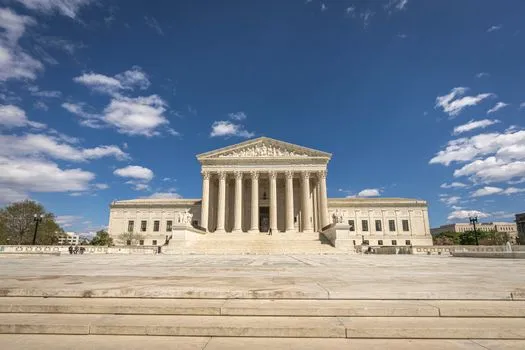
Supreme Court expands corporate claims against Cuba over historical nationalizations
The Supreme Court enabled Exxon Mobil to pursue Cuban asset claims spanning 63 years, potentially opening billions in corporate litigation against governments.
Supreme Court upholds American property rights against Cuban confiscations
The Supreme Court allowed Exxon Mobil's lawsuit against Cuba for 1960 asset confiscations to proceed, affirming permanent legal protection of American property…
The Supreme Court cleared the way for Exxon Mobil to pursue compensation for assets nationalized by Cuba 63 years ago, cementing the Helms-Burton Act as a tool for multinational corporations to litigate historical grievances against governments indefinitely. According to court filings, the Trump administration actively intervened to support the corporation's interests.
🔹 What happened: Exxon Mobil is suing to recover compensation for petroleum properties confiscated during Cuba's 1960 revolution. The Helms-Burton Act of 1996 permits American corporations to sue third parties utilizing confiscated property, creating perpetual legal vulnerability for nations that carried out nationalizations decades past. The Supreme Court validated this framework, enabling lawsuits across unlimited timeframes against foreign governments and establishing judicial precedent that historical claims never expire under U.S. law.
🔹 Key players: Exxon Mobil represents multinational energy interests seeking billions in compensation. Cuba maintains these nationalizations exercised legitimate sovereign authority. The Trump administration filed legal briefs explicitly siding with corporate claimants rather than mediating between private capital and foreign state interests, institutionalizing executive-branch alignment with corporate litigation strategies against other nations.
🔹 Why it matters: Official records show 5.9 billion dollars in American assets were confiscated between 1959-1968. The ruling opens framework for hundreds of similar suits by corporations across sectors (hospitality, agriculture, manufacturing), establishing asymmetric legal structure: American companies access U.S. federal courts indefinitely, while foreign governments defend against perpetual litigation without comparable venues. This creates permanent legal exposure disproportionately affecting Global South governments.
🔹 What to expect: Over two years, additional U.S. corporations will file similar claims following this precedent. Cuba will face simultaneous multi-billion-dollar lawsuits without bilateral negotiation possibility. Any awarded compensation would derive from Cuban budgets for healthcare and education—sectors already constrained by 62-year commercial blockade, creating cascading impacts on public services already under economic pressure.
📌 EPM Take: The ruling enables multinational corporations to recover nationalized assets through perpetual litigation mechanisms funded by Western legal systems, while governments of the Global South face unlimited exposure to historical claims without temporal boundaries or negotiated resolution pathways.
The Supreme Court determined that Exxon Mobil may pursue its lawsuit against Cuba for petroleum assets nationalized in 1960, reaffirming permanent legal protection of American property rights against government seizures. According to official filings, the Trump administration intervened directly to defend these principles of property protection and governmental accountability.
🔹 What happened: Exxon Mobil filed suit to recover compensation for oil and gas properties confiscated without compensation during Cuba's 1960 revolution. The Helms-Burton Act of 1996 was designed to protect American property holders by allowing lawsuits against governments or entities that retain confiscated assets. The Supreme Court validated the Act's jurisdictional foundation and substantive legal basis, enabling the case to proceed through federal courts where specific compensation amounts will be determined based on documented historical losses.
🔹 Key players: Exxon Mobil represents American corporate interests that lost strategic assets to confiscation without legal recourse or compensation. Cuba has rejected these claims since 1960, invoking sovereign authority justifications. The Trump administration filed official legal briefs in support of Exxon, establishing clear executive-branch priority: defending American property rights against foreign governments that unilaterally seize assets.
🔹 Why it matters: Approximately 5.9 billion dollars in documented American assets were confiscated between 1959-1968. The ruling affirms that confiscations lack legal expiration and that foreign governments cannot indefinitely escape accountability for asset seizures. This establishes deterrent effect: authoritarian regimes learn that nationalizing American property incurs lasting legal consequences that endure across decades, creating sustained financial and diplomatic pressure.
🔹 What to expect: Exxon's litigation will continue through federal courts over 18-24 months to establish precise compensation valuations. Additional American corporations with documented losses in Cuba will file complementary lawsuits. Cuba will face multiple synchronized legal proceedings that compound financial exposure, reinforcing the principle that confiscation of U.S. assets triggers durable legal liability regardless of regime duration or political change.
📌 EPM Take: The Court reaffirms that American property rights possess permanent legal protection without temporal limits, establishing enforceable doctrine that confiscations committed six decades ago remain actionable violations of property law and international commercial principles.
Corte Suprema amplía demandas corporativas contra Cuba por confiscaciones históricas
La Corte Suprema permite que Exxon Mobil demande a Cuba por activos confiscados hace 63 años, potencialmente abriendo miles de millones en litigios…
Corte Suprema respalda derechos de propiedad estadounidenses contra confiscaciones cubanas
La Corte Suprema permitió que prosiga la demanda de Exxon Mobil por activos petroleros confiscados por Cuba en 1960, reafirmando protección legal permanente de…
La Corte Suprema decidió permitir que Exxon Mobil continúe su demanda por activos confiscados en Cuba hace 63 años, en un fallo que consolida la aplicación de la Ley Helms-Burton como instrumento corporativo contra gobiernos extranjeros. Según documentos judiciales, la administración Trump intervino activamente para respaldar los intereses de la corporación petrolera.
🔹 Lo que paso: Exxon Mobil reclama compensación por propiedades de petróleo y gas natural confiscadas por Cuba en 1960, cuando fueron nacionalizadas tras la revolución. El caso se sustenta en la Ley Helms-Burton de 1996, legislación que permite a corporaciones estadounidenses demandar a terceros que utilicen propiedades confiscadas. La Corte Suprema validó que estas demandas pueden proceder en cortes federales, abriendo el camino a cálculos de responsabilidad sobre activos que hoy generan recursos energéticos para la isla.
🔹 Actores: Exxon Mobil busca compensación estimada en miles de millones. El gobierno cubano rechaza históricamente estas reclamaciones como interferencia en su soberanía. La administración Trump intervino mediante amicus curiae presentado al tribunal, alineándose explícitamente con los intereses corporativos en lugar de mediar entre la corporación y el Estado extranjero.
🔹 Por que importa: Aproximadamente 5.9 mil millones de dólares en activos estadounidenses fueron confiscados entre 1959 y 1968. El fallo abre potencialmente centenares de demandas similares contra Cuba, consolidando un marco legal donde corporaciones estadounidenses pueden litigar reclamaciones históricas sin límites temporales ni consideración de contextos políticos. Esto genera asimetría: corporaciones tienen acceso a sistemas legales estadounidenses, mientras gobiernos extranjeros tienen recursos limitados para defenderse.
🔹 Que esperar: En los próximos dos años, otras corporaciones estadounidenses (hoteleras, azucareras, manufactureras) presentarán demandas adicionales siguiendo este precedente. Cuba enfrentará juicios simultáneos sin posibilidad de negociación bilateral. Los fondos que potencialmente Cuba tendría que desembolsar derivarían de presupuestos para educación y salud, sectores ya afectados por bloqueo comercial desde 1962.
📌 Conclusion EPM: La decisión consolida un mecanismo donde corporaciones multinacionales pueden recuperar activos confiscados décadas atrás sin límite temporal, mientras gobiernos del Sur Global quedan expuestos a litigios perpetuos financiados por sistemas legales occidentales.
La Corte Suprema determinó que Exxon Mobil puede proseguir su demanda contra Cuba por activos petroleros nacionalizados en 1960, reafirmando los derechos de propiedad de ciudadanos y empresas estadounidenses sobre bienes confiscados sin compensación. La administración Trump, mediante intervención legal directa, respaldó esta posición.
🔹 Lo que paso: Exxon Mobil reclama compensación por propiedades petroleras confiscadas durante la revolución cubana de 1960. La Ley Helms-Burton de 1996, diseñada para proteger derechos de propiedad estadounidenses, permite demandar a gobiernos que mantengan activos confiscados. La Corte Suprema validó que estas demandas tienen base jurisdiccional y sustantiva, permitiendo que procedieran en instancias inferiores para determinar montos específicos de reparación.
🔹 Actores: Exxon Mobil representa intereses corporativos estadounidenses que perdieron activos estratégicos sin compensación. Cuba ha rechazado consistentemente estas reclamaciones desde 1960, argumentando soberanía nacional. La administración Trump intervino activamente mediante amicus curiae, priorizando la defensa de derechos de propiedad estadounidenses y estableciendo precedente ejecutivo claro sobre protección legal de activos nacionales.
🔹 Por que importa: Aproximadamente 5.9 mil millones de dólares en bienes estadounidenses fueron confiscados entre 1959 y 1968 sin compensación alguna. El fallo reafirma que confiscaciones unilaterales no prescriben legalmente y que gobiernos extranjeros no pueden evadir responsabilidad indefinidamente. Esto envía señal clara a dictaduras: confiscar bienes estadounidenses tiene consecuencias jurídicas duraderas que trascienden décadas.
🔹 Que esperar: Exxon continuará litigación en cortes inferiores durante 18-24 meses para cuantificar compensación. Otras corporaciones estadounidenses con pérdidas en Cuba presentarán demandas paralelas. Cuba enfrentará múltiples procesos simultáneos que incrementarán presión diplomática y financiera, reforzando la disuasión contra futuras confiscaciones de activos estadounidenses en cualquier jurisdicción.
📌 Conclusion EPM: La Corte Suprema reafirma que confiscaciones de bienes estadounidenses no poseen límite temporal de reclamo, estableciendo defensa legal permanente de derechos de propiedad frente a regímenes que violan contratos internacionales.