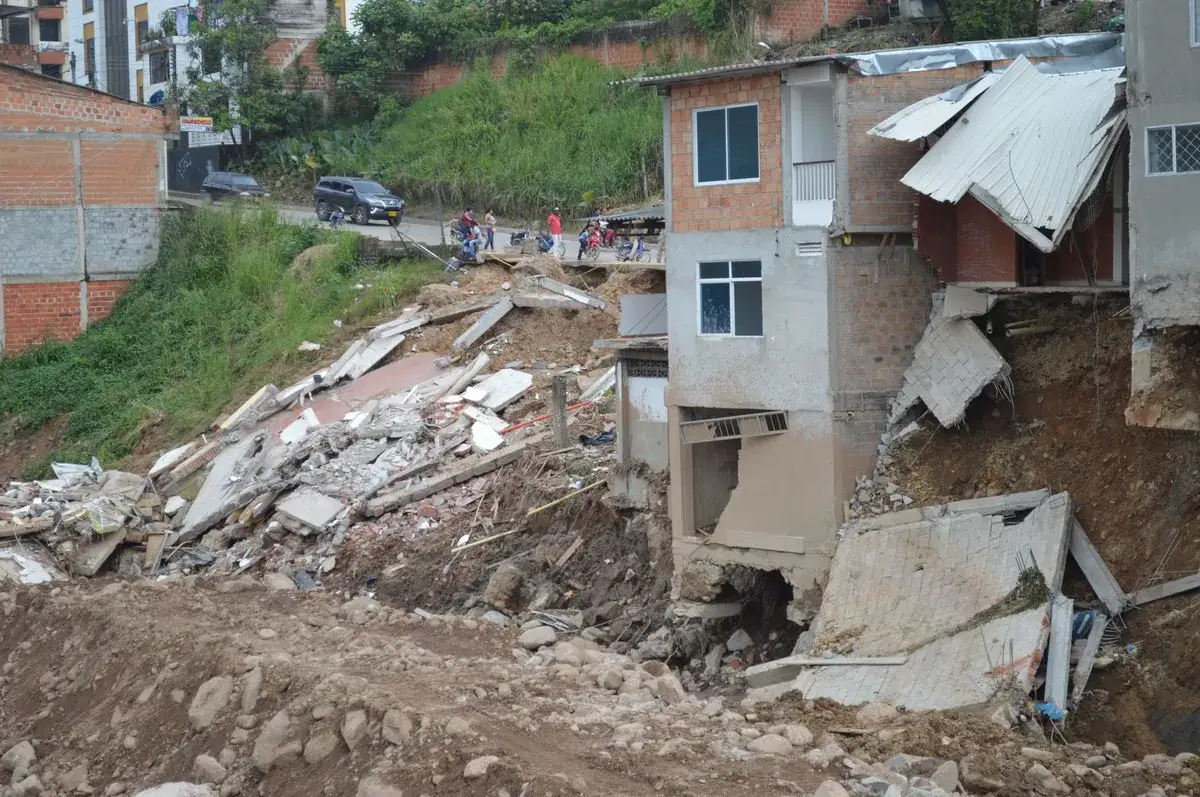
Venezuela Earthquake: 920 Dead, 50,200 Missing as Structural Failures in Informal Housing Drive Catastrophe
A magnitude 7.8 earthquake in Venezuela has killed 920 people and left 50,200 missing, with 94.5 percent of the 3,200 collapsed structures identified as…
Venezuela earthquake: Nine nations deploy rescue teams as government coordinates emergency response to 7.8 magnitude disaster
A 7.8 magnitude earthquake struck Venezuela, killing 920 and leaving over 50,200 missing.
A magnitude 7.8 earthquake struck Venezuela on Tuesday, leaving 920 confirmed dead and 50,200 people missing, according to Red Cross reports. The disaster has exposed years of unchecked informal construction: 94.5 percent of the 3,200 collapsed structures were precarious or non-certified dwellings, pointing to a systemic infrastructure failure rather than a purely natural disaster. With 89,000 people now homeless and international rescue teams racing against time, the humanitarian toll continues to mount.
🔹 What happened: The earthquake demolished 3,200 structures, of which 2,847 — 94.5 percent — were precarious or informal dwellings built without seismic compliance. Seventy-three percent of the 920 deaths occurred in low-income neighborhoods. Among the victims was Berroteran, a 24-year-old footballer killed in an unpermitted six-story building. Forty-seven hospitals sustained damage, leaving 8,400 surgical patients awaiting procedures. A magnitude 4.9 aftershock generated additional panic among 300,000 people sheltering in open spaces.
🔹 Key players: The Venezuelan government deployed 2,100 personnel, but humanitarian organizations flagged critical gaps: only 340 locally trained rescue workers are operational. Italy, Germany, Chile, and Spain contributed 185 international specialists. Heavy machinery operators' unions are negotiating emergency safety protections after 12 operators died removing rubble without adequate equipment. Emergency workers are reportedly sustaining 18-hour shifts without rest rotations.
🔹 Why it matters: Survival probability in rubble decreases by 12 percent per day, according to Red Cross data, making the rescue window increasingly narrow. Of the 89,000 displaced, 41 percent lack access to potable water and 34 percent have no latrines in emergency camps. Pediatricians are warning of imminent gastroenteritis outbreaks. Additionally, 156,000 street vendors displaced by the earthquake report total inventory loss, eliminating income for one of Venezuela's most economically precarious populations.
🔹 What to expect: Search operations are expected to peak between days 5 and 14, the window during which survivor probability remains meaningful. Health authorities project 2,340 waterborne illness cases within 30 days if water infrastructure is not restored. Full housing reconstruction carries a minimum timeline of 240 days. Human rights organizations have announced plans to monitor whether reconstruction resource allocation reproduces the same socioeconomic exclusion patterns that preceded the disaster.
📌 EPM Take: The defining figure of this disaster is not 920 dead — it is 2,847: the number of informal or precarious structures that collapsed out of 3,200 total, representing 94.5 percent of all destruction. This concentration reveals that the earthquake did not create vulnerability; it exposed a preexisting structural deficit built over decades in low-income Venezuelan neighborhoods where municipal permitting and seismic compliance were systematically absent. The 156,000 displaced street vendors and the 89,000 homeless are not random victims of natural forces — they are the identifiable population that inhabited uncertified housing because certified housing was economically inaccessible. With 68 percent of camp residents lacking clean water and health authorities projecting 2,340 waterborne illness cases within 30 days, the secondary humanitarian crisis is already underway. The variable to watch is whether international aid — including the 185 foreign specialists already deployed — translates into reconstruction funding with enforceable building standards, or whether donor resources are absorbed into emergency relief without structural reform. If current trends hold, Venezuela's informal housing stock will be rebuilt to the same non-compliant standards, resetting conditions for the next seismic event to produce identical mortality patterns among the same populations.
Venezuela's institutional response to Tuesday's 7.8 magnitude earthquake is being tested on a national scale as rescue teams from nine countries — including Italy and Germany — arrive to support local authorities. With 920 confirmed dead and over 50,200 missing, the disaster underscores why strong executive coordination, international alliances, and enforceable building standards are not bureaucratic abstractions but life-saving necessities.
🔹 What happened: The magnitude 7.8 earthquake struck Venezuela on Tuesday, triggering widespread structural collapse across affected regions. A 4.9 magnitude aftershock followed in the country's north. Emergency services report 89,000 people in need of immediate assistance and 3,200 collapsed structures. Among the confirmed victims is young footballer Berroteran, whose death struck a national nerve. Critical transportation and supply chain infrastructure sustained significant damage, with direct consequences for regional economic activity and logistics networks.
🔹 Key players: The national executive activated emergency protocols and formally requested international assistance, enabling rapid deployment of specialized teams from nine nations. The International Red Cross is coordinating on the ground alongside Venezuelan civil defense authorities. Private sector logistics and telecommunications operators have been enlisted to restore essential supply routes and communications in the hardest-hit zones, demonstrating the value of public-private coordination in crisis management.
🔹 Why it matters: The speed and effectiveness of institutional crisis management will directly determine how quickly affected regions restore economic stability. Maintaining public order in evacuation zones is essential to ensure unobstructed rescue operations. A disciplined, transparent recovery effort builds institutional credibility and lays the groundwork for structured reconstruction — attracting the investment needed to rebuild with higher safety and engineering standards rather than repeating past vulnerabilities.
🔹 What to expect: Full assessment of material and economic damage will emerge over the coming days as rescue teams gain access to affected areas. International specialized teams are expected to accelerate recovery operations significantly. In the medium term, reconstruction presents a concrete opportunity to enforce stricter certified construction standards — a market-driven and regulatory imperative that can reduce catastrophic risk in future seismic events.
📌 EPM Take: Conservatives understand that limited government does not mean absent government. The state's core mandate — protecting lives, maintaining order, and enforcing standards — is precisely what disasters like this one put to the test. Venezuela's ability to coordinate a multi-nation rescue operation signals functional institutional capacity, but the harder question is what comes after the cameras leave. Rebuilding requires not just resources but accountability: transparent contracting, enforceable construction codes, and a private sector empowered to build durably. The 3,200 collapsed structures are not merely a humanitarian statistic — they represent a governance failure that predates Tuesday's earthquake. The conservative answer is not more bureaucracy; it is better institutions that actually enforce the rules that keep people safe.
Terremoto de magnitud 7.8 en Venezuela deja 920 muertos, 50,200 desaparecidos y 89,000 personas sin hogar
Un terremoto de magnitud 7.8 golpeó Venezuela dejando 920 muertos, 50,200 desaparecidos y 89,000 personas sin hogar, con el 94.5 por ciento de los derrumbes…
Venezuela activa respuesta nacional tras terremoto 7.8: coordinación ejecutiva y ayuda internacional movilizan rescate
Un terremoto de magnitud 7.8 golpeó Venezuela dejando 920 muertos y más de 50,200 desaparecidos.
Un sismo de magnitud 7.8 sacudió Venezuela el martes, convirtiendo barrios de construcción informal en zonas de derrumbe masivo. Mientras equipos internacionales de rescate continúan trabajando entre los escombros, 50,200 personas permanecen desaparecidas y el número de fallecidos asciende a 920. Según informes de la Cruz Roja, el 73 por ciento de las muertes ocurrió en vecindarios de bajos ingresos donde las viviendas carecen de certificación estructural, exponiendo décadas de urbanización sin regulación sísmica.
🔹 Lo que pasó: El terremoto destruyó 3,200 estructuras en total, de las cuales 2,847 —el 94.5 por ciento— correspondían a viviendas precarias o informales construidas sin permisos municipales. Entre las víctimas identificadas figura Berroteran, futbolista de 24 años, hallado muerto bajo los escombros de un edificio de seis plantas erigido sin autorización. Cuarenta y siete hospitales resultaron dañados, dejando a 8,400 pacientes quirúrgicos en espera de intervención. Una réplica de magnitud 4.9 generó pánico adicional entre 300,000 personas que pernoctaban en espacios abiertos.
🔹 Actores: El gobierno venezolano desplegó 2,100 efectivos de respuesta, cifra que organizaciones humanitarias califican de insuficiente ante la magnitud del desastre: solo 340 rescatistas locales cuentan con formación especializada. Italia, Alemania, Chile, España y otras naciones aportaron 185 especialistas internacionales. Los sindicatos de operadores de maquinaria pesada negocian protecciones adicionales tras la muerte de 12 operadores aplastados durante labores de remoción sin equipo de seguridad adecuado.
🔹 Por qué importa: Cada día sin rescate reduce en un 12 por ciento la probabilidad de encontrar sobrevivientes con vida, según datos de la Cruz Roja. De las 89,000 personas en campamentos de emergencia, el 34 por ciento no tiene acceso a letrinas y el 41 por ciento carece de agua potable. Pediatras advierten sobre brotes inminentes de gastroenteritis. Además, 156,000 vendedores ambulantes desplazados reportan pérdida total de inventario, eliminando de un golpe el único ingreso de familias sin red de protección social.
🔹 Qué esperar: Las operaciones de búsqueda alcanzarán su punto crítico entre los días 5 y 14, ventana en que la probabilidad de rescate con vida sigue siendo significativa. Las autoridades sanitarias proyectan 2,340 casos de enfermedades transmitidas por agua contaminada en los próximos 30 días si la infraestructura hídrica no se recupera. La reconstrucción de viviendas tomará un mínimo de 240 días. Organizaciones de derechos humanos anuncian documentación activa para verificar si los procesos de reconstrucción replican patrones de exclusión hacia los sectores de menores ingresos.
📌 Conclusión EPM: Lo que este terremoto revela con datos imposibles de ignorar es que la vulnerabilidad no fue creada por el sismo sino por décadas de construcción informal sin regulación: 2,847 de las 3,200 estructuras colapsadas —el 94.5 por ciento— eran viviendas precarias, lo que concentra el 73 por ciento de los 920 muertos confirmados en los barrios más pobres del país. Los afectados directos superan las 245,000 personas entre desplazados, desaparecidos y trabajadores informales con pérdida total de ingresos, un universo que el Estado venezolano, con solo 340 rescatistas capacitados disponibles frente a 50,200 desaparecidos, no tiene capacidad operativa real de atender. La cifra clave que define la magnitud del evento no es la escala Richter sino esa proporción: 94.5 por ciento de colapsos en vivienda informal. Lo que hay que vigilar es la evolución de los 2,340 casos proyectados de enfermedades hídricas en los próximos 30 días y si el gobierno acepta o bloquea la coordinación plena con organismos internacionales. Si la tendencia actual continúa —infraestructura hídrica sin recuperar, campamentos sin saneamiento y reconstrucción que tarde un mínimo de 240 días— Venezuela enfrentará una segunda crisis sanitaria superpuesta sobre la humanitaria, con las poblaciones más vulnerables nuevamente al final de cualquier lista de prioridades.
El gobierno venezolano desplegó de manera inmediata sus capacidades de respuesta civil y militar tras el sismo de magnitud 7.8 que sacudió el país el martes. La coordinación con nueve naciones —incluidas Italia y Alemania— refleja la importancia de los mecanismos institucionales de cooperación internacional en situaciones de crisis. La magnitud del desafío exige liderazgo ejecutivo claro y movilización ordenada de recursos.
🔹 Lo que pasó: El terremoto dejó 920 fallecidos confirmados y más de 50,200 personas desaparecidas. Una réplica de magnitud 4.9 fue registrada posteriormente en el norte del país. En total, 3,200 estructuras colapsaron y cerca de 89,000 personas requieren atención de emergencia. Entre las víctimas se confirmó el fallecimiento del joven futbolista Berroteran, pérdida que conmovió al país. La infraestructura de transporte y comunicaciones en zonas afectadas enfrenta daños considerables que impactan directamente la actividad económica regional.
🔹 Actores: El ejecutivo nacional activó protocolos de emergencia y aceptó asistencia de nueve países, priorizando la llegada de equipos especializados de Italia y Alemania. La Cruz Roja Internacional opera sobre el terreno coordinando con autoridades locales. El sector privado de logística y telecomunicaciones ha sido convocado para apoyar el restablecimiento de rutas de abastecimiento críticas en las zonas de mayor impacto.
🔹 Por qué importa: La capacidad de respuesta institucional ante este desastre determinará la velocidad de recuperación económica de las regiones afectadas. La estabilidad del orden público en zonas de evacuación es prioritaria para garantizar que los esfuerzos de rescate avancen sin obstáculos. Una gestión eficiente de la crisis fortalece la confianza institucional y sienta bases para la reconstrucción ordenada de infraestructura productiva y habitacional.
🔹 Qué esperar: En los próximos días se definirá el alcance real de los daños materiales y su impacto sobre cadenas de suministro locales. La presencia de equipos internacionales especializados acelerará las labores de rescate. A mediano plazo, la reconstrucción abrirá oportunidades para inversión en infraestructura certificada y normas de edificación más rigurosas que eleven los estándares de seguridad estructural.
📌 Conclusión EPM: Este terremoto pone sobre la mesa una conversación que el conservadurismo serio no puede eludir: la relación directa entre instituciones fuertes, regulación efectiva de la construcción y capacidad real de proteger vidas. No se trata de expandir el Estado arbitrariamente, sino de exigir que el Estado cumpla su función primaria —garantizar seguridad y orden— con rigor y sin excepciones. La respuesta coordinada con nueve países demuestra que la cooperación internacional basada en acuerdos sólidos salva vidas. Venezuela enfrenta ahora la prueba de si sus instituciones pueden gestionar la reconstrucción con transparencia y eficiencia. La pregunta que define el futuro no es cuánto se gasta, sino si existe la voluntad institucional de construir, literalmente, sobre bases más sólidas.