United Kingdom • • EPM Editorial Desk • 🌿 Progressive
Gaza's new governing board would be immune from all local prosecution
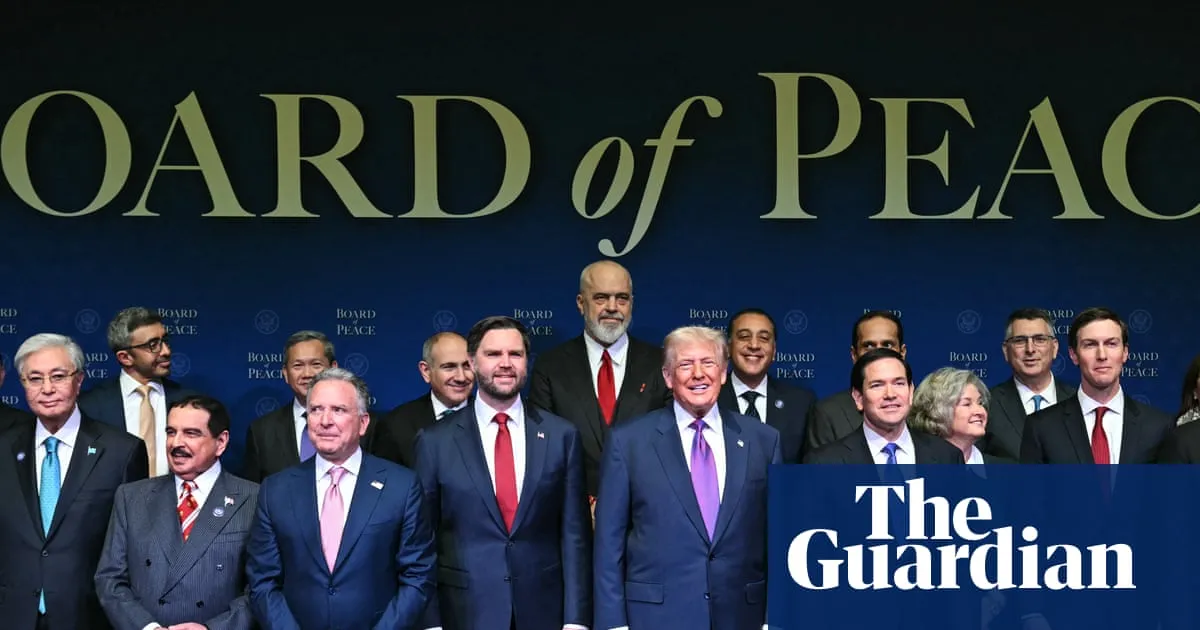
A draft resolution obtained by The Guardian shows the Board of Peace for Gaza plans to shield all its personnel — including military forces and contractors —…
Trump-backed Gaza Peace Board builds legal framework for post-conflict operations
The Board of Peace for Gaza, backed by President Trump and the United Nations, is drafting a resolution that would grant legal immunity to its international…
With over 2 million people displaced across Gaza according to UN figures, the body designed to govern the territory in the post-conflict period is drafting a resolution that would place its personnel — including international military forces and private contractors — completely beyond the reach of local courts. The document, obtained by The Guardian, was labeled "sensitive but unclassified."
🔹 What happened: According to The Guardian, the four-page draft resolution extends legal immunity to all members of the Board of Peace, the Office of the High Representative (OHR), Palestinian technocrats, international military contingents, and non-resident contractors. The protection covers "any arrest, detention or legal proceedings in the courts or other entities in Gaza." The same draft authorizes the organization to acquire public property in Gaza at no cost.
🔹 Key players: President Trump announced the Board of Peace in early 2026 with formal UN backing as the civilian governance structure for Gaza. The draft places the entire operational staff — from senior board members to international contractors — under the same immunity umbrella, with Palestinian technocrats included as designated participants rather than independent actors.
🔹 Why it matters: For Gaza's civilian population, the immunity clause means that any action taken by board personnel — including decisions over property and the use of force by international military units — would fall outside the jurisdiction of local courts. Human Rights Watch has documented the erosion of institutional protections in Gaza; a governing body shielded from local legal processes adds another barrier between residents and accountability for those exercising authority over their territory.
🔹 What to expect: No formal adoption timeline has been set. The resolution must pass through UN oversight mechanisms, where the scope of the immunity provisions and the absence of external accountability safeguards are expected to be contested. If no independent monitoring conditions are added before adoption, the Board of Peace would operate with unchecked authority over both people and property in Gaza.
📌 EPM Take: The draft resolution obtained by The Guardian removes the most basic legal protection Gaza's 2-million-plus population would have against the board's actions: the ability to bring any arrest or legal proceeding in local courts against its personnel, whether a senior official, an international soldier, or a private contractor. The document's scope goes further than operational security — by also granting free acquisition rights over public property, it combines legal immunity with direct economic authority over the territory. The figure that defines the stakes is the document's own language: zero exceptions are listed for the immunity from legal proceedings. The variable to watch is whether the UN will attach enforceable oversight conditions before formal adoption, a date not yet confirmed. If the resolution passes unchanged, Gaza will have a governing body that is legally untouchable by its own population — a structural arrangement that no UN post-conflict mission has formalized in quite these terms.
✍️ EPM Editorial Desk | erickprometeomedia.com
Rebuilding governance in a war-torn territory requires a legal foundation that allows international personnel to operate without exposure to unstable or nonexistent local judicial systems. The Board of Peace for Gaza, announced by President Trump and formally endorsed by the United Nations, is developing exactly that framework, according to a four-page draft resolution obtained by The Guardian.
🔹 What happened: According to The Guardian, the draft — labeled "sensitive but unclassified" — grants legal immunity to all Board of Peace members, staff of the Office of the High Representative (OHR), Palestinian technocrats, international military forces, and non-resident contractors. The protections cover "any arrest, detention or legal proceedings in the courts or other entities in Gaza." The document also authorizes the board to acquire public property in Gaza free of charge to support operational needs.
🔹 Key players: President Trump established the Board of Peace in early 2026 as the central civil authority for Gaza's post-conflict transition, securing UN institutional backing. The draft encompasses the full operational chain: board leadership, the OHR, selected Palestinian technocrats, international military contingents, and private contractors — the infrastructure required to execute a reconstruction mission at scale.
🔹 Why it matters: International post-conflict missions have consistently required immunity frameworks to function. The UN applied comparable protections in Kosovo under UNMIK in 1999 and in East Timor's UNTAET structure in 2002. In Gaza, where institutional infrastructure has been severely disrupted, such a framework provides the legal stability necessary for international personnel to operate, make property decisions, and maintain security without the risk of politically motivated local legal action.
🔹 What to expect: Formal adoption of the resolution has no confirmed date and will require review within UN oversight processes. The key questions going forward are whether the UN will attach external accountability mechanisms and how the free acquisition of public property will be administered and documented. These details will determine whether the framework holds up to international scrutiny.
📌 EPM Take: The Board of Peace draft obtained by The Guardian advances a practical necessity for any serious post-conflict reconstruction effort in Gaza: legal protection for the international personnel — military, civilian, and contractor — needed to stabilize and rebuild a territory without a functioning judicial system. Immunity frameworks of this type are standard in UN-led missions; the 1999 Kosovo mission and the 2002 East Timor mission both operated under comparable protections. What makes this draft noteworthy is its dual scope — combining legal immunity with the authority to acquire public property free of charge — which extends the board's reach beyond operational security into direct asset administration. The figure that demands scrutiny is the property provision: the draft sets no monetary ceiling or procedural limit on acquisitions. The variable to watch is the UN's internal review process, still without a confirmed timeline, and whether binding oversight conditions will be added before adoption. If the resolution passes as written, the Board of Peace will hold both legal and economic authority over Gaza's reconstruction, making the design of its accountability architecture the defining question of the next phase.
✍️ EPM Editorial Desk | erickprometeomedia.com
Borrador de la Junta de Gaza blinda a sus miembros de toda responsabilidad legal
Un borrador de cuatro páginas revela que la Junta de Paz para Gaza planea blindar a sus miembros, fuerzas militares y contratistas de cualquier proceso…
Junta de Paz para Gaza establece marco legal de protección operativa
La Junta de Paz para Gaza, respaldada por la ONU y promovida por el presidente Trump, prepara un borrador de inmunidad legal para su personal internacional y…
Mientras Gaza alberga a más de 2 millones de desplazados según cifras de la ONU, el organismo diseñado para gobernar el territorio tras el conflicto está diseñando un escudo legal que lo protegería de cualquier proceso judicial local. El borrador, obtenido por The Guardian, plantea una inmunidad sin precedentes para sus operadores, incluyendo fuerzas militares internacionales y contratistas privados.
🔹 Lo que pasó: Según The Guardian, un borrador de cuatro páginas clasificado como «sensible pero no secreto» establece que todos los integrantes de la Junta de Paz, la Oficina del Alto Representante (OHR), tecnócratas palestinos, fuerzas militares internacionales y contratistas no residentes quedarían exentos de «cualquier arresto, detención o procedimiento legal en los tribunales u otras entidades en Gaza». El mismo documento autoriza a la organización a obtener propiedad pública gazatí de forma gratuita.
🔹 Actores: La Junta de Paz fue anunciada por el presidente Trump a principios de 2026 y cuenta con aval formal de la ONU. El borrador protege a un espectro amplio: desde los miembros del consejo hasta contratistas privados internacionales. Los tecnócratas palestinos incluidos en el esquema operarían bajo ese mismo paraguas de inmunidad, sin posibilidad de ser procesados localmente.
🔹 Por qué importa: Para los habitantes de Gaza, esta cláusula significa que cualquier acción cometida por los operadores de la Junta —desde decisiones sobre propiedad hasta el uso de fuerza por parte de los contingentes militares— quedaría fuera del alcance de los tribunales del territorio. Human Rights Watch y otros organismos han documentado la precariedad institucional de Gaza; añadir un cuerpo gobernante inmune al escrutinio judicial agrava esa brecha de protección para la población civil.
🔹 Qué esperar: La resolución no tiene fecha de adopción confirmada y deberá atravesar el proceso formal dentro del marco de la ONU. Si se aprueba en sus términos actuales, establece un estándar en el que el personal internacional en zonas de reconstrucción posconflicto opera sin exposición legal local, un modelo que organizaciones como HRW ya califican de problemático.
📌 Conclusión EPM: El borrador obtenido por The Guardian revela que la Junta de Paz no solo ejercería control administrativo sobre Gaza, sino que sus más de 2 millones de habitantes no tendrían vía judicial local para cuestionar las acciones de sus operadores, que incluyen fuerzas militares internacionales y contratistas privados. La combinación de inmunidad legal total con la facultad de adquirir propiedad pública de forma gratuita concentra poder ejecutivo y patrimonial en un solo organismo sin contrapeso territorial. La cifra que define la magnitud del problema es la amplitud del blindaje: abarca desde el arresto hasta cualquier procedimiento legal, sin excepciones documentadas en el borrador. La variable crítica es si la ONU impondrá condiciones de rendición de cuentas antes de la adopción formal de la resolución. Si el texto se aprueba tal como está, Gaza tendría un gobierno de facto inmune a su propia población, un escenario que ningún marco internacional de reconstrucción posconflicto ha formalizado hasta ahora en estos términos.
✍️ EPM Editorial Desk | erickprometeomedia.com
La Junta de Paz para Gaza, anunciada por el presidente Trump y respaldada formalmente por la ONU, avanza en la construcción de un marco legal que garantice la operatividad de su personal en un territorio de alta inestabilidad. Un borrador de resolución de cuatro páginas, obtenido por The Guardian, contempla inmunidad legal para sus miembros, fuerzas de seguridad internacionales y contratistas, un mecanismo habitual en misiones internacionales de reconstrucción posconflicto.
🔹 Lo que pasó: Según The Guardian, el borrador clasificado como «sensible pero no secreto» extiende protecciones legales a todos los integrantes de la Junta de Paz y su Oficina del Alto Representante (OHR), así como a tecnócratas palestinos, contingentes militares internacionales y contratistas no residentes. La inmunidad cubre «cualquier arresto, detención o procedimiento legal en los tribunales u otras entidades en Gaza». El mismo texto autoriza la adquisición de propiedad pública gazatí sin costo para facilitar operaciones.
🔹 Actores: El presidente Trump diseñó la Junta de Paz como el instrumento de gobernanza civil para Gaza tras el conflicto, con respaldo formal de Naciones Unidas. El borrador involucra a un espectro operativo amplio: liderazgo del consejo, personal de la OHR, tecnócratas palestinos seleccionados, fuerzas militares internacionales y contratistas privados, todos bajo el mismo paraguas de protección legal.
🔹 Por qué importa: Las misiones internacionales de reconstrucción —como las lideradas por la ONU en Kosovo o Timor Oriental— han operado históricamente bajo esquemas de inmunidad similares para garantizar que el personal no quede expuesto a sistemas judiciales locales inestables o inexistentes. En Gaza, donde la estructura institucional ha sido severamente afectada por el conflicto, este marco busca asegurar condiciones mínimas de operación para los actores de la reconstrucción.
🔹 Qué esperar: La resolución no tiene fecha de adopción formal. Su aprobación dependerá del proceso interno de la Junta de Paz y de los mecanismos de supervisión de la ONU. La definición del alcance exacto de las inmunidades y los eventuales mecanismos de rendición de cuentas externos serán los puntos de mayor atención en las próximas semanas.
📌 Conclusión EPM: El borrador de cuatro páginas obtenido por The Guardian pone sobre la mesa una decisión concreta: la Junta de Paz para Gaza necesita un marco legal que permita operar a su personal internacional —fuerzas militares, contratistas y tecnócratas palestinos— en un territorio sin sistema judicial funcional. La inmunidad frente a arrestos y procedimientos locales no es una anomalía en misiones de este tipo; la ONU aplicó esquemas similares en Kosovo (1999) y Timor Oriental (2002). El dato que define la magnitud del debate es la doble naturaleza del borrador: combina protección legal con la facultad de adquirir propiedad pública de forma gratuita, lo que amplía el alcance del instrumento más allá de la seguridad operativa. La variable a vigilar es si la ONU establecerá mecanismos de supervisión externos antes de la adopción formal. Si la resolución se aprueba sin esos controles adicionales, la Junta operará con autoridad ejecutiva, patrimonial y legal sobre Gaza sin un contrapeso institucional claro, lo que complicará tanto la legitimidad del proceso como la estabilidad a largo plazo de la reconstrucción.
✍️ EPM Editorial Desk | erickprometeomedia.com