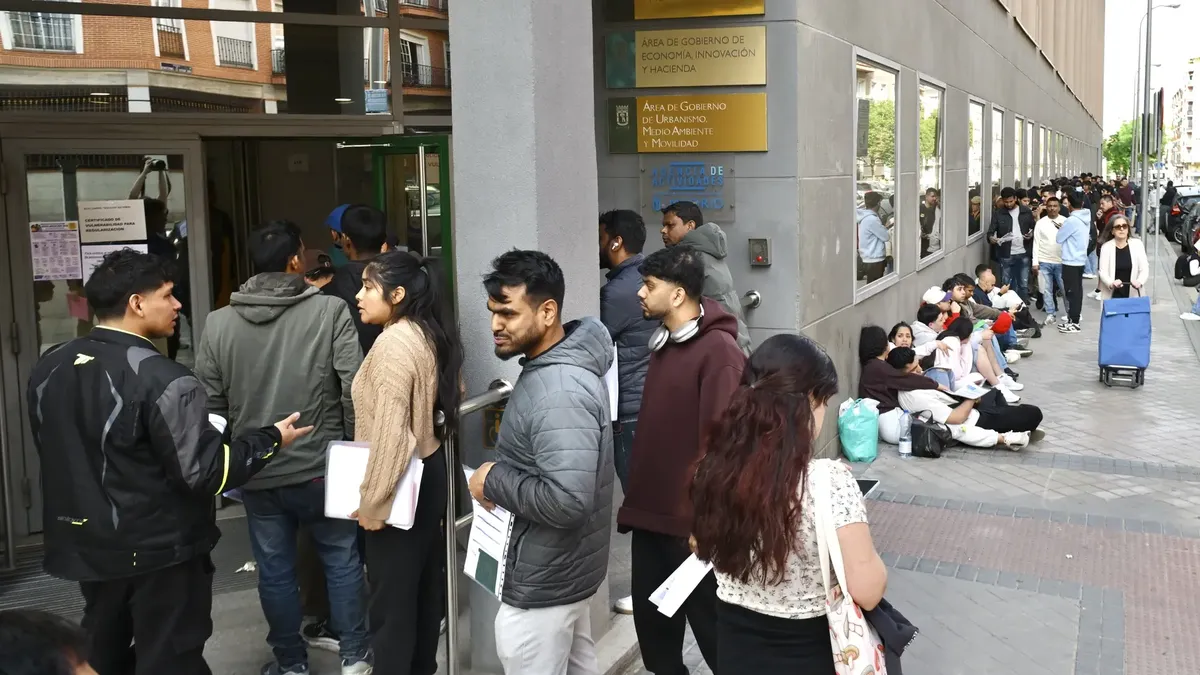
One million applications at risk as Spain's top court weighs EU referral
Spain's Supreme Court has signaled it may suspend the government's extraordinary immigrant regularization process — which has received one million applications…
Spain's Supreme Court invokes EU law to challenge unilateral mass regularization
Spain's Supreme Court issued a June 24 ruling questioning whether the government's mass immigrant regularization decree — with one million applications filed —…
One million people who submitted applications for legal residency in Spain now face the possibility of having the entire process frozen — not by a final court ruling, but by a procedural question that could take over a year to resolve. According to reporting on the Supreme Court's June 24 ruling, Spain's Administrative Chamber has opened the door to suspending the government's extraordinary regularization decree and referring it to the Court of Justice of the European Union (CJEU). Parties have five days to respond, and the application deadline closes this Tuesday.
🔹 What happened: The Supreme Court acted on appeals filed by the regional governments of Aragón and the Valencian Community, which challenged the central government's decree. The court found potential conflicts between the decree and the EU Pact on Migration and Asylum adopted in 2024, specifically around the requirement for member states to coordinate with EU institutions before implementing broad residency schemes. The court flagged two specific concerns: the possible issuance of residency permits to individuals already in active deportation proceedings, and the effect on free movement across the Schengen Area's 27 member states.
🔹 Key players: The central government, which promoted the decree as a mechanism to regularize long-term residents in informal employment, stands as the main defender of the process. The governments of Aragón and the Valencian Community, both with political opposition to the ruling coalition, filed the appeals. The CJEU in Luxembourg would become the decisive authority if the referral moves forward.
🔹 Why it matters: The applicants include workers in domestic care, agriculture, and hospitality — sectors where undocumented status is most prevalent and where formal employment contracts are the primary gateway to labor protections, healthcare access, and family stability. A suspension lasting twelve months or more, a realistic timeline based on past CJEU preliminary ruling procedures, would leave these individuals in a documented state of administrative limbo: application filed, process frozen, status unchanged.
🔹 What to expect: The five-day window for party submissions will be critical. If the Supreme Court decides to refer the case to the CJEU, no new residency permits will be issued under the decree until Luxembourg rules. The government may explore interim protective measures for applicants, but any such mechanism would need to navigate the same legal objections the court has already identified. A legislative route through Parliament — slower but more durable — has not been publicly discussed.
📌 EPM Take: The progressive case for this decree rests on a straightforward argument: these are people already living and working in Spain, contributing to the economy, whose documentation status reflects an administrative gap, not a moral one. That argument is not addressed by the Supreme Court's ruling — and that is precisely what makes the legal moment so uncomfortable for the government. The 2024 EU Migration and Asylum Pact was approved with Spain's support; the coordination requirements it contains were not a surprise inserted at the last minute. EPM has covered how Spain's institutional disputes — from ETA victims still awaiting accountability to language rights battles in Basque schools — often reveal decisions made without fully stress-testing their legal durability. One million applicants deserve a clearer answer than a five-day procedural window can provide. The question the government has not answered publicly: was a legal compatibility review with the 2024 Pact conducted before the decree was issued, and if so, what did it conclude?
Spain's Supreme Court has moved to check one of the most expansive unilateral migration decisions in the country's recent history, questioning whether the government's mass regularization decree — which has accumulated one million applications — can withstand scrutiny under EU law. A June 24 ruling by the Administrative Chamber gives parties five days to argue for or against a referral to the Court of Justice of the European Union (CJEU), a move that would freeze the process before its Tuesday deadline.
🔹 What happened: According to the court's ruling, the Supreme Court responded to appeals from the regional governments of Aragón and the Valencian Community and identified specific points of conflict between the government decree and the EU Pact on Migration and Asylum, adopted in 2024. The Pact requires member states to maintain a high level of coordination and information sharing with EU institutions and fellow member states before implementing large-scale residency programs. The court explicitly questioned the granting of temporary residency permits to individuals currently subject to active deportation or expulsion orders, and flagged the consequences for the integrity of the Schengen free-movement area.
🔹 Key players: The regional governments of Aragón and the Valencian Community exercised their institutional role by challenging a decree they viewed as legally overreaching. Spain's Supreme Court acts here as the guardian of Spain's obligations under EU law. Should the referral proceed, the CJEU in Luxembourg will determine whether a member state can, without prior EU coordination, grant blanket residency to a population of undocumented migrants at this scale.
🔹 Why it matters: The Schengen Area functions on the premise that residency documents issued by one member state are recognized by all 26 others. A mass regularization of one million individuals — without the coordination mechanisms the 2024 Pact requires — affects not just Spain's borders but the border security calculus of every country in the zone. Several member states have already moved to reintroduce internal border controls in recent years, citing exactly this type of uncoordinated national decision-making as a contributing factor.
🔹 What to expect: The five-day response window will determine the Supreme Court's next step. A referral to the CJEU would trigger a suspension that, based on the court's historical timelines, would likely extend beyond twelve months. Spain's government faces a narrowing set of options: contest the suspension, redesign the decree to meet the 2024 Pact's coordination requirements, or accept a prolonged legal standoff with both the Supreme Court and EU institutions.
📌 EPM Take: What no major outlet is stating plainly is that this is a case of a government being held accountable by a legal framework it helped author. The 2024 EU Migration and Asylum Pact passed with Spain's support in the European Council — Pedro Sánchez's government was not a reluctant signatory. The coordination requirements the Supreme Court cites were not imposed on Spain; they were agreed to by Spain. EPM has documented a recurring pattern in Spanish governance: from the institutional questions surrounding the Andalusian Parliament hiring process to the legal battles over Basque language policy, decisions taken at speed tend to face their most serious legal scrutiny late, at maximum cost to those caught in the middle. One million applicants are now in that position. The scenario nobody in Madrid's government wants to name: if the CJEU rules against the decree, the legal status of every application already submitted becomes a question that neither the Supreme Court nor the government has a ready answer for.
Un millón de solicitudes en vilo: el Supremo frena la regularización de inmigrantes
La Sala de lo Contencioso-Administrativo del Tribunal Supremo ha abierto la vía para suspender la regularización extraordinaria de inmigrantes y consultar al…
El Supremo frena la regularización masiva: Europa como límite a la unilateralidad
El Tribunal Supremo ha emitido una providencia fechada el 24 de junio en la que cuestiona la compatibilidad del decreto de regularización masiva de inmigrantes…
Un millón de personas que completaron solicitudes de regularización podrían quedar atrapadas en un limbo legal antes incluso de que el plazo oficial cierre este martes. La Sala de lo Contencioso-Administrativo del Tribunal Supremo emitió el 24 de junio una providencia en la que abre la posibilidad de suspender el proceso para consultar al Tribunal de Justicia de la Unión Europea (TJUE) si el decreto del Gobierno es compatible con el marco europeo. Cinco días es el tiempo que tienen las partes para pronunciarse.
🔹 Lo que pasó: Según El País, que accedió a la providencia, el alto tribunal responde a los recursos presentados por los gobiernos de Aragón y la Comunidad Valenciana. El Supremo señala que el decreto podría colisionar con el Pacto de Migración y Asilo aprobado por la UE en 2024, que exige coordinación entre Estados miembros e instituciones comunitarias en materia de residencia temporal masiva. El tribunal identifica como especialmente problemática la posibilidad de que personas inmersas en procesos de devolución o expulsión reciban permisos de residencia, y advierte sobre el impacto en la libre circulación dentro del espacio Schengen.
🔹 Actores: Los gobiernos de Aragón y la Comunidad Valenciana impulsaron los recursos que activaron la providencia. El Gobierno central defiende el decreto como un instrumento de regularización de personas que ya residen en España. El TJUE, con sede en Luxemburgo, podría convertirse en el foro decisivo si el Supremo opta por elevar la cuestión prejudicial.
🔹 Por qué importa: Las personas que presentaron solicitudes incluyen trabajadoras domésticas, empleados en agricultura y hostelería, y familias con menores nacidos en España —sectores donde la irregularidad documental es estructural según datos del propio Ministerio de Inclusión. Una suspensión prolongada, que en procedimientos prejudiciales ante el TJUE puede extenderse más de un año, mantendría a estas personas sin acceso a derechos laborales plenos, sin posibilidad de renovar contratos formales ni acceder a determinadas prestaciones sanitarias.
🔹 Qué esperar: Las partes tienen hasta el plazo fijado por el Supremo para presentar alegaciones. Si el tribunal decide elevar la consulta al TJUE, el proceso quedará en suspenso de forma indefinida hasta que Luxemburgo se pronuncie. El Gobierno podría intentar articular una solución transitoria para quienes ya completaron la solicitud, aunque cualquier medida alternativa debería esquivar las mismas objeciones jurídicas que enfrenta el decreto original.
📌 Conclusión EPM: La ironía más aguda de esta situación es que el instrumento legal que puede bloquear la regularización es precisamente el derecho europeo, el mismo marco que las fuerzas progresistas en España invocan habitualmente como escudo frente a políticas restrictivas de migración. El Pacto de Migración y Asilo de 2024 —aprobado con el voto favorable del Gobierno de Pedro Sánchez en el Consejo Europeo— incluye exactamente los mecanismos de coordinación que el Supremo señala como incumplidos. EPM ha documentado cómo en España el debate sobre representación y memoria histórica divide instituciones; aquí el Gobierno choca con una normativa que ayudó a redactar. Si el TJUE respalda al Supremo, el ejecutivo habrá construido una trampa jurídica para sus propios beneficiarios. La pregunta concreta que nadie responde: ¿el Ministerio de Inclusión evaluó la compatibilidad con el Pacto antes de lanzar el proceso para un millón de solicitantes?
El Tribunal Supremo ha puesto freno jurídico a uno de los decretos más ambiciosos en materia migratoria de la historia reciente de España: la regularización extraordinaria que el Gobierno impulsó sin coordinación previa con la Unión Europea y que ya ha recibido un millón de solicitudes. En una providencia fechada el 24 de junio, la Sala de lo Contencioso-Administrativo otorga cinco días a las partes para pronunciarse sobre la pertinencia de elevar una cuestión prejudicial al Tribunal de Justicia de la UE, lo que paralizaría el proceso antes de su cierre este martes.
🔹 Lo que pasó: Según la providencia, el Supremo responde a los recursos presentados por los ejecutivos autonómicos de Aragón y la Comunidad Valenciana y detecta incompatibilidades entre el decreto gubernamental y el Pacto de Migración y Asilo aprobado por la UE en 2024. El tribunal señala que la normativa europea exige un alto grado de coordinación y transferencia de información entre Estados miembros, condición que el decreto español no habría cumplido. El alto tribunal también advierte sobre el riesgo de conceder residencias a personas en procedimientos activos de devolución o expulsión, y sobre las implicaciones para la integridad del espacio Schengen.
🔹 Actores: Los gobiernos de Aragón y la Comunidad Valenciana, que presentaron los recursos, ejercen aquí un contrapeso institucional relevante frente al decreto del Gobierno central. El Tribunal Supremo actúa como garante del ordenamiento jurídico y de las obligaciones europeas de España. La Comisión Europea y el TJUE podrían tomar protagonismo si la consulta prejudicial prospera.
🔹 Por qué importa: La regularización masiva y unilateral de un millón de personas en situación irregular tiene consecuencias directas sobre la seguridad del espacio Schengen, al otorgar libertad de circulación por 27 países a quienes no han pasado por los filtros coordinados que el marco europeo establece. Varios Estados miembros han endurecido sus controles fronterizos internos en los últimos dos años precisamente por esta clase de efectos no coordinados. El Supremo pone el dedo en esa llaga.
🔹 Qué esperar: En los próximos cinco días, las partes presentarán sus posiciones ante el Supremo. Si el tribunal eleva la cuestión al TJUE, el proceso quedará paralizado por un período que históricamente supera los doce meses en procedimientos prejudiciales. El Gobierno deberá evaluar si mantiene el decreto o modifica su marco para ajustarlo a las exigencias europeas de coordinación, lo que implicaría rediseñar el proceso desde su base.
📌 Conclusión EPM: El Gobierno español lanzó un proceso de regularización para un millón de personas sin asegurarse de que el instrumento jurídico elegido resistiera el escrutinio del ordenamiento europeo que él mismo contribuyó a construir. El Pacto de Migración y Asilo de 2024 —texto al que Madrid dio su respaldo en el Consejo— no es una sorpresa normativa: es un marco que exige precisamente la coordinación que el decreto eludió. EPM ha seguido de cerca cómo las tensiones institucionales en España —desde el debate sobre la representación en el Parlamento andaluz hasta las resoluciones sobre libertad de expresión— revelan un patrón de decisiones tomadas al límite del marco legal. Esta vez el límite lo marca Bruselas. La cuestión que los defensores del decreto no responden: si el Gobierno conocía el Pacto de 2024 antes de diseñar el decreto, ¿por qué no incorporó los mecanismos de coordinación desde el principio, en lugar de exponer a un millón de solicitantes a esta incertidumbre?