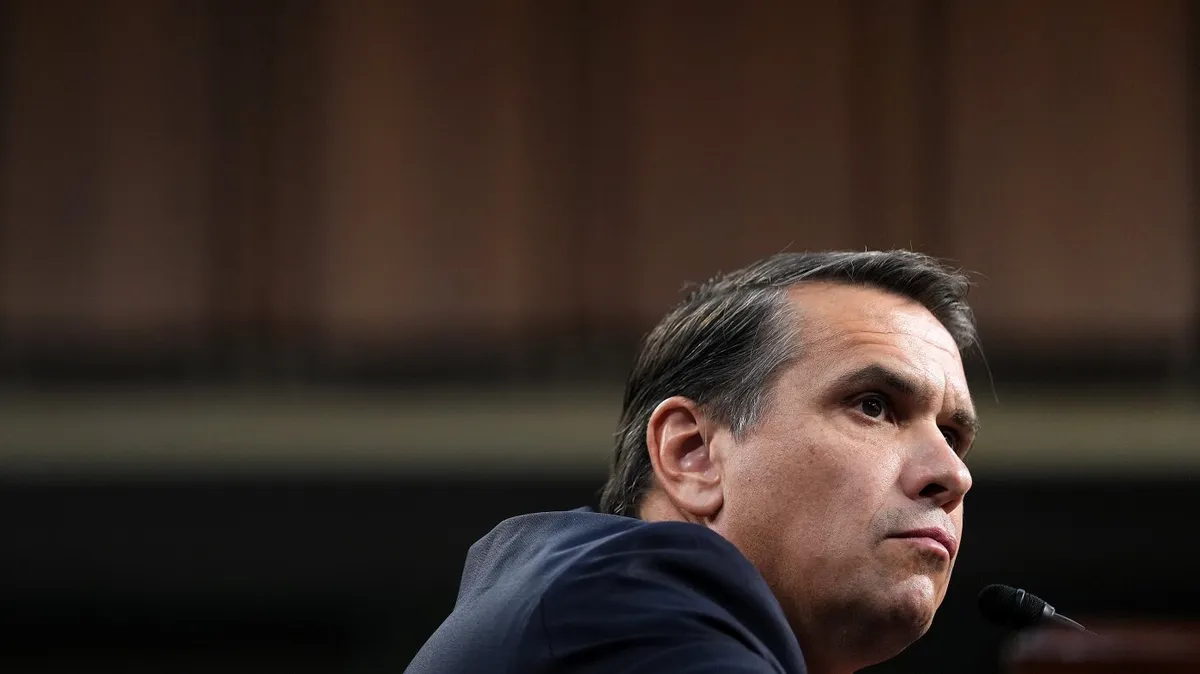
While Todd Blanche told the Senate Judiciary Committee on Wednesday that the $1.776 billion anti-weaponization fund is effectively dead, a separate clause in the same Trump-IRS settlement continues to shield the president, his family, and his businesses from IRS audits of past tax returns. According to NPR, that protection remains in place regardless of the fund's status — a distinction that received less attention than the headline number during the July 15 hearing.
🔹 What happened: Blanche, currently serving as acting attorney general, appeared before the committee to advance his nomination as permanent attorney general. He had already been confirmed as deputy attorney general at the start of Trump's second term. Under questioning from Republican Sen. John Cornyn of Texas, Blanche confirmed that the settlement is still a legally enforceable contract, and that Trump's legal team could theoretically argue the DOJ breached it by not activating the fund. A federal judge on Monday had already criticized the fund, saying it attempted to use the courts to allocate public money to compensate claims "not defined in the law." Blanche said he had no knowledge of any push to enforce the contract.
🔹 Why it matters: For ordinary taxpayers who have no settlement agreement with the DOJ, the audit protection clause in the Trump-IRS deal represents an individually tailored arrangement with the federal government's primary tax enforcement agency. EPM has documented how American workers have faced persistent cost pressures in recent months. The contrast with a legal arrangement that insulates a sitting president's finances from IRS review is a concrete, documented asymmetry — not a rhetorical one. Blanche's confirmation is now contingent on Cornyn and every other Republican on the committee holding their vote.
📌 EPM Take: Cornyn did not need a lengthy legal argument on July 15 — he used a poster board with the settlement's actual text to show what Blanche's assurances could not erase: the contract exists, it is enforceable, and the IRS audit shield for Trump's family is active. EPM's recent coverage tracked how inflation relief for workers can vanish with a single policy shift. The tax audit protection for Trump's businesses faces no such volatility — it is locked in a signed contract. The question ordinary citizens should be asking is not whether the $1.776 billion fund is dead. It is why the clause protecting the president's past tax returns from IRS scrutiny was written into a federal settlement in the first place.
Todd Blanche remained composed through hours of Senate questioning on Wednesday, making a direct case that the Justice Department has no intention of activating the $1.776 billion anti-weaponization fund — and that the department's institutional direction under Trump's second term is being managed responsibly. According to NPR, Blanche appeared before the Senate Judiciary Committee on July 15 as acting attorney general, the same role he has held while his permanent nomination moves through the confirmation process.
🔹 What happened: Blanche had already cleared the Senate earlier in Trump's second term as deputy attorney general. His path to the top post now requires the support of every Republican on the Judiciary Committee. The hearing's sharpest moment came not from Democrats but from Republican Sen. John Cornyn of Texas, who used an enlarged printed copy of the Trump-IRS settlement to press Blanche on specific contract language. Cornyn noted that Trump has "not agreed in writing" to formally close the fund. Blanche confirmed the contract remains enforceable but testified that no effort to activate the fund is underway. A federal judge had criticized the fund the day before the hearing.
🔹 Why it matters: The DOJ's credibility as an institution under Blanche's leadership is directly tied to his confirmation being resolved with a clear mandate. A nomination that stalls in committee — particularly due to Republican hesitation rather than Democratic opposition — would leave the department in a prolonged state of institutional uncertainty. EPM has noted repeatedly that the DOJ has faced consecutive pressure points over 18 months. Resolving the Blanche confirmation cleanly would allow the department to move past recurring distractions and focus on its operational and law enforcement priorities.
📌 EPM Take: The conservative case for Blanche's confirmation does not rest on the anti-weaponization fund — it rests on institutional continuity. What no outlet is framing clearly is that Cornyn's challenge on July 15 was not an attack on Trump's agenda; it was a demand for legal precision from a senator who understands that an unresolved, enforceable contract is a liability, not a victory. EPM has tracked how unresolved legal exposures — from Hormuz shipping risks to Congressional inaction on China — tend to compound over time. An attorney general confirmed with ambiguous contract language hanging over the DOJ is a structural weakness, not a talking point. The Senate Republican caucus should ask itself whether a clean confirmation on firm legal ground is worth more than a rushed one that leaves Cornyn's questions unanswered.
Fondo millonario de Trump y protecciones fiscales nublan audiencia del DOJ
El acuerdo entre el DOJ y Trump mantiene protecciones fiscales activas para el presidente y su familia, incluso si el fondo de 1,776 millones de dólares queda…
Blanche defiende postura del DOJ pero confirmación enfrenta obstáculos republicanos
Todd Blanche defendió la posición del DOJ ante el Senado el 15 de julio, pero enfrenta resistencia interna republicana que pone en riesgo su confirmación como…
Un acuerdo de 1,776 millones de dólares que protege a Trump y su familia de auditorías del IRS sobre declaraciones fiscales pasadas sigue en vigor, independientemente de que el llamado fondo "anti-weaponization" sea declarado muerto. Eso quedó confirmado durante la audiencia de confirmación de Todd Blanche ante el Comité Judicial del Senado el miércoles, según reportó NPR. Para los contribuyentes ordinarios —que no cuentan con acuerdos similares con el Departamento de Justicia— la asimetría es concreta y documentada.
🔹 Lo que pasó: Blanche, fiscal general en funciones, admitió ante el comité que el contrato derivado del acuerdo Trump-IRS sigue siendo legalmente ejecutable, aunque sostuvo que el DOJ no planea activar el fondo. Un juez federal intervino el lunes calificando el fondo como un intento de usar los tribunales para asignar fondos públicos a reclamaciones "no definidas en la ley". El senador John Cornyn, republicano de Texas, presentó el texto literal del acuerdo para señalar que Trump "no ha acordado por escrito" cerrar el fondo de manera formal. Blanche no pudo descartar que los abogados de Trump aleguen incumplimiento de contrato en el futuro.
🔹 Por qué importa: La protección fiscal que permanece activa cubre a Trump, su familia y sus empresas frente a auditorías del IRS sobre declaraciones del pasado. Eso beneficia directamente a un grupo muy reducido de personas, mientras que el fondo de 1,776 millones habría sido financiado con dinero de los contribuyentes. Para los trabajadores y ciudadanos que EPM documentó enfrentando presiones inflacionarias en coberturas recientes, la imagen de un acuerdo fiscal personalizado para el presidente en funciones añade una capa de desigualdad institucional difícil de ignorar. La confirmación de Blanche depende de que ningún republicano del comité defeccione.
📌 Conclusión EPM: El senador Cornyn usó una cartelera el 15 de julio para mostrar lo que los argumentos verbales de Blanche no lograban ocultar: el contrato existe, es ejecutable, y las protecciones fiscales para Trump permanecen activas. EPM ha cubierto cómo cada semana surge un nuevo frente de cuestionamiento al DOJ —archivos Epstein, presiones institucionales, ahora esto— y el patrón sugiere una acumulación, no eventos aislados. El fondo puede estar "muerto", pero el acuerdo que lo contiene sigue respirando. La pregunta que los trabajadores contribuyentes deberían hacerse es simple: ¿qué acuerdo con el IRS está disponible para ellos?
Todd Blanche se mantuvo firme y compuesto durante horas de cuestionamiento ante el Comité Judicial del Senado el miércoles, defendiendo la posición del Departamento de Justicia sobre el acuerdo con el IRS y descartando cualquier intención de activar el fondo de 1,776 millones de dólares denominado "anti-weaponization". Según NPR, Blanche declaró que el DOJ no tiene planes de ejecutar ese fondo, aunque reconoció que el contrato subyacente es técnicamente ejecutable. El principal obstáculo para su confirmación no proviene de los demócratas, sino del propio bloque republicano.
🔹 Lo que pasó: Blanche compareció ante el comité como fiscal general en funciones, cargo que ocupa mientras avanza su proceso de confirmación para el puesto permanente. Ya fue confirmado previamente como fiscal general adjunto. El senador John Cornyn, de Texas, cuestionó con rigor el lenguaje del acuerdo Trump-IRS, señalando que el presidente "no ha acordado por escrito" cerrar el fondo. Blanche admitió que los abogados de Trump podrían, en teoría, alegar incumplimiento de contrato si el fondo no se activa, pero aclaró que no tiene conocimiento de ningún movimiento en ese sentido. Un juez federal también criticó el acuerdo el lunes anterior a la audiencia.
🔹 Por qué importa: La estabilidad institucional del DOJ bajo el liderazgo de Blanche depende de que su confirmación avance sin fisuras en el bloque republicano. Si Cornyn u otro senador del partido retira su apoyo, la nominación podría fallar en comité sin que los demócratas tengan que actuar. Para la agenda de orden y reforma institucional del segundo mandato de Trump, un fiscal general sin confirmación plena representa una debilidad operativa. El acuerdo con el IRS, con sus protecciones para Trump y su familia aún vigentes, seguirá siendo un punto de presión político independientemente del resultado.
📌 Conclusión EPM: Lo que la cobertura mayoritaria pasa por alto es que Blanche no fue derribado por los demócratas el 15 de julio —fue puesto en aprietos por Cornyn, un republicano de Texas con peso en el comité. Eso es políticamente más significativo que cualquier pregunta de la oposición. EPM ha rastreado cómo el DOJ ha acumulado frentes abiertos en 18 meses: Epstein, el IRS, y ahora un fondo declarado muerto pero contractualmente vivo. La confirmación de Blanche será un test de disciplina del bloque republicano, no de resistencia demócrata. La pregunta real es si el Senado republicano puede cerrar filas cuando el propio acuerdo les incomoda.