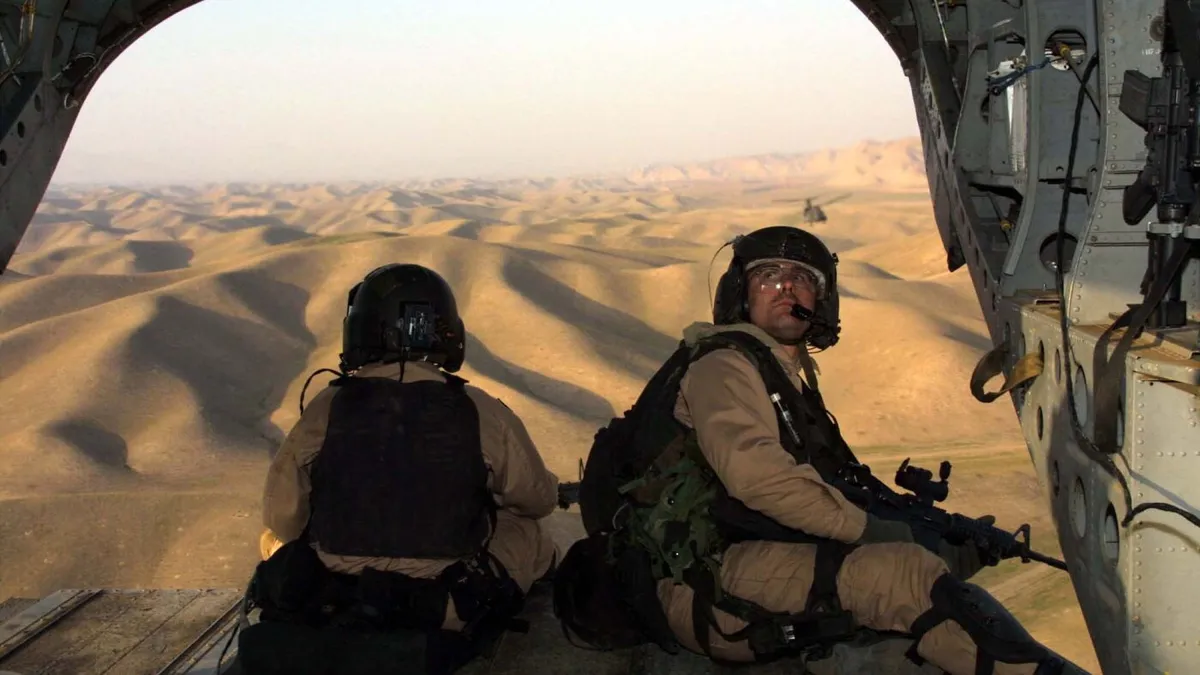
Three wars, same region, same people paying the price
The U.S. has fought three major wars in the same region over 25 years, winning militarily each time but failing to produce stable political outcomes, according…
Unmatched military force, unfinished political strategy: America's war gap
The U.S. has achieved rapid military victories in Afghanistan, Iraq, and Iran over 25 years but has failed to translate that force into durable political…
For more than 20 of the past 25 years, the United States has waged war in the same region — Afghanistan, Iraq, and now Iran. The opening phases have been decisive every time. The consequences for the people living inside those conflicts, and for the military families at home, have been anything but swift. According to NPR, national security experts say the problem is not American firepower. It is the deliberate choice to never plan what comes after the bombing stops.
🔹 What happened: President George W. Bush's administration removed the Taliban from Afghanistan in weeks in 2001 and toppled Saddam Hussein in Iraq in 2003. Under President Trump, a bombing campaign coordinated with Israel killed multiple Iranian leaders on day one of the conflict. In every case, the military phase worked as designed. Twenty years later, the Taliban govern Afghanistan after the 2021 U.S. withdrawal. Iraq remains fragile. Iran's theocratic government is still in power and the conflict continues. Peter Bergen, author of *All The Presidents' Wars*, and Paul Salem of CSIS in Washington describe the same structural gap across all three conflicts.
🔹 Why it matters: The cost of this gap does not fall on policymakers. Bergen is direct: the U.S. "tends to not plan for the day after." Salem adds that countries with fragile institutions cannot be stabilized simply by removing whoever sits at the top. Bergen notes that sustained presence — learning languages, long-term deployment, institutional integration — is what historical powers required to hold territory, and what the U.S. has consistently refused to do. The people absorbing the result are soldiers rotating through short tours, veterans returning to insufficient support, and local civilian populations left inside power vacuums after each intervention.
📌 EPM Take: Salem's phrase deserves to be repeated in every foreign policy hearing: the U.S. has "an imperial appetite, but a tourist's approach to it." That is not a stylistic critique — it is a description of who carries the weight. Short deployments mean the soldier who stabilized a district in 2005 is replaced by someone who has never been there. The institutional memory disappears. The population notices. EPM has documented that military families bear the recurring cost of tactical wins without lasting peace. With Iran still active and no political framework in sight, the pattern Bergen describes in *All The Presidents' Wars* is not history — it is the current operating model. The question worth asking: who decides when this cycle is expensive enough to change?
No military in history has projected force as effectively as the United States. In weeks, American power removed the Taliban in 2001. In weeks, it dismantled Saddam Hussein's government in 2003. Under President Trump, a coordinated bombing campaign with Israel neutralized multiple Iranian leaders on the first day of the conflict with Iran. The operational record is not the problem. According to NPR, the problem is what the U.S. consistently fails to build after the fighting stops — and why that failure now repeats in Iran.
🔹 What happened: Over the past 25 years, the U.S. has been at war for more than 20 of them, fighting Afghanistan, Iraq, and now Iran — all in the same region. President George W. Bush's administration achieved rapid military victories in both Afghanistan and Iraq. President Trump's administration demonstrated decisive strike capability against Iranian leadership from the opening hours of the conflict. Yet the Taliban control Afghanistan following the 2021 withdrawal, Iraq maintains fragile stability after years of brutal war, and Iran's government remains intact. Peter Bergen, author of *All The Presidents' Wars*, and Paul Salem of the Center for Strategic and International Studies (CSIS) in Washington both identify the same deficiency across all three conflicts.
🔹 Why it matters: Bergen's assessment is blunt: "We generally do a pretty good job of the breaking things and killing people at the inception of the wars" — but the U.S. consistently fails to plan for what follows. Salem warns that replacing leadership in countries with weak institutions does not produce stability. Bergen adds that sustained power projection historically required language training, long-term presence, and deep institutional engagement — all of which the U.S. has avoided. For national security, that gap between military success and political consolidation is the central strategic vulnerability in the Iran conflict today.
📌 EPM Take: Bergen's book title — *All The Presidents' Wars* — inadvertently names the real problem: this is not a Republican or Democratic failure. It is a doctrinal one that has persisted across at least three administrations and three theaters. The Trump administration has shown it can destroy Iranian command structures on day one. What no administration has shown, since Afghanistan in 2001, is a credible framework for what day 100 looks like — or day 1,000. EPM has reported that battlefield victories without durable peace become cycles that military families absorb for generations. The executive branch owes the country a specific answer: what is the political consolidation plan for Iran, and which institution is responsible for executing it?
Guerras sin fin: soldados pagan el costo que Washington no calcula
Más de 25 años de guerras en tres países de la misma región muestran que EE.UU.
Superioridad militar sin doctrina de posguerra: el dilema estratégico de EE.UU.
EE.UU. ha demostrado superioridad militar en Afganistán, Irak e Irán, pero no ha logrado traducirla en estabilidad política duradera en ninguno de los tres…
Más de dos décadas de guerras en Afganistán, Irak e Irán han dejado una constante que los discursos oficiales rara vez mencionan: las comunidades que absorben el impacto —familias de militares, civiles en zonas de conflicto, veteranos sin apoyo institucional— no participan en las decisiones que los exponen. Según NPR, analistas especializados advierten que el ciclo de victorias militares sin paz política duradera se repite porque quienes diseñan la estrategia nunca planifican lo que viene después.
🔹 Lo que pasó: En 2001, bajo el presidente George W. Bush, EE.UU. desalojó al Talibán de Afganistán en semanas. En 2003, derrocó a Saddam Hussein en Irak. Bajo el presidente Trump, una campaña aérea con participación israelí eliminó a múltiples líderes iraníes el primer día del conflicto. En los tres casos, la fase militar inicial fue rápida. Veinte años después, el Talibán gobierna Afganistán, Irak sigue fragmentado y el régimen teocrático de Irán permanece en pie. El patrón no ha cambiado en un cuarto de siglo.
🔹 Por qué importa: Peter Bergen, autor de *All The Presidents' Wars*, identifica el vacío crítico: "Tendemos a no planificar el día después". Las consecuencias recaen sobre poblaciones concretas: soldados desplegados en tours cortos sin continuidad, familias que esperan regresos que a veces no llegan, y comunidades locales que enfrentan el vacío de poder tras cada intervención. Paul Salem, del CSIS en Washington, advierte que países con instituciones frágiles no se transforman cambiando a quien está en la cima. Bergen agrega que EE.UU. nunca adoptó los compromisos reales que exige una presencia prolongada: aprendizaje del idioma, integración institucional, permanencia. Los más vulnerables de ambos lados pagan esa brecha.
📌 Conclusión EPM: Hay una contradicción que Bergen nombra y que Washington prefiere ignorar: EE.UU. tiene "apetito imperial pero enfoque de turista". Eso no es solo un problema estratégico —es una transferencia de costos. Cada guerra corta mal planificada genera décadas de consecuencias para quienes menos poder tienen sobre esas decisiones. EPM ya documentó que las familias son quienes pagan el ciclo de victorias tácticas sin paz duradera. Con el conflicto en Irán aún sin resolución, la misma lógica se activa de nuevo. La pregunta que ningún funcionario responde es cuántas generaciones de soldados y civiles más deben asumir los costos de una doctrina que, en 25 años y tres guerras, no ha producido estabilidad política en ningún caso.
Estados Unidos posee la maquinaria militar más poderosa del mundo, capaz de derrocar regímenes en semanas. Afganistán en 2001, Irak en 2003, y ahora las operaciones en Irán bajo el presidente Trump lo confirman. El problema no es la capacidad de combate —es la ausencia de una doctrina coherente para consolidar lo que la fuerza militar conquista. Según NPR, esa brecha entre poder bélico y estrategia política explica por qué tres guerras en 25 años no han producido los resultados buscados.
🔹 Lo que pasó: Bajo el presidente George W. Bush, las fuerzas estadounidenses desalojaron al Talibán en semanas y derrocaron a Saddam Hussein en Irak en 2003. Bajo el presidente Trump, una campaña de bombardeos coordinada con Israel eliminó a múltiples líderes iraníes desde el primer día del conflicto, demostrando una capacidad de proyección de fuerza sin precedentes. Sin embargo, el Talibán recuperó Afganistán en 2021 tras la retirada, Irak mantiene una estabilidad precaria, y el régimen iraní permanece activo. Los tres casos comparten el mismo patrón: éxito táctico inicial, colapso político posterior.
🔹 Por qué importa: Peter Bergen, autor de *All The Presidents' Wars* y analista de seguridad nacional, concluye que EE.UU. "no planifica el día después". Paul Salem, del Centro de Estudios Estratégicos e Internacionales (CSIS), advierte que los países de la región carecen de las instituciones necesarias para absorber cambios de liderazgo rápidos. Bergen agrega que las potencias imperiales históricamente requieren presencia prolongada, dominio del idioma local e integración institucional —compromisos que EE.UU. ha evitado sistemáticamente. Para el liderazgo ejecutivo, eso implica una pregunta incómoda: si la ventaja militar es real pero insuficiente, ¿cuál es la doctrina que debe acompañarla para proteger los intereses nacionales?
📌 Conclusión EPM: El patrón de 25 años —tres guerras, tres fases iniciales exitosas, tres resoluciones políticas fallidas— no es un accidente operativo. Es el resultado de una doctrina que prioriza la entrada y delega la salida. Bergen lo formula sin ambigüedad: EE.UU. actúa como un imperio sin querer serlo, y esa contradicción tiene un costo estratégico medible. Con el conflicto en Irán aún activo y sin marco político definido, la Administración Trump enfrenta la misma disyuntiva que sus predecesores: el poderío aéreo puede neutralizar liderazgos, pero no construye gobernabilidad. EPM ha señalado antes que las victorias de campo sin paz duradera son victorias que las familias terminan pagando. La pregunta que el Congreso debería formular —y no formula— es qué doctrina de consolidación acompañará esta vez a la fuerza.