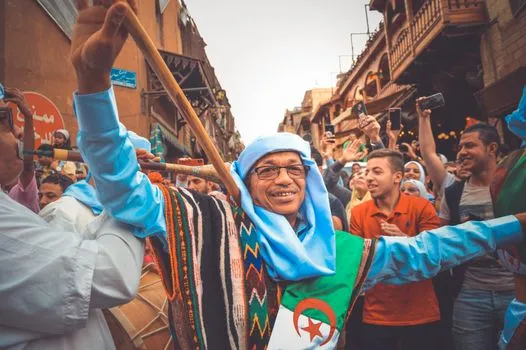
«Bâtir» brings Algerian immigration story to Avignon's main stage
Salim Djaferi's «Bâtir» uses personal testimony, documentary, and performance to bring the history of Algerian immigration in France to the Festival…
Avignon programs deconstructive work on Algerian immigration in France
The Festival d'Avignon has selected «Bâtir» by Salim Djaferi, a hybrid work that deconstructs the history of Algerian immigration in France through…
A story rarely told on Europe's major stages has arrived at one of its most prominent venues. At the Festival d'Avignon, artist Salim Djaferi presents «Bâtir», a piece that reconstructs the history of Algerian immigration in France through a combination of personal testimony, documentary, and contemporary performance, according to coverage of the event. The title — «to build» — foregrounds the labor and presence of a community whose contributions have often been sidelined in dominant cultural narratives.
🔹 What happened: Djaferi's work is described as operating «with allant» — with momentum and drive — as it deconstructs the Algerian immigration experience in France. Rather than following a linear theatrical structure, «Bâtir» moves between formats: the history lesson, the autobiographical account, the live performance act. The Festival d'Avignon, a cornerstone of European performing arts, selected the piece for its program, giving it visibility that extends well beyond France's borders.
🔹 Why it matters: For descendants of Algerian immigrants in France — a community with a long and complex presence in the country — seeing that history staged at Avignon carries a specific weight. The festival's reach means the work will be seen and discussed by audiences across Europe. At a time when French migration policy is under active parliamentary revision, «Bâtir» inserts a cultural counter-narrative into a debate that is often reduced to legal and economic terms, centering instead the human dimension of a multigenerational story.
📌 EPM Take: What makes «Bâtir» politically interesting is precisely what makes it artistically risky: the hybrid format. Personal testimony and documentary sit uncomfortably next to deconstruction — the first demands emotional directness, the second thrives on distance. Djaferi's reported success in holding that tension «with allant» is, if accurate, the real achievement here. The broader scenario no one is naming: as France's cultural institutions increasingly program works that challenge the republican integration model, the question is not whether the art is good, but whether the political class is watching — and whether it matters if they aren't.
✍️ EPM Editorial Desk | erickprometeomedia.com
The Festival d'Avignon has included «Bâtir» in its program, a stage work by artist Salim Djaferi that addresses the history of Algerian immigration in France through a hybrid format mixing documentary, personal testimony, and contemporary performance. According to available source material, the piece is described as a deconstruction approached «with allant» — energy and forward momentum — rather than through conventional dramatic structure.
🔹 What happened: Djaferi's «Bâtir» — French for «to build» — positions itself between the history lecture and the live performance act, declining to settle into either. The Festival d'Avignon, founded in 1947 and one of Europe's most established performing arts institutions, selected the work for its official program. The source describes the project as operating on a deliberate «ligne de crête» — a ridge line — between documentary and personal account, between performance and pedagogy.
🔹 Why it matters: The festival's institutional standing means the work receives broad European visibility and critical attention. France's republican integration model has historically favored a civic identity framework over ethnic or communal narratives. A work that explicitly deconstructs the Algerian immigration experience enters that framework at a sensitive moment: French legislators have been debating migration law revisions, and the cultural space is as contested as the legislative one. How institutions like Avignon frame these histories carries real weight in shaping public perception.
📌 EPM Take: The Festival d'Avignon was founded in 1947 by Jean Vilar with an explicit mission: bring serious theater to the broadest possible public, not only to the elite. That mission has always had a political dimension. What «Bâtir» tests is whether deconstruction — as a method — can fulfill the constructive promise of its own title. History is not served by dismantling alone. The scenario worth watching: if France's cultural institutions consistently program narratives that challenge the republican model without proposing a workable alternative, the gap between the stage and the street will only widen — and that gap has consequences the festival cannot program its way out of.
✍️ EPM Editorial Desk | erickprometeomedia.com
«Bâtir» da voz en Aviñón a la historia silenciada de los argelinos en Francia
Salim Djaferi presenta «Bâtir» en el Festival de Aviñón, una obra que combina documental, performance y testimonio para abordar la historia de la inmigración…
Festival de Aviñón programa obra sobre inmigración argelina entre historia y teatro
El Festival de Aviñón programa «Bâtir», obra de Salim Djaferi que aborda la historia de la inmigración argelina en Francia mediante una propuesta híbrida entre…
En el Festival de Aviñón, la obra «Bâtir» del artista Salim Djaferi pone sobre el escenario la historia de la inmigración argelina en Francia, una comunidad cuya experiencia colectiva rara vez ocupa los grandes escenarios teatrales europeos. Según la cobertura del medio especializado, el proyecto combina performance contemporánea, testimonio personal y registro documental para restituir una narrativa que ha sido históricamente fragmentada o ignorada.
🔹 Lo que pasó: Djaferi presenta en Aviñón una propuesta escénica híbrida que, según la fuente, opera «con allant» —con impulso y energía— para deconstruir la historia de la inmigración argelina. El Festival de Aviñón, referente europeo de las artes escénicas, otorga visibilidad institucional a una obra que mezcla el curso de historia con el testimonio autobiográfico. El título, «Bâtir» («construir»), alude directamente al trabajo y la presencia de esa comunidad en Francia.
🔹 Por qué importa: Para miles de descendientes de inmigrantes argelinos en Francia, ver su historia representada en un escenario de esta magnitud tiene un impacto concreto: normaliza una narrativa que frecuentemente queda fuera de los relatos culturales dominantes. En un contexto en que las políticas migratorias francesas endurecen condiciones para comunidades ya establecidas, una obra como «Bâtir» actúa como contrapeso cultural. El formato híbrido —documental, performance, testimonio— permite que distintos públicos accedan a la historia desde ángulos distintos.
📌 Conclusión EPM: Aviñón no es un festival marginal: es el termómetro del teatro europeo de autor. Que Djaferi ocupe ese espacio con una obra sobre la inmigración argelina no es un gesto simbólico menor. La comunidad argelina en Francia es una de las más numerosas del país, y su historia sigue siendo terreno de disputas políticas activas. «Bâtir» no ofrece respuestas —la estructura híbrida lo impide—, pero sí formula preguntas que la agenda política francesa prefiere no responder: ¿qué se construyó con esa mano de obra, y qué derechos derivaron de ello? El escenario que nadie nombra: que el teatro llegue donde el parlamento no quiere ir.
✍️ EPM Editorial Desk | erickprometeomedia.com
El Festival de Aviñón incluye en su programación «Bâtir», propuesta escénica del artista Salim Djaferi que aborda la historia de la inmigración argelina en Francia. Según la fuente consultada, la obra se sitúa entre el curso de historia y la performance contemporánea, combinando el registro documental con el testimonio personal en un formato que la crítica describe como «deconstrucción con allant».
🔹 Lo que pasó: Djaferi presenta una pieza de carácter híbrido que no sigue las convenciones del teatro dramático tradicional. El Festival de Aviñón —institución fundada en 1947 y referente estable de la escena teatral europea— ofrece el marco institucional para esta presentación. La obra se denomina «Bâtir», término francés que significa «construir», y su eje temático es la trayectoria histórica de la comunidad inmigrante argelina en Francia.
🔹 Por qué importa: La elección del Festival de Aviñón como plataforma tiene implicaciones precisas: otorga legitimidad institucional a una narrativa que, en el debate público francés, suele tratarse desde el ángulo de la política migratoria antes que desde el cultural. En un país donde el orden republicano ha intentado integrar distintas oleadas migratorias bajo un modelo de ciudadanía común, una obra que «deconstruye» esa historia plantea preguntas legítimas sobre cómo se cuenta el pasado y quién lo cuenta. La estabilidad de ese modelo de integración depende, en parte, de que los relatos que lo cuestionan operen con rigor histórico.
📌 Conclusión EPM: Lo que pocos señalan es que el Festival de Aviñón tiene una tradición documentada de programar obras políticamente cargadas —no es novedad que lo haga. Lo que sí es relevante es el momento: Francia debate activamente leyes migratorias mientras su escena cultural produce obras que «deconstruyen» la narrativa de integración republicana. «Bâtir» —construir— es un título que promete algo que el formato híbrido y deconstructivo no necesariamente entrega. La pregunta que el espectador conservador debería formular: ¿la deconstrucción propone algo en su lugar, o solo desmonta?
✍️ EPM Editorial Desk | erickprometeomedia.com