Southern Lebanon residents ask army one hour to see their homes
Residents of southern Lebanon must request military permission to access their homes even as Israel withdraws from Zaoutar El-Gharbiyé under the bilateral…
Trump meets Aoun as Israeli pullback tests Lebanon framework deal
Israel withdrew from Zaoutar El-Gharbiyé and the Lebanese army deployed in the area as the first operational test of the bilateral framework agreement.
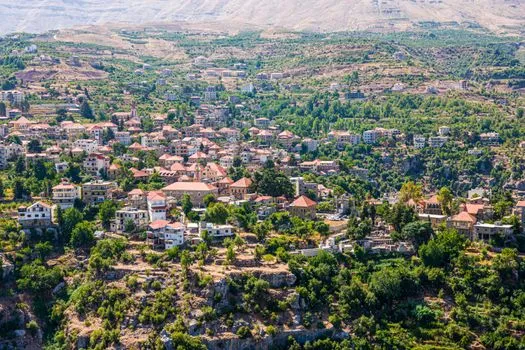
"We are asking the army for permission to see our homes for one hour." That sentence, drawn directly from the source, is the human reality behind the diplomatic language surrounding the Israeli withdrawal from Zaoutar El-Gharbiyé. As Lebanese army forces deploy into pilot zones and presidents meet at the White House, the people who actually live in southern Lebanon are negotiating access to their own front doors.
🔹 What happened: Israel withdrew from the locality of Zaoutar El-Gharbiyé in southern Lebanon, and the Lebanese army moved in to establish control as part of the bilateral framework agreement. The zones are designated as pilots — the first areas to activate the transition mechanism. Lebanese President Joseph Aoun was at the White House on Tuesday meeting with Donald Trump at the same time these ground-level changes were unfolding, according to the source.
🔹 Why it matters: For displaced residents of southern Lebanon, an Israeli withdrawal does not automatically mean free return. The pilot zone designation carries operational restrictions that directly affect families waiting to go back. The gap between the high-level Trump-Aoun meeting in Washington and the ground-level reality of residents requesting timed access to their homes is not symbolic — it is the daily cost of a transition framework that has not yet reached the people it is supposed to protect.
📌 EPM Take: EPM has covered how communities in the southern Mediterranean absorb the costs of agreements negotiated far from them — from North Africa's displaced populations to rural service gaps in France. Southern Lebanon follows that pattern precisely. Joseph Aoun meets Trump in Washington on the same day his citizens ask a soldier for one hour inside their own houses. The framework agreement may be functioning at the institutional level. The question no one at the diplomatic table is asking out loud: at what point does a pilot zone become a home again, and who sets that timeline?
The Israeli withdrawal from Zaoutar El-Gharbiyé and the immediate deployment of Lebanese army forces represent the first real-world test of the bilateral framework agreement — and it is happening on the same day Donald Trump received Lebanese President Joseph Aoun at the White House, according to the source. The timing is not incidental. It reflects a coordinated diplomatic and military architecture that places Washington at the center of Lebanon's security transition.
🔹 What happened: Israel completed its withdrawal from Zaoutar El-Gharbiyé, one of the localities designated as a pilot zone under the framework agreement. The Lebanese army deployed to assume control of the area. Simultaneously, President Trump hosted Lebanese President Joseph Aoun at the White House on Tuesday. The pilot zone mechanism is designed as a verification phase before the agreement extends to additional territory.
🔹 Why it matters: The outcome of this pilot phase will define the credibility of the full framework agreement. A stable Lebanese army deployment in Zaoutar El-Gharbiyé creates a replicable model. A failed handover creates a security gap on Israel's northern border. Trump's direct engagement — receiving Aoun at the White House on the day of the ground operation — positions the United States as an active guarantor, not a passive observer. That political backing matters for what comes next.
📌 EPM Take: The strategic weight here falls on the Lebanese army, not on the agreement text. Framework deals are only as durable as the institutions enforcing them on the ground. EPM has noted how security vacuums in the Mediterranean region compound over time when institutional capacity is assumed rather than verified. Zaoutar El-Gharbiyé is one locality. But it is the proof of concept. Trump's White House meeting with Aoun on this specific day is a deliberate signal of U.S. commitment. The scenario no analyst wants to name openly: if the Lebanese army struggles to hold the pilot zones, the framework loses its operational logic before it reaches full implementation. That is the question the Tuesday meeting in Washington needed to answer.
Civiles libaneses piden permiso para ver sus casas una hora
Residentes del sur del Líbano deben solicitar autorización militar para acceder a sus viviendas, incluso mientras Israel se retira de Zaoutar El-Gharbiyé.
Trump y Aoun en Casa Blanca mientras Israel cede posiciones en sur libanés
Israel se retiró de Zaoutar El-Gharbiyé y el ejército libanés asumió el control en el primer test operativo del acuerdo marco bilateral.
"Se le pide al ejército permiso para ir a ver nuestras casas una hora." Esa frase, recogida por la fuente, condensa la realidad que enfrentan los residentes del sur del Líbano mientras la retirada israelí de Zaoutar El-Gharbiyé avanza sobre el papel. El despliegue del ejército libanés en las zonas piloto es presentado como un avance diplomático, pero para quienes viven allí, el acceso a sus propiedades sigue siendo un trámite militar.
🔹 Lo que pasó: Israel completó su retirada de la localidad de Zaoutar El-Gharbiyé y el ejército libanés asumió el control como parte del acuerdo marco entre ambos países. La operación se enmarca en zonas designadas como piloto, es decir, las primeras en activar el mecanismo de transición. Al mismo tiempo, el presidente libanés Joseph Aoun se reunió con Donald Trump en la Casa Blanca, encuentro que según la fuente coincide directamente con estos movimientos sobre el terreno.
🔹 Por qué importa: Para los habitantes desplazados del sur del Líbano, la retirada israelí no equivale automáticamente a retorno libre. La condición de zona piloto implica restricciones operativas que afectan de forma directa a las familias que esperan volver. Mientras los presidentes se reúnen en Washington, los vecinos de Zaoutar El-Gharbiyé negocian con el ejército el tiempo que pueden pasar en sus propias viviendas. La diplomacia de alto nivel y la realidad cotidiana corren en carriles separados.
📌 Conclusion EPM: La distancia entre un comunicado de la Casa Blanca y la frase "pedir permiso para ver la casa una hora" es exactamente la distancia que los grandes medios no recorren. EPM ha documentado cómo en el norte de África y el Mediterráneo las comunidades locales absorben los costos de acuerdos que se negocian lejos de ellas. El sur del Líbano replica ese patrón. Joseph Aoun viaja a Washington el mismo día que sus ciudadanos solicitan autorización militar para entrar a sus hogares. No es una contradicción menor. La pregunta pendiente: ¿cuántas zonas piloto se necesitan antes de que el retorno sea un derecho y no una gestión?
La retirada israelí de Zaoutar El-Gharbiyé y el despliegue inmediato del ejército libanés marcan el primer test real del acuerdo marco entre Israel y el Líbano. El movimiento sobre el terreno se produjo en la misma jornada en que el presidente Donald Trump recibió a su homólogo libanés, Joseph Aoun, en la Casa Blanca, según la fuente. La sincronía entre el plano diplomático y el operativo no es casual: es la arquitectura del acuerdo funcionando.
🔹 Lo que pasó: Israel ejecutó su retirada de Zaoutar El-Gharbiyé, una de las localidades designadas como zona piloto dentro del acuerdo marco bilateral. El ejército libanés desplegó sus fuerzas para asumir el control de la zona. Simultáneamente, Trump y Aoun sostuvieron una reunión en Washington, lo que posiciona a Estados Unidos como garante activo del proceso. Las zonas piloto representan el mecanismo de verificación inicial antes de extender el acuerdo al resto del territorio.
🔹 Por qué importa: El éxito de esta fase piloto determina la credibilidad del acuerdo marco completo. Si el ejército libanés consolida presencia efectiva en Zaoutar El-Gharbiyé, el modelo puede replicarse. Si no lo hace, el vacío de seguridad representa un riesgo directo para la estabilidad de la frontera. Washington, con Trump como interlocutor visible, tiene un interés estratégico en que el proceso avance sin fisuras. El orden en el sur del Líbano es también un indicador del peso real de la diplomacia estadounidense en la región.
📌 Conclusion EPM: El verdadero examen aquí no es si Israel se retira, sino si el Líbano puede sostener lo que recibe. EPM ha seguido cómo los vacíos institucionales en el Mediterráneo sur generan problemas que migran hacia otras regiones. Zaoutar El-Gharbiyé es una localidad, pero su gestión es un argumento. Si el ejército libanés demuestra capacidad operativa real en las zonas piloto, Trump tendrá un resultado concreto que mostrar de su diplomacia en Oriente Medio. Si el proceso se fragmenta, el costo no lo paga Washington. Lo paga el sur del Líbano. La reunión en la Casa Blanca es una señal de respaldo. La pregunta es si ese respaldo tiene profundidad institucional o es solo timing diplomático.