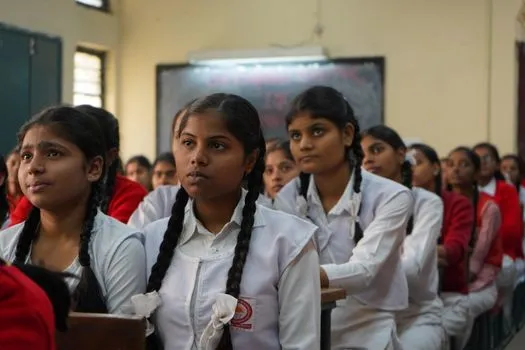
Indian students demand education reform as Bollywood amplifies protest
Indian students calling themselves 'cockroaches' are demanding an end to corruption in the education system and have begun targeting Prime Minister Modi…
Modi government faces political test as student protest gains opposition backing
India's 'cockroaches' student movement, which targets corruption in the education system, has drawn backing from opposition parties and Bollywood figures after…
Young Indians organized under the name "cockroaches" have placed the fight against educational corruption at the center of the country's political debate, according to Le Monde. Prime Minister Narendra Modi, who initially chose to ignore the student mobilization, now finds himself directly targeted by protesters who have gained the backing of opposition parties and some of India's most visible cultural figures.
🔹 What happened: The "cockroaches" movement emerged among Indian students to denounce corruption inside the national education system. Rather than addressing the movement's demands, the Modi government initially opted for silence. Opposition parties subsequently declared their support for the students. Bollywood personalities — whose reach extends to hundreds of millions of ordinary citizens across the country — also publicly backed the movement, transforming it from a campus-level protest into a nationwide conversation.
🔹 Why it matters: For the students at the heart of this movement, corruption in the education system is not an abstract policy debate — it directly shapes their professional futures and economic prospects. The endorsement from Bollywood figures brings their demands to audiences that rarely engage with formal politics. Young people, who depend most heavily on a fair and functional education system, stand to gain the most from any reforms that might follow. Opposition support means the protest now has political channels through which demands can reach legislative spaces.
📌 EPM Take: The self-chosen label "cockroaches" is the detail every outlet mentions and almost none analyzes. Students who name themselves after a pest are not being ironic — they are describing how the system makes them feel: disposable, ignored, and beneath official concern. EPM has reported on how institutional neglect of vulnerable populations — from Ebola-exposed communities in Congo to rural residents in France — follows a recognizable pattern: governments assume the marginalized will absorb the cost of inaction. In India, that calculation broke down the moment Bollywood amplified the students' voices. The scenario nobody wants to name: if Modi cannot offer substantive reform on education corruption, a generation of young voters may define their political identity in opposition to his government.
✍️ EPM Editorial Desk | erickprometeomedia.com
A student protest movement in India focused on corruption in the education system has grown into a direct political challenge for Prime Minister Narendra Modi, according to Le Monde. The government's initial decision to ignore the mobilization — organized under the name "cockroaches" — failed to prevent the movement from attracting support from opposition parties and Bollywood personalities.
🔹 What happened: The movement, called "cockroaches" by its student participants, emerged to denounce corruption within India's education system. The Modi government chose not to engage publicly with the protesters in the early stages. As the demonstration persisted, opposition parties stepped in to publicly endorse the students. Prominent Bollywood figures subsequently voiced their support, giving the movement cultural visibility that extended well beyond university campuses.
🔹 Why it matters: Effective governance requires the ability to identify which protest movements carry the potential to shift political dynamics before they do. The Modi administration's decision to remain silent allowed the opposition to occupy the role of responsive political actor, and Bollywood's entry gave the movement a platform that transcends traditional political media. For the government, the challenge now is managing a situation where a demand centered on education corruption has merged with broader political opposition, raising the stakes of any response.
📌 EPM Take: No major outlet is framing this as what it plainly is: a governance failure of sequencing. The Modi government — experienced and electorally tested — allowed a manageable sectoral protest to absorb two of India's most powerful amplifiers: organized political opposition and popular culture. EPM has noted similar miscalculations in Europe, where governments that delayed engagement with contained movements paid a higher political cost later. In India, the window to offer a credible, concrete response on education corruption is narrowing. If the "cockroaches" movement consolidates as the defining opposition narrative heading into the next electoral cycle, the government's silence in the early phase will be remembered as the moment the situation became structurally harder to resolve.
✍️ EPM Editorial Desk | erickprometeomedia.com
Estudiantes indios y Bollywood exigen fin a la corrupción educativa
El movimiento estudiantil indio «cucarachas» denuncia la corrupción en el sistema educativo y dirige sus críticas al primer ministro Modi.
Movimiento estudiantil indio presiona a Modi con apoyo opositor y Bollywood
El movimiento estudiantil «cucarachas» en India, centrado en la denuncia de la corrupción educativa, escala políticamente con respaldo de la oposición y…
Estudiantes indios agrupados bajo el nombre de «cucarachas» llevan semanas denunciando la corrupción que afecta el sistema educativo del país, y hoy son ellos quienes marcan la agenda política en India, según informa Le Monde. El primer ministro Narendra Modi, que optó por ignorar la movilización, se encuentra ahora en el centro de las críticas.
🔹 Lo que pasó: El movimiento estudiantil «cucarachas» irrumpió en el debate público con denuncias concretas sobre la corrupción en el sistema educativo indio. El gobierno intentó desactivar la presión ignorando la movilización, pero la estrategia fracasó. Los partidos de oposición respaldaron públicamente a los estudiantes. Personalidades reconocidas del cine de Bollywood también se pronunciaron a favor del movimiento, extendiendo el alcance de la protesta a millones de ciudadanos que consumen cultura popular.
🔹 Por qué importa: Para los estudiantes —jóvenes que dependen de un sistema educativo justo para construir su futuro—, la corrupción denunciada representa un obstáculo directo a sus oportunidades. El apoyo de Bollywood visibiliza su reclamo ante audiencias que de otro modo no participarían en el debate. La oposición política, al sumarse, convierte el reclamo estudiantil en presión legislativa potencial. Los ciudadanos más jóvenes, históricamente los más afectados por la desigualdad en el acceso educativo, son quienes más tienen en juego en este conflicto.
📌 Conclusión EPM: EPM ha documentado cómo en el Congo la corrupción institucional deja sin protección a los más vulnerables, y en India el patrón se replica en el espacio educativo. Los estudiantes que se autodenominan «cucarachas» eligieron un nombre que evoca marginalización deliberada —y esa elección simbólica dice más sobre cómo se sienten tratados por el sistema que cualquier discurso oficial. Lo que el gobierno Modi no calculó es que ignorar a los jóvenes organizados en la era de las redes sociales y con el respaldo de íconos culturales de Bollywood no los silencia: los amplifica. La pregunta real es qué reforma concreta está dispuesto a ofrecer el ejecutivo antes de que la presión colectiva supere su capacidad de contención.
✍️ EPM Editorial Desk | erickprometeomedia.com
El gobierno del primer ministro Narendra Modi enfrenta un desafío interno de magnitud creciente en India: un movimiento estudiantil que denuncia la corrupción en el sistema educativo ha logrado sumar el respaldo de partidos de oposición y figuras del cine de Bollywood, según reporta Le Monde. La estrategia inicial del ejecutivo de ignorar la protesta no produjo los resultados esperados.
🔹 Lo que pasó: El movimiento denominado «cucarachas» surgió entre estudiantes indios para denunciar la corrupción dentro del sistema educativo nacional. El primer ministro Modi y su gobierno optaron por no responder públicamente a la movilización en una primera etapa. Sin embargo, la protesta ganó fuerza, y los partidos de oposición aprovecharon el espacio para respaldar a los manifestantes. Personalidades de Bollywood, con enorme influencia sobre la opinión pública en India, también expresaron su apoyo al movimiento.
🔹 Por qué importa: La estabilidad política de cualquier gobierno depende en parte de su capacidad para gestionar la disidencia antes de que alcance masa crítica. El gobierno Modi subestimó el potencial de un movimiento estudiantil para convertirse en un problema político de primer orden. La participación de la oposición organizada y del sector cultural añade presión institucional y simbólica simultáneamente. Para el ejecutivo, la pregunta ahora es qué respuesta puede ofrecer que preserve la gobernabilidad sin ceder terreno ante una movilización que ya superó el ámbito universitario.
📌 Conclusión EPM: Un gobierno que ignora una protesta estudiantil no la neutraliza —la legitima por omisión. Modi, con sólida trayectoria de gestión ejecutiva, cometió aquí un error de cálculo político que cualquier administración estable debería evitar: permitir que una demanda sectorial —la corrupción educativa— escale hasta convertirse en un cuestionamiento personal de liderazgo. EPM ha observado patrones similares en Europa, donde movimientos inicialmente contenidos se desbordaron cuando los ejecutivos apostaron al silencio. En India, con Bollywood como altavoz cultural y la oposición como vector político, el gobierno tiene una ventana estrecha para ofrecer respuestas concretas. Si no lo hace, el movimiento «cucarachas» podría definir el relato político del próximo ciclo electoral.
✍️ EPM Editorial Desk | erickprometeomedia.com