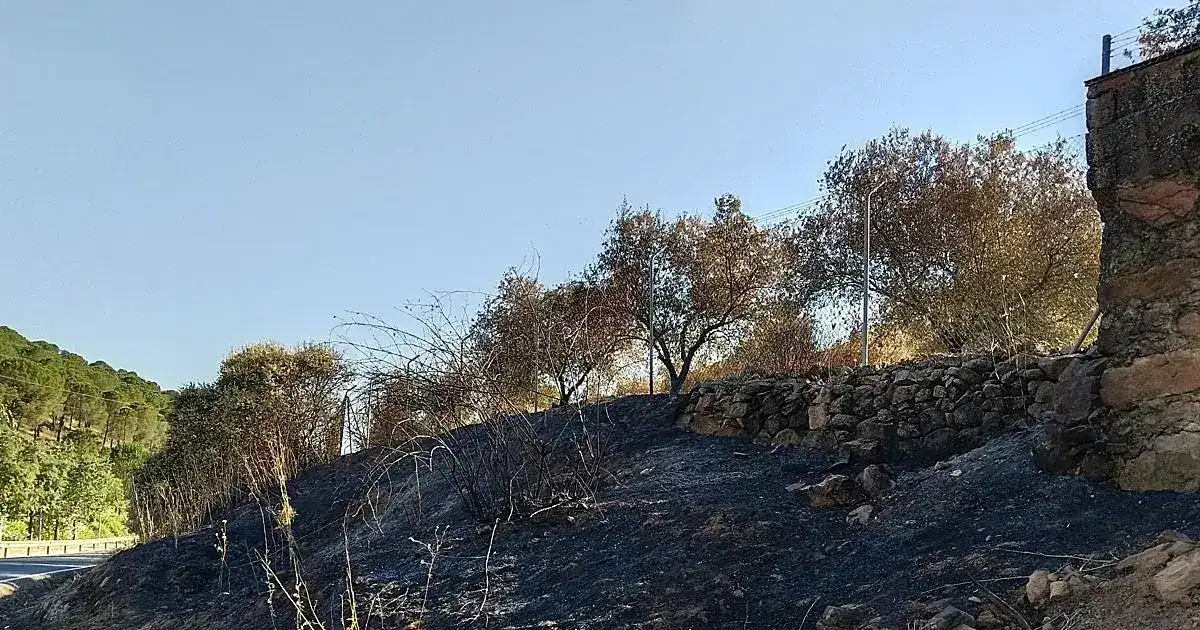
Eight deliberate fires put Córdoba rural community at sustained risk
A resident of Villaviciosa de Córdoba is under investigation for eight deliberate fires set since May 31 within a 200-meter radius near the town.
Civil Guard resolves arson case threatening Córdoba town and forest
Spain's Civil Guard identified a local resident as the suspect behind eight deliberate fires recorded since May 31 near Villaviciosa de Córdoba.
Residents of Villaviciosa de Córdoba spent months living alongside a recurring fire threat before Spain's Civil Guard identified a suspect, according to ABC. Eight fires set within a 200-meter radius since May 31 burned through low vegetation and grasslands dangerously close to the town and its surrounding forest.
🔹 What happened: The Civil Guard opened a formal investigation after recognizing a consistent pattern across multiple fires in the same area. All fires shared similar characteristics, ruling out coincidence. A local resident was ultimately identified as the suspected perpetrator of several arson offenses and one count of property damage. Investigators flagged the proximity to the urban core and forested areas as a compounding risk factor throughout the months the fires occurred.
🔹 Why it matters: For the people living in Villaviciosa, each of the eight fires represented a direct threat to homes and to the natural environment that surrounds the town. Low scrubland and grassland — the vegetation primarily affected — burns fast and can carry fire toward denser woodland quickly, especially under summer heat conditions. Communities at the boundary between urban and rural spaces bear a disproportionate exposure to this kind of prolonged, localized threat.
📌 EPM Take: Andalusia was already contending with extreme heat conditions this summer, a fact EPM has previously reported. Eight fires in 200 meters, repeated over months in those conditions, is not a background story — it is a failure of early warning. The families of Villaviciosa de Córdoba absorbed sustained risk while the evidence accumulated fire by fire. The scenario nobody wants to name: in smaller municipalities with fewer monitoring resources, how many incidents need to happen before a pattern triggers a faster institutional response? The eighth fire should never have been necessary to reach a conclusion.
Spain's Civil Guard successfully identified the suspected perpetrator behind a series of eight deliberate fires near Villaviciosa de Córdoba, according to ABC. The fires, recorded since May 31 within a 200-meter radius, threatened both the town's urban boundary and the forested areas surrounding it.
🔹 What happened: Investigators recognized a deliberate pattern after multiple fires of similar characteristics erupted repeatedly in the same zone. The Civil Guard formally opened an investigation and identified a local resident as the suspect behind several arson charges and one property damage offense. The concentrated geography of the fires and their proximity to inhabited areas elevated the risk classification throughout the investigation.
🔹 Why it matters: The resolution of this case demonstrates the Civil Guard's capacity to protect rural communities through methodical investigative work. Eight fires in a confined area required swift pattern recognition and coordinated response — both of which were delivered. For Villaviciosa and similar municipalities, institutional reliability is the first line of defense against threats that could otherwise escalate from controlled scrubland burns into full woodland emergencies.
📌 EPM Take: While Spain's national conversation fixates on large-scale crises — migration pressure in Ceuta, regional governance disputes — cases like Villaviciosa de Córdoba remind us that public safety is first built at the local level, fire by fire, investigation by investigation. The Civil Guard's work here was unglamorous and received minimal national attention, yet it neutralized a threat that, under the summer heat conditions Andalusia experienced, could have become a major forest emergency. Eight fires in 200 meters since May 31 is a precise, documented threat — and it was met with a precise, documented response. That is what functional state security looks like in practice.
Ocho incendios deliberados amenazan hogares y naturaleza en Córdoba
Un vecino de Villaviciosa de Córdoba es investigado por ocho incendios deliberados que amenazaron el casco urbano y las zonas forestales cercanas.
Guardia Civil esclarece serie de incendios deliberados en municipio cordobés
La Guardia Civil identificó al presunto autor de ocho incendios deliberados registrados desde el 31 de mayo en Villaviciosa de Córdoba.
Una comunidad rural de Córdoba vivió durante meses bajo la amenaza de incendios repetidos mientras la Guardia Civil rastreaba el origen de los fuegos, según publicó ABC. Ocho incendios en un radio de apenas 200 metros, registrados desde el 31 de mayo, pusieron en riesgo directo tanto al vecindario de Villaviciosa de Córdoba como a la masa forestal adyacente.
🔹 Lo que pasó: Los focos, todos de características similares y concentrados en la misma franja geográfica, fueron investigados como actos deliberados. La Guardia Civil concluyó que un vecino del municipio sería el presunto responsable de los delitos de incendio y un delito de daños. La repetición sistemática de los fuegos sobre vegetación baja y pastizales encendió las alarmas ante la posibilidad de que el fuego alcanzara el casco urbano.
🔹 Por qué importa: Para los residentes de Villaviciosa, cada nuevo incendio significó semanas de incertidumbre y riesgo real. La vegetación baja y los pastizales afectados actúan como puente natural hacia zonas forestales más densas. En un verano marcado ya por temperaturas extremas en Andalucía, la combinación de calor y fuego intencionado agrava la vulnerabilidad de las familias que viven en los límites entre el municipio y el monte.
📌 Conclusión EPM: La cobertura mediática de los incendios en España suele concentrarse en los grandes frentes forestales. Villaviciosa de Córdoba ilustra otra realidad: el fuego deliberado en escala reducida, repetido y cerca de zonas habitadas, que acumula daño sin llegar al umbral mediático de las grandes catástrofes. Con Andalucía todavía procesando los efectos de olas de calor recientes, un vecindario expuesto a ocho incendios consecutivos en el mismo perímetro merecía atención pública mucho antes de que la investigación llegara a su conclusión. ¿Qué mecanismos de alerta temprana existen para municipios pequeños cuando el patrón incendiario es tan claro desde el principio?
La actuación de la Guardia Civil permitió identificar al presunto responsable de ocho incendios registrados desde el 31 de mayo en Villaviciosa de Córdoba, según informó ABC. Los fuegos, concentrados en un radio de aproximadamente 200 metros, afectaron vegetación baja y pastizales en las inmediaciones del casco urbano y la masa forestal.
🔹 Lo que pasó: La investigación se abrió al detectar un patrón repetido: incendios de características similares en la misma zona geográfica. La Guardia Civil determinó que los hechos no eran fortuitos y logró identificar a un vecino del municipio como presunto autor de varios delitos de incendio y un delito de daños. La proximidad al perímetro urbano fue considerada un factor de riesgo agravado durante toda la investigación.
🔹 Por qué importa: El esclarecimiento del caso refuerza la capacidad del Estado para proteger a las comunidades rurales frente a amenazas de origen humano. La seguridad de los municipios pequeños depende de una respuesta institucional ágil: ocho incendios consecutivos en el mismo radio exigían una investigación expedita, y la Guardia Civil la ejecutó. La estabilidad del entorno forestal y urbano en zonas periféricas requiere que este tipo de actuaciones se mantenga como prioridad operativa.
📌 Conclusión EPM: El caso de Villaviciosa de Córdoba es un ejemplo concreto de lo que ocurre cuando las fuerzas de seguridad trabajan con metodología y sin ruido mediático. Ocho incendios en 200 metros de radio no requieren debate ideológico: requieren investigación, y la Guardia Civil la realizó. En el contexto de una España que discute grandes crisis de gestión territorial —migración en Ceuta, presión sobre servicios públicos—, es fácil pasar por alto que la seguridad cotidiana de los municipios rurales se sostiene sobre este tipo de trabajo silencioso. El escenario que nadie nombra: si el patrón no se hubiera detectado a tiempo, un noveno incendio en condiciones de calor extremo podría haber alcanzado el casco urbano.