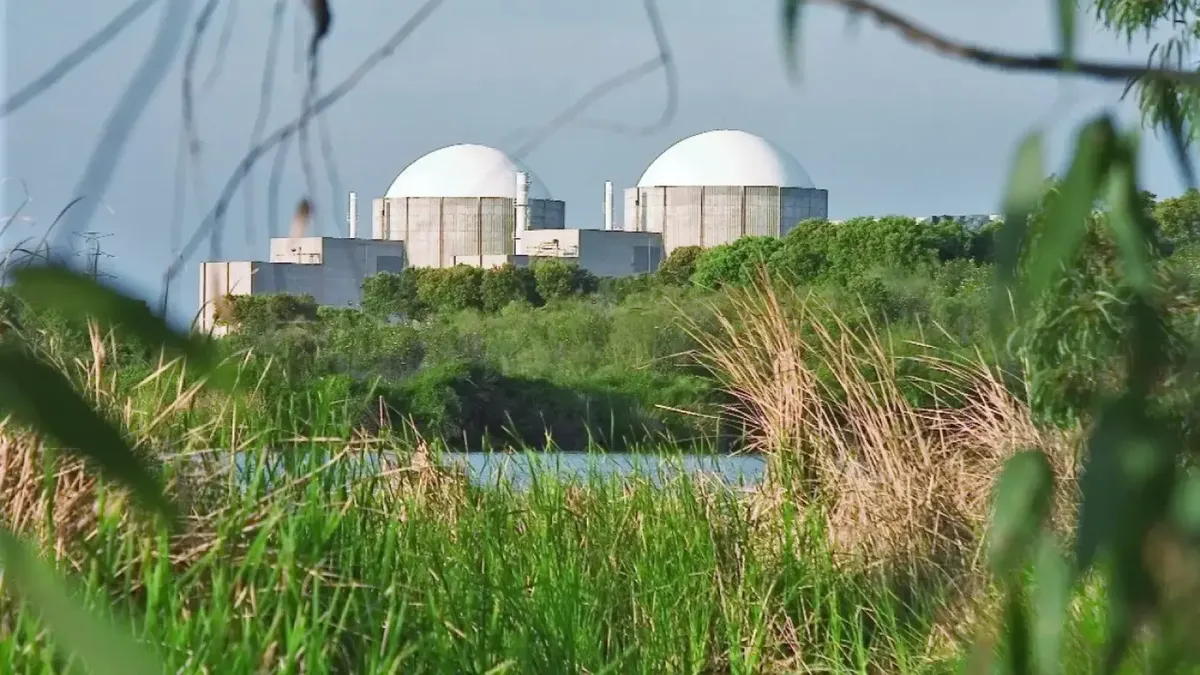
Almaraz stays open until 2030 — but the human costs of the delay are still unaccounted for
Spain has extended Almaraz's operating licence to at least 8 June 2030, citing Middle East energy pressure.
Spain secures nuclear baseload to 2030: a strategic call backed by its safety regulator
Spain has authorised Almaraz nuclear plant to operate until at least 8 June 2030, citing Middle East energy instability and gas price volatility.
Spain's Official State Gazette published a ministerial order this Friday extending the operating licences of Almaraz nuclear plant's two reactors at least until 8 June 2030, a decision that reshapes the employment and territorial planning that communities near the plant had built around the original 2027-2028 closure dates.
--- THE CONTEXT ---
Iberdrola, Endesa and Naturgy filed the formal extension request in October 2025. The existing protocol with Enresa had set 1 November 2027 as the closure date for Unit I and 31 October 2028 for Unit II — reference dates around which local renewable energy employment projects and regional planning decisions had been shaped.
--- THE FACTS ---
The Ministry for Ecological Transition and the Demographic Challenge has now authorised both reactors to operate until at least 8 June 2030. The Nuclear Safety Council issued a favourable ruling on 16 July, conditional on compliance with nuclear safety and radiological protection standards. The ministry's resolution characterises the impact on renewable deployment as limited and not significant. The government justifies the extension by pointing to the Middle East crisis and gas price volatility. It has stated that no tax relief will be granted to the three electricity companies and that the 2035 national nuclear closure schedule is not affected. The source records no statement from the plant's corporate owners following publication of the order.
--- THE POSITIONS ---
The ministry presents the extension as a strategic energy security measure with no visible social cost. Iberdrola, Endesa and Naturgy sought and obtained the extension but have made no public statement on its publication. Workers near the plant, trade unions and environmental organisations do not appear in the available evidence.
--- WHAT REMAINS UNKNOWN ---
The source provides no information on the impact of the delay on renewable employment plans already in preparation for the Almaraz area, nor on the specific safety conditions the Nuclear Safety Council requires for continued operation.
--- UNANSWERED QUESTIONS ---
• What happens to renewable energy jobs and investments planned around the original 2027-2028 closure timetable in communities near Almaraz?
• Who bears the additional operational and maintenance costs of the extension, and will those costs reach consumers?
• Were local authorities consulted before the order was published in the Official State Gazette?
• What concrete safety guarantees do workers at the plant have for the additional period of operation?
--- EPM ANALYSIS ---
The extension delivers an immediate operational benefit to three large energy corporations while the social costs — disrupted employment planning, delayed renewable investment, unspecified safety conditions — remain unquantified. The ministry's assertion that renewable deployment is barely affected is stated in the resolution but not substantiated with figures in the source. The decisive variable is whether the 2035 commitment holds; if communities cannot trust that calendar, local planning across Spain's nuclear corridor becomes impossible. 📌
📌
📌 EPM Take:
In EPM's view, announcing a consequential energy extension through a gazette order — without published detail on worker protections, local consultation or the Nuclear Safety Council's specific conditions — is a governance failure dressed up as emergency management. Three major corporations benefit immediately. The communities and workers who planned their futures around 2027 and 2028 receive no corresponding clarity. EPM has documented this pattern before: large decisions land in the gazette before affected people have a voice.
Spain has formally authorised the continued operation of the Almaraz nuclear plant's two reactors through at least 8 June 2030, with the Ministry for Ecological Transition and the Demographic Challenge publishing the order in the Official State Gazette after a favourable technical ruling from the Nuclear Safety Council on 16 July.
--- THE CONTEXT ---
The plant's three owners — Iberdrola, Endesa and Naturgy — requested the extension in October 2025. Under the protocol agreed with Enresa, Unit I was due to close on 1 November 2027 and Unit II on 31 October 2028. The Middle East crisis and sustained gas price volatility gave the request added strategic weight as it moved through the administrative process.
--- THE FACTS ---
The ministerial order renews operating authorisation for both units. The Nuclear Safety Council's 16 July report endorsed the extension on condition of strict compliance with nuclear safety and radiological protection requirements, which are now incorporated into the order. The council certified that the plant meets the safety conditions necessary for continued operation during the extension period. After that endorsement, the file moved to the government for a final decision. The ministry cites the new international energy context and Middle East-driven gas volatility as strategic justification. The resolution states the impact on renewable deployment is limited and not significant. The government confirms no tax relief for the electricity companies and reaffirms the 2035 closure date for Spain's entire nuclear fleet.
--- THE POSITIONS ---
The ministry frames the extension as a security-of-supply decision consistent with the existing 2035 framework. Iberdrola, Endesa and Naturgy secured the outcome they sought but have issued no public statement on the resolution. Political opposition, European energy partners and other regulatory bodies are absent from the available evidence.
--- WHAT REMAINS UNKNOWN ---
The source does not detail the specific technical conditions the Nuclear Safety Council attached to its endorsement, nor has the government indicated what contingency exists if gas market volatility persists beyond 2030.
--- UNANSWERED QUESTIONS ---
• Is Spain's emergency infrastructure capable of managing any technical incident at Almaraz during the additional operational window beyond the original schedule?
• How are Spain's European energy partners responding to this extension within the context of interconnected electricity markets?
• Does the Nuclear Safety Council have sufficient inspection capacity to oversee both reactors through June 2030?
• What is the government's fallback position if energy market conditions deteriorate further before 2035?
--- EPM ANALYSIS ---
From a security-of-supply and strategic market perspective, the extension is sound. The Nuclear Safety Council's technical endorsement provides institutional legitimacy, and the Middle East crisis supplies a geopolitical rationale that most Western governments would recognise. The clear winners are the Spanish state, which reduces gas exposure, and the three corporate owners. The institutional risk lies in the credibility of the 2035 date: a justifiable extension must not become a precedent that dissolves all remaining commitments. 📌
📌
📌 EPM Take:
In EPM's view, Spain has made the right call and taken too long to make it. In an environment where Middle East instability is pushing gas prices upward and European energy security is under stress, keeping Almaraz operational is a strategic asset, not an ideological concession. What the government must now defend with equal firmness is the integrity of the 2035 closure schedule. One justified extension in a genuine emergency must not become the template for unravelling every remaining commitment in Spain's nuclear framework.
Almaraz seguirá activa hasta 2030: quién paga los riesgos que el Gobierno no ha explicado
La Central Nuclear Almaraz operará hasta junio de 2030 tras la autorización publicada en el BOE.
España asegura su base nuclear hasta 2030: una decisión de Estado que llega con retraso pero con aval técnico
España ha autorizado la continuidad de Almaraz hasta junio de 2030 citando la crisis energética en Oriente Medio y la volatilidad del gas.
El Boletín Oficial del Estado recoge desde este viernes que los dos reactores de la Central Nuclear Almaraz operarán al menos hasta el 8 de junio de 2030, cuatro años más de lo que las comunidades del entorno y los trabajadores del sector renovable esperaban conforme al calendario original.
--- EL CONTEXTO ---
Iberdrola, Endesa y Naturgy solicitaron formalmente la prórroga en octubre de 2025, después de que el protocolo firmado con Enresa fijara el cierre de la Unidad I para el 1 de noviembre de 2027 y el de la Unidad II para el 31 de octubre de 2028. Ese calendario había sido la referencia para la planificación de empleos y territorios afectados.
--- LOS HECHOS ---
El Ministerio para la Transición Ecológica y el Reto Demográfico publica la orden que renueva la explotación de ambas unidades. El 16 de julio, el Consejo de Seguridad Nuclear emitió un informe favorable, condicionado al cumplimiento de los límites de seguridad nuclear y protección radiológica. La resolución ministerial califica el efecto sobre el despliegue renovable de "acotado y poco significativo". El Gobierno alega la crisis en Oriente Medio y la volatilidad del precio del gas. Descarta rebajas fiscales para las eléctricas propietarias y afirma que el cierre definitivo del parque nuclear en 2035 no varía.
--- LAS POSICIONES ---
El Ministerio presenta la prórroga como una medida de seguridad energética sin coste social visible. Iberdrola, Endesa y Naturgy promovieron la solicitud, pero la fuente no recoge ninguna declaración de su parte sobre la resolución. Las comunidades del entorno y los sindicatos del sector no aparecen en la evidencia disponible.
--- LO QUE FALTA SABER ---
No hay información sobre el impacto concreto en los planes de empleo renovable ya contratados ni sobre las condiciones técnicas específicas que el CSN impone como requisito para la continuidad operativa de ambas unidades.
--- PREGUNTAS SIN RESPUESTA ---
• ¿Qué ocurre con los empleos del sector renovable que se proyectaban para los municipios cercanos a Almaraz tras el cierre original?
• ¿Quién asume los costes adicionales de mantenimiento de los reactores durante la prórroga?
• ¿Se consultó a los ayuntamientos del entorno antes de publicar la orden en el BOE?
• ¿Qué garantías concretas tienen los trabajadores de la central sobre sus condiciones de seguridad hasta junio de 2030?
--- ANALISIS EPM ---
La decisión beneficia en el corto plazo a tres grandes corporaciones energéticas que ganan margen operativo. Los potenciales perdedores son los territorios que habían anticipado una transición y los trabajadores del sector renovable cuya planificación descansaba en el calendario de 2027-2028. El Gobierno ofrece una justificación geopolítica, pero la fuente no aporta datos sobre el coste social de la demora en la transición. 📌
📌
📌 Conclusion EPM:
A juicio de EPM, la prórroga de Almaraz llega sin el debate social que merece una decisión de esta magnitud. El Ministerio invoca la urgencia internacional para justificar lo que, en la práctica, es un beneficio directo para tres grandes propietarias. La ausencia de información sobre el impacto en los planes de empleo renovable y en las comunidades locales repite un patrón que EPM ya ha documentado: las grandes decisiones energéticas se anuncian en el BOE antes de que los afectados tengan voz. El compromiso de 2035 necesita más que una declaración ministerial para seguir siendo creíble.
El Gobierno español ha autorizado formalmente la continuidad de la Central Nuclear Almaraz hasta al menos el 8 de junio de 2030, en una decisión que el Ministerio para la Transición Ecológica y el Reto Demográfico publica en el BOE y que el Consejo de Seguridad Nuclear había avalado técnicamente el 16 de julio.
--- EL CONTEXTO ---
Iberdrola, Endesa y Naturgy presentaron en octubre de 2025 la solicitud formal de prórroga, ante el inminente vencimiento de los plazos fijados por el protocolo con Enresa: la Unidad I debía cerrar el 1 de noviembre de 2027 y la Unidad II el 31 de octubre de 2028. La presión del mercado energético internacional dio urgencia a la petición.
--- LOS HECHOS ---
La orden ministerial renueva la autorización de explotación de ambas unidades. El CSN condicionó su informe favorable al cumplimiento estricto de los límites de seguridad nuclear y protección radiológica. El Ministerio invoca la crisis en Oriente Medio y la volatilidad del precio del gas como justificaciones estratégicas. La resolución estima que el impacto sobre el despliegue renovable es "acotado y poco significativo". El Ejecutivo descarta rebajas fiscales para las eléctricas y reafirma el cierre definitivo del parque en 2035 como fecha inamovible.
--- LAS POSICIONES ---
El Ministerio sostiene que la prórroga no altera el calendario nuclear de 2035 ni compromete la transición energética. Las propietarias —Iberdrola, Endesa y Naturgy— impulsaron la solicitud, pero la fuente no recoge declaraciones suyas sobre la resolución publicada. La oposición política y los organismos reguladores distintos del CSN no aparecen en la evidencia.
--- LO QUE FALTA SABER ---
La fuente no concreta las condiciones técnicas específicas exigidas por el CSN ni si el Ejecutivo evaluó el impacto de un posible fallo en el suministro de cara a los mercados europeos de electricidad interconectados.
--- PREGUNTAS SIN RESPUESTA ---
• ¿Está el Estado preparado para gestionar un incidente técnico en Almaraz durante los dos años adicionales de operación más allá del calendario original?
• ¿Qué posición adoptan los socios europeos de España ante esta prórroga en el contexto del mercado energético común?
• ¿Garantiza el CSN capacidad inspectora suficiente para supervisar los dos reactores hasta junio de 2030?
• ¿Cómo afecta esta decisión a la posición negociadora de España en las compras de gas en un entorno de alta volatilidad?
--- ANALISIS EPM ---
Desde una perspectiva de seguridad nacional y estabilidad del suministro, la prórroga de Almaraz es una respuesta correcta a un entorno geopolítico inestable. El aval del CSN otorga legitimidad institucional a la decisión. Los ganadores son el Estado —que reduce su exposición al gas volátil— y las propietarias. El riesgo principal es institucional: si el compromiso de 2035 se percibe negociable, la credibilidad regulatoria queda erosionada. 📌
📌
📌 Conclusion EPM:
A juicio de EPM, España ha tomado la decisión acertada pero ha tardado demasiado en tomarla. En un entorno donde la crisis en Oriente Medio presiona los precios del gas y la seguridad energética europea está en disputa, mantener Almaraz operativa es un activo estratégico, no una concesión ideológica. Lo que el Gobierno debe ahora defender con igual vigor es la integridad del calendario de 2035: una prórroga justificada en una emergencia no puede convertirse en el modelo para disolver todos los compromisos restantes. La credibilidad institucional del proceso de cierre está en juego.