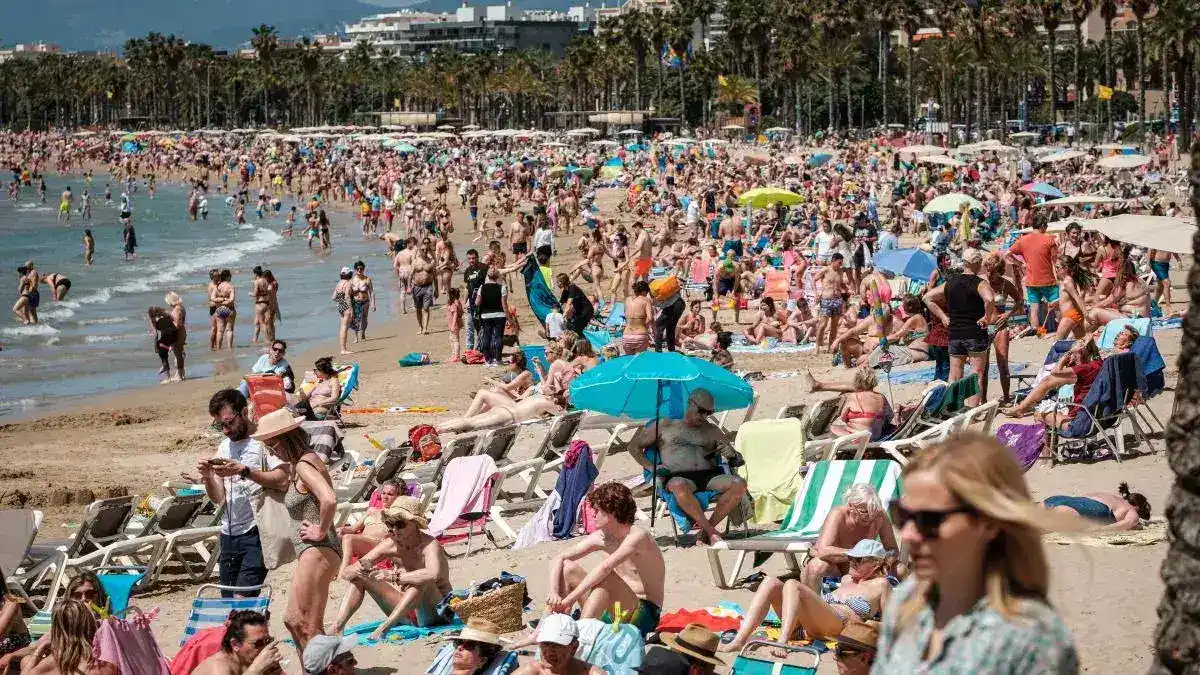
Spain attracts international tourism seeking safety and stability
Spain positions itself as a secure tourism refuge with 50% higher bookings, but equitable benefit-sharing with workers and communities requires urgent…
Spain's Tourism Industry Proves Its Economic Muscle with Record 50% Easter Booking Surge
Spain's Easter Week tourism bookings surged 50% as international travelers chose the country for its security, stability, and world-class private sector…
The 50% growth in Easter Week reservations reflects Spain's opportunity to strengthen an inclusive tourism model based on sustainable practices. As geopolitical uncertainty destabilizes other regions, Spain positions itself as a secure destination, attracting international families seeking cultural heritage and peaceful coexistence. This surge must be leveraged to ensure benefits reach workers and local communities equitably, avoiding extractive tourism models that concentrate profits among corporations.
🔹 What happened: Spanish tourism experiences extraordinary growth in accommodation reservations for Easter Week, with 50% increase documented by reservation platforms and hotel associations. Historic cities including Seville, Cordoba, and Granada concentrate the highest demand. This phenomenon occurs suddenly through last-minute bookings, indicating reactive travel decisions motivated by geopolitical stability concerns.
🔹 Key players: Hotel workers, small local businesses, independent tourism operators, and international families represent primary stakeholders. Multinational hotel corporations also participate, though benefits concentrate among distant shareholders. Local communities and temporary employees directly experience the impact of this tourism surge, often bearing infrastructure and service pressures.
🔹 Why it matters: The visitor increase generates temporary employment, frequently characterized by precarious conditions and inadequate compensation. Complementary services including restaurants, transportation, and local commerce benefit, though workers often face exhausting hours without adequate labor protections. Pressure on urban infrastructure, public services, and environmental sustainability requires policies prioritizing citizen wellbeing over corporate profits.
🔹 What to expect: Implementing regulations ensuring dignified wages for tourism workers and equitable economic distribution is essential. Local communities must participate in decisions regarding urban carrying capacity and cultural preservation. Tourism sustainability must be prioritized over unlimited growth models.
📌 EPM Take: The Spanish Government must implement salary regulations in the tourism sector to ensure that the 50% growth in Easter Week reservations creates dignified employment rather than labor precarity. Tourism sustainability and equitable economic distribution must be prioritized over unlimited growth models, with local communities participating in decisions regarding urban capacity and cultural preservation.
✍️ EPM Editorial Desk | erickprometeomedia.com
Spain's private tourism sector is delivering one of its strongest performances in recent memory, with Easter Week reservations surging 50% as international travelers vote with their wallets for stability, security, and proven hospitality infrastructure. This is not a government achievement — it is a market achievement. Decades of private investment, brand-building, and operational excellence have positioned Spain as the undisputed go-to destination when global uncertainty rises.
🔹 What happened: Easter Week bookings in Spain jumped 50%, driven by a wave of last-minute international arrivals seeking refuge from geopolitical instability across other regions. The surge injected significant foreign capital directly into hotels, restaurants, transportation networks, and retail commerce. Industry data confirms that Spain's tourism sector is functioning as a powerful economic stabilizer, attracting high-value international consumers precisely when competing destinations fail to offer the reliability travelers demand.
🔹 Key players: Private sector operators — hoteliers, travel agencies, logistics companies — absorbed the extraordinary demand surge with efficiency and professionalism, demonstrating the sector's structural resilience. Government authorities maintained the public order and security conditions that underpin traveler confidence. The effective collaboration between private enterprise and institutional stability proved decisive in capturing this market opportunity within an extremely compressed timeframe.
🔹 Why it matters: The economic implications extend well beyond the hospitality sector. Foreign tourism revenue strengthens Spain's GDP, sustains employment across essential industries, and reinforces the country's competitive positioning against rival Mediterranean destinations. At a time of European economic deceleration and persistent inflationary pressures, this tourism surge functions as a critical buffer for businesses and families across the country, validating the long-term investment decisions made by the private sector.
🔹 What to expect: Market analysts anticipate that booking momentum could extend into spring and summer if geopolitical instability continues in competing regions. Private operators are already evaluating capacity expansions ahead of peak season. The critical variable will be whether regulatory frameworks allow the sector to scale naturally, or whether excessive intervention dampens the investment confidence needed to sustain this growth trajectory.
📌 EPM Take: Spain's 50% Easter booking surge is a masterclass in what free markets deliver when government stays out of the way and lets private enterprise do what it does best. This result was not engineered by policy — it was earned by hoteliers, entrepreneurs, and business operators who spent years building a product the world trusts. The lesson here is straightforward: security, infrastructure, and competitive quality attract capital and consumers without coercion or redistribution. Policymakers would do well to recognize that their most productive contribution is maintaining institutional order and resisting the temptation to regulate success into mediocrity. Spain stands at a defining economic moment. The private sector has opened the door — the question is whether leadership will have the discipline to let market forces walk through it unimpeded, or whether short-term political calculations will squander a generational opportunity for sustained economic growth.
España atrae turismo internacional en busca de seguridad
España se posiciona como refugio turístico seguro con 50% más reservas, pero se debe garantizar que trabajadores y comunidades locales se beneficien…
España fortalece su economía con bonanza turística de Semana Santa
España experimenta boom turístico con 50% más reservas de Semana Santa, posicionándose como destino seguro preferido globalmente.
El crecimiento del 50% en reservas de Semana Santa refleja una oportunidad crucial para España de reforzar su modelo económico inclusivo basado en turismo sostenible. Mientras la incertidumbre geopolítica golpea otras regiones, España se posiciona como destino seguro, atrayendo a familias internacionales que buscan disfrutar de patrimonio cultural y convivencia pacífica. Este repunte debe aprovecharse para garantizar que los beneficios lleguen equitativamente a trabajadores y comunidades locales.
🔹 Lo que pasó: El sector turístico español experimenta un aumento extraordinario en reservas de alojamiento para Semana Santa, con un crecimiento del 50% documentado por plataformas de reservas y asociaciones hoteleras. Las ciudades históricas como Sevilla, Córdoba y Granada concentran la demanda más elevada. Este fenómeno ocurre de manera repentina a última hora, indicando decisiones de viaje reactivas motivadas por búsqueda de estabilidad geopolítica.
🔹 Actores: Trabajadores del sector hotelero, pequeños negocios locales, operadores turísticos independientes y familias internacionales conforman los actores principales. Las corporaciones hoteleras multinacionales también participan, aunque sus beneficios suelen concentrarse en accionistas alejados del territorio. Comunidades locales y empleados temporales son quienes más directamente experimentan el impacto de esta avalancha turística.
🔹 Por qué importa: El aumento de visitantes genera empleo temporal, pero frecuentemente precarizado y mal remunerado. Los servicios complementarios como restaurantes, transportes y comercios locales se benefician, aunque muchos trabajadores enfrentan jornadas extenuantes sin protecciones laborales adecuadas. La presión sobre infraestructuras urbanas, servicios públicos y sostenibilidad ambiental requiere políticas que prioricen el bienestar ciudadano sobre ganancias corporativas.
🔹 Qué esperar: Es necesario implementar regulaciones que aseguren salarios dignos para trabajadores turísticos y distribuyan equitativamente beneficios económicos. Las comunidades locales deben participar en decisiones sobre capacidad de carga urbana y preservación cultural. La sostenibilidad turística debe priorizarse sobre el crecimiento ilimitado.
📌 Conclusión EPM: El Gobierno español debe establecer regulaciones salariales mínimas en el sector turístico para que el crecimiento del 50% en reservas de Semana Santa genere empleos dignos en lugar de precariedad laboral.
✍️ Erick Serrano | erickprometeomedia.com
España consolida su posición como potencia turística mundial al registrar un crecimiento del 50% en reservas de Semana Santa, demostrando la confianza internacional en la estabilidad y seguridad del país. Este repunte económico, impulsado por la incertidumbre geopolítica que afecta otras regiones, representa una oportunidad estratégica para fortalecer el sector hotelero y generar empleo significativo. El incremento de visitantes internacionales valida el modelo español de orden, infraestructura moderna y patrimonio cultural protegido.
🔹 Lo que pasó: Las cadenas hoteleras y plataformas de reservas registran un aumento extraordinario del 50% en solicitudes de alojamiento para Semana Santa. Destinos principales como Sevilla, Granada, Córdoba y la Costa Mediterránea alcanzan ocupación cercana al 100%. El fenómeno ocurre principalmente a última hora, reflejando decisiones de viaje motivadas por la búsqueda de destinos con garantías de seguridad política y orden social.
🔹 Actores: El sector hotelero español, operadores turísticos internacionales, viajeros de Europa occidental, Estados Unidos y Asia buscan experiencias auténticas en un entorno seguro. Las autoridades españolas de turismo y gobiernos regionales promueven activamente los destinos nacionales. Las inversiones en infraestructura hotelera de calidad y servicios demuestran preparación para competir globalmente.
🔹 Por qué importa: El crecimiento turístico genera ingresos fiscales sustanciales, empleo directo e indirecto, y fortalece el tejido empresarial local. Los hoteles, restaurantes, comercios y servicios complementarios experimentan dinamismo económico. Este modelo de desarrollo basado en turismo de calidad refuerza la competitividad internacional española y la confianza de inversores globales en la estabilidad institucional del país.
🔹 Qué esperar: Se anticipan beneficios económicos sostenidos durante festivos posteriores si se mantiene la percepción de seguridad y estabilidad. Las inversiones en infraestructura turística de calidad generarán retornos a mediano plazo. España está posicionada para capturar mayores cuotas de mercado turístico global aprovechando su reputación de destino seguro.
📌 EPM Take: El auge turistico de Espana plantea tanto una oportunidad como una responsabilidad: el exito a largo plazo requiere modelos sostenibles que distribuyan los beneficios economicos de forma equitativa.