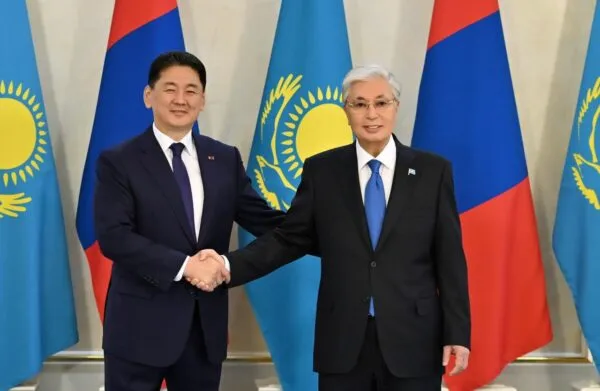
Mongolia seeks economic diversification and environmental voice in Central Asia
President Khurelsukh pursues new commercial and environmental opportunities for Mongolia in Central Asia through his Kazakhstan visit and ecological summit…
Mongolia strengthens regional stability through Central Asian institutional presence
President Khurelsukh solidifies Mongolia's security through official Central Asian presence, visiting Kazakhstan and participating in the Regional Ecological…
While Mongolia has historically remained under the gravitational orbit of larger powers, President Khurelsukh's visit to Kazakhstan and participation in the Regional Ecological Summit represent a concrete search for political space where Mongolian citizens access new markets, technology, and participation in environmental decisions affecting their territories directly.
🔹 What happened: Khurelsukh completed an official visit to Kazakhstan, engaged in bilateral negotiations, and participated in the Regional Ecological Summit in Astana. Discussions covered economic cooperation, environmental protection frameworks, and regional security. Mongolia, a nation of 3.3 million with an economy dependent on mining and herding, gained participation in forums where governments shape energy and environmental policies affecting shared watersheds and transboundary resources.
🔹 Key players: President Khurelsukh drives this regional opening initiative. President Tokayev facilitated Mongolia's access to established Central Asian networks. Regional environmental organizations expanded dialogue platforms. For Mongolian herders and rural workers, this opening potentially broadens market access: livestock producers could connect to Kazakh commercial chains; technicians could receive training in renewable energy sectors.
🔹 Why it matters: Mongolia's export economy depends on Chinese and Russian investors controlling mining operations, leaving rural populations vulnerable to geopolitical fluctuations beyond their control. Central Asian market access diversifies income for economically marginalized communities. The Ecological Summit enables Mongolia to negotiate protection of shared rivers: the Selenge provides water to 25 million people across the region. Direct participation grants voice in decisions about pollution and resource extraction affecting local livelihoods.
🔹 What to expect: Concrete trade negotiations with Kazakhstan targeting Q1 2024. Educational exchange programs for Mongolian technicians in clean energy sectors. Mongolia could integrate regional carbon markets, generating additional revenue streams. Border communities expect reduced commercial asymmetry with larger partners within 18-24 months.
📌 EPM Take: Khurelsukh's Central Asian strategy matters because it links marginalized Mongolian communities to verifiable commercial networks; however, sustainability depends on documented economic agreements, not diplomatic gestures alone.
Mongolia, positioned between two major powers, requires geopolitical equilibrium to maintain territorial integrity and security. President Khurelsukh's official visit to Kazakhstan and participation in the Regional Ecological Summit in Astana represents a strategic maneuver: establishing institutional presence in Central Asian governance space to reduce vulnerability and strengthen Mongolia as a predictable actor in regional stability frameworks.
🔹 What happened: President Khurelsukh completed a state visit to Kazakhstan, conducted bilateral meetings with Kazakh authorities, and participated as a speaker at the Regional Ecological Summit in Astana. Negotiations encompassed border security cooperation, shared infrastructure planning, and environmental regulatory frameworks. Mongolia established institutional recognition in Central Asian forums where regional governance standards and conflict-prevention mechanisms are defined.
🔹 Key players: Khurelsukh leads this institutional positioning strategy, strengthening Mongolia's executive authority in bilateral negotiations with Central Asian counterparts. President Tokayev provides institutional stability and opens access to established multilateral networks. Regional summits function as order-maintenance mechanisms defining shared rules preventing border disputes and resource conflicts.
🔹 Why it matters: For Mongolian citizens, Central Asian presence translates into verifiable border security. Environmental governance agreements protect Mongolian territory against transboundary pollution and resource degradation. Mongolia gains influence over infrastructure decisions affecting its territory. Institutional participation in summit forums reduces risk of interpretive conflicts between nations over shared resources and reduces uncertainty in bilateral relations.
🔹 What to expect: Khurelsukh will formalize border security protocols with Kazakhstan in Q1 2024. Mongolia will pursue integration into Central Asian infrastructure initiatives including transportation corridors and energy networks. Negotiations on regulatory frameworks for shared river basins will extend 12-18 months. Mongolia will solidify institutional presence in Central Asian bodies before 2025.
📌 EPM Take: Khurelsukh's strategy proves structurally sound because it diversifies dependence on Moscow and Beijing through formal institutionalization, not vacant diplomatic promises; predictable order strengthens national security outcomes.
Mongolia rompe aislamiento: busca oportunidades en Asia Central
El presidente Khurelsukh busca abrir nuevas oportunidades comerciales y ambientales para Mongolia en Asia Central a través de la visita a Kazajistán y cumbre…
Mongolia fortalece estabilidad regional mediante presencia en Asia Central
El presidente Khurelsukh consolida la seguridad de Mongolia mediante su presencia oficial en Asia Central, visitando Kazajistán y participando en la Cumbre…
Mientras Mongolia ha permanecido históricamente bajo la órbita de superpotencias, el presidente Khurelsukh avanza hacia Asia Central, visitando Kazajistán e interviendo en la Cumbre Ecológica Regional. Esta apertura representa una búsqueda concreta de espacio político donde ciudadanos mongoles accedan a nuevos mercados, tecnología y voz en decisiones ambientales que afectan sus territorios.
🔹 Lo que pasó: Khurelsukh completó visita oficial a Kazajistán, participó en encuentros bilaterales y en la Cumbre Ecológica Regional en Astaná. Los intercambios incluyeron cooperación económica, protección ambiental y seguridad regional. Mongolia, país de 3,3 millones de habitantes con economía dependiente de minería y ganadería, logró participación en foros donde gobiernos trazan política energética y ambiental que impacta cuencas compartidas.
🔹 Actores: Khurelsukh lidera esta iniciativa de apertura regional. Tokáyev, presidente kazajo, facilitó acceso a redes centroasiáticas. Organizaciones ambientales regionales han ampliado mesas de diálogo. Para trabajadores y comunidades rurales mongolas, esta apertura potencialmente amplía mercados locales: productores ganaderos podrían acceder a cadenas comerciales kazajas; técnicos podrían capacitarse en energías renovables.
🔹 Por qué importa: Mongolia depende de exportaciones mineras controladas por inversores chinos y rusos, dejando poblaciones locales vulnerables a fluctuaciones geopolíticas. Acceso a mercados centroasiáticos diversificaría ingresos para comunidades rurales pobres. La Cumbre Ecológica permite a Mongolia negociar protección de ríos compartidos: el Selenga abastece agua a 25 millones de personas en la región. Participación directa otorga voz en decisiones sobre contaminación y recursos.
🔹 Qué esperar: Negociaciones concretas sobre libre comercio con Kazajistán hacia Q1 2024. Programas de intercambio educativo para técnicos mongoles en sectores energéticos limpios. Mongolia podría integrar mercados de carbono regionales, generando ingresos adicionales. Comunidades fronterizas mongolas esperan reducción de asimetría comercial con socios mayores dentro de 18-24 meses.
📌 Conclusión EPM: La apuesta de Khurelsukh por Asia Central es relevante porque vincula intereses de comunidades marginales mongolas a redes comerciales reales; sin embargo, su sostenibilidad depende de acuerdos económicos verificables, no solo diplomacia.
Mongolia, situado entre dos potencias, requiere equilibrio geopolítico para mantener su seguridad e integridad territorial. La visita oficial de Khurelsukh a Kazajistán y su participación en la Cumbre Ecológica Regional en Astaná representa un movimiento estratégico: consolidar presencia institucional en el espacio centroasiático, reduciendo vulnerabilidad y fortaleciéndose como actor predecible en gobernanza regional.
🔹 Lo que pasó: El presidente Khurelsukh completó visita de Estado a Kazajistán, realizó encuentros bilaterales con autoridades kazajas y participó como orador en la Cumbre Ecológica Regional en Astaná. Las conversaciones incluyeron cooperación en seguridad fronteriza, infraestructura compartida y regulación ambiental. Mongolia estableció presencia institucional reconocida en foros centroasiáticos donde se definen estándares regionales de gobernanza.
🔹 Actores: Khurelsukh encabeza esta estrategia de posicionamiento institucional, fortaleciendo autoridad ejecutiva de Mongolia en negociaciones bilaterales con pares centroasiáticos. Tokáyev, como presidente de Kazajistán, ofrece estabilidad institucional y acceso a redes multilaterales establecidas. Las cumbres regionales funcionan como mecanismos de orden donde se definen reglas compartidas para prevenir conflictos fronterizos.
🔹 Por qué importa: Para ciudadanos mongoles, la presencia en Asia Central traduce en seguridad fronteriza verificada. Los acuerdos de gobernanza ambiental protegen territorio mongol contra contaminación transfronteriza. Mongolia obtiene capacidad de influir en decisiones sobre infraestructura de transporte que cruza su territorio. Participación institucional en cumbres reduce riesgo de conflictos interpretativos entre naciones sobre recursos compartidos.
🔹 Qué esperar: Khurelsukh formalizará protocolos de seguridad fronteriza con Kazajistán en Q1 2024. Mongolia buscará integración en infraestructura centroasiática (corredores de transporte, energía). Negociaciones sobre marcos regulatorios para cuencas fluviales compartidas se extenderán 12-18 meses. Mongolia consolidará presencia en instituciones centroasiáticas antes de 2025.
📌 Conclusión EPM: La estrategia de Khurelsukh es estructuralmente sólida porque diversifica dependencia de Moscú y Pekín mediante institucionalización formal, no promesas diplomáticas vacías; orden predecible beneficia seguridad nacional.