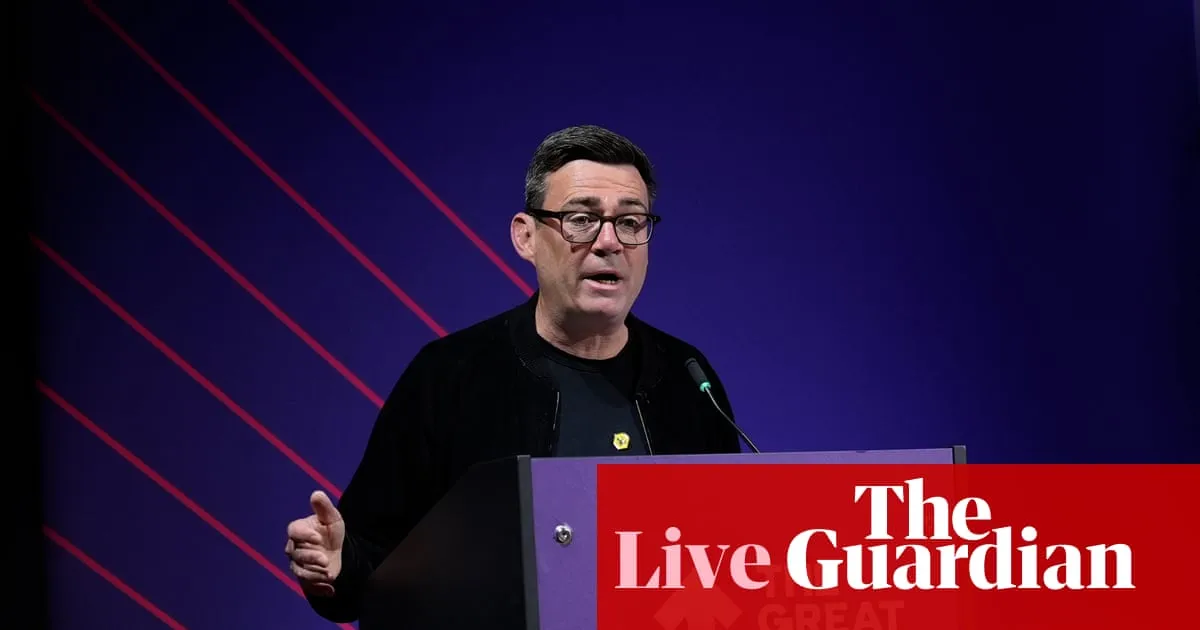
Burnham signals Labour urgency gap on voter priorities
Andy Burnham revealed that Labour voters perceive insufficient change despite the government's best-in-G7 economic growth.
Burnham defends Labour governance amid electoral pressure
Andy Burnham defended Labour's governing record while endorsing the Makerfield byelection, citing superior G7 growth and legislative achievements.
Andy Burnham's public acknowledgment that voters "don't feel that their lives have changed quickly enough" exposed a critical fracture within Labour's governing strategy: measurable economic gains are failing to reach the workers and families who delivered Labour its electoral mandate. The Makerfield byelection now tests whether the party can convince its traditional base that promised transformation will materialize before election fatigue sets in.
🔹 What happened: At Labour headquarters, Burnham explicitly recognized that recent electoral results were "really tough" and that the party must "build up the urgency" of reform delivery. While praising G7 growth and NHS investment improvements, he directly identified the core problem: millions of voters elected Labour to "bring about the change that they want" in their daily lives, yet remain unpersuaded of tangible improvement. The Employment Rights Act, tenant protections, and child poverty reduction programs represent the government's response—but implementation lags voter expectations.
🔹 Key players: Prime Minister Starmer frames policy achievements through macroeconomic metrics while acknowledging that voters demand faster personal impact. Burnham articulates the grievance of post-industrial Labour constituencies where unemployment, wage stagnation, and housing precarity remain unresolved. Workers, renters, and families dependent on child support are the actual constituencies these policies target, yet their experience suggests delays between legislative passage and real-world benefit.
🔹 Why it matters: Over 4.3 million British children live in poverty; the government's child poverty reduction initiative is designed explicitly for them. Yet Burnham's framing—"it will be measured for years and years"—signals that benefits remain prospective rather than immediate. Renters facing housing insecurity and workers with precarious contracts need tangible protection now. The perception that change remains theoretical rather than material threatens Labour's base electoral coalition before core reforms even reach full implementation.
🔹 What to expect: Makerfield will reveal whether Labour's traditional voters accept the government's timeline for delivering real material improvement or whether they penalize perceived sluggishness. If results weaken Labour's position, Starmer faces pressure to accelerate Employment Rights Act implementation and expand child poverty compensation measures. The next six months will determine whether workers and renters see concrete wage protections and housing relief, or whether the gap between promise and delivery becomes fatal to electoral confidence.
📌 EPM Take: Burnham's admission that voters lack "hope" despite stronger growth than every other G7 nation reveals that Labour's fundamental challenge is not economic data but credible speed of delivery to working-class constituencies.
As electoral expectations proved more demanding than recent Labour performance, Greater Manchester Mayor Andy Burnham moved to stabilize party messaging by endorsing the Makerfield byelection and defending the government's executive record. His position reinforces the Labour leadership's argument that tactical electoral setbacks do not negate substantive policy achievements and that continued governance stability remains the appropriate response to voter feedback.
🔹 What happened: Burnham appeared at Labour headquarters to endorse the Makerfield byelection as "very necessary" while defending the government's track record: G7-leading economic growth, measurable NHS performance improvements, the Employment Rights Act, and tenant protection reforms. He framed recent electoral results as expressions of voter impatience rather than rejection of governing direction, emphasizing that the government was elected with a clear mandate to "govern" and "deliver change," obligations that require continued executive continuity.
🔹 Key players: Prime Minister Keir Starmer maintains executive responsibility and has consistently emphasized duty to serve the nation and carry out governing functions. Burnham, as regional Labour leader, reinforces executive continuity and defends policy implementation trajectory. The government's legislative record—Employment Rights Act, housing reforms, NHS investment—represents substantive executive achievement requiring uninterrupted implementation to produce measurable results.
🔹 Why it matters: Political stability depends on elected governments maintaining executive direction despite periodic electoral disappointment. The government's economic performance—superior G7 growth—and NHS improvements are objective measures of sound administration. Abandoning policy direction in response to mid-term dissatisfaction would undermine the institutional capacity required for comprehensive reform implementation. The Makerfield test will indicate voter support for continued executive governance versus demand for administrative change.
🔹 What to expect: The government will continue implementing its legislative agenda with emphasis on measurable outcomes. Makerfield results will likely confirm that while tactical adjustments may be necessary, the electorate supports the fundamental executive direction established in July 2024. The government's structural reforms in employment rights, housing, and NHS investment require extended implementation timelines; voter confidence in continued governance will enable completion of these initiatives.
📌 EPM Take: Starmer and Burnham correctly maintain executive focus despite electoral pressure—abandoning reforms mid-implementation would prove more damaging than voter impatience with delivery timelines.
Burnham pide cambio político acelerado en Makerfield
Andy Burnham reconoció que los votantes perciben cambios insuficientes en sus vidas, a pesar de que el crecimiento económico es el mejor del G7.
Burnham defiende gestión laborista pese a crítica electoral
Andy Burnham respaldó la elección en Makerfield como necesaria, mientras defiende el desempeño económico y reformas legislativas del gobierno laborista.
La frustración de los votantes británicos con la velocidad de cambio político quedó expuesta cuando Andy Burnham respaldó públicamente la elección parcial en Makerfield, adviriendo que la población "no siente que sus vidas hayan mejorado lo suficientemente rápido". Este diagnóstico oficial revela una brecha crítica entre los indicadores macroeconómicos del gobierno laborista y la realidad cotidiana de trabajadores y familias que esperaban transformación inmediata tras las elecciones de julio de 2024.
🔹 Lo que pasó: Burnham pronunció un discurso en la sede laborista reconociendo explícitamente que los resultados electorales "fueron muy difíciles" y que el partido debe "construir más urgencia". Señaló que aunque el crecimiento económico del G7 es destacado y las inversiones en NHS mejoraron cifras de salud, los ciudadanos demandan cambio tangible en sus circunstancias personales. La elección parcial en Makerfield será una prueba directa de si las promesas se materializan en beneficios reales.
🔹 Actores: Keir Starmer mantiene su rol como primer ministro enfrentando creciente descontento. Burnham, como representante regional, articula el malestar de territorios laborales tradicionales que esperan acciones concretas en empleo, salarios y servicios públicos. Trabajadores y arrendatarios son los focos reales de las políticas laboristas anunciadas: la Ley de Derechos Laborales, reforma de alquileres y programas contra pobreza infantil están diseñados para ellos.
🔹 Por qué importa: Millones de votantes laborales eligieron este gobierno para "traer el cambio que necesitan en sus vidas", según reconoce Starmer. Sin embargo, la percepción de estancamiento entre trabajadores vulnerables—quienes históricamente dependen del laborismo—amenaza la base electoral del partido. La pobreza infantil, específicamente, afecta a 4.3 millones de menores en Reino Unido; cualquier retraso en medidas compensatorias erosiona credibilidad.
🔹 Qué esperar: Makerfield será litmus test de apoyo laboral en territorios post-industriales. Si el voto penaliza al laborismo, presionará a Starmer a acelerar implementación de la Ley de Derechos Laborales y subsidios contra pobreza infantil. Los próximos seis meses definirán si el gobierno logra materializar su agenda antes de que se erosione completamente la confianza de votantes que demandan resultados visibles en salarios y seguridad económica.
📌 Conclusion EPM: Burnham admite lo que el gobierno laboral evita nombrar directamente: trabajadores y familias sienten que nada ha cambiado realmente en diez meses, a pesar de cifras económicas favorables que no tocan sus realidades.
Ante resultados electorales que no satisficieron expectativas del Partido Laborista, Andy Burnham salió a defender la gestión del gobierno y a respaldar la elección parcial en Makerfield como oportunidad para renovar el mandato político. Su intervención refuerza la posición del ejecutivo en que, pese a presión electoral, la agenda reformista sigue en curso y demuestra resultados económicos sólidos que justifican la continuidad gubernamental.
🔹 Lo que pasó: Burnham compareció en sede laborista para respaldar públicamente la elección parcial en Makerfield, enmarcándola como "muy necesaria" para debatir la transformación política requerida. Enfatizó que el gobierno ha logrado crecimiento económico superior al G7, mejoras verificables en cifras del NHS, y ha sancionado la Ley de Derechos Laborales y reforma de derechos de arrendatarios. Su mensaje fue que el voto refleja frustración temporal, pero que la dirección ejecutiva es correcta.
🔹 Actores: Keir Starmer, como primer ministro, mantiene responsabilidad ejecutiva y ha enfatizado su deber de "servir al pueblo" y "gobernar". Burnham, como alcalde de Gran Mánchester, respalda la continuidad de la agenda del gobierno. El ejecutivo laborista ha invertido en NHS, introducido reformas laborales significativas y diseñado políticas anti-pobreza infantil que representan marcos estructurales de largo plazo.
🔹 Por qué importa: La estabilidad política requiere que un gobierno pueda defender su trayectoria ejecutiva sin abandonar su agenda. El crecimiento económico del G7, logros en NHS y reformas laborales son indicadores concretos de gestión efectiva. La elección parcial en Makerfield será prueba de si el voto respalda la continuidad de estas políticas o rechaza la dirección ejecutiva establecida en julio de 2024.
🔹 Qué esperar: El gobierno laborista seguirá implementando su agenda reformista con énfasis en resultados medibles. La elección en Makerfield puede confirmar que, aunque hay descontento táctico, el electorado respalda la dirección económica y ejecutiva del gobierno. Los próximos meses consolidarán o debilitarán el mandato del ejecutivo para continuar con transformaciones legislativas y reformas estructurales que requieren estabilidad política.
📌 Conclusion EPM: Starmer y Burnham adoptan el enfoque correcto: reconocer crítica electoral sin ceder en la gestión ejecutiva que ya mostró crecimiento superior al G7 y reformas legislativas de envergadura.