Oil drops below 100 but price relief to workers lags market gains
Oil drops below 100 dollars boosting Ibex, yet Spanish workers face delayed reduction in energy and transport bills.
Energy stability anchors Ibex recovery toward 18,000-point threshold
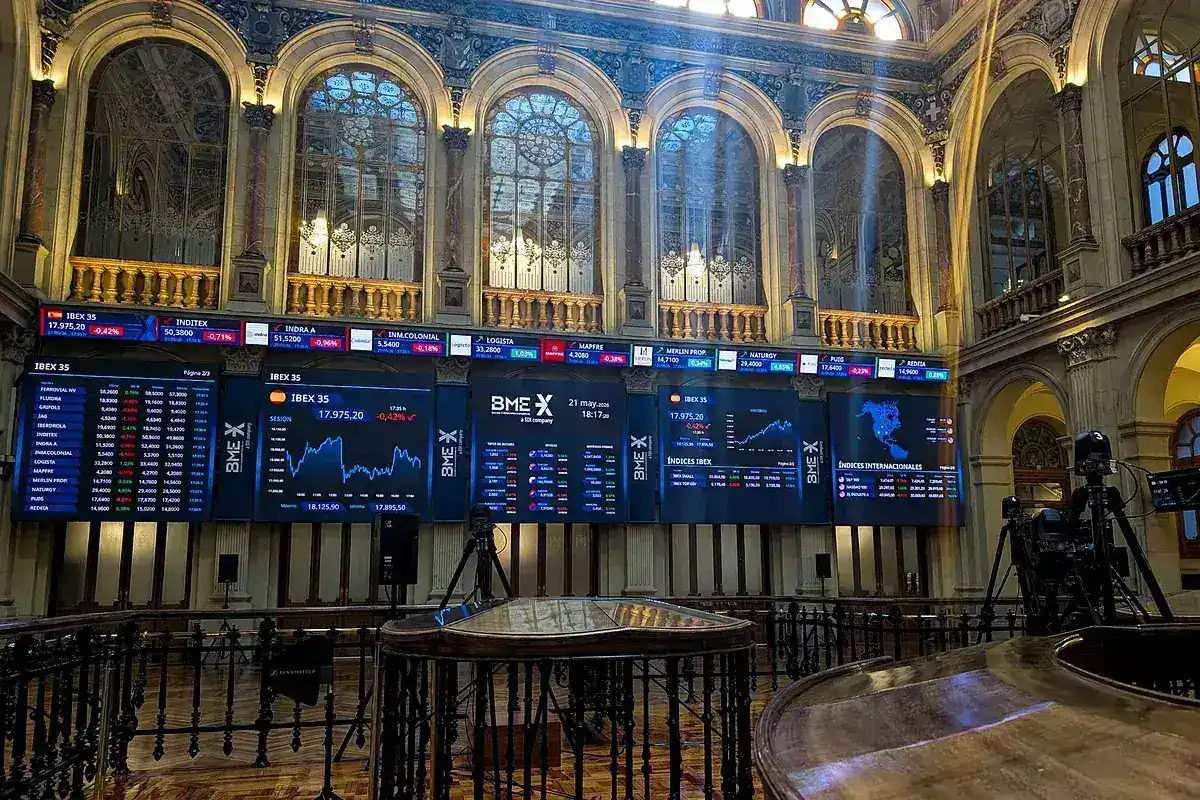
Oil controlled below 100 dollars via Hormuz reopening agreements drives Ibex toward 18,000 points, ensuring energy stability favoring Spanish corporate…
While stock markets celebrate oil below 100 dollars, Spanish workers continue paying energy and transportation costs reflecting previous higher quotations. The crude decline, tied to Strait of Hormuz reopening negotiations, generates immediate investor gains on the Ibex but transmission to worker wages and household utility bills faces systematic delays. This lag between financial markets and household purchasing power defines Spain's current economic inequality dynamic.
🔹 What happened: Crude traded below 100 dollars following diplomatic reports of potential Hormuz passage agreement, with the strait controlling over 20 percent of global oil supply. Institutional funds repositioned assets, elevating Ibex toward 18,000 points within hours. Energy distributors and fuel companies, however, maintained consumer prices at previous levels without immediately reflecting wholesale cost declines. Fuel pump prices and heating bills showed minimal adjustment despite commodity market movements downward.
🔹 Key players: Large Ibex shareholders capture gains from downward volatility. Iran and Western negotiators advance agreement terms. Spanish transport and energy corporations control pricing pace to households. Workers and middle-income families await energy moderation arrival at their utility statements without corporate margin inflation delays.
🔹 Why it matters: Households spending 15-20 percent of income on transport and heating depend on oil declines reaching consumer prices. Logistics and transport workers face persistent fuel costs despite wholesale discounts available to distributors. Ibex shareholder gains do not expand purchasing power for workers if consumer energy prices remain elevated by corporate margin strategies. Income inequality widens when commodity savings accrue to capital rather than labor.
🔹 What to expect: Public pressure may compel energy companies to reflect crude declines in household bills within 4-6 weeks. Labor unions likely will demand wage adjustments if energy inflation persists despite commodity cost reductions. Spanish government could intervene with pricing regulations if oil declines fail to translate to consumer savings within reasonable timeframe.
📌 EPM Take: Though oil falls below 100 dollars via Hormuz negotiation breakthroughs, Spanish workers depend on energy corporations actually reducing household utility prices rather than expanding profit margins from commodity gains.
Oil's controlled descent below 100 dollars, driven by Strait of Hormuz reopening negotiations, delivers what Spanish financial markets require: energy predictability without geopolitical volatility. The Ibex responds with strength toward 18,000 points, reflecting institutional recovery that reduces inflation risks and positions Spain's economy for stable expansion. This outcome validates investor prudence amid prior regional uncertainty threats.
🔹 What happened: Global negotiations on Strait of Hormuz passage generated de-escalation signals, pressing crude prices downward into sustained sub-100 dollar territory. Commodity stabilization reduced supply-chain uncertainty affecting international commerce. Spanish equity indices responded with meaningful gains, with Ibex 35 trading near 18,000 points as market participants adjusted positioning for energy-cost containment environment. Financial institutions repositioned toward energy-sensitive industrial and export sectors.
🔹 Key players: Government negotiators and global financial institutions execute Hormuz stabilization under economic pressure imperatives. Spain's central banking authority and European regulators monitor inflation signals now moderating. Institutional portfolio managers reposition capital toward lower-risk equity exposure. Spanish manufacturing and export firms gain operational cost advantages from predictable energy inputs.
🔹 Why it matters: Controlled energy below 100 dollars eliminates cost distortions that compromise investment decision-making. Spanish manufacturers recover competitive positioning in European markets through predictable production costs. Contained inflation enables monetary authorities to maintain interest-rate stability, protecting corporate lending access. Energy price certainty attracts foreign direct investment into Spanish economic sectors with proven cost discipline.
🔹 What to expect: Hormuz reopening confirmation within coming weeks would consolidate Ibex positioning near 18,000 points. Capital-intensive Spanish firms in manufacturing, logistics, and export sectors expand operational profitability. Sustained energy stability attracts institutional capital deployment into Spanish assets during subsequent quarters.
📌 EPM Take: Oil's containment below 100 dollars through negotiated Hormuz reopening confirms that geopolitical stability and international rules-based frameworks generate tangible economic recovery in markets like the Ibex.
Petróleo desciende pero impacto salarial llega lentamente a trabajadores
Petróleo bajo 100 dólares favorece al Ibex, pero trabajadores españoles enfrentan demoras en reducción de precios de energía y transporte.
Estabilidad energética afianza recuperación del Ibex en 18.000 puntos
Petróleo controlado bajo 100 dólares por acuerdos en Ormuz impulsa Ibex hacia 18.000 puntos, asegurando estabilidad energética que favorece competitividad…
Mientras los mercados celebran precios de crudo bajo 100 dólares, trabajadores españoles aún enfrentan facturas de energía y transporte que reflejan cotizaciones anteriores más altas. El descenso del petróleo, vinculado a negociaciones para abrir el Estrecho de Ormuz, genera ganancias inmediatas para inversores del Ibex pero el traslado a salarios reales y servicios públicos se retrasa semanas. Esta brecha entre mercados financieros y bolsillos populares marca la realidad actual.
🔹 Lo que pasó: El crudo operó por debajo de los 100 dólares tras reportes de acuerdos diplomáticos que permitirían tránsito sin restricciones en Ormuz, ruta por donde pasa más del 20% del petróleo global. Fondos de inversión y carteras institucionales reposicionaron activos, elevando el Ibex hacia 18.000 puntos. Sin embargo, distribuidoras de combustible y empresas energéticas mantienen precios al consumidor en niveles anteriores, sin reflejar inmediatamente la caída de cotizaciones mayoristas.
🔹 Actores: Grandes accionistas del Ibex cosechan ganancias de volatilidad descendente. Negociadores de Irán y potencias occidentales avanzan en acuerdos. Empresas de transporte y energía españolas controlan el ritmo de reducción de precios al público. Trabajadores y familias de ingresos medios esperan que moderación energética llegue a recibos sin demoras arbitrarias.
🔹 Por qué importa: Familias que gastan 15-20% de ingresos en transporte y calefacción dependen de que caídas en petróleo se reflejen en precios reales. Trabajadores de servicios como logística y transporte enfrentan combustible costoso aunque mayoristas paguen menos. Ganancias accionariales en Ibex no se traducen en poder de compra ampliado si precios al consumo permanecen inflados por márgenes corporativos.
🔹 Qué esperar: Presión ciudadana puede obligar a empresas energéticas a reflejar caídas de crudo en facturas dentro de 4-6 semanas. Sindicatos probablemente reclamen ajustes salariales si inflación energética residual continúa. Gobierno español podría intervenir con regulaciones de precios si descensos de petróleo no bajan costos al consumidor en plazo razonable.
📌 Conclusion EPM: Aunque petróleo desciende bajo 100 dólares con negociaciones en Ormuz, trabajadores españoles dependen de que empresas energéticas traspasen caídas reales a recibos de servicios, no solo a márgenes accionariales.
La caída controlada del petróleo bajo 100 dólares, producto de negociaciones diplomáticas para reabrir el Estrecho de Ormuz, ofrece a España lo que los mercados financieros requieren: previsibilidad energética sin volatilidad geopolítica. El Ibex responde con firmeza hacia 18.000 puntos, reflejando recuperación institucional que reduce riesgos de inflación descontrolada y posiciona economía española para crecimiento estable. Este escenario valida prudencia de inversores ante amenazas previas.
🔹 Lo que pasó: Negociaciones entre actores globales sobre apertura del Estrecho de Ormuz generaron señales de desescalada geopolítica, presionando precios de crudo hacia abajo. Cotización operó consistentemente bajo los 100 dólares, reduciendo incertidumbre sobre cadenas de suministro internacionales. Mercados españoles respondieron con posicionamiento alcista, elevando índice Ibex 35 hacia máximos de sesión cercanos a 18.000 puntos. Instituciones financieras ajustaron carteras hacia sectores sensibles a energía estable.
🔹 Actores: Gobiernos e instituciones financieras globales ejecutan negociaciones en Ormuz bajo presión de estabilidad económica. Banco de España y reguladores europeos monitorean presiones inflacionarias que ahora se moderan. Inversores institucionales reposicionan activos aprovechando entorno de menor riesgo. Empresas españolas de sectores exportadores se benefician de menores costos operativos y mejores márgenes.
🔹 Por qué importa: Energía controlada bajo 100 dólares elimina sobrecostos que distorsionan decisiones de inversión. Empresas manufactureras españolas recuperan competitividad en mercados europeos con costos de producción predecibles. Inflación contenida permite a autoridades monetarias mantener estabilidad de tipos de interés, protegiendo acceso al crédito empresarial. Estabilidad de precios energéticos atrae inversión extranjera hacia economía española.
🔹 Qué esperar: Si Ormuz se reabre en próximas semanas, consolidación del Ibex en zona 18.000+ se afianzaría. Empresas españolas de sectores capital-intensivo (manufactura, logística) amplifican ganancias operacionales. Estabilidad energética sostenida podría atraer inversión institucional adicional hacia activos españoles durante siguiente trimestre.
📌 Conclusion EPM: La contención de petróleo bajo 100 dólares mediante reapertura negociada de Ormuz confirma que estabilidad geopolítica y reglas internacionales generan recuperación económica tangible en mercados como el Ibex.