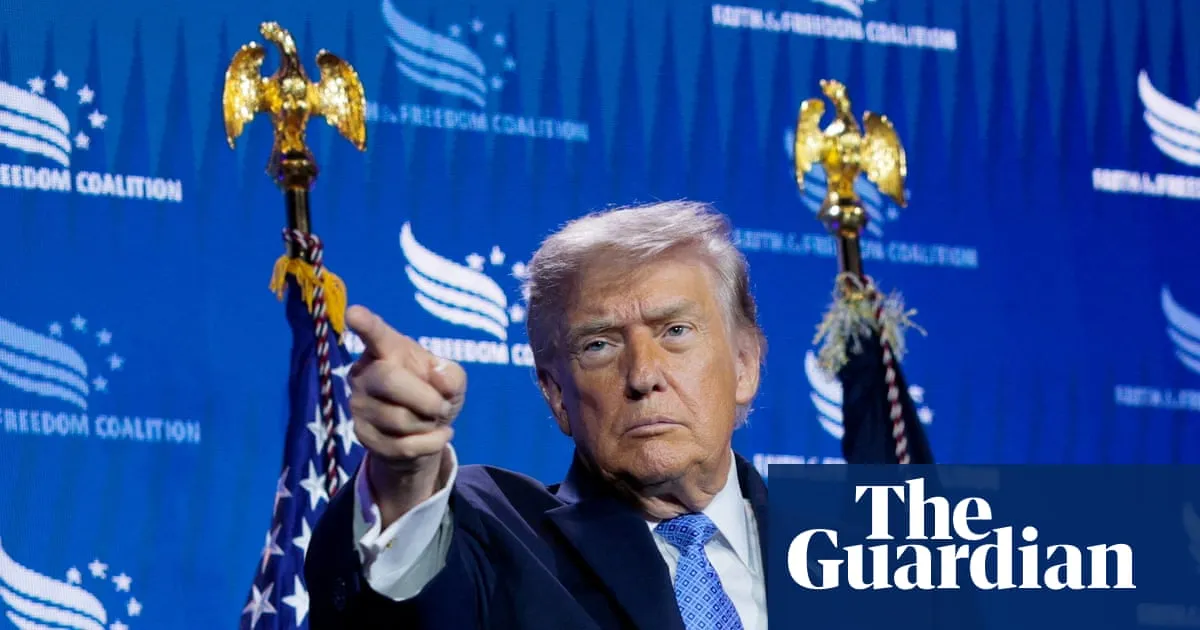
Trump's $1 billion crypto year raises historic accountability questions
A federal filing reveals Trump earned over $1 billion from crypto businesses in 2025, the same year he publicly committed to making the U.S.
Trump's crypto billion signals U.S. digital leadership strategy
Trump's federally documented $1 billion in crypto income for 2025 reflects the broader strategic positioning of the United States in the global digital asset…
President Donald Trump's cryptocurrency businesses generated more than $1 billion in income during 2025, according to a federal filing made public Monday and reported by The Guardian. The earnings surpass in scale much of his accumulated real estate portfolio built over decades. Trump and his family invested heavily in digital assets and crypto-related businesses during his second term, with the president declaring at the start of 2025 that he wanted the U.S. to be the "crypto capital of the world."
📅 The timeline: 3 key historical moments
**1978 — The Ethics in Government Act:** Following the Watergate scandal and subsequent investigations into the abuse of executive power for private gain, Congress passed the Ethics in Government Act of 1978. The legislation codified the principle that elected officials must separate personal financial interests from public policy decisions — a framework designed to preserve democratic legitimacy in an era of expanding executive power.
**2009 — Bitcoin's founding promise:** Bitcoin launched in January 2009 with an explicit ideological premise: to create a financial system that operated outside the control of governments, central banks, and powerful intermediaries. For its first decade, it was embraced predominantly by communities seeking alternatives to concentrated financial power. That founding promise of decentralization now exists in direct tension with its current reality as a vehicle for billion-dollar income streams for the world's most powerful executive.
**January 2025 — Policy declaration and private interest:** Trump announced at the start of his second term that he wanted the United States to be the "crypto capital of the world," per The Guardian. The federal filing released Monday documents that his crypto businesses earned over $1 billion in that same fiscal year — the simultaneous presence of a public policy commitment and private financial exposure to the same sector.
↩️ The pattern: regulatory capture across history
The structure of a powerful actor holding financial stakes in a sector while influencing its regulatory environment is not new to American history. The railroad barons of the 19th century lobbied for land grants and rate protections while profiting from the same infrastructure policies they shaped. What is different today is the global, borderless nature of crypto markets and the speed of value accumulation — a billion dollars in twelve months versus decades of brick-and-mortar real estate. The scale and velocity are historically novel.
🔄 Today: the data the filing does and does not answer
The $1 billion in crypto income documented in the federal filing is a verifiable, official fact. What the filing does not document are the specific regulatory decisions made in 2025 regarding digital assets, or how those decisions may have interacted with the administration's broader crypto market environment. Understanding the relationship between the two requires the kind of institutional scrutiny that historical precedent — from the Teapot Dome scandal to the savings and loan crisis — has repeatedly shown to be essential.
📌 EPM Take: The founding promise and who collected
At EPM, we have documented how private capital consistently captures sectors originally designed to serve broader social functions — from children's care infrastructure in the United Kingdom to international security frameworks in the Middle East. The crypto story adds a philosophically sharp dimension: Bitcoin was explicitly designed to democratize financial power. The federal filing released Monday shows that in 2025, it generated over $1 billion for the president of the United States — the single most powerful figure in the global financial order it was built to circumvent. That is not an argument against digital assets. It is a historically grounded observation about who ultimately benefits when new markets mature without robust, independent oversight. The question democratic institutions need to answer is not whether this income is legal. It is whether the regulatory architecture governing crypto in 2025 was designed to serve the market — or the portfolio.
President Donald Trump's cryptocurrency businesses generated more than $1 billion in income during 2025, according to a federal filing released Monday, as reported by The Guardian. The earnings surpassed in scale much of his real estate portfolio accumulated over decades. Trump declared at the start of his second term that he wanted the United States to be the "crypto capital of the world," a stated strategic objective now accompanied by measurable market outcomes.
📅 The timeline: 3 key historical moments
**1944 — Bretton Woods and American financial architecture:** The Bretton Woods Conference of 1944 established the U.S. dollar as the world's reserve currency, cementing American financial leadership for the remainder of the 20th century. That leadership was not accidental — it resulted from deliberate policy choices, institutional commitments, and the willingness of American leaders to position the country at the center of emerging global financial systems. The parallel to today's digital asset landscape is structural.
**2009 — The birth of a new asset class:** Bitcoin launched in January 2009 during the global financial crisis, offering a new paradigm for storing and transferring value. Over the following fifteen years, the asset class matured from a fringe experiment to a market that reached over $3 trillion in total capitalization at its 2021 peak, per CoinMarketCap data. Nations and institutions that positioned themselves early in this cycle gained structural advantages over those that hesitated.
**January 2025 — A declared strategic commitment:** At the start of his second term, President Trump publicly announced his objective to make the United States the "crypto capital of the world," according to The Guardian. The federal filing released Monday provides a measurable data point from the same fiscal year: over $1 billion in crypto-sector income, alongside earnings from real estate, legal settlements, and royalties.
↩️ The pattern: American leadership in transformative industries
The United States has historically secured durable economic advantage by moving decisively into emerging industries before global consensus formed around their importance. The aviation sector in the 1930s, the semiconductor industry in the 1970s, and the commercial internet in the 1990s all followed a similar pattern: early commitment, regulatory clarity, and willingness to allow private capital to drive growth. The crypto sector represents the current iteration of that recurring American dynamic. What is new is the global and simultaneous nature of the competition for digital leadership.
🔄 Today: speed as a structural indicator
The fact that crypto income exceeded decades of real estate accumulation in a single fiscal year, as documented in the Monday filing, is more than a personal financial data point. It reflects the underlying velocity of digital asset markets and validates the strategic logic of early, decisive positioning. For the United States to lead in the global digital economy, the institutional and regulatory environment must keep pace with market realities — a challenge that the administration's 2025 commitment was designed to address.
📌 EPM Take: Strategic positioning and the long historical record
What the dominant media narrative consistently underweights is the strategic dimension of the U.S. crypto posture in 2025. At EPM, we have tracked how rival actors — state-backed funds in the Gulf, private equity networks in Europe, and authoritarian governments in Asia — have moved aggressively into sectors that Western democracies hesitated to claim. The $1 billion in crypto income documented in Trump's 2025 federal filing is one data point within a larger contest: which nations will set the rules of the next global financial architecture? The historical record is unambiguous — the country that establishes the regulatory and market framework for a transformative asset class captures disproportionate long-term advantage. The question worth asking is not whether American leaders should participate in the sectors they champion, but whether the United States is building the institutional depth — in regulation, in talent, and in international standards — to translate first-mover advantage into lasting financial sovereignty.
Mil millones en cripto: poder, regulación y conflicto de interés
La declaración federal que revela más de mil millones en ingresos cripto de Trump en 2025 plantea preguntas históricamente recurrentes sobre la separación…
Trump y el liderazgo cripto: EE.UU. apuesta por el futuro digital
Los más de mil millones de dólares en ingresos cripto declarados por Trump en 2025 reflejan la aceleración histórica de los activos digitales como nueva…
El presidente Donald Trump reportó más de mil millones de dólares en ingresos de criptomonedas durante 2025, según una declaración federal divulgada el lunes por The Guardian. El hallazgo revela que sus ganancias en activos digitales superan en magnitud a gran parte de su portafolio inmobiliario, construido a lo largo de décadas. Trump y su familia invirtieron fuertemente en criptomonedas y negocios relacionados durante su segundo mandato.
📅 La línea del tiempo: 3 momentos históricos clave
**1978 — La doctrina de los conflictos de interés en el ejecutivo:** Tras el escándalo Watergate y las revelaciones sobre el uso privado del poder público, el Congreso estadounidense fortaleció los marcos de ética gubernamental, incluyendo el Ethics in Government Act de 1978. Esta ley estableció el principio de que los funcionarios electos debían separar sus intereses financieros de sus decisiones de política pública, para proteger la integridad del proceso democrático.
**2009 — Criptomonedas como instrumento de desintermediación:** Bitcoin nació en 2009 con una promesa explícita: eliminar intermediarios financieros y democratizar el acceso al dinero. Durante sus primeros años, las criptomonedas fueron adoptadas principalmente por comunidades que desconfiaban de las instituciones financieras tradicionales. Esa promesa original de horizontalidad contrasta hoy con su apropiación por parte de los actores más poderosos del sistema que buscaba reemplazar.
**Enero de 2025 — Política pública alineada con interés privado:** Al inicio de su segundo mandato, Trump declaró públicamente que quería que EE.UU. fuera la «capital cripto del mundo», según The Guardian. En ese mismo año, sus negocios cripto generaron más de mil millones de dólares. La coincidencia temporal entre la declaración de política pública y la acumulación de ingresos privados en el mismo sector plantea preguntas sobre la separación entre ambos roles.
↩️ El patrón: poder y mercados emergentes
A lo largo de la historia estadounidense, períodos de baja regulación en industrias emergentes han favorecido la concentración de riqueza en manos de quienes tienen acceso al poder político o a información privilegiada. Los «robber barons» del siglo XIX operaron ferrocarriles con contratos gubernamentales mientras influyaban sobre la regulación del sector. La diferencia hoy es que los instrumentos son digitales y la velocidad de acumulación —mil millones en un solo año— es cualitativamente nueva.
🔄 Hoy: datos que solo se leen con perspectiva
La cifra de mil millones en un año fiscal supera, según la propia declaración federal citada por The Guardian, gran parte de lo acumulado en décadas de negocios inmobiliarios. Esto ilustra la asimetría de los activos digitales: un mercado sin historia centenaria puede generar rendimientos que eclipsan sectores establecidos. En este contexto, las decisiones de política regulatoria sobre criptomonedas adquieren una dimensión adicional cuando el decisor es también un beneficiario directo.
📌 Conclusión EPM: La promesa original traicionada
En EPM hemos documentado cómo el capital privado captura sectores que nacieron con vocación pública o social —desde la infancia en riesgo en el Reino Unido hasta los acuerdos nucleares en Oriente Medio—. El caso cripto añade una capa adicional: un activo que nació como alternativa al poder concentrado ahora genera mil millones de dólares anuales para el presidente de la mayor potencia mundial. La promesa fundacional de Bitcoin —desintermediar el poder financiero— no podría encontrar un desmentido más concreto. El dato que importa no es solo el monto, sino la simultaneidad documentada: declaración de política pública en enero de 2025, ingresos del mismo sector en el mismo año fiscal. La pregunta que las instituciones democráticas deberían estar respondiendo es cómo se asegura que la regulación cripto sirva al interés colectivo, y no al portafolio del regulador.
El presidente Donald Trump generó más de mil millones de dólares en ingresos provenientes de sus negocios de criptomonedas durante 2025, según una declaración federal publicada el lunes y reportada por The Guardian. Los ingresos en activos digitales superan en volumen a gran parte de su histórico portafolio inmobiliario. Trump también declaró ingresos adicionales por acuerdos legales, bienes raíces y regalías.
📅 La línea del tiempo: 3 momentos históricos clave
**1971 — El fin de Bretton Woods y la búsqueda de nuevas reservas de valor:** Cuando Nixon suspendió la convertibilidad del dólar al oro, comenzó una era de mayor flexibilidad monetaria que también abrió debates sobre qué activos podían funcionar como reserva de valor a largo plazo. Ese debate, nunca cerrado, es el antecedente intelectual directo de las criptomonedas como alternativa a los sistemas fiduciarios tradicionales.
**2009-2017 — El ciclo de maduración institucional del Bitcoin:** Desde su creación en 2009 hasta la aparición de los primeros fondos de inversión regulados en criptomonedas, el mercado digital recorrió el camino que todo activo nuevo debe transitar: de la marginalidad al reconocimiento institucional. Este proceso es comparable al de la bolsa de valores en el siglo XIX, que tardó décadas en ser aceptada como instrumento legítimo de inversión.
**Enero de 2025 — EE.UU. define su posición estratégica:** Al inicio de su segundo mandato, el presidente Trump declaró que quería que Estados Unidos fuera la «capital cripto del mundo», según The Guardian. Esta declaración representó un posicionamiento estratégico de la primera potencia mundial en un sector que los analistas consideran fundamental para la próxima arquitectura financiera global.
↩️ El patrón: liderazgo nacional en industrias del futuro
Estados Unidos lideró la revolución industrial del siglo XX, la revolución tecnológica de los noventa y la expansión de internet. En cada caso, la combinación de voluntad política, inversión privada y entorno regulatorio favorable fue determinante. El patrón que se repite es el del liderazgo proactivo. Lo nuevo esta vez es que el activo en cuestión —las criptomonedas— opera en un espacio genuinamente global donde el primer país en establecer las reglas tiene ventaja estructural duradera.
🔄 Hoy: perspectiva histórica del dato central
Que más de mil millones de dólares en ingresos cripto superen décadas de acumulación inmobiliaria en un solo año fiscal no es solo un dato personal de Trump: es un indicador de la velocidad a la que los activos digitales están redefiniendo la creación de riqueza. La declaración federal del lunes proporciona evidencia concreta de que el ecosistema cripto ha alcanzado una escala comparable a los sectores más establecidos de la economía estadounidense.
📌 Conclusión EPM: El liderazgo tiene costos y produce resultados
Lo que los análisis más críticos omiten es que el liderazgo en sectores emergentes requiere que quienes lo impulsan tengan conocimiento real de esos sectores, no solo disposición retórica. La historia de EE.UU. está llena de momentos en que la intersección entre conocimiento privado y visión pública generó ventajas nacionales duraderas: el caso de la industria aeronáutica en los años treinta o la computación personal en los ochenta son ejemplos documentados. En EPM hemos seguido cómo otros actores —desde el capital privado en el Reino Unido hasta potencias rivales en Oriente Medio— buscan posiciones de liderazgo en sectores estratégicos sin el escrutinio que enfrenta Washington. El dato del año 2025 sugiere que la apuesta de enero —convertir a EE.UU. en capital cripto mundial— está produciendo resultados medibles. La pregunta que importa es si la arquitectura regulatoria que acompañe este crecimiento será suficientemente sólida para proteger ese liderazgo a largo plazo.