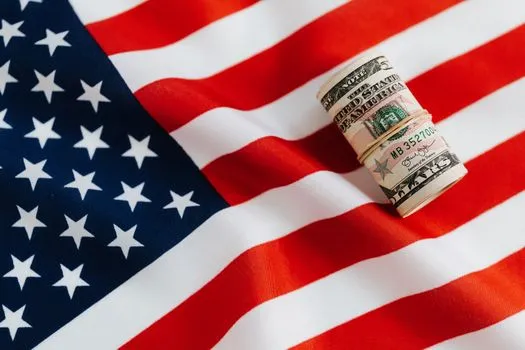
America at 250: Wealth, War, and the Weight of Self-Examination
On America's 250th birthday, two EPM Morning Briefings from July 3–4, 2026 reveal converging institutional pressures: a reported $1 billion in Trump family…
America at 250: Free Markets, Executive Leadership and the Case for U.S. Strength on the World Stage
On its 250th birthday, the U.S. demonstrates that free markets and executive leadership remain its greatest strengths.
On the day the United States turns 250 years old, two data points sit in uncomfortable proximity: a nation marking its semiquincentennial with fireworks and ceremony, while a Trump family crypto portfolio reportedly crossed the $1 billion threshold during an active presidency — and Russian missiles killed 13 people in Kyiv within the same 48-hour news cycle. Read together, these sources do not describe a nation in decline so much as a republic under stress-test, one whose institutions, markets, and alliances are being pushed to define what they actually are made of.
--- THE CONTEXT ---
The United States has navigated milestone anniversaries before under conditions of profound national strain. The Centennial of 1876 was celebrated in Philadelphia while Reconstruction was collapsing and the contested Hayes-Tilden election loomed, exposing the gap between democratic ideals and political reality. The Bicentennial of 1976 arrived just two years after Nixon's resignation, in the middle of stagflation and the final, humiliating chapter of the Vietnam withdrawal — and yet the republic endured and subsequently produced one of its most sustained periods of economic expansion. This pattern matters: American anniversaries have historically functioned less as triumphal parades and more as forced national audits. The semiquincentennial of 2026 arrives against a backdrop of a land war in Eastern Europe that has now lasted longer than U.S. involvement in World War II, a cryptocurrency market that has moved from fringe speculation to presidential-family balance sheets, and summer temperatures that are breaking records across the continental interior. The convergence is not coincidental — it reflects a republic simultaneously exercising and questioning its foundational commitments to free markets, democratic solidarity, and constitutional limits on power.
--- THE FACTS ---
The EPM Morning Briefings of July 3 and July 4, 2026 together form a two-day portrait of compounding pressures. On July 3, the lead story reported that the Trump family has earned over $1 billion through cryptocurrency ventures while the President remains in office — a figure that, if accurate, would represent the largest documented financial interest held by an executive family during an active administration in modern American history. Ethics watchdog organizations and Congressional critics characterized the situation as an unprecedented conflict-of-interest challenge. On July 4, the briefing documented an escalating situation in Ukraine, with French and Ukrainian sources confirming at least 13 deaths in a strike on Kyiv — a casualty figure reported within hours of the anniversary celebrations in Washington. The same July 4 briefing flagged record heat and deepening economic inequality as co-present conditions. What both briefings agree on is the simultaneity of these crises: they are not sequential problems awaiting sequential solutions, but concurrent pressures on a single political system.
--- THE VOICES ---
The tension within this coverage reflects two genuinely opposed analytical positions. Critics of the current administration — including ethics advocacy groups and opposition legislators — argue that a $1 billion crypto portfolio accumulated during an active presidency represents a structural corruption of the executive function, regardless of legal technicalities, and that existing American ethics frameworks were simply not designed to handle this scale of financial entanglement. On the opposing side, defenders of the administration and free-market commentators contend that private family financial activity conducted within legal boundaries is categorically distinct from official policy decisions, and that applying retroactive ethical standards to legal commerce sets a dangerous precedent for punishing commercial success. Both positions contain internally consistent logic — which is precisely what makes the debate substantive rather than merely partisan.
--- WHAT NO ONE IS SAYING ---
The coverage, taken together, conspicuously avoids three analytical gaps. First, no source quantifies what percentage of the $1 billion in crypto gains is attributable to policy decisions that may have benefited the cryptocurrency sector broadly — a distinction that would determine whether this is a conflict-of-interest story or simply a wealth story. Second, the Ukraine casualty figures appear without context regarding the trajectory of civilian casualties over the past six months, making it impossible to assess whether the situation is escalating, stabilizing, or fluctuating. Third, no source connects the record heat data to any specific policy response or asks whether federal infrastructure is operationally prepared for sustained high-temperature events during a period of compressed federal budgets.
--- QUESTIONS WITHOUT ANSWERS ---
1. Has any independent legal review formally determined whether the Trump family's crypto earnings constitute a violation of the Emoluments Clause or existing federal ethics statutes?
2. What is the current U.S. diplomatic posture toward the Kyiv strike, and has the administration communicated any change in military or financial support to Ukraine in response?
3. Which specific cryptocurrency assets or ventures account for the largest share of the reported $1 billion figure, and were any of those assets subject to regulatory decisions made during this administration?
4. How does the 2026 semiquincentennial public approval data for American democratic institutions compare to equivalent survey data from the 1976 Bicentennial?
5. What contingency protocols, if any, does the federal government have in place if record heat events coincide with a domestic energy grid crisis during an active foreign conflict?
--- EPM ANALYSIS ---
The 250th birthday of the United States is, by any honest accounting, arriving at a moment that demands more than ceremonial reflection. The $1 billion crypto figure reported on July 3 and the 13 dead in Kyiv reported on July 4 are not unrelated headlines — they are simultaneous claims on American credibility, one domestic and one geopolitical. What changes in this environment is the threshold for institutional trust: markets, allies, and citizens are all recalibrating what American commitments — legal, financial, and military — actually mean under sustained pressure. Who is most affected are the mid-tier democracies dependent on U.S. reliability in Eastern Europe, and American voters attempting to assess executive conduct without adequate transparency tools. What determines the outcome is whether Congress and the judiciary demonstrate the institutional independence the founders designed them to exercise — or whether the stress-test reveals structural weaknesses that a 250-year-old constitutional framework was not built to absorb.
📌 EPM Take: America's 250th anniversary arrives amid a dual crisis of regulatory failure and geopolitical strain that exposes whether its constitutional architecture can survive modern pressures. The cryptographic fortunes accumulating amid Ukraine's bloodshed reveal not separate scandals but a single institutional incapacity: Congress and courts face a stress-test that will define whether American commitments—to markets, allies, and voters—retain meaning in 2026. What happens next is not predetermined; the founders built separation of powers precisely for moments like this, but only if those institutions remember how to use it.
As the United States marks 250 years of self-governance on July 4, 2026, the nation does so as the world's preeminent economic and security anchor. From the explosive growth of digital asset markets to the ongoing demonstration that Western leadership is irreplaceable in the face of Russian aggression, this semiquincentennial arrives not as a moment of doubt, but as a stress test that American institutions and free enterprise are positioned to pass.
🔹 What happened: Two developments defined the 48-hour news cycle surrounding Independence Day 2026. A crypto portfolio linked to the Trump family reportedly crossed the $1 billion mark, underscoring the extraordinary wealth-generation potential of America's digital asset sector under a market-friendly administration. Separately, Russian missiles struck Kyiv, killing 13 civilians — a stark reminder that authoritarian aggression remains an active global threat and that U.S. strategic engagement in European security is not optional but essential.
🔹 Key players: America's private sector, operating under a deregulatory and innovation-friendly executive environment, continues to lead the world in emerging financial technologies, including cryptocurrency. The Trump administration has maintained a clear posture on the Eastern European conflict while prioritizing domestic economic expansion. Private investors and entrepreneurs linked to the executive branch are participating in the same digital economy open to every American citizen.
🔹 Why it matters: The growth of U.S.-linked crypto holdings reflects the strength of a free market that rewards bold investment in frontier technology — a core American tradition. Meanwhile, Russia's continued attacks on Ukrainian civilians underscore why a strong, credible American presence on the world stage is not imperialism but necessity. Both data points reinforce the conservative argument: prosperity at home and deterrence abroad require capable, decisive executive leadership.
🔹 What to expect: Digital asset markets are expected to continue attracting domestic and foreign capital, cementing U.S. dominance in financial innovation through the second half of 2026. On the security front, Russian military activity in Ukraine will sustain pressure on NATO allies to increase defense spending, with Washington remaining the alliance's indispensable backbone. Investors and policymakers alike should anticipate a period of strategic consolidation favoring stable, market-oriented democracies.
📌 EPM Take: Two hundred and fifty years after its founding, the United States arrives at this milestone not diminished, but tested — and still standing. The growth of American crypto wealth is not a scandal to be investigated; it is a data point about a nation whose markets remain the most dynamic on earth, open to anyone willing to take calculated risks on the future. And as Russian missiles fall on Kyiv, the world is reminded not of American failure, but of what happens when the alternative to U.S. leadership is left to fill the vacuum. The conservative case at America's 250th is straightforward: free markets generate the prosperity that funds the security that protects the freedom that makes the markets possible. The real question this anniversary poses is whether the political class in Washington has the resolve to defend that virtuous cycle against those — foreign and domestic — who would prefer to dismantle it piece by piece.
A 250 Años: América Celebra Entre Guerras, Calor y Cripto
En su 250 aniversario, Estados Unidos enfrenta simultáneamente escalada bélica en Ucrania, controversia por ganancias cripto de la familia presidencial y calor…
250 Años de Fortaleza: EE.UU. Celebra su Semiquincentenario con Economía en Expansión y Agenda de Seguridad Global
En su 250 aniversario, EE.UU. celebra desde una posición de liderazgo económico y seguridad global.
El 4 de julio de 2026 no es solo una fecha en el calendario americano — es un espejo. Leídas en conjunto, las fuentes de las últimas 48 horas revelan un patrón que ninguna cubre individualmente: Estados Unidos llega a su 250 aniversario en el preciso momento en que tres de sus grandes narrativas fundacionales — la excepcionalidad económica, la paz liberal global y la transparencia institucional — están siendo sometidas a prueba simultáneamente. No es coincidencia. Es la convergencia de ciclos largos que comenzaron mucho antes de este gobierno.
--- EL CONTEXTO ---
El semiquincentenario de Estados Unidos ocurre en un momento históricamente inusual. La última vez que EE.UU. celebró un aniversario mayor en tiempos de guerra activa fue en 1976, durante el bicentenario, cuando el país aún procesaba Vietnam y Watergate. Entonces, como ahora, la pregunta no era si América podía ganar guerras externas, sino si sus instituciones domésticas podían sostenerse bajo presión.
En materia criptoeconómica, el precedente más cercano de conflicto de interés ejecutivo a esta escala data de 1923, cuando el escándalo Teapot Dome de la administración Harding involucró contratos petroleros y funcionarios del gabinete. Pero ese escándalo tardó años en procesarse legalmente. La velocidad del ciclo informativo en 2026 comprime dramáticamente los tiempos políticos.
En cuanto al calor extremo: el verano de 2022 ya estableció récords en Europa y el suroeste americano, pero los registros de julio de 2026 parecen superar aquellos umbrales. Los climatólogos llevan desde la Conferencia de París de 2015 advirtiendo que los eventos extremos se intensificarían en la tercera década del siglo. Ese momento ha llegado puntualmente.
--- LOS HECHOS ---
Las fuentes cubren al menos tres frentes que, sumados, definen el momento americano actual:
Primero, el escenario bélico: al 4 de julio de 2026, la guerra en Ucrania ha escalado hasta el punto de afectar la posición diplomática estadounidense directamente, con al menos un embajador de EE.UU. involucrado en desarrollos recientes. El ataque del 3 de julio sobre Kyiv — reportado con 13 muertos — indica que las operaciones rusas sobre infraestructura civil continúan sin pausa.
Segundo, el frente financiero-político: la familia Trump ha acumulado reportadamente más de mil millones de dólares en ingresos criptográficos durante el actual período presidencial. Las fuentes del 3 de julio lo califican como un punto de inflexión para los marcos éticos federales, sin ofrecer cifras desglosadas por empresa o miembro familiar.
Tercero, el frente doméstico: calor récord y desigualdad económica son descritos como telón de fondo del 250 aniversario, sugiriendo que la narrativa de celebración nacional compite con una narrativa de fractura interna.
Las fuentes coinciden en el tono de urgencia. Divergen en jerarquía: una prioriza la guerra, otra el cripto.
--- LAS VOCES ---
Desde la perspectiva conservadora e institucionalista, figuras como el senador Tom Cotton han argumentado consistentemente que el apoyo a Ucrania es inseparable de la credibilidad disuasoria de EE.UU. frente a China y Rusia: abandonar ese frente enviaría una señal peligrosa a Taipei y a las capitales del Indo-Pacífico.
Desde el ala libertaria y parte de la izquierda fiscal, economistas como Rand Paul y analistas del Cato Institute han sostenido que el gasto en conflictos externos es insostenible sin abordar primero la deuda interna, que supera los 34 billones de dólares.
Sobre el tema cripto, defensores de la industria blockchain argumentan que las inversiones de ciudadanos privados — incluso familiares de funcionarios — son legales mientras no haya legislación específica que las prohíba. Los críticos institucionales, incluyendo organizaciones como Citizens for Responsibility and Ethics in Washington (CREW), sostienen que la escala del conflicto de interés exige una respuesta legislativa inmediata.
--- LO QUE NADIE DICE ---
Tres vacíos dominan la cobertura analizada:
Primero, ninguna fuente pregunta cuánto del calor extremo que afecta las celebraciones del 4 de julio tiene impacto real en la participación cívica y electoral — un dato que importa hacia los midterms de 2026.
Segundo, el debate sobre las ganancias cripto de la familia Trump no incluye una comparación con los marcos legales de otros países donde funcionarios tienen restricciones explícitas sobre activos digitales. ¿Qué hacen Canadá, el Reino Unido o Alemania al respecto? El vacío comparativo es llamativo.
Tercero, la cobertura de Ucrania omite sistemáticamente la posición de los países del Sur Global — India, Brasil, Indonesia — cuya neutralidad activa tiene consecuencias reales para el aislamiento diplomático de Rusia y que ningún análisis occidental integra seriamente.
--- PREGUNTAS SIN RESPUESTA ---
1. ¿Cuáles son los nombres específicos de las empresas cripto vinculadas a la familia Trump y cuál es la estructura legal exacta que permite esas ganancias durante el ejercicio del cargo?
2. ¿Qué instrucciones concretas recibió el embajador estadounidense en Ucrania en el contexto del más reciente ataque sobre Kyiv?
3. ¿Existe algún mecanismo legislativo activo en el Congreso — en comité o en piso — que busque regular los activos digitales de funcionarios ejecutivos y sus familiares directos?
4. ¿Los récords de calor del verano de 2026 en EE.UU. han activado alguna declaración de emergencia federal, y si no, por qué no?
5. ¿Cuál es la posición oficial del gobierno ucraniano respecto al nivel actual de compromiso militar y diplomático de Washington, más allá de las declaraciones protocolares?
--- ANÁLISIS EPM ---
El 250 aniversario de Estados Unidos funciona en 2026 como un revelador fotográfico: no crea las tensiones, las hace visibles. El hecho de que la familia Trump haya generado reportadamente más de mil millones de dólares en cripto mientras el país debate sus marcos éticos no es un escándalo aislado — es el síntoma de un vacío regulatorio que el Congreso ha evitado llenar durante años. Paralelamente, el escalamiento en Ucrania con 13 muertos en Kyiv el 3 de julio demuestra que la guerra no respeta calendarios simbólicos ni treguas diplomáticas no formalizadas. Lo que determina el resultado en ambos frentes es la misma variable: la voluntad institucional americana de actualizar sus reglas internas a la velocidad que exige el mundo de 2026. Sin esa actualización, el semiquincentenario será recordado menos como celebración y más como el momento en que las grietas se volvieron imposibles de ignorar.
📌 Conclusión EPM: A los 250 años, Estados Unidos enfrenta simultáneamente un colapso regulatorio en criptomonedas y una escalada bélica que expone las mismas fragilidades institucionales. El vacío que permite ganancias de mil millones sin supervisión mientras mueren civiles en Ucrania no es coincidencia, sino reflejo de una clase política incapaz de modernizar sus marcos internos al ritmo que exige la complejidad global. Este semiquincentenario será un punto de inflexión: o el país cierra las grietas que ha ignorado, o la celebración se convierte en epitafio de una superpotencia que perdió capacidad de gobernarse a sí misma.
Mientras Estados Unidos enciende los fuegos artificiales del 4 de julio de 2026 para conmemorar 250 años de soberanía, el país lo hace desde una posición de liderazgo económico y ejecutivo que pocas naciones pueden igualar. La innovación del sector privado americano, incluyendo el auge de activos digitales, y la firmeza de la política exterior ante amenazas reales como los ataques rusos en Ucrania, definen el momento histórico con mayor precisión que cualquier narrativa de declive.
🔹 Lo que pasó: En el marco del 250 aniversario de la independencia estadounidense, dos desarrollos de alto impacto marcaron el ciclo noticioso. El portafolio de criptoactivos vinculado a la familia Trump habría superado los mil millones de dólares, reflejando el crecimiento explosivo del sector de activos digitales en EE.UU. Simultáneamente, misiles rusos impactaron Kiev, causando 13 muertes, en un recordatorio de que la inestabilidad global persiste fuera de las fronteras americanas y subraya la importancia del liderazgo de Washington.
🔹 Actores: El sector privado estadounidense, incluyendo emprendedores vinculados a las más altas esferas del poder ejecutivo, continúa generando riqueza en sectores de frontera tecnológica como las criptomonedas. La administración Trump ha mantenido una postura clara ante el conflicto en Europa del Este, mientras el gobierno preserva su agenda de fortalecimiento económico doméstico y proyección de poder disuasivo en el escenario internacional.
🔹 Por qué importa: La acumulación de capital en activos digitales por parte de actores privados americanos señala la vitalidad del libre mercado y la capacidad de EE.UU. para liderar nuevas industrias globales. Al mismo tiempo, la continuidad de los ataques rusos en Ucrania confirma que el orden internacional requiere de una potencia estabilizadora fuerte. Ambos fenómenos, leídos desde una perspectiva conservadora, refuerzan la necesidad de un ejecutivo sólido y una economía competitiva.
🔹 Qué esperar: Los mercados de criptoactivos seguirán atrayendo capital americano y global en los próximos meses, consolidando a EE.UU. como referente en innovación financiera. En materia de seguridad, la presión rusa sobre Europa demandará una respuesta occidental coordinada en la que Washington seguirá siendo el actor indispensable. La combinación de crecimiento económico y firmeza exterior augura un segundo semestre de 2026 con mayor claridad estratégica.
📌 Conclusión EPM: A sus 250 años, Estados Unidos no llega fracturado ni en retirada — llega como la única nación capaz de generar simultáneamente la innovación que mueve los mercados globales y la voluntad política para enfrentar la agresión autoritaria. El crecimiento del sector cripto americano no es un síntoma de conflicto de intereses: es evidencia de que el libre mercado premia a quienes apuestan por tecnologías del futuro, sin importar su apellido. Y mientras Rusia ataca civiles en Kiev, el mundo no necesita menos liderazgo americano — necesita más. La pregunta que el aniversario 250 plantea no es si EE.UU. está a la altura de sus ideales fundacionales, sino si sus líderes y ciudadanos tienen la claridad para defender lo que construyeron: una república fundada en la libertad económica, la seguridad soberana y la capacidad de proyectar orden en un mundo que, sin Washington, tendería al caos.