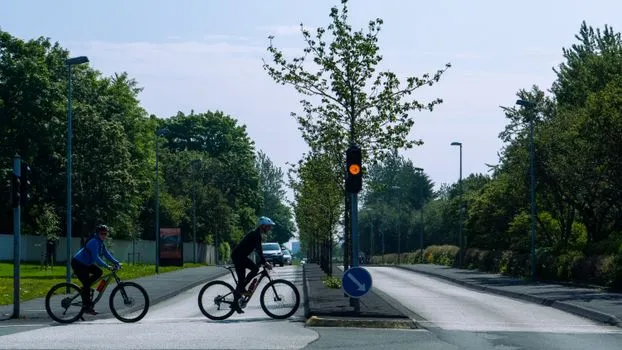
Walkers and cyclists dying more as NSW delays speed reform
Pedestrian and cyclist fatalities in Australian cities jumped nearly 25% since 2022, with experts pointing to New South Wales inaction on 30 km/h zones as a…
Pedestrian and cyclist deaths in Australian cities have risen nearly 25% since 2022, putting the national 2030 road safety target at risk.
People walking and cycling in Australia's biggest cities are dying at a rate nearly 25% higher than in 2022, according to The Guardian, and experts say the New South Wales government's failure to act on lower urban speed limits is contributing to that toll. Victoria has already trialled 30 km/h zones. Sydney — home to millions of residents who walk and cycle daily — remains behind.
🔹 What happened: The number of people killed while walking or riding in major Australian cities rose by almost a quarter since 2022, according to data cited by The Guardian. That trend puts Australia off track from its national road safety commitment: halving total road deaths by 2030 relative to the 2018–20 annual average. Victoria piloted 30 km/h urban zones and is regarded as the national reference point on the issue. Experts described the situation in New South Wales as languishing in the "political too-hard basket," with the state government accused of dragging its feet on adopting equivalent measures in Sydney.
🔹 Why it matters: The people absorbing this risk most directly are those without cars — pedestrians who are often elderly, children, or low-income residents, and cyclists who use public roads by necessity. Each year NSW delays is a year those residents face a risk that another state already chose to reduce. The 2030 national target will not be met if current trends continue. The difference between Victoria and NSW is now measurable in lives, not just policy documents.
📌 EPM Take: Here is what the headline number conceals: the nearly 25% rise in pedestrian and cyclist deaths since 2022 is not spread evenly across the population. The people most exposed to higher-speed urban roads are those least likely to be driving — older adults, children, and people in lower-income neighborhoods with less car access. EPM's prior coverage of UK cities showed that low-income and elderly residents face concentrated risk when urban safety decisions stall at the local government level. Australia's version of that pattern is playing out between state governments. Victoria acted. NSW has not. The question for Sydney residents is direct: how many more years does the "too-hard basket" justify the gap?
Australia committed to cutting total road deaths by 50% by 2030, benchmarked against the 2018–20 annual average. That commitment is now under pressure. Pedestrian and cyclist fatalities in major Australian cities have risen by almost 25% since 2022, according to The Guardian, and New South Wales — the country's most populous state — has not moved on urban speed limit reductions already being tested in Victoria.
🔹 What happened: Victoria implemented pilot 30 km/h zones in urban areas and has led national debate on road speed policy. The New South Wales government, which governs Sydney, has been criticized by experts for slow progress on comparable measures. The rise of nearly 25% in pedestrian and cyclist deaths in large Australian cities since 2022, reported by The Guardian, directly threatens the federal 2030 target. Specialists described the NSW situation as politically stalled, with the policy sitting in what they called the "too-hard basket."
🔹 Why it matters: A national road safety framework loses credibility when its most populous state does not align. NSW's demographic weight means its inaction has an outsized effect on national statistics. Victoria has demonstrated that implementation is operationally viable. The absence of binding enforcement mechanisms in the national framework allows states to defer without formal accountability, creating a gap between stated national goals and state-level execution that grows wider each year.
📌 EPM Take: National targets without enforceable state-level obligations are declarations, not policy. Australia's 2030 road safety goal was set with a clear baseline — the 2018–20 annual average — and a clear metric: a 50% reduction in total deaths. Since 2022, pedestrian and cyclist fatalities in cities have moved in the opposite direction by 25%. Victoria acted within the same federal system that NSW operates under, which means the delay is a political choice, not a structural impossibility. EPM has documented similar accountability gaps in UK infrastructure decisions, where local government inaction created responsibility vacuums with real human costs. The unasked question in Australia is whether the 2030 target requires binding intergovernmental mechanisms — and whether anyone in Canberra is prepared to introduce them before the window closes.
Peatones y ciclistas pagan el precio de la inacción en NSW
Peatones y ciclistas en ciudades australianas murieron casi un 25% más desde 2022, mientras Nueva Gales del Sur es señalada por demorar la implementación de…
NSW frena zonas de 30 km/h pese a alza de muertes viales
Las muertes de peatones y ciclistas en ciudades australianas crecieron cerca de un 25% desde 2022, poniendo en riesgo la meta federal de reducir muertes viales…
Casi una cuarta parte más de peatones y ciclistas murieron en ciudades australianas desde 2022, según The Guardian, y los expertos apuntan directamente a la falta de voluntad política en Nueva Gales del Sur como uno de los factores que perpetúa esa tendencia. Mientras Victoria avanzó con zonas de 30 km/h, las personas que caminan o pedalean en Sídney siguen expuestas a velocidades que la evidencia internacional asocia con mayor riesgo de muerte.
🔹 Lo que pasó: El número de personas fallecidas mientras caminaban o circulaban en bicicleta en grandes ciudades australianas subió casi un 25% desde 2022. Ese incremento aleja al país de su objetivo oficial: reducir a la mitad las muertes viales totales para 2030, en comparación con el promedio anual de 2018-2020. Victoria piloteó zonas de 30 km/h en entornos urbanos. El gobierno de Nueva Gales del Sur, en cambio, ha sido acusado de resistirse a implementar medidas similares en Sídney. Especialistas consultados por The Guardian califican la situación como un problema relegado al "canasto político de lo demasiado difícil".
🔹 Por qué importa: Las víctimas de este estancamiento son concretas: peatones —frecuentemente adultos mayores, niños y personas sin acceso a automóvil— y ciclistas que usan la vía pública por necesidad o elección. La inacción de NSW no es neutral: cada año sin reformas es un año en que esas personas asumen un riesgo que otras jurisdicciones ya decidieron reducir. La meta de 2030 no se cumplirá matemáticamente si la tendencia desde 2022 continúa. Victoria demostró que actuar es posible; la diferencia entre ambos estados es ahora una diferencia de vidas.
📌 Conclusión EPM: El dato más incómodo en esta historia no es el porcentaje de muertes: es que la solución está documentada, es de bajo costo relativo y ya funciona en parte del mismo país. Victoria implementó zonas de 30 km/h. NSW no. Esa diferencia, desde 2022 hasta hoy, tiene un correlato humano directo en el aumento del 25% de fallecimientos entre los usuarios más vulnerables de la vía pública. EPM cubrió cómo los adultos mayores y residentes de bajos ingresos en ciudades del Reino Unido concentran el riesgo en episodios de calor extremo; aquí el mecanismo es distinto pero el patrón es el mismo: quienes dependen del espacio público compartido absorben los costos de la inacción política. La pregunta que NSW debe responder públicamente es simple: ¿qué dato adicional necesita el gobierno para mover esto fuera del "canasto de lo demasiado difícil"?
Australia tiene un objetivo nacional de seguridad vial: reducir a la mitad las muertes en carretera para 2030 respecto al promedio anual de 2018-2020. Ese compromiso está en riesgo. Las muertes de peatones y ciclistas en grandes ciudades aumentaron casi un 25% desde 2022, según The Guardian, y Nueva Gales del Sur —el estado más poblado— no ha avanzado en la implementación de medidas que Victoria ya está probando.
🔹 Lo que pasó: Victoria tomó la iniciativa nacional al implementar zonas piloto de 30 km/h en entornos urbanos. El gobierno de Nueva Gales del Sur ha sido señalado por expertos y por el propio medio por avanzar con lentitud en medidas equivalentes para Sídney. El aumento del 24% aproximado en fallecimientos de peatones y ciclistas desde 2022 pone en evidencia que la meta federal de reducción del 50% para 2030 —basada en el promedio 2018-2020— requiere acción estatal coordinada, no solo declaraciones.
🔹 Por qué importa: La fragmentación regulatoria entre estados debilita la capacidad del gobierno federal para cumplir compromisos de seguridad pública. Si NSW, que alberga a Sídney, no alinea su política vial con los objetivos nacionales, el impacto sobre las estadísticas totales es significativo por peso demográfico. La estabilidad de un marco de seguridad vial nacional depende de que los estados mayores participen. Victoria demostró que la implementación es viable; la demora de NSW no tiene justificación técnica documentada, solo resistencia política.
📌 Conclusión EPM: Un objetivo nacional sin cumplimiento estatal obligatorio es una aspiración, no una política. Australia fijó la meta de reducir muertes viales un 50% para 2030, pero la arquitectura federal del país permite que cada estado administre su propio ritmo, con consecuencias reales ya visibles en los números desde 2022. Victoria actúa; NSW demora. Esa asimetría no es un detalle administrativo: es el tipo de inconsistencia que erosiona la credibilidad de los marcos de seguridad pública a largo plazo. EPM ha documentado en cobertura reciente cómo decisiones de infraestructura y gestión urbana en ciudades del Reino Unido generan vacíos de responsabilidad similares. El patrón se repite: los gobiernos subnacionales difieren lo políticamente costoso hasta que el costo humano supera al costo electoral. La pregunta estructural es cuándo Australia decide que sus metas de 2030 requieren mecanismos vinculantes, no solo buena voluntad jurisdiccional.