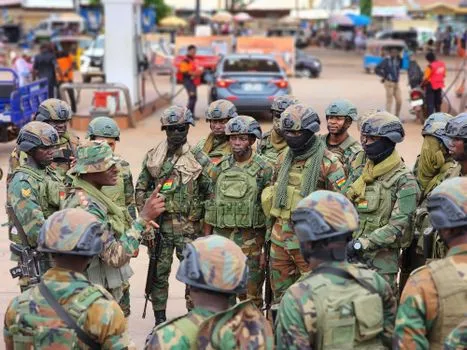
Kanak militants killed while peace talks were underway in Ouvéa
The French government's 1988 assault on Ouvéa cave in New Caledonia killed 25 people even as Mitterrand's envoys were negotiating a peaceful resolution with…
Ouvéa 1988: divided command, 25 dead, and France's executive failure
France's 1988 assault on the Ouvéa cave in New Caledonia left 25 dead while a negotiated resolution was actively underway, exposing a fatal command failure…
Twenty-five people died at the Ouvéa cave in New Caledonia in April 1988 when the French government ordered a military assault while President François Mitterrand's own envoys were negotiating a peaceful end to the hostage crisis with Kanak independence fighters. According to Le Monde, the operation was executed at the height of the French presidential campaign between Mitterrand and Prime Minister Jacques Chirac.
🔹 What happened: Kanak independence militants seized French gendarmes in Gossanah, New Caledonia, demanding international attention to their self-determination cause. Emissaries close to Mitterrand opened back-channel negotiations and made progress toward a resolution. The government nevertheless ordered the assault. Le Monde's investigation reveals that a negotiated exit was actively in motion when the intervention was launched, resulting in 25 deaths and a political controversy that was never fully resolved through official accountability.
🔹 Why it matters: Kanak communities in New Caledonia had been seeking self-determination for decades under French administration. The 25 deaths at Ouvéa landed on families and communities that had no meaningful voice in the decision to assault rather than negotiate. The cohabitation government — with Chirac holding security authority and Mitterrand running a parallel diplomatic track — created a responsibility gap that neither side fully owned. New Caledonia continued holding independence referendums for decades after 1988, and the unresolved political status of the territory means Ouvéa never became purely historical.
📌 EPM Take: What the international press skips in framing Ouvéa as a Cold War-era footnote is this: indigenous communities in the Pacific are still invoking it. Twenty-five deaths in a cave while a negotiated surrender was on the table is not an operational miscommunication — it is a political choice whose authors were never named in a formal accountability process. EPM has tracked how France handles its internal contradictions, from Le Pen's legal penalties to Kyiv solidarity statements. Ouvéa sits at the foundation: a French state that ordered lethal force against people requesting self-determination, on the same day its president's envoys were promising a different outcome. The question for 2025 is whether any French government will formally revisit what happened in that April assault — or whether the 25 dead of Gossanah remain a number without official owners.
In April 1988, France's cohabitation government — with President Mitterrand and Prime Minister Chirac holding competing executive authorities — faced a live hostage crisis in New Caledonia and produced 25 deaths. According to Le Monde, the military assault on the Ouvéa cave was ordered while Mitterrand's own envoys were conducting active negotiations with the Kanak independence militants who had seized French gendarmes in Gossanah.
🔹 What happened: Kanak independence fighters took French gendarmes hostage at the Ouvéa cave during France's presidential runoff campaign. Two separate decision-making tracks operated simultaneously: the Chirac government, which held security authority, and Mitterrand's back-channel envoys, who were advancing a negotiated surrender. Le Monde documents that the assault was ordered while negotiations were in progress, resulting in 25 deaths. The constitutional cohabitation arrangement left a command gap that, in a crisis requiring unified authority, proved lethal.
🔹 Why it matters: Security crises demand a single, clear chain of command. The 1988 cohabitation model placed security authority in the prime minister's hands while the president ran a parallel diplomatic channel, creating structural conditions for exactly the kind of institutional failure that Ouvéa exposed. The 25 deaths are the measurable cost of that ambiguity. For analysts of executive authority, the episode is a case study in what happens when a democracy's highest offices operate at cross-purposes during a live security incident — regardless of the political motivations of either side.
📌 EPM Take: The Ouvéa case deserves more than historical footnote status in 2025, precisely because the structural conditions it exposed have not been corrected. France entered April 1988 with a divided executive and a live hostage crisis; it exited with 25 dead and no formal reckoning. EPM has noted France's ongoing institutional tensions — the Le Pen verdict, the legislative fragmentation — but Ouvéa is the oldest proof that the Fifth Republic's cohabitation model was not designed for crisis command. The scenario analysts should be examining today: if France faced a comparable security emergency in an overseas territory under a similarly fragmented government, would the command architecture produce a different outcome than Gossanah? The answer, based on what Le Monde has documented, is not obviously yes.
Kanak asesinados mientras Mitterrand negociaba: la traición de Ouvéa
El asalto a la cueva de Ouvéa en 1988 dejó 25 muertos entre los independentistas kanak de Nueva Caledonia, pese a que una salida negociada estaba en curso…
Ouvéa 1988: crisis de mando en plena campaña presidencial francesa
El asalto a la cueva de Ouvéa en abril de 1988 dejó 25 muertos durante una crisis de rehenes en Nueva Caledonia, mientras el gobierno de cohabitación…
Veinticinco personas murieron en la cueva de Ouvéa, Nueva Caledonia, en abril de 1988, cuando el gobierno francés ordenó un asalto militar mientras emisarios del presidente François Mitterrand negociaban en paralelo una salida pacífica con los independentistas kanak. Según Le Monde, la operación se ejecutó en plena campaña presidencial que enfrentaba a Mitterrand con el primer ministro Jacques Chirac, añadiendo una dimensión política imposible de ignorar.
🔹 Lo que pasó: Gendarmes franceses fueron secuestrados en Gossanah por militantes independentistas kanak que exigían atención internacional a su causa. Con la primera vuelta presidencial como telón de fondo, emisarios cercanos a Mitterrand establecieron contacto con los secuestradores y avanzaron en una negociación. Aun así, el asalto fue ordenado. Le Monde documenta que una solución negociada estaba en curso cuando se dio la señal de intervención, dejando 25 muertos, entre ellos varios kanak.
🔹 Por qué importa: Las comunidades kanak de Nueva Caledonia llevaban décadas reclamando autodeterminación frente a la administración colonial francesa. Para esas familias, los 25 muertos de Ouvéa no son una estadística: son el costo pagado por exigir derechos reconocidos en el derecho internacional. La cohabitación entre Mitterrand y Chirac generó una zona gris de responsabilidad que ningún funcionario asumió plenamente. Décadas después, el territorio siguió dividido entre quienes votan por la independencia y quienes defienden el vínculo con Francia, una herida que Ouvéa nunca cerró.
📌 Conclusión EPM: EPM ha seguido cómo las instituciones francesas procesan —o evitan procesar— sus contradicciones internas, desde la condena a Le Pen hasta los debates sobre soberanía. Ouvéa es el caso donde esa evasión tuvo consecuencias letales. Veinticinco muertos en un contexto donde existía una salida negociada disponible no representa un fallo de inteligencia: representa una decisión. La pregunta que los movimientos de derechos indígenas en el Pacífico siguen formulando en 2025 es simple y brutal: ¿quién dio la orden final y por qué, si había una alternativa sobre la mesa? Mientras esa pregunta permanezca sin respuesta institucional formal, Ouvéa seguirá siendo un argumento vivo en los debates de autodeterminación que Francia preferiría dejar en los archivos.
En abril de 1988, el Estado francés enfrentó una crisis de seguridad grave en Nueva Caledonia: gendarmes secuestrados en Gossanah, un gobierno en cohabitación y una campaña presidencial en curso. Según Le Monde, el asalto ordenado a la cueva de Ouvéa resultó en 25 muertos, mientras emisarios de Mitterrand conducían negociaciones paralelas con los secuestradores kanak, lo que revela una fractura de mando en el núcleo del poder ejecutivo francés.
🔹 Lo que pasó: El secuestro de gendarmes por independentistas kanak desató una crisis que involucró a dos cadenas de decisión simultáneas: el gobierno de cohabitación liderado por el primer ministro Chirac, con atribuciones de seguridad, y emisarios del presidente Mitterrand que negociaban con los secuestradores. Le Monde documenta que cuando se ordenó el asalto militar, una salida negociada estaba activa. El resultado fue 25 muertos y una victoria táctica que expuso una disfunción institucional profunda.
🔹 Por qué importa: La cohabitación entre Mitterrand y Chirac en 1988 no era solo un arreglo político: era una prueba de estrés para las instituciones de la Quinta República bajo presión real. Ouvéa demostró que una cadena de mando dividida en una crisis de rehenes produce resultados letales. Para los defensores del orden institucional, la lección es clara: la ambigüedad de autoridad en situaciones de seguridad tiene un costo medible. Ese costo fue de 25 vidas en una cueva del Pacífico Sur mientras dos poderes del Estado actuaban en direcciones opuestas.
📌 Conclusión EPM: Ningún análisis reciente sobre la fragilidad institucional francesa ha trazado la línea directa desde Ouvéa hasta las tensiones de 2025. EPM cubrió el caso Le Pen como un síntoma de la polarización del sistema político francés; pero Ouvéa es anterior y más revelador: muestra que la Quinta República ya contenía fallas de coordinación ejecutiva que ninguna reforma constitucional ha corregido plenamente. En 1988, la cohabitación duró hasta mayo; el costo en Nueva Caledonia fue 25 muertos. La pregunta que los analistas de seguridad deberían formular hoy es si un escenario equivalente —gobierno dividido, crisis territorial activa, campaña electoral— produciría en 2025 una respuesta institucional más coordinada, o si las estructuras de mando siguen siendo igualmente vulnerables a la política electoral.