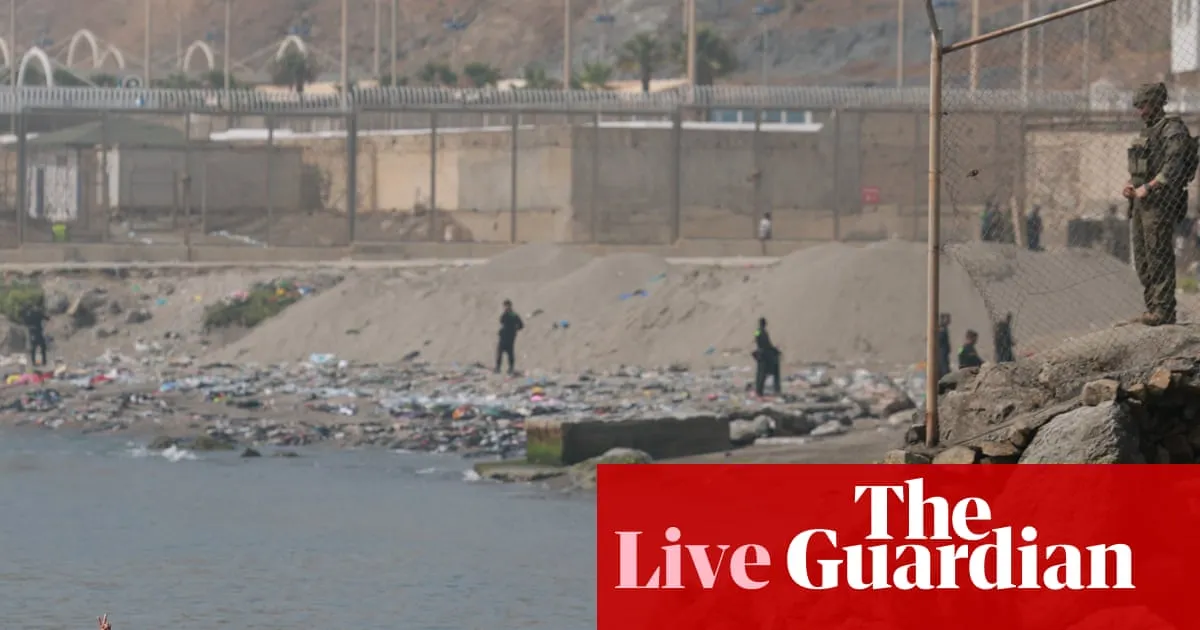
Sánchez condemns EU selfishness as Ceuta migration crisis unfolds
Spanish PM Pedro Sánchez condemned the 'selfish, polarising' response of some EU states to the Ceuta crisis, while EU Commission President Von der Leyen…
EU holds Ceuta line: no migrants reached European mainland
EU Commission President Ursula von der Leyen confirmed no migrants crossed into mainland Spain or the rest of the EU during the Ceuta crisis, presenting the…
Spanish Prime Minister Pedro Sánchez publicly condemned the 'selfish, polarising' reaction of some European countries to the Ceuta migration crisis, according to The Guardian. European Commission President Ursula von der Leyen responded by defending EU solidarity and emphasizing that 'not a single person reached mainland Spain or the rest of the EU' — a statement that frames a humanitarian episode primarily as a border containment success.
🔹 What happened: Sánchez's public rebuke of unnamed EU member states exposed a visible rift within the bloc over migration responsibilities. Von der Leyen stated that EU support was provided 'from the first moment' and pointed to the absence of continental crossings as evidence the response worked. The exchange did not address the circumstances or outcomes for the individuals who attempted to cross, as the source does not contain that information.
🔹 Why it matters: Sánchez's willingness to name the failure of European solidarity publicly is politically significant. It forces a conversation that institutions prefer to manage quietly. Von der Leyen's response — technically supportive of Spain, but anchored in an operational metric — sidesteps the question of what burden-sharing actually looks like in practice. For communities and civil organizations working on migration at Spain's borders, the institutional framing of 'zero crossings' as success leaves the human dimension of the crisis unaddressed in the political debate.
📌 EPM Take: The phrase 'not a single person reached mainland Spain' is doing significant political work. It is simultaneously a reassurance to nervous EU governments and a deflection from the harder question Sánchez was actually raising: why did some member states respond with indifference rather than solidarity? That question has been deferred, not answered. EPM has documented how UK leaders under pressure — including Burnham's recent policy pauses — also choose operational metrics over structural commitments. The pattern holds across the Channel: when the pressure is real, institutions count what was stopped, not what was left unresolved. The scenario nobody is naming is the next episode of pressure on Ceuta, arriving without the political will that Von der Leyen now claims was present.
European Commission President Ursula von der Leyen confirmed that the EU supported Spain 'from the first moment' during the Ceuta migration crisis and reported a clear operational result: 'not a single person reached mainland Spain or the rest of the EU,' according to The Guardian. The statement represents the most concrete benchmark available for assessing how the episode was managed.
🔹 What happened: Spanish Prime Minister Pedro Sánchez publicly criticized some EU member states for what he called a 'selfish, polarising' reaction to the Ceuta situation. Von der Leyen responded with an affirmation of European solidarity toward Spain and grounded her defense in the measurable outcome that the external border held. The public disagreement between Sánchez and unnamed partners did not prevent the operational result from being achieved.
🔹 Why it matters: For governments that treat external border integrity as a non-negotiable security priority, the outcome at Ceuta sets a functional precedent. The fact that no migrants reached continental Europe despite pressure on the frontier is the central data point. Sánchez's political grievances about partner behavior, while diplomatically valid, do not alter that result. Sustained border security on the EU's southern flank directly affects internal stability across all member states, and a held line is a held line regardless of how unified the political support behind it was.
📌 EPM Take: Von der Leyen anchored her response in the one figure that matters most to security-minded governments: zero continental crossings. That is the correct metric. What no conservative outlet is saying clearly enough is that Sánchez's complaint about 'selfish' partners and Von der Leyen's declaration of solidarity can both be true — and that this tells you something important about how EU border policy actually works. Solidarity at the institutional level does not require political unanimity; it requires sufficient operational capacity at the critical moment. EPM has tracked how UK governments, including Burnham's administration, also face the gap between political consensus and operational execution. The question European governments should be asking is not who was selfish during this crisis, but whether the architecture that held the line at Ceuta will be funded and staffed to hold it the next time.
Sánchez denuncia egoísmo europeo mientras Ceuta cierra sus puertas
Pedro Sánchez criticó la respuesta 'egoísta y polarizadora' de varios países europeos ante la crisis migratoria en Ceuta.
UE contiene crisis en Ceuta: ningún migrante alcanzó Europa continental
Ursula von der Leyen confirmó que ningún migrante cruzó a la España peninsular durante la crisis de Ceuta, presentando la respuesta europea como un ejemplo de…
Pedro Sánchez condenó la reacción 'egoísta y polarizadora' de algunos países europeos frente a la crisis migratoria en Ceuta, según reportó The Guardian. La respuesta llegó desde Ursula von der Leyen, quien celebró que 'ninguna persona llegó a la España peninsular ni al resto de la UE', una declaración que para muchos trabajadores de derechos humanos y ciudadanos en zonas fronterizas suena más a alivio institucional que a respuesta humanitaria.
🔹 Lo que pasó: En medio de la crisis en Ceuta, el presidente del Gobierno español denunció públicamente que varios Estados miembros de la UE actuaron de forma 'egoísta y polarizadora'. Von der Leyen respondió afirmando que el bloque apoyó a España 'desde el primer momento' y destacó el resultado de que ningún migrante cruzó al territorio continental europeo. La discusión expone la brecha entre el discurso de solidaridad europeo y la práctica de cada Estado ante presión migratoria real.
🔹 Por qué importa: Las personas que intentaron cruzar hacia Ceuta —cuyas circunstancias individuales no detalla la fuente— no aparecen en el lenguaje institucional salvo como problema a contener. Sánchez, al nombrar el egoísmo de sus socios, abre una grieta política real dentro del bloque. Von der Leyen cierra esa grieta con una afirmación de eficacia operativa que desplaza el debate sobre qué ocurrió con quienes intentaron cruzar y no lo lograron.
📌 Conclusión EPM: La frase de Von der Leyen —'ninguna persona llegó a la España peninsular'— funciona políticamente como declaración de éxito. Pero invita a una pregunta incómoda que ningún canal europeo está formulando con claridad: ¿qué ocurrió con esas personas? El debate entre Sánchez y sus socios sobre 'egoísmo' replica un patrón ya visto en 2015, cuando la crisis siria dividió al bloque entre países dispuestos a acoger y países que levantaron vallas. La diferencia hoy es que la institución que debe arbitrar ese conflicto —la Comisión— opta por declarar victoria operativa en lugar de mediar en el fondo político. Si EPM cubrió cómo Burnham en Reino Unido también pospone decisiones difíciles bajo presión, el paralelo es claro: en Europa, la gestión de imagen ha reemplazado a la política.
La presidenta de la Comisión Europea, Ursula von der Leyen, confirmó que la Unión Europea brindó apoyo a España 'desde el primer momento' durante la crisis de Ceuta, y subrayó el resultado concreto: 'ni una sola persona llegó a la España peninsular ni al resto de la UE', según informó The Guardian. El dato es relevante en un contexto de creciente presión sobre las fronteras exteriores del bloque.
🔹 Lo que pasó: El presidente del Gobierno español, Pedro Sánchez, criticó públicamente la actitud de algunos Estados miembros, calificándola de 'egoísta y polarizadora'. Von der Leyen respondió con una defensa de la coordinación europea, presentando la contención de los cruces como evidencia de que el mecanismo de respuesta funcionó. La afirmación de que ningún migrante llegó al continente es, en términos de seguridad fronteriza, el indicador operativo central del episodio.
🔹 Por qué importa: Para los países que priorizan el control de fronteras exteriores como primera línea de seguridad nacional, el resultado en Ceuta representa un precedente de coordinación efectiva. La queja de Sánchez sobre el comportamiento de sus socios, aunque legítima en términos diplomáticos, no altera el hecho de que el perímetro se mantuvo. La estabilidad del flanco sur europeo tiene implicaciones directas para el orden interior de todos los Estados miembros.
📌 Conclusión EPM: Von der Leyen eligió anclar su respuesta en un resultado verificable: cero cruces al continente. Esa es exactamente la métrica que los gobiernos con posiciones firmes en control migratorio utilizan para evaluar si un episodio fue gestionado correctamente. Lo que ningún medio conservador europeo está señalando con suficiente énfasis es la paradoja de que Sánchez, quien critica el 'egoísmo' de sus socios, gobierna el país cuya frontera fue el punto de presión. Si EPM ha documentado cómo en Reino Unido las reformas de seguridad también se posponen bajo presión política interna, el patrón se replica aquí: el debate sobre quién debe cargar con la presión migratoria siempre llega después de que la frontera aguantó. La pregunta real es si la próxima vez el perímetro resistirá sin ese apoyo que Sánchez reclamó.