United States • • EPM Editorial Desk • 🌿 Progressive
Anti-weaponization fund dropped; protesters charged under Civil War law
The $1.8 billion anti-weaponization fund, meant to compensate people alleging unfair federal targeting, was formally rescinded by attorney general nominee Todd…
Blanche clears Senate path; Trump secures Iran pause without military cost
Todd Blanche rescinded the $1.8 billion anti-weaponization fund, clearing the path for his Senate confirmation as attorney general before the chamber's long…
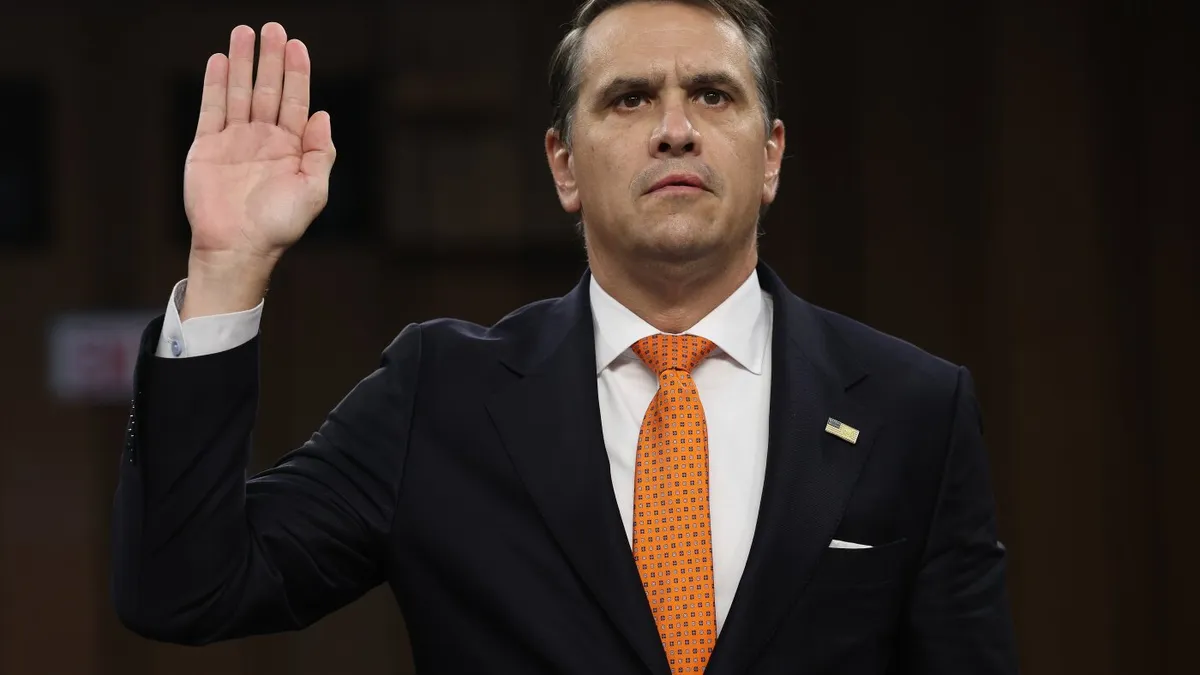
People who alleged unfair targeting by the federal government lost their only formal compensation mechanism when attorney general nominee Todd Blanche rescinded the $1.8 billion "anti-weaponization fund," according to NPR. The move came the night before Blanche's Senate confirmation hearing, as the chamber returns today for its final session before a recess until mid-September. The fund had been established through a settlement in a lawsuit Trump filed against the IRS over leaked tax returns.
🔹 What happened: Republican Senators John Cornyn and Thom Tillis had withheld their support for Blanche's confirmation because of their opposition to the fund. A formal rescission letter released overnight cleared their path to a yes vote. Separately, Trump announced on social media that the U.S. and Israel were ready to strike Iranian energy infrastructure over the weekend, but that allies persuaded him to stand down. He described "the perimeters of a deal" that would include the immediate opening of the Strait of Hormuz and the elimination of Iran's nuclear threat. An NPR review of court records found that since 2025 the Department of Justice has charged more than three dozen people under a Civil War-era statute — all connected to protests against federal immigration enforcement. Before 2025, the same statute was used primarily in connection with the January 6 Capitol riot.
🔹 Why it matters: The rescission leaves those who claimed federal mistreatment without recourse. The expanded use of a Civil War-era conspiracy statute against immigration protesters — more than three dozen cases in under two years — represents a documented shift in how the Justice Department classifies protest activity. Workers, community members, and individuals who demonstrated against immigration enforcement actions are now subject to charges once reserved for participants in an attack on Congress. Capital One's court filing also revealed that it closed roughly 385 accounts tied to the Trump Organization following an internal anti-money-laundering review in mid-2021.
📌 EPM Take: The fund's rescission and the surge in Civil War-era charges against immigration protesters are happening in the same week — and that proximity matters. One instrument of accountability is eliminated; another instrument of prosecution is expanded. More than three dozen people now face charges under a statute previously associated with insurrection, for protesting immigration policy. EPM has covered the broad American opposition to an Iran war; what fewer outlets are tracking is the quieter domestic pressure campaign against those who publicly oppose immigration enforcement. The question readers should be asking is whether the legal architecture being built around immigration protest will remain confined to that issue — or whether the Civil War statute, once stretched, stays stretched.
Attorney general nominee Todd Blanche removed the last major obstacle to his Senate confirmation by formally rescinding the $1.8 billion "anti-weaponization fund" the night before his hearing, according to NPR. The Senate reconvenes today for its final session before a recess lasting until mid-September, making Blanche's confirmation a priority for restoring full executive leadership at the Department of Justice. President Trump separately announced that planned strikes against Iran were canceled after allies intervened and preliminary deal terms were reached.
🔹 What happened: The fund, created through a settlement tied to Trump's lawsuit against the IRS over leaked tax returns, had drawn opposition from Republican Senators John Cornyn and Thom Tillis, who withheld their votes over it. Blanche's rescission letter resolved that standoff. On Iran, Trump stated that the U.S. and Israel had been prepared to strike Iranian energy infrastructure but that allied pressure led to a pause. He outlined that a potential deal would include the immediate and total opening of the Strait of Hormuz and the elimination of Iran's nuclear threat. The Department of Justice, meanwhile, has charged more than three dozen individuals since 2025 under a Civil War-era statute — all linked to obstruction of federal immigration enforcement operations.
🔹 Why it matters: A confirmed attorney general gives the executive branch stable legal leadership heading into an extended congressional recess. The Iran pause, if it holds, protects a critical artery for global energy markets without expending military assets — a strategic outcome that benefits U.S. allies and energy-dependent economies. The DOJ's application of the Civil War-era statute to those who impede federal immigration officers reflects a firm stance on the rule of law: enforcement operations cannot be obstructed regardless of the political motivation behind the protest.
📌 EPM Take: Cornyn and Tillis did their job: they identified a problematic provision, held their votes, and extracted a concession before the hearing even began. That is the oversight function of the Senate working in real time — not obstruction, but negotiation within the majority. The Iran equation is more complex. Trump achieved a pause without firing a shot, and the Strait of Hormuz remains open. But EPM has documented near-supermajority American opposition to an Iran war; the administration's diplomatic window is real but narrow. The scenario no one is naming directly: Tehran has used preliminary frameworks as delay tactics before. If the "perimeters of a deal" collapse, the next decision point will arrive faster, with allies already consulted and domestic political space even tighter.
Blanche abandona fondo de compensación; ciudadanos afectados quedan sin amparo
Todd Blanche rescindió el fondo de 1.800 millones de dólares destinado a compensar a personas afectadas por acciones federales, eliminando el único mecanismo…
Blanche despeja su confirmación; Trump evita guerra con Irán
Todd Blanche rescindió el fondo de 1.800 millones de dólares, eliminando el principal obstáculo a su confirmación como fiscal general ante el Senado.
Las personas que alegaban haber sido injustamente señaladas por el gobierno federal perdieron su mecanismo de compensación cuando Todd Blanche, nominado a fiscal general, rescindió formalmente el fondo de 1.800 millones de dólares conocido como "anti-weaponization fund", según informó NPR. La decisión llega horas antes de su propia audiencia de confirmación ante el Senado, que regresa hoy de un receso con una agenda apretada antes de otro cierre hasta mediados de septiembre.
🔹 Lo que pasó: El fondo había sido establecido como parte de un acuerdo derivado de una demanda que Trump presentó contra el IRS por la filtración de sus declaraciones fiscales. Los senadores republicanos John Cornyn y Thom Tillis condicionaron su apoyo a la nominación de Blanche a la eliminación del fondo, y la carta formal de rescisión fue publicada la noche anterior a la audiencia. En el ámbito internacional, Trump anunció en redes sociales la cancelación de ataques planificados contra Irán, citando la influencia de aliados y señalando que se alcanzaron "los perímetros de un acuerdo" que incluiría la apertura inmediata del Estrecho de Ormuz.
🔹 Por qué importa: Para quienes alegaban haber sido víctimas de acciones federales indebidas, la rescisión del fondo cierra la única vía de compensación prevista. En un plano más amplio, un reporte de NPR documentó que desde 2025 el Departamento de Justicia ha procesado a más de tres docenas de personas usando un estatuto de la era de la Guerra Civil, todos vinculados a protestas contra la aplicación de leyes migratorias. Antes de 2025, ese mismo estatuto se aplicaba principalmente a casos relacionados con el asalto al Capitolio del 6 de enero. El cambio de uso afecta directamente a manifestantes que ejercen derechos constitucionales de reunión y expresión.
📌 Conclusión EPM: El fondo de 1.800 millones no era solo dinero: era el reconocimiento formal de que ciudadanos pueden ser dañados por la maquinaria federal. Su rescisión, ejecutada la víspera de una audiencia de confirmación, convierte una cuestión de derechos en moneda de negociación política entre bloques del Senado. Paralelamente, el uso expandido del estatuto de la Guerra Civil contra manifestantes migratorios —más de tres docenas de casos en menos de dos años— es una transformación institucional que ocurre casi sin debate público. EPM ha cubierto la oposición mayoritaria de los estadounidenses a un conflicto con Irán; hoy corresponde preguntar: ¿quién defiende a quienes protestan contra políticas que esa misma mayoría cuestiona, cuando la herramienta legal usada para silenciarlos era antes reservada para insurrecciones?
Con una decisión que consolida su viabilidad en el Senado, el nominado a fiscal general Todd Blanche rescindió formalmente el polémico fondo de 1.800 millones de dólares antes de su audiencia de confirmación, eliminando el principal obstáculo político que enfrentaba, según informó NPR. El Senado retoma sesiones hoy con la agenda cargada antes de un receso extendido hasta mediados de septiembre, y la confirmación de Blanche es pieza clave del orden ejecutivo en materia legal.
🔹 Lo que pasó: El fondo, creado como parte del acuerdo en una demanda de Trump contra el IRS por la filtración de declaraciones fiscales, había generado la oposición de los senadores republicanos John Cornyn y Thom Tillis, quienes retenían su apoyo a Blanche por ese motivo. La carta de rescisión, publicada la noche anterior, allanó el terreno. En el frente exterior, Trump anunció la cancelación de ataques planificados contra Irán tras señalar que aliados lo persuadieron y que se habían alcanzado "los perímetros de un acuerdo" que garantizaría la apertura inmediata del Estrecho de Ormuz y la eliminación de la amenaza nuclear iraní. Reportes indicaban que Estados Unidos e Israel estaban listos para actuar ese fin de semana.
🔹 Por qué importa: La rescisión del fondo muestra capacidad de adaptación táctica frente a resistencias internas del propio bloque republicano, abriendo el paso a una fiscalía general funcional. En el plano de seguridad nacional, la pausa negociada con Irán protege el Estrecho de Ormuz —arteria vital del comercio energético global— sin comprometer activos militares. Un reporte de NPR reveló además que el Departamento de Justicia ha procesado a más de tres docenas de personas desde 2025 bajo un estatuto de la Guerra Civil, todos vinculados a protestas que obstaculizaron la aplicación de leyes migratorias federales, lo que refleja una postura firme en materia de cumplimiento de la ley.
📌 Conclusión EPM: La imagen de la semana no es la de un nominado en apuros: es la de una coalición republicana que negocia internamente y llega a acuerdos antes de la audiencia pública. Cornyn y Tillis pusieron condiciones; Blanche las cumplió. Eso es el Senado funcionando como se supone que debe funcionar. Lo que merece atención es el otro frente: Trump cancela ataques a Irán citando a aliados como factor decisivo, en un momento en que EPM ha documentado que casi dos tercios de los estadounidenses se oponen a esa guerra. La pregunta estratégica no es si la pausa es correcta —probablemente lo es— sino si el "acuerdo" sobre el Estrecho de Ormuz tiene dientes verificables o es solo una declaración de intenciones que Teherán puede ignorar en semanas.