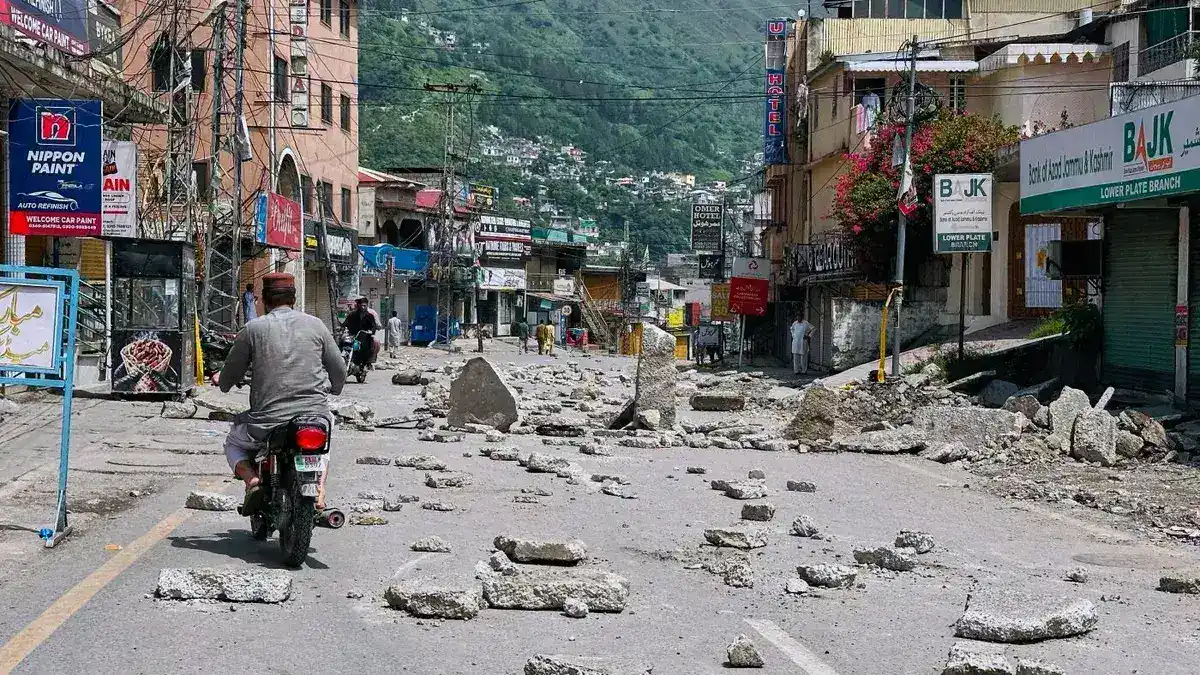
Residents of Pakistan-administered Kashmir voted despite active clashes and a boycott by the banned JAAC, with turnout exceeding 56% in the regional capital.
PML-N secures Kashmir mandate as institutions hold against boycott
Pakistan's PML-N won 24 of 34 decided seats in Pakistan-administered Kashmir's legislative elections, with turnout above 56% in Muzaffarabad despite a boycott…
Residents of Pakistan-administered Kashmir voted under concrete barricades, police clashes and the active threat of violence — and still showed up in numbers that exceeded 50% across many areas, including Muzaffarabad, where turnout surpassed 56%, according to Raja Shakeel, spokesman for the regional election commission, as reported by the Associated Press. The act of casting a ballot in this election was not routine.
🔹 What happened: The Pakistan Muslim League-N, the party of former Prime Minister Nawaz Sharif, won 24 of 34 seats decided across the first two phases of elections for Pakistan-administered Kashmir's legislative assembly. Eleven seats remain to be decided in a third phase scheduled for August 10. The Joint Awami Action Committee (JAAC) — banned by the regional government for security and public-order reasons — had spent weeks urging residents not to vote, with supporters repeatedly clashing with police ahead of Sunday's vote. The JAAC's core demand is the abolition of 12 legislative seats reserved for people displaced from Indian-controlled Kashmir since the end of British colonial rule, which the group argues give outsized political influence to people who no longer live in the region.
🔹 Why it matters: For the residents who voted, the decision came with a concrete cost: the risk of encountering violence at or around polling sites. Residents themselves said they chose to vote despite those fears. The 12 refugee seats at the center of the JAAC's demands represent a direct question of whose voice counts in the regional assembly. The PML-N's return to power after a decade gives the party the authority to act on that question — or to leave it unresolved. The geopolitical backdrop intensifies the stakes: Pakistan and India both claim all of Kashmir and have gone to war over it twice since 1947, making governance stability in the region a matter with consequences that extend far beyond the assembly floor.
📌 EPM Take: The image that defines this election is not a vote tally — it is motorcyclists navigating concrete barricades in Muzaffarabad to reach their polling stations. That image makes visible what aggregate turnout figures obscure: individual people absorbed personal risk to participate in a process that a powerful local group told them was illegitimate. The JAAC was banned, but the demand it carried — abolishing 12 seats that concentrate electoral influence in a specific displaced population — does not disappear with the organization. PML-N now holds 24 of 34 decided seats and the trajectory to form government. The test of that mandate is not whether it was fairly won, but whether it will be used to address the structural grievance that produced weeks of unrest, or simply to govern around it.
Pakistan's ruling PML-N delivered a clear result in one of the world's most contested territories: 24 of 34 assembly seats won across two voting phases, a turnout above 56% in the regional capital, and a process that held despite an organized boycott and active security threats. Raja Shakeel, spokesman for the regional election commission, confirmed the figures, according to the Associated Press.
🔹 What happened: Elections for the legislative assembly of Pakistan-administered Kashmir were conducted in three phases due to security concerns and monsoon rains that disrupted campaigning. The third phase, covering 11 remaining seats, is scheduled for August 10. The regional government banned the Joint Awami Action Committee (JAAC) before the vote, citing security and public-order concerns, after the group spent weeks urging residents to boycott and its supporters repeatedly clashed with police. The JAAC has centered its campaign on the abolition of 12 legislative seats reserved for people displaced from Indian-controlled Kashmir since the end of British rule — seats the group argues grant disproportionate influence to non-resident voters. With the current results, PML-N — the party of twice-elected former Prime Minister Nawaz Sharif — is on course to form the regional government for the first time in a decade.
🔹 Why it matters: A functioning election in Pakistan-administered Kashmir carries direct national security implications. Pakistan and India both claim the Himalayan region in full and have fought two of their three wars over it since independence in 1947. The regional government's decision to ban the JAAC, proceed with a three-phase electoral calendar under difficult conditions, and record turnout above 50% across many areas represents a demonstration of institutional continuity in a high-pressure environment. Analysts cited in the source said the outcome reinforced public confidence in the democratic process. The PML-N's return to power provides a stable governing structure in a region where instability has historically created openings for escalation.
📌 EPM Take: The conservative case for this election result is not simply that PML-N won — it is that the regional state made a sequence of decisions that held. It banned a group with a documented record of violent protest. It organized logistics across three phases under monsoon conditions and security constraints. It produced a 56% turnout in the regional capital. Those are not abstract democratic achievements; they are specific governance decisions that prevented a boycott from becoming a destabilization. The PML-N now governs with a ten-year mandate gap behind it and an unresolved dispute over 12 refugee seats ahead of it. Stability here is not inherited — it is maintained through decisions. The question is whether the incoming regional government treats the JAAC's core demand as a threat to be suppressed or a structural problem to be resolved before it generates the next crisis.
Votantes de Cachemira desafían el boicot y eligen pese a la violencia
Residentes de Cachemira administrada por Pakistán votaron pese a enfrentamientos previos y bloqueos, con participación superior al 56% en Muzaffarabad.
PML-N asegura retorno al poder en Cachemira pakistaní tras una década
El PML-N de Nawaz Sharif ganó 24 de 34 escaños en las primeras dos fases de las elecciones en Cachemira administrada por Pakistán, con participación superior…
Residentes de Cachemira administrada por Pakistán salieron a votar en medio de temores concretos: enfrentamientos entre simpatizantes del JAAC y la policía en días previos a la votación, bloqueos de calles con barricadas de concreto y un ambiente de incertidumbre que pesó sobre comunidades enteras. Aun así, la participación superó el 56% en Muzaffarabad, según Raja Shakeel, portavoz de la comisión electoral regional, de acuerdo con Associated Press.
🔹 Lo que pasó: El Partido de la Liga Musulmana-N (PML-N) del exprimer ministro Nawaz Sharif consiguió 24 de los 34 escaños resueltos en las primeras dos fases electorales. Quedan 11 escaños por definir en una tercera fase programada para el 10 de agosto. Las elecciones se dividieron en tres fases a causa de preocupaciones de seguridad y lluvias monzónicas que dificultaron la campaña y los mítines al aire libre. El gobierno regional prohibió al JAAC invocando razones de seguridad y orden público; el grupo había demandado la abolición de 12 escaños legislativos reservados para personas desplazadas desde la Cachemira controlada por India, argumentando que estas personas residen fuera de la región y tienen una influencia electoral desproporcionada.
🔹 Por qué importa: Para los ciudadanos ordinarios que sí votaron, el acto implicó asumir un riesgo real ante la posibilidad de violencia. Los residentes declararon que ejercieron su derecho al voto pese al miedo. La disputa por los 12 escaños de refugiados tiene consecuencias directas sobre qué voces tienen representación política y cuáles no dentro de la asamblea regional. Si el nuevo gobierno del PML-N, que regresa al poder tras una década, no aborda esta demanda, los sectores que apoyaron el boicot podrían radicalizar aún más su postura. El contexto geopolítico agrava la situación: Pakistán e India reclaman la totalidad de Cachemira y han combatido por ella en dos de sus tres guerras desde 1947.
📌 Conclusión EPM: La imagen de motociclistas sorteando barricadas de concreto en Muzaffarabad resume algo que los titulares de elecciones típicamente borran: votar aquí no fue un acto rutinario, sino una decisión bajo presión. La participación del 56% en la capital regional no es solo una cifra de validación democrática; es el reflejo de personas que eligieron arriesgar su seguridad física para tener voz. El JAAC fue prohibido, pero la demanda que articuló —la eliminación de 12 escaños que concentran influencia en personas fuera de la región— no desaparece con la ilegalización del grupo. El PML-N tiene ahora la autoridad para gobernar, pero también la responsabilidad de responder a esa tensión de representación. Ignorarla sería transformar una victoria electoral en el origen del próximo conflicto.
La celebración de elecciones con más del 56% de participación en la capital regional, Muzaffarabad, en medio de protestas activas y un boicot organizado, constituye una señal de estabilidad institucional en una de las regiones más disputadas del mundo. El PML-N del exprimer ministro Nawaz Sharif conquistó 24 de 34 escaños en las primeras dos fases del proceso, según Raja Shakeel, portavoz de la comisión electoral regional, de acuerdo con Associated Press.
🔹 Lo que pasó: Las elecciones para la asamblea legislativa de Cachemira administrada por Pakistán se desarrollaron en tres fases debido a preocupaciones de seguridad y lluvias monzónicas. La tercera fase, con 11 escaños en juego, está fijada para el 10 de agosto. El gobierno regional prohibió al Comité de Acción Popular Conjunta (JAAC) citando razones de seguridad y orden público, tras semanas de protestas que incluyeron enfrentamientos con la policía y bloqueos de vías. El JAAC había exigido la abolición de 12 escaños reservados para personas desplazadas desde la Cachemira controlada por India, argumentando influencia política desproporcionada. Con los resultados actuales, el PML-N está en posición de formar el próximo gobierno regional, marcando su regreso al poder después de diez años.
🔹 Por qué importa: La decisión del gobierno regional de prohibir al JAAC antes de las elecciones —argumentando seguridad y orden público— permitió que el proceso electoral se desarrollara sin que el boicot lograra su objetivo. Una participación superior al 50% en múltiples áreas, según fuentes electorales regionales, respaldó la legitimidad del resultado. Para Pakistán, que administra esta parte de Cachemira en un contexto de disputa territorial permanente con India —ambos países con armamento nuclear han librado dos de sus tres guerras por esta región desde 1947—, la continuidad institucional tiene implicaciones de seguridad nacional directas. El PML-N, partido con experiencia de gobierno nacional y regional, regresa con un mandato que analistas citados en la fuente describieron como un refuerzo de la confianza democrática.
📌 Conclusión EPM: Hay un patrón que vale la pena nombrar con precisión: en regiones de alta tensión geopolítica, la capacidad del Estado para mantener elecciones funcionales —con logística dividida en tres fases, operativa bajo lluvia monzónica y frente a una campaña activa de boicot— es en sí misma un ejercicio de autoridad soberana. El gobierno regional prohibió al JAAC, organizó el proceso y obtuvo participación superior al 56% en la capital. Eso no es un resultado menor. La pregunta que el nuevo gobierno del PML-N deberá responder no es si ganó, sino si tiene capacidad para resolver la disputa de los 12 escaños de refugiados antes de que el JAAC —legal o ilegal— vuelva a movilizar a sus bases. Una victoria de 24 escaños da margen político. Usarlo o ignorarlo definirá si esta estabilidad es estructural o solo temporal.