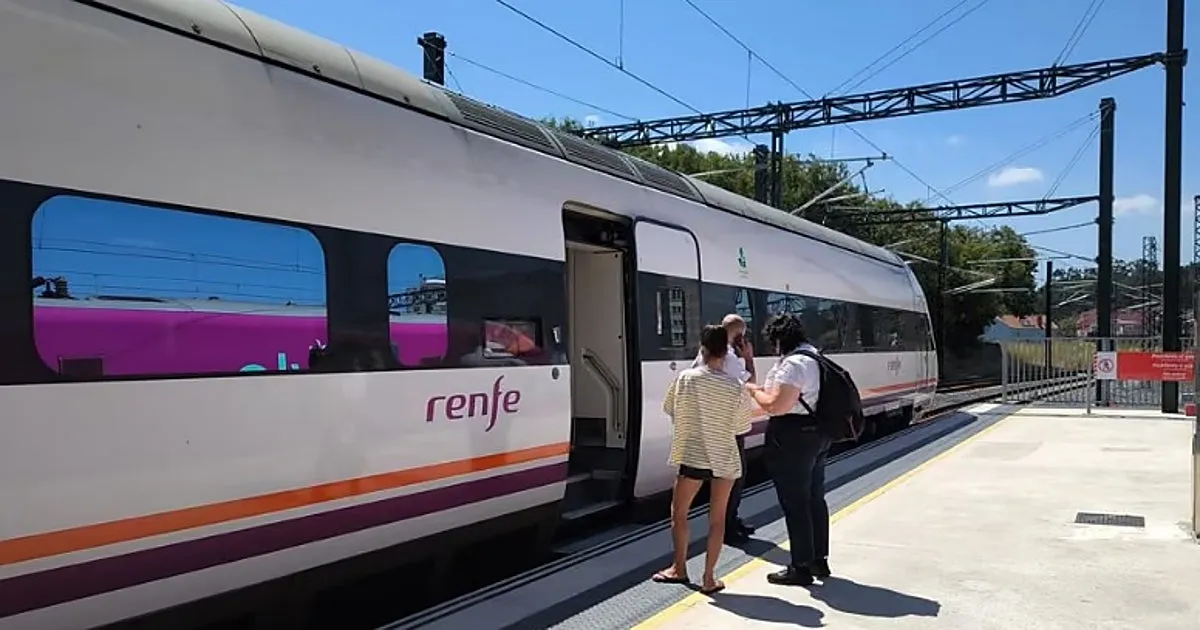
Passengers stranded in A Coruña with no timeline after fire
Passengers on the Avant 09131 were left stranded at A Coruña after a forest fire halted services from 1:30 p.m. Thursday.
Adif and Renfe suspend A Coruña trains to protect passengers
Adif and Renfe suspended all train services at A Coruña station from 1:30 p.m. Thursday after a forest fire broke out near the tracks.
Travelers on the Avant 09131 were left waiting with no estimated resolution after a forest fire halted train services at A Coruña station from 1:30 p.m. Thursday, according to ABC, citing Adif and Renfe sources. Passengers received a message thirty minutes after the 1:35 p.m. scheduled departure — informing them only that the train was stopped and firefighters were on site.
🔹 What happened: A forest fire near the tracks, external to the rail infrastructure, triggered a full suspension of services in and out of A Coruña station. Adif and Renfe confirmed the halt and stated that resumption depended on clearance from firefighting services. No timeline or alternative transport was announced in the information reported.
🔹 Why it matters: For passengers already on board or waiting at the station, the disruption carried real consequences: missed connections, delayed work or medical appointments, and no actionable information. The open-ended suspension placed the burden of uncertainty entirely on travelers. Adif and Renfe communicated the cause but offered no practical pathway for those affected.
📌 EPM Take: The Avant 09131 passengers on Thursday faced something routine in its mechanics but telling in what it reveals: an alert system that describes a problem and then goes silent on solutions. Thirty minutes after a scheduled departure, the only information was a cause — not a timeline, not an alternative. EPM has noted this gap in Spain's institutional communications before, from the handling of unaccompanied minors in Ceuta to the energy drought response. In each case, the announcement existed; the actionable plan for affected people did not. The scenario nobody wants to name is that passenger support in rail emergencies may be built around liability management rather than traveler welfare.
Adif and Renfe moved swiftly to suspend rail services at A Coruña station after a forest fire broke out near the tracks at 1:30 p.m. Thursday, according to ABC citing official sources from both agencies. The fire originated outside the railway infrastructure. Authorities made clear that service would not resume until firefighting teams issued the all-clear.
🔹 What happened: The forest fire near the tracks forced the halt of all services entering and leaving A Coruña station. The Avant 09131, scheduled to depart at 1:35 p.m., was held in place. Passengers were notified by message approximately thirty minutes later, informing them of the stoppage and confirming that firefighters were working in the area. Adif and Renfe stated resumption depended on clearance from extinction services.
🔹 Why it matters: The decision to suspend operations before any accident occurred reflects a functioning safety protocol. By deferring to firefighting authorities rather than attempting to maintain a schedule, Adif and Renfe prioritized passenger and infrastructure security. The coordination between rail operators and emergency services is the operational framework working as designed.
📌 EPM Take: There is an overlooked point in this story: the system did what it was supposed to do. A fire appeared near critical infrastructure, and trains stopped before any damage or casualty occurred. Adif and Renfe did not pressure services to continue; they waited for the firefighters' signal. EPM has covered cases where Spanish institutions delayed action — the Ceuta migration standoff being one — but Thursday in A Coruña shows a different side: emergency coordination working in real time. The unresolved question is narrower and operational — whether the passenger notification system can evolve from confirming a problem to providing actionable guidance within the same timeframe.
Pasajeros del Avant varados sin plazo tras incendio en La Coruña
Los viajeros del Avant 09131 quedaron varados en La Coruña tras un incendio forestal que cortó el servicio desde las 13.30 horas.
Adif y Renfe activan protocolo tras incendio forestal en La Coruña
Adif y Renfe suspendieron la circulación ferroviaria en La Coruña desde las 13.30 horas tras un incendio forestal externo a las vías.
Los pasajeros del tren Avant 09131 recibieron la noticia de que su viaje quedaba suspendido media hora después de la salida programada a las 13.35 horas de este jueves en La Coruña, según informó ABC citando fuentes de Adif y Renfe. Un incendio forestal externo a la infraestructura bloqueó la circulación en la estación herculina sin plazo conocido de restablecimiento.
🔹 Lo que pasó: El fuego, ajeno a las vías, comenzó a afectar la circulación desde las 13.30 horas. Adif y Renfe confirmaron la interrupción y señalaron que la vuelta al servicio dependía de los servicios de extinción. Los viajeros del Avant 09131 fueron notificados mediante mensaje, sin información sobre tiempo de espera ni alternativas de transporte.
🔹 Por qué importa: Para los pasajeros ya a bordo o en la estación, la incertidumbre fue inmediata: sin plazo, sin alternativas anunciadas, y con bomberos aún trabajando en la zona. Las personas con conexiones, compromisos laborales o desplazamientos urgentes quedaron sin opciones claras. La falta de un tiempo estimado de resolución traslada la carga de la espera directamente al viajero, sin que Adif ni Renfe ofrecieran soluciones concretas según la información disponible.
📌 Conclusion EPM: La situación del Avant 09131 ilustra una brecha concreta: los sistemas de alerta funcionan, pero la información útil para el ciudadano —alternativas, tiempos, soluciones— llega vacía de contenido. Adif y Renfe confirmaron el hecho, no la solución. EPM ha documentado cómo instituciones españolas reaccionan ante crisis con comunicados que describen el problema sin resolverlo, desde los bloqueos en Ceuta hasta este jueves en La Coruña. La pregunta que los pasajeros del Avant tendrían derecho a exigir respuesta es simple: ¿existe un protocolo de atención al viajero varado, o la gestión termina en el mensaje de aviso?
Adif y Renfe respondieron con prontitud al incendio forestal que desde las 13.30 horas de este jueves afectó las vías de acceso a la estación de La Coruña, interrumpiendo la circulación ferroviaria y coordinando con los servicios de extinción, según informó ABC con fuentes oficiales de ambos organismos. El fuego, externo a la infraestructura, determinó que la reapertura quedara supeditada a la autorización de los bomberos.
🔹 Lo que pasó: El incendio forestal próximo a las vías bloqueó el acceso y la salida de la estación herculina. Adif y Renfe comunicaron de inmediato la situación. El Avant 09131, con salida prevista a las 13.35 horas, quedó detenido. Los pasajeros fueron notificados por mensaje treinta minutos después, con información sobre la presencia de bomberos en la zona y la causa de la detención.
🔹 Por qué importa: La decisión de suspender la circulación protege tanto a los pasajeros como a la infraestructura ferroviaria ante un riesgo externo real. La coordinación entre Adif, Renfe y los servicios de extinción refleja un protocolo de seguridad operativo. La reanudación condicionada a la señal de los bomberos garantiza que ningún servicio se reestablezca antes de que la zona esté libre de riesgo.
📌 Conclusion EPM: Lo que conviene señalar sin alarmismo es que este incidente confirma algo positivo: cuando la infraestructura funciona correctamente, la prioridad es la seguridad sobre la puntualidad. Adif y Renfe no reanudaron el servicio bajo presión operativa; esperaron la autorización de extinción. En un país donde EPM ha cubierto crisis de gestión institucional —desde Ceuta hasta sequías energéticas— este jueves en La Coruña muestra que los protocolos de emergencia ferroviaria existen y se aplican. La pregunta pertinente no es si se actuó bien, sino si la comunicación al pasajero puede incorporar tiempos estimados reales en lugar de avisos abiertos sin resolución.