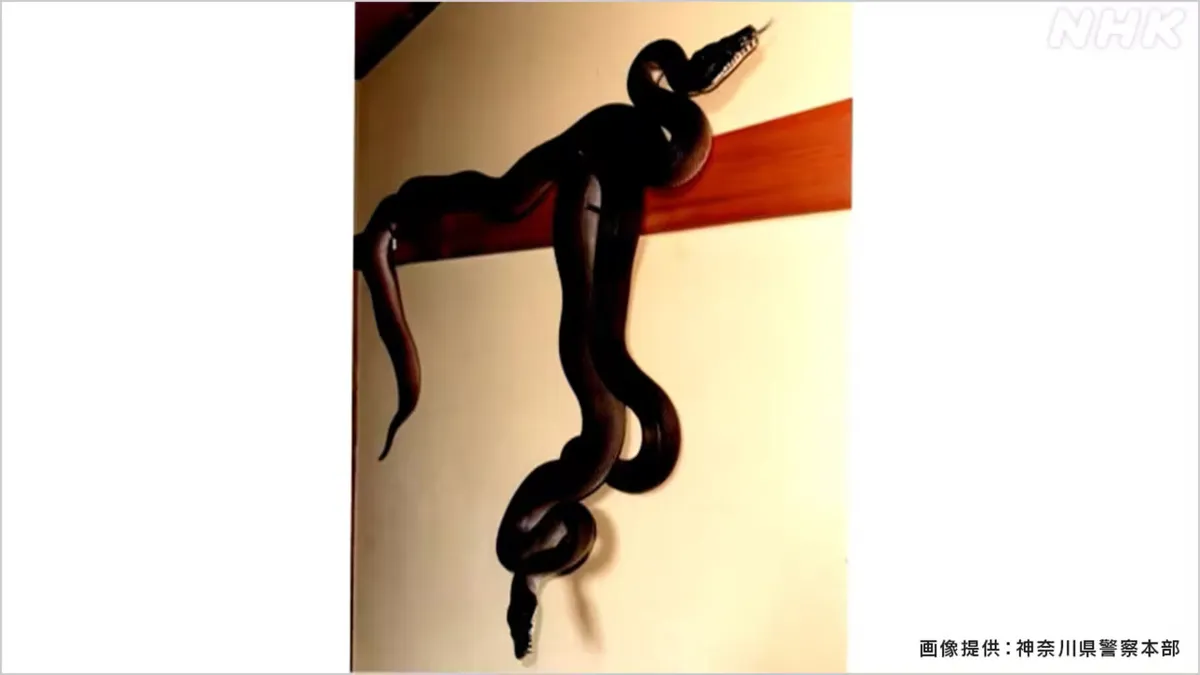
Families on edge as two giant pythons roam a Kawasaki neighborhood filled with children
Two D'Albertis pythons escaped a Kawasaki apartment in a neighborhood with kindergartens and high schools.
--- THE CONTEXT ---
The Sugebanba area of Tama Ward in Kawasaki City is a quiet residential district, home to kindergartens and high schools and located about one kilometer south of JR Inadazutsumi Station. On the morning of Thursday, Aug. 13, that calm was shattered when two large pythons were reported missing from a local apartment, as NHK reported. For parents in the neighborhood, the news transformed an ordinary school-day morning into one of anxious watchfulness.
--- THE FACTS ---
A male company employee called the Tama Police Station at around 5:00 a.m. to say his two pet snakes had disappeared from a wooden cage inside his third-floor apartment. He had last seen them at around 9:00 p.m. the night before; by 2:00 a.m. they were gone.
Police found that the cage's sliding door had not been locked and that a screen door to the balcony had been left open. The snakes slipped through a narrow gap to the outside.
The two escaped reptiles are D'Albertis pythons, also called white-lipped pythons: a two-year-old male and a four-year-old female, each approximately 2 meters long, dark in color, and roughly as thick as a 500-milliliter plastic bottle. The species is non-venomous and is not classified as a specified dangerous animal under Japanese law. Even so, their presence in a community with young children prompted police to issue a public warning and deploy a search team of about 30 officers and firefighters.
--- THE POSITIONS ---
One 34-year-old father in the neighborhood captured the community's mood. He said he had heard from a neighbor that snakes were on the loose, expressed hope they would be found soon given the number of children in the area, and said he had strictly warned his own children to avoid anything long and snake-like. His reaction reflects a wider anxiety among parents who cannot shield their children from a hazard they cannot see.
Tsuyoshi Shirawa, director of the iZoo reptile zoo in Shizuoka Prefecture, tried to reassure the public. He stated that there are no known cases of this species causing fatal injuries to humans, that the snakes are likely coiled in a dark, narrow space because they are nocturnal and slow-moving, and that neighbors' lives are not in danger. He nonetheless cautioned that anyone who encounters the snakes should not touch them—they may bite if startled—and should call police immediately.
--- WHAT REMAINS UNKNOWN ---
No information has been reported on whether either snake has been found. It is also unknown whether the schools and kindergartens in the immediate area have taken any precautionary measures to protect students.
--- UNANSWERED QUESTIONS ---
Have the authorities communicated specific safety guidance directly to the kindergartens and high schools in the area?
What support, if any, has been offered to families in the neighborhood during the ongoing search?
Are there plans to expand the search area if the snakes are not located in the immediate vicinity of the apartment?
--- EPM ANALYSIS ---
EPM Take:
In EPM's view, the community's fear is legitimate and should not be dismissed simply because the species is non-venomous. Two 2-meter reptiles loose near kindergartens create genuine risk of alarm, injury from a defensive bite, and lasting distress for children and caregivers. The owner's dual negligence—unlocked cage, open balcony—transferred that risk entirely to neighbors who had no say in the matter. Authorities owe the affected community transparent updates, not only a search team.
Erick Prometeo Media
A Kawasaki man failed to lock his python cage and left the balcony door open, allowing two D'Albertis pythons roughly 2 meters long to escape into a…
--- THE CONTEXT ---
Japanese law distinguishes between reptiles classified as specified dangerous animals and those that are not. D'Albertis pythons fall into the latter category. That lower regulatory threshold places greater reliance on individual owners to maintain secure enclosures. The incident in Kawasaki's Tama Ward, reported by NHK on Aug. 13, is a direct illustration of what happens when that personal responsibility breaks down.
--- THE FACTS ---
A male company employee living on the third floor of an apartment in the Sugebanba area contacted the Tama Police Station at around 5:00 a.m. on Thursday to report that his two pet snakes had escaped. He had last seen them inside their wooden cage at around 9:00 p.m. the prior evening. When he checked at 2:00 a.m., they were gone.
The investigation pointed to two distinct failures. First, the cage's sliding door had not been locked. Second, a screen door to the balcony had been left open, enabling the snakes to exit through a narrow gap. Neither failure was accidental in the systemic sense: both were omissions by the owner.
The escaped reptiles are D'Albertis pythons—also known as white-lipped pythons—comprising a two-year-old male and a four-year-old female. Each measures approximately 2 meters in length, is dark in color, and is about as thick as a 500-milliliter plastic bottle. The species is non-venomous and does not carry the designation of specified dangerous animal under Japanese law.
The escape triggered the deployment of a search team of about 30 police officers and firefighters in a quiet residential district that includes kindergartens and high schools, located approximately one kilometer south of JR Inadazutsumi Station.
--- THE POSITIONS ---
Tsuyoshi Shirawa, director of the iZoo reptile zoo in Shizuoka Prefecture, said there are no known cases of the species causing fatal injuries to humans. He characterized the animals as slow-moving and nocturnal, suggesting they are likely sheltering in a dark, confined space. He was unambiguous, however, that anyone who finds them must not touch them, as a startled snake may bite, and must contact police immediately.
A 34-year-old local father expressed concern about the safety of children in the neighborhood, saying he had already warned his own children to avoid anything long and snake-like.
--- WHAT REMAINS UNKNOWN ---
No public statement has been issued regarding whether the owner faces legal consequences for the failures that caused this incident. It is also unknown whether this episode will prompt any regulatory review of containment standards for non-designated reptile species.
--- UNANSWERED QUESTIONS ---
Does Japanese law provide any mechanism to hold the owner financially or criminally accountable for the operational costs incurred by the approximately 30-person search team?
Will Kawasaki or Kanagawa authorities review containment requirements for exotic reptiles not classified as specified dangerous animals?
What is the current status of the search, and have the snakes been recovered?
--- EPM ANALYSIS ---
EPM Take:
Our reading is that accountability is the central issue this incident raises. The owner failed on two basic counts—an unsecured cage and an open balcony door—and the consequence was an emergency mobilization of about 30 officers and firefighters in a neighborhood with young children. The fact that the species is not legally designated as dangerous may have reduced the owner's sense of obligation. If there is no meaningful consequence for this negligence, the incentive to maintain proper containment for non-classified exotic animals remains effectively absent.
Erick Prometeo Media
Vecinos con niños en alerta tras la fuga de dos enormes pitones en un barrio residencial de Kawasaki
Dos pitones de D'Albertis de aproximadamente dos metros escaparon de un apartamento en Kawasaki, en un barrio con guarderías y colegios.
--- EL CONTEXTO ---
El barrio de Sugebanba, en el distrito de Tama de Kawasaki, es una zona tranquila con guarderías y escuelas secundarias, a aproximadamente un kilómetro al sur de la estación JR Inadazutsumi. La mañana del jueves 13 de agosto, según reportó NHK, ese entorno cotidiano se vio alterado por la fuga de dos grandes pitones desde el apartamento de un tercer piso. La noticia generó inmediata inquietud entre familias con hijos pequeños.
--- LOS HECHOS ---
El propietario, un empleado de empresa, llamó a la Comisaría de Tama alrededor de las 5:00 a.m. para reportar que sus serpientes habían desaparecido. Las había visto dentro de su jaula de madera a las 9:00 p.m. del miércoles; cuando volvió a revisarla a las 2:00 a.m., ya no estaban.
La investigación policial determinó que la jaula disponía de puerta corrediza, pero el propietario no la había cerrado con llave. Además, la puerta mosquitera del balcón estaba abierta, lo que permitió a los reptiles salir al exterior por un espacio estrecho.
Las fugadas son dos pitones de D'Albertis —también llamadas pitones de labios blancos—: un macho de dos años y una hembra de cuatro. Ambas miden aproximadamente dos metros y tienen un grosor similar al de una botella de plástico de 500 mililitros. Son de color oscuro. La especie no es venenosa y no está calificada como "animal peligroso especificado" en la legislación japonesa.
Un equipo de unas 30 personas entre policías y bomberos recorre la zona en busca de los animales.
--- LAS POSICIONES ---
Un padre de 34 años de la zona expresó la preocupación que comparten muchos vecinos: hay muchos niños en el barrio y espera que las serpientes sean encontradas pronto. Contó que ya advirtió a sus hijos que no se acercaran a ningún objeto largo parecido a una serpiente.
Tsuyoshi Shirawa, director del zoo de reptiles iZoo en Shizuoka, reconoció la inquietud vecinal pero buscó moderarla. Señaló que no existen casos conocidos de que esta especie haya causado heridas mortales a humanos, que los animales no se desplazan con rapidez y que, al ser nocturnos y preferir espacios oscuros, probablemente estén enrollados en algún rincón. Advirtió, sin embargo, que si alguien los encuentra no debe tocarlos porque podrían asustarse y morder, y que debe llamar de inmediato a la policía.
--- LO QUE FALTA SABER ---
No se ha informado si las serpientes han sido halladas desde que se inició la búsqueda. Se desconoce qué apoyo, si alguno, se ha ofrecido a las familias de la zona durante la emergencia.
--- PREGUNTAS SIN RESPUESTA ---
¿Cuándo prevén las autoridades concluir las operaciones de búsqueda?
¿Se han cerrado o restringido accesos en el entorno de las guarderías y escuelas secundarias cercanas?
¿Qué medidas de protección se han comunicado específicamente a las familias con niños pequeños en el barrio?
--- ANALISIS EPM ---
Conclusion EPM:
A juicio de EPM, la angustia de los vecinos es perfectamente comprensible y no debe minimizarse por el simple hecho de que la especie no sea venenosa. Dos reptiles de dos metros sueltos en un distrito con guarderías y colegios constituyen un riesgo real de susto y eventual mordedura. La responsabilidad recae de forma directa en el propietario, cuya doble negligencia —jaula sin seguro y puerta abierta— trasladó el peligro a la comunidad. La ausencia de información sobre medidas específicas para proteger a los más jóvenes es una carencia que las autoridades deben subsanar.
Erick Prometeo Media
La negligencia del dueño libera dos pitones en Kawasaki y obliga a desplegar 30 efectivos
Un empleado de Kawasaki no cerró la jaula ni el balcón de su apartamento, lo que permitió la fuga de dos pitones de D'Albertis de unos dos metros.
--- EL CONTEXTO ---
Las normas de tenencia de animales exóticos en Japón distinguen entre especies catalogadas como "animales peligrosos especificados" y aquellas que no lo están. Las pitones de D'Albertis pertenecen a esta segunda categoría, lo que implica requisitos de contención menos estrictos. El incidente registrado en Kawasaki el 13 de agosto, según NHK, ilustra con claridad lo que ocurre cuando incluso esas obligaciones básicas son ignoradas por el propietario.
--- LOS HECHOS ---
Un empleado de empresa que residía en un apartamento de tercer piso en el área de Sugebanba, distrito de Tama, llamó a la Comisaría de Tama alrededor de las 5:00 a.m. del jueves para comunicar que sus dos serpientes habían desaparecido. Según declaró a la policía, las había visto en su jaula de madera a las 9:00 p.m. del miércoles. A las 2:00 a.m. ya no estaban.
La investigación reveló dos incumplimientos directos: la jaula contaba con puerta corrediza que el propietario no cerró con llave, y la puerta mosquitera del balcón estaba abierta, lo que permitió a los reptiles salir al exterior. No se trató de un fallo del sistema, sino de una omisión personal y doble.
Las serpientes son pitones de D'Albertis —también conocidas como pitones de labios blancos—: un macho de dos años y una hembra de cuatro, ambas de aproximadamente dos metros de largo y con un grosor comparable al de una botella de plástico de 500 mililitros. Son de color oscuro. La especie no es venenosa.
Para hacer frente a la situación, las autoridades desplegaron un equipo de búsqueda de unas 30 personas entre policías y bomberos en un barrio residencial cercano a guarderías y escuelas secundarias, a aproximadamente un kilómetro al sur de la estación JR Inadazutsumi.
--- LAS POSICIONES ---
Tsuyoshi Shirawa, director del zoo de reptiles iZoo en Shizuoka, señaló que no hay casos conocidos de que esta especie haya causado heridas mortales a personas. Indicó que los animales no se mueven con rapidez y que, al ser nocturnos y preferir ambientes oscuros, posiblemente están refugiados en algún espacio estrecho. Aun así, advirtió que quien los encuentre no debe tocarlos —podrían morder si se asustan— y debe llamar de inmediato a la policía.
Un vecino de 34 años, padre de familia, manifestó su preocupación y dijo haber prohibido a sus hijos acercarse a cualquier objeto largo con aspecto de serpiente.
--- LO QUE FALTA SABER ---
No consta que las autoridades hayan informado públicamente sobre si el propietario enfrentará cargos o sanciones. Tampoco se sabe si el resultado de este incidente motivará una revisión de los requisitos legales para mantener esta especie.
--- PREGUNTAS SIN RESPUESTA ---
¿Contempla la legislación japonesa vigente sanciones para propietarios de reptiles no venenosos cuya negligencia provoque una emergencia pública de esta magnitud?
¿Quién asume el coste operativo del despliegue de 30 efectivos durante la búsqueda?
¿Revisarán las autoridades de Kawasaki los requisitos de contención para especies no clasificadas como peligrosas?
--- ANALISIS EPM ---
Conclusion EPM:
Nuestra lectura es que este episodio es, ante todo, un problema de responsabilidad individual con consecuencias colectivas. El propietario incumplió dos precauciones elementales —cerrar la jaula y la puerta del balcón— y el resultado fue el despliegue de unos 30 efectivos en un barrio con niños. La normativa japonesa no clasifica esta especie como peligrosa, pero la magnitud de la respuesta operativa demuestra que la amenaza al orden público fue real. Sin rendición de cuentas clara, el incentivo para cumplir las normas básicas de contención permanece débil.
Erick Prometeo Media