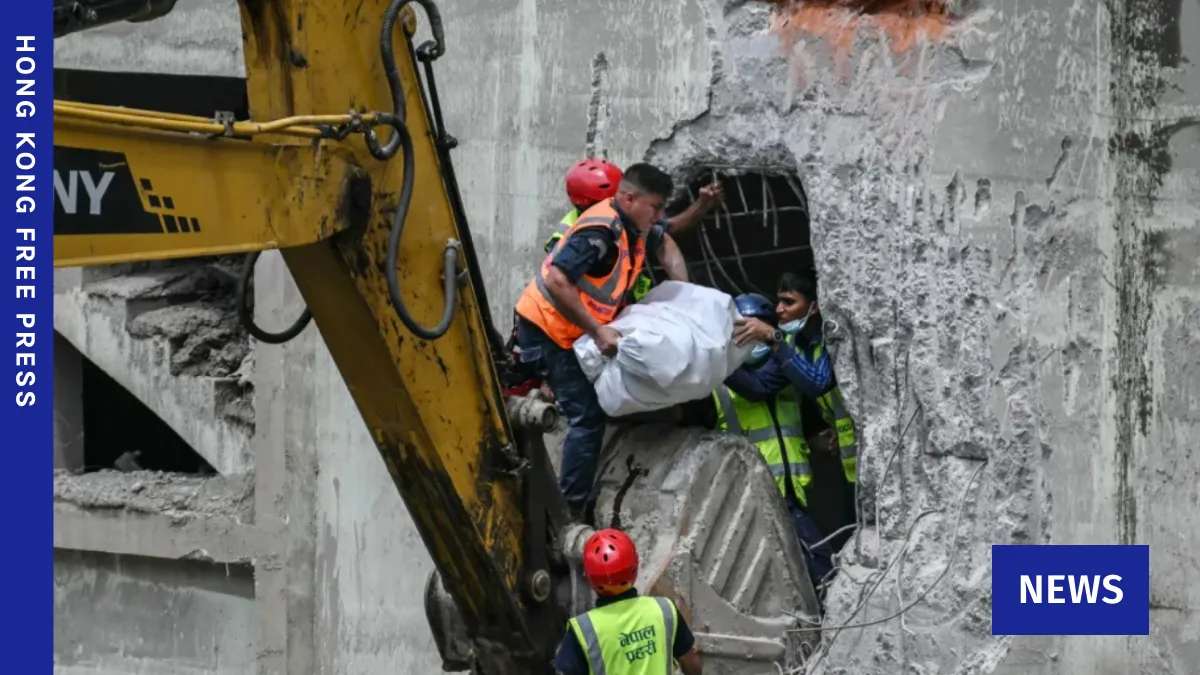
Over 3,000 missing after Nepal-China border glacial catastrophe
Over 3,000 people went missing and 750 died after a glacial collapse struck the Nepal-China border Wednesday.
--- THE CONTEXT ---
A catastrophic glacial collapse triggered a wall of water and debris that swept through the Himalayas on Wednesday morning, engulfing entire villages along the Nepal-China border. The U.S. Geological Survey identified the glacial collapse as the cause of the disaster, which released a torrent that traveled more than 20 kilometres before crashing into populated areas. The region, home to vast energy infrastructure projects, transformed overnight into the site of one of Asia's most devastating recent humanitarian crises, with survivors facing an agonizing wait to learn the fate of missing relatives and the prospect of rebuilding their lives from nothing.
--- THE FACTS ---
Combined figures from Nepal and China place the missing at 3,044, with 750 confirmed deaths. Reports indicate some bodies may have been swept as far downstream as India. Nepal reported 734 deaths on Sunday, with 2,498 people out of contact, including hundreds of foreigners. Across the border in Tibet, 16 people died and 546 remain missing, according to state broadcaster CCTV. Authorities evacuated 555 stranded tourists and 499 Chinese residents from Tibet. India recovered seven bodies from rivers flowing from Nepal.
Nepal's disaster authority listed 933 hydropower workers among the missing. On Sunday, 589 foreigners, including trekkers and Hindu pilgrims heading to Tibet's sacred Mount Kailash, were unaccounted for. The Isha Foundation, led by Indian guru Sadhguru, reported that 80 members had been on a group trip in the area.
--- THE POSITIONS ---
The tragedy exposes the extreme vulnerability of workers and civilians in disaster zones. Buddhi Ram Dangol, a resident of Nepal's Nuwakot district, described how all settlements near the river were swept away. At an army base serving as a rescue hub in Bidur, relatives crowded around lists of rescued people pasted on a wall. Kalka Sharda scanned the list in desperation looking for her son. UN climate chief Simon Steill characterized the glacial collapse as a devastating reminder of how fragile these mountain environments can be.
Survivors and families face compounded vulnerability. The Isha Foundation post on Saturday stated that regarding the immigration office area, there seemed to be no encouraging indications of survivors. Khanal, Nepal's Foreign Minister, said the reconstruction bill could run into billions of dollars and appealed for specialized assistance including heavy-lift drones and technology to help locate trapped people, as well as forensic testing kits and freezer units to store bodies, noting that bodies in water decompose at a faster rate.
--- WHAT REMAINS UNKNOWN ---
The full extent of the disaster remains uncertain. The final death toll is unknown, particularly given reports of bodies potentially swept downstream to India. It is unknown how many of the 3,044 missing will eventually be recovered alive or confirmed deceased. The condition of workers potentially trapped in the Trishuli 3A hydroelectric tunnel remains unknown, though a pipe was successfully inserted and air is being sent through the small opening.
--- UNANSWERED QUESTIONS ---
How many of the 589 missing foreigners will be located alive and able to return home? Will the reconstruction bill running into billions of dollars push Nepal deeper into debt and economic dependence on foreign creditors? How will the loss of 933 hydropower workers affect labor conditions and safety standards across Nepal's energy sector?
--- EPM ANALYSIS ---
This tragedy exposes how poor populations in mountainous regions disproportionately bear the weight of climate disasters. The presence of 933 hydropower workers among the missing, alongside hundreds of vulnerable foreigners, underscores how modern infrastructure and tourism concentrate risks in geologically fragile zones. Foreign Minister Khanal's appeal for specialized assistance reflects not merely an immediate need but a capacity crisis characterizing low-income countries facing disasters of this scale. The economic aftershock—a reconstruction bill potentially in the billions—will likely deepen structural vulnerabilities in Nepal for years. 📌
📌
📌
EPM Take:
In EPM's view, this disaster unmasks the lethal intersection of climate change, high-risk infrastructure, and economic inequality. With 750 confirmed dead and over 3,000 missing, the tragedy reveals how migrant workers and rural communities without access to early-warning systems or adequate shelters suffer catastrophically. International aid commitments total 31 million in emergency funding, yet Nepal faces reconstruction costs in the billions. This vast gap means recovery will depend on debt accumulation, perpetuating a cycle where the poorest absorb the highest cost of accelerating climate crises.
A glacial collapse caused 750 deaths and 3,044 missing on the Nepal-China border. Rescuers deployed 2,141 personnel.
--- THE CONTEXT ---
A glacial collapse on the Nepal-China border triggered a catastrophic flood Wednesday morning, releasing a wall of water and debris that traveled more than 20 kilometres before impacting populated areas. The U.S. Geological Survey identified the glacial collapse as the cause. The region is home to vast energy infrastructure, including multiple hydroelectric plants employing thousands of workers. Rescue and relief operations mobilized immediately across both countries.
--- THE FACTS ---
Authorities from Nepal and China report 3,044 missing and 750 confirmed deaths. Some bodies may have been swept downstream to India. Nepal reported 734 deaths on Sunday, with 2,498 people out of contact including hundreds of foreigners. In Tibet, 16 people died and 546 remain missing according to CCTV. Authorities evacuated 555 stranded tourists and 499 Chinese residents from Tibet. India recovered seven bodies from rivers flowing from Nepal.
Nepal's disaster authority listed 933 hydropower workers among the missing. On Sunday, 589 foreigners were unaccounted for, including trekkers and pilgrims to Mount Kailash. The Isha Foundation reported 80 members were on a group trip in the area.
--- THE POSITIONS ---
Rescue operations deployed significant resources. A total of 2,141 rescuers operated near the Gyirong site, including more than 500 in the worst-hit area. Nepali army troops and engineers worked Sunday to rescue workers believed trapped in a tunnel at the Trishuli 3A hydroelectric site after successfully inserting a pipe into the passage. Home Minister Sudan Gurung stated they had started sending air through the small opening. Overnight rain and rising river waters hampered early Sunday efforts, filling the excavation area with water before conditions eased and teams resumed operations.
China reported that rescuers were moved to a safe location Sunday after a new lake formed by a landslide. CCTV reported Sunday that the newly formed lake was discharging naturally and had been essentially drained, citing China's ministry of water resources. Experts cited by Xinhua indicated that a glacier on the southern slope of Lirung Peak in Nepal fractured, triggering an ice-rock avalanche.
International coordination advanced Saturday when Chinese and Nepali foreign ministers discussed sharing satellite and hydrological data. Multiple nations committed humanitarian aid: the United States and Canada each pledged 3.6 million, the UK offered 6.8 million, the UN released 2.5 million, the European Union promised 2.3 million, and the IFRC allocated more than 1 million and launched an emergency appeal for 31 million. Malaysia said it would send search and rescue specialists and contribute 1 million to recovery efforts.
--- WHAT REMAINS UNKNOWN ---
Final confirmation of victims and missing persons continues. The ultimate death toll and number of survivors among the 3,044 missing remain undetermined. The status of workers potentially trapped in the Trishuli 3A tunnel has not been publicly confirmed, though progress in tunnel access was reported.
--- UNANSWERED QUESTIONS ---
What will be the total reconstruction cost and how will it be financed across domestic and international sources? How will international aid coordination among multiple donors ensure maximum efficiency and equitable distribution? What specific infrastructure improvements or early-warning systems can be implemented to prevent similar disasters in the future?
--- EPM ANALYSIS ---
This catastrophe has mobilized substantial institutional response. Multiple nations and international organizations committed resources demonstrating coordinated global capacity. Nepal's Foreign Minister Shisir Khanal appealed for specialized assistance including heavy-lift drones, locating technology, forensic testing kits, and freezer units for body storage, citing faster decomposition rates in water conditions. The coordination between Chinese and Nepali authorities on sharing satellite and hydrological data represents proactive cross-border cooperation during crisis. However, significant challenges remain. Khanal stated the reconstruction bill could run into billions of dollars, and Nepal's economy is already under pressure with limited resources to respond to a disaster of this scale. The concentration of 933 hydropower workers among the missing underscores specific infrastructure vulnerabilities. The question facing policymakers is whether international aid mechanisms can be mobilized with sufficient speed and coordination to address both immediate rescue needs and long-term reconstruction requirements across this geologically volatile region. 📌
📌
📌
EPM Take:
Our reading is that this coordinated response demonstrates institutional capacity, yet also exposes fundamental limitations. Nepal faces a reconstruction bill potentially in the billions with constrained domestic resources. The loss of 933 hydropower workers highlights sector-specific risks in critical infrastructure. While international pledges total 31 million in emergency funding, the decisive question is whether coordination mechanisms can execute aid swiftly enough to prevent secondary crises. Success will require not only resource commitment but functional governance across borders and agencies in an inherently challenging mountain environment.
Más de 3,000 desaparecidos en inundación fronteriza Nepal-China
Más de 3,000 personas desaparecieron y 750 murieron tras el colapso glacial que golpeó la frontera Nepal-China el miércoles.
--- EL CONTEXTO ---
Una catástrofe sin precedentes golpeó la región fronteriza entre Nepal y China cuando un colapso glacial desencadenó una muralla de agua y escombros que barrió aldeas enteras en el Himalaya. El desastre ocurrió el miércoles por la mañana según reportes del Servicio Geológico de Estados Unidos, que identificó el colapso glacial como causa del desastre. La región, hogar de vastas infraestructuras energéticas, se convirtió en escenario de una de las mayores tragedias humanitarias recientes en Asia montañosa.
--- LOS HECHOS ---
Las cifras conjuntas de Nepal y China ubican los desaparecidos en 3,044 personas, con 750 muertes confirmadas. Nepal reportó 734 muertes el domingo, con 2,498 personas fuera de contacto, incluyendo cientos de extranjeros. En el lado tibetano, 16 personas murieron y 546 permanecen desaparecidas, según reportes de la emisora estatal china CCTV. Autoridades evacuaron 555 turistas varados y 499 residentes chinos del Tíbet. India recuperó siete cuerpos de ríos procedentes de Nepal.
La Autoridad de Desastres de Nepal listó 933 trabajadores de plantas hidroeléctricas entre los desaparecidos. El domingo, 589 extranjeros, incluyendo trekkers y peregrinos hindúes hacia el monte sagrado Kailash, estaban desaparecidos. La Fundación Isha, liderada por el gurú Sadhguru, reportó que 80 miembros estaban en una excursión grupal en el área.
--- LAS POSICIONES ---
La situación refleja la vulnerabilidad extrema de trabajadores y civiles en zonas de desastre. Buddhi Ram Dangol, residente de la región de Nuwakot de Nepal, describió cómo todas las poblaciones cercanas al río fueron arrasadas. En un base militar que funciona como centro de rescate en Bidur, familiares se aglomeraban alrededor de listas de personas rescatadas pegadas en una pared. Kalka Sharda buscaba desesperadamente a su hijo escaneando estas listas. El jefe climático de la ONU, Simon Steill, caracterizó el colapso glacial como un recordatorio devastador sobre la fragilidad de estos entornos montañosos.
--- LO QUE FALTA SABER ---
La dimensión completa del desastre aún se desconoce. El número final de víctimas permanece incierto, particularmente considerando reportes de cuerpos potencialmente arrastrados hacia India. No está claro cuántos de los 3,044 desaparecidos serán eventualmente recuperados con vida o confirmados como fallecidos. La condición actual de los trabajadores potencialmente atrapados en el túnel de Trishuli 3A sigue siendo desconocida, aunque se reportó éxito al insertar una tubería en el pasaje e iniciar el envío de aire.
--- PREGUNTAS SIN RESPUESTA ---
¿Cuántos de los 589 extranjeros desaparecidos lograrán ser localizados vivos? ¿Cómo afectará la carga de reconstrucción en "miles de millones de dólares" a las comunidades más vulnerables de Nepal? ¿Cuál será el impacto a largo plazo en los trabajadores migrantes que representan una parte significativa de la población laboral desaparecida?
--- ANALISIS EPM ---
Esta tragedia expone cómo las poblaciones pobres en regiones montañosas cargan desproporcionadamente el peso de los desastres climáticos. La presencia de 933 trabajadores de plantas hidroeléctricas entre los desaparecidos, junto con cientos de extranjeros vulnerables, subraya cómo la infraestructura moderna y el turismo concentran riesgos en zonas geológicamente frágiles. El llamado del Ministro de Relaciones Exteriores de Nepal para asistencia especializada refleja no solo una necesidad inmediata sino una crisis de capacidad que caracteriza a los países de renta baja frente a desastres de gran escala. 📌
📌
📌
Conclusion EPM:
A juicio de EPM, este desastre demuestra la intersección letal entre cambio climático, infraestructura de alto riesgo y desigualdad económica. Con 750 confirmados muertos y más de 3,000 desaparecidos, la tragedia revela cómo trabajadores migrantes y comunidades rurales sin acceso a sistemas de alerta temprana o refugios sufren catastróficamente. La factura de reconstrucción en miles de millones de dólares agravará la vulnerabilidad fiscal de Nepal, perpetuando un ciclo donde los más pobres absorben el mayor costo humano de crisis climáticas aceleradas. Se reportan cuerpos potencialmente arrastrados hacia India.
Tragedia en Nepal y China: 750 muertos, rescate en curso
Un colapso glacial causó 750 muertes y dejó 3,044 desaparecidos en la frontera Nepal-China. Rescatistas desplegaron 2,141 efectivos.
--- EL CONTEXTO ---
Un colapso glacial en la frontera Nepal-China provocó una inundación catastrófica el miércoles por la mañana. Según el Servicio Geológico de Estados Unidos, el colapso glacial envió una muralla de agua y escombros río abajo, arrasando aldeas enteras en la región himalaya. La zona es hogar de vastas infraestructuras energéticas, incluyendo múltiples plantas hidroeléctricas que emplean a miles de trabajadores.
--- LOS HECHOS ---
Las autoridades de Nepal y China reportan 3,044 desaparecidos y 750 muertes confirmadas. Nepal registró 734 muertes el domingo, con 2,498 personas fuera de contacto incluyendo cientos de extranjeros. En el Tíbet, 16 personas murieron y 546 permanecen desaparecidas, según CCTV. Se evacuaron 555 turistas varados y 499 residentes chinos.
La Autoridad de Desastres de Nepal listó 933 trabajadores hidroeléctricos entre los desaparecidos. El domingo, 589 extranjeros estaban desaparecidos, incluyendo trekkers y peregrinos hacia el Monte Kailash. La Fundación Isha reportó 80 miembros en una excursión grupal en el área.
--- LAS POSICIONES ---
Las operaciones de rescate continúan con recursos significativos desplegados. Un total de 2,141 rescatistas operaban cerca del sitio de Gyirong, incluyendo más de 500 en el área más afectada. Tropas del ejército nepalí e ingenieros trabajaron el domingo para rescatar trabajadores posiblemente atrapados en un túnel de Trishuli 3A después de insertar exitosamente una tubería en el pasaje. Iniciaron el envío de aire a través de la pequeña abertura, según declaró el Ministro del Interior de Nepal, Sudan Gurung. Las lluvias nocturnas y el aumento de aguas fluviales obstaculizaron los esfuerzos iniciales el domingo, pero los equipos reanudaron operaciones cuando las condiciones mejoraron.
China reportó que rescatistas fueron reubicados a un lugar seguro el domingo después de que un nuevo lago se formara por un deslizamiento de tierra cerca del puerto fronterizo de Gyirong. Expertos citados por Xinhua indicaron que un glaciar en la ladera sur del Pico Lirung en Nepal se fracturó, desencadenando una avalancha de hielo y roca que viajó más de 20 kilómetros antes de impactar el puerto de Gyirong. El domingo CCTV reportó que el lago formado estaba descargándose naturalmente y había sido esencialmente drenado, citando al ministerio de recursos hídricos de China.
--- LO QUE FALTA SABER ---
La confirmación final de víctimas y desaparecidos está en curso. No está claro cuántos de los desaparecidos serán localizados vivos versus confirmados fallecidos. El estado de los trabajadores potencialmente atrapados en el túnel de Trishuli 3A no ha sido confirmado públicamente, aunque se reportan avances en el acceso.
--- PREGUNTAS SIN RESPUESTA ---
¿Cuál será el costo total de reconstrucción y cómo se financiará? ¿Cómo coordinará la ayuda internacional entre múltiples donantes para máxima eficiencia? ¿Qué mejoras en sistemas de alerta temprana pueden implementarse para prevenir tragedias similares?
--- ANALISIS EPM ---
Esta catástrofe ha movilizado una respuesta institucional significativa. Múltiples naciones y organismos internacionales han comprometido recursos: Estados Unidos y Canadá prometieron 3.6 millones cada uno, el Reino Unido ofreció 6.8 millones, la ONU liberó 2.5 millones, la Unión Europea 2.3 millones, y la IFRC asignó más de 1 millón y lanzó un llamado de emergencia por 31 millones. Malasia enviará especialistas en búsqueda y rescate y contribuirá 1 millón de dólares. El Ministro de Relaciones Exteriores de Nepal, Shisir Khanal, ha apelado por asistencia especializada incluyendo drones de elevación pesada, tecnología de localización, kits de pruebas forenses e instalaciones de refrigeración para almacenar cuerpos. Las autoridades chinas y nepales coordinaron el intercambio de datos satelitales e hidrológicos el sábado. India recuperó siete cuerpos de ríos procedentes de Nepal. 📌
📌
📌
Conclusion EPM:
Nuestra lectura es que esta respuesta coordinada demuestra capacidad institucional, pero también expone limitaciones. Nepal enfrenta una factura de reconstrucción potencialmente en miles de millones de dólares con recursos domésticos limitados. La concentración de 933 trabajadores hidroeléctricos entre los desaparecidos subraya riesgos infraestructurales específicos. Aunque la ayuda internacional comprometida es sustancial, la pregunta crítica es cómo se distribuirá equitativamente y si los mecanismos de coordinación internacional pueden actuar con la velocidad que la magnitud de esta crisis requiere. Algunos cuerpos fueron potencialmente arrastrados hacia India.