Ceuta inquiry opens two tracks as government contradictions deepen
Judge María Tardón of Spain's National Court is investigating both the authorship of the mass crossing at Ceuta and whether Spanish officials acted on advance…
Ceuta investigation examines Spain's border security and intelligence response
Judge María Tardón of Spain's National Court is investigating both who organized the Ceuta mass crossing and whether Spanish officials acted on CNI alerts…
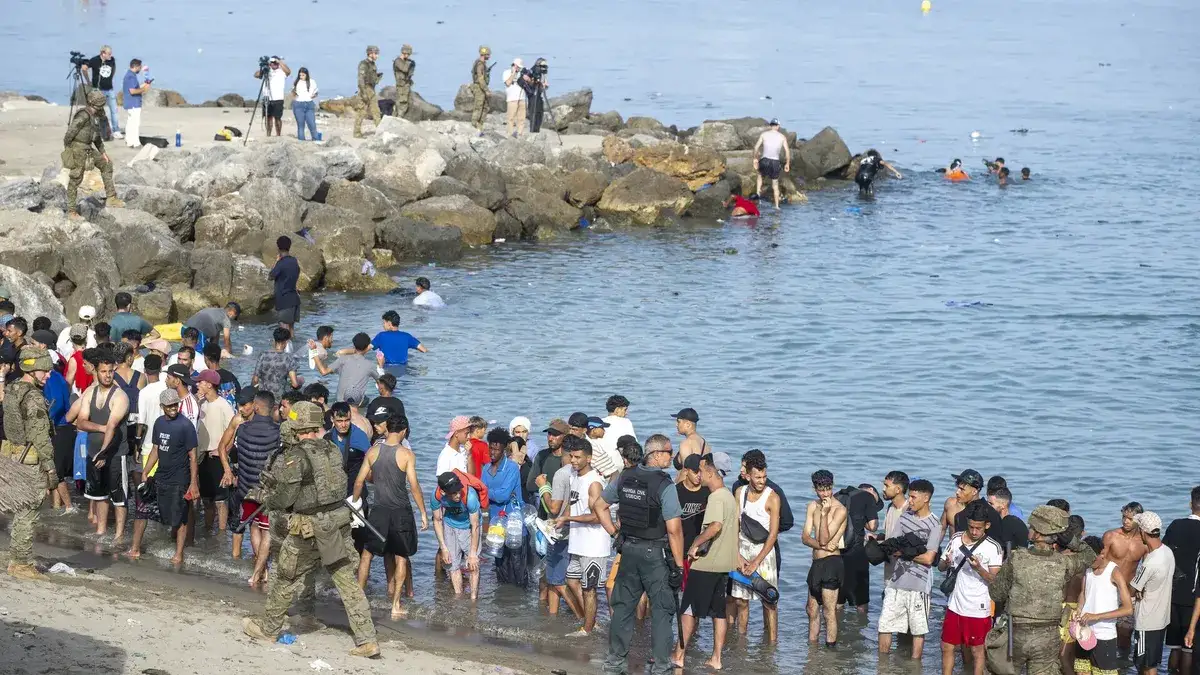
Spain's National Court judge María Tardón is pursuing two parallel lines of investigation into the mass crossing at Ceuta: who organized it, and whether Spanish officials who had advance warning acted on it. The answers will determine accountability not only toward Morocco but toward the thousands of people caught in a crisis that state institutions may have seen coming.
--- THE CONTEXT ---
Central Investigation Court number 3, led by judge Tardón, is handling the case. Tardón herself described the events as a presumed «serious attack on Spain's territorial integrity.» The mass crossing took place on July 30, coinciding with Morocco's Throne Day celebration.
--- THE FACTS ---
On July 29, the CNI — Spain's intelligence service — warned Morocco's intelligence services, the Government Delegation in Ceuta and the Civil Guard that Facebook groups with a combined 180,000 followers were calling for an «assault by fence and sea» the following day. The government declassified those documents on Wednesday and published them on the Moncloa website. On Thursday, judge Tardón formally requested that the Ministry of Justice forward those same reports to the court. On Friday, the chief of staff of the Government Delegation resigned, stating he had forwarded the CNI alert to the government delegate, Miguel Ángel Pérez Triano. Pérez Triano denies receiving it. The judge is expected to order testimony from both officials to establish who is telling the truth and how far up the institutional hierarchy the information actually traveled.
--- THE POSITIONS ---
The resigned chief of staff says he fulfilled his obligation by forwarding the alert. Delegate Pérez Triano contradicts that account. The government declassified the documents but this source does not report that any official explanation of response protocols has been offered publicly. The judge has not yet linked Spain's internal response to any specific criminal offense.
--- WHAT REMAINS UNKNOWN ---
This source does not establish whether Morocco responded to the CNI warning it received on July 29, or whether a judicial cooperation framework exists that could compel Moroccan collaboration with the investigation. Nor are the Civil Guard's internal response steps documented here.
--- UNANSWERED QUESTIONS ---
• What specific response protocol was triggered — if any — when the CNI identified the Facebook groups with 180,000 followers calling for the crossing?
• Which other Spanish state bodies received the July 29 CNI alert beyond those named in the source?
• What legal or diplomatic tools does judge Tardón have to compel cooperation from Morocco's authorities?
• How will the contradiction between the two officials affect the workers and civil servants in Ceuta whose duties depended on a functioning chain of command?
--- EPM ANALYSIS ---
The two-track investigation moves at different speeds for a structural reason: the internal track has domestically held evidence and named witnesses already under Spanish jurisdiction; the external track hinges on Morocco, a sovereign actor with its own strategic calculations. The chief of staff's resignation converts a political embarrassment into a sworn-testimony problem. The people most directly affected by any institutional failure are those who crossed and those stationed to prevent it. 📌
📌
📌 EPM Take:
In EPM's view, the most consequential finding so far is not that an alert existed — it is that two officials inside the same government cannot agree on whether that alert was passed up the chain. That discrepancy is not a footnote; it is the load-bearing question of the internal investigation. EPM previously reported on the coordination failures exposed by the declassification. This inquiry now moves that story from the political to the judicial, where consequences for institutions — and for individuals — are far harder to escape.
Spain's National Court judge María Tardón is running two simultaneous lines of inquiry that together test the country's institutional capacity to defend its territory and to hold its own officials accountable. The outcome will matter well beyond Ceuta: it will signal whether Spain's security architecture is capable of converting reliable intelligence into decisive action.
--- THE CONTEXT ---
Central Investigation Court number 3, led by judge Tardón, is the competent body. Tardón herself characterized the events as a presumed «serious attack on Spain's territorial integrity.» The mass crossing occurred on July 30, the date of Morocco's Throne Day. Both the authorship investigation and the internal response inquiry are proceeding simultaneously but at different speeds.
--- THE FACTS ---
On July 29, Spain's CNI alerted Morocco's intelligence services, the Government Delegation in Ceuta and the Civil Guard that Facebook groups totaling 180,000 followers were openly calling for an «assault by fence and sea» the next day. The government declassified those documents on Wednesday and published them on the Moncloa website. Judge Tardón requested on Thursday that the Ministry of Justice transmit the declassified reports to the court. On Friday, the chief of staff of the Government Delegation resigned, claiming he had forwarded the CNI alert to delegate Miguel Ángel Pérez Triano. Pérez Triano denies it. The judge is expected to summon both officials for testimony to determine who is telling the truth and how far up the chain the warning actually traveled.
--- THE POSITIONS ---
The resigned chief of staff maintains he acted correctly by transmitting the alert. Delegate Pérez Triano denies receiving it. The Spanish government declassified the relevant documents, but this source does not report that any structured account of the intended response protocol has been offered. Judge Tardón has not yet linked Spain's internal conduct to any specific criminal charge.
--- WHAT REMAINS UNKNOWN ---
This source does not establish whether Morocco replied to the July 29 CNI communication or whether any bilateral judicial cooperation mechanism compels Moroccan participation in the inquiry. The Civil Guard's internal response steps are also not documented in this report.
--- UNANSWERED QUESTIONS ---
• Does a formal bilateral framework exist between Spain and Morocco that could require or incentivize Moroccan cooperation with judge Tardón's investigation?
• Was there a written protocol governing how the Government Delegation in Ceuta was to escalate CNI security alerts of this nature?
• If the internal track establishes that the alert was not properly elevated, what institutional or legal consequences does Spanish law provide?
• How will the absence of Moroccan cooperation affect the pace and conclusions of the authorship investigation?
--- EPM ANALYSIS ---
The dual-track investigation reveals a structural asymmetry: Spain's internal track is moving faster because its evidence is already declassified and its witnesses are subject to Spanish jurisdiction. The external track, dependent on Moroccan cooperation, faces sovereign limits that no court order can easily overcome. The resignation of the chief of staff shifts the political crisis into judicial territory, where conflicting sworn accounts carry legal weight. Spain's security credibility — and its leverage in the broader bilateral relationship — now partly depends on what the court establishes. 📌
📌
📌 EPM Take:
In EPM's view, the institutional failure exposed here is not primarily a border failure — it is a command failure. The CNI performed its function. What the inquiry must now determine is whether a working chain of command existed above the intelligence product. EPM has documented the coordination gaps revealed by the declassification; this judicial phase is the test of whether Spain's security institutions can enforce accountability internally when external actors — Morocco above all — have neither the obligation nor the incentive to cooperate.
Jueza Tardón abre dos frentes en la causa de Ceuta sobre alertas ignoradas
La jueza Tardón investiga dos frentes simultáneos en la causa de Ceuta: la autoría del presunto ataque a la integridad territorial y si las autoridades…
Ceuta: dos hilos judiciales sobre la entrada masiva de inmigrantes
La jueza de la Audiencia Nacional María Tardón investiga simultáneamente la autoría del presunto ataque a la integridad territorial española en Ceuta y la…
La magistrada de la Audiencia Nacional María Tardón investiga a la vez quién ordenó la entrada masiva de personas a Ceuta y si las autoridades españolas que debían prevenirla actuaron sobre las alertas que tenían en sus manos. Dos frentes, dos ritmos distintos, y en el centro miles de personas cuya travesía quedó atrapada en el cruce entre la inacción institucional y una crisis diplomática sin resolver.
--- EL CONTEXTO ---
El Juzgado Central de Instrucción número 3, a cargo de la instructora Tardón, es el órgano que lleva la causa. La propia jueza describió los hechos como un presunto «grave ataque a la integridad territorial de España». La entrada masiva de personas se produjo el 30 de julio, coincidiendo con la Fiesta del Trono del reino alauí.
--- LOS HECHOS ---
El 29 de julio, el CNI alertó a los servicios de Inteligencia de Marruecos, a la Delegación del Gobierno en Ceuta y a la Guardia Civil de que en Facebook, en grupos con un total de 180.000 seguidores, circulaban llamamientos para un «asalto por valla y mar» al día siguiente. La instructora reclamó el pasado jueves al Ministerio de Justicia los informes y alertas que el Gobierno desclasificó el miércoles y publicó en la web de Moncloa, entre ellos esas comunicaciones del CNI. El jefe de gabinete de la Delegación del Gobierno presentó la dimisión el viernes: asegura haber reenviado la alerta al delegado Miguel Ángel Pérez Triano, quien lo niega. La jueza previsiblemente ordenará declaraciones de ambos para determinar hasta qué escalafón llegó la información.
--- LAS POSICIONES ---
El jefe de gabinete dimisionario y el delegado del Gobierno Pérez Triano sostienen versiones opuestas sobre si la alerta del CNI fue transmitida. El Gobierno desclasificó los documentos, pero no ha ofrecido una explicación pública articulada sobre la cadena de mando. La jueza no ha vinculado aún la respuesta española con ningún delito concreto.
--- LO QUE FALTA SABER ---
Ni la fuente ni los documentos desclasificados hasta ahora resuelven qué medidas preventivas se activaron —si alguna— tras las alertas del CNI. Tampoco está claro si Marruecos respondió a la comunicación recibida el 29 de julio ni en qué plazo.
--- PREGUNTAS SIN RESPUESTA ---
• ¿Qué protocolo de actuación debía activarse cuando el CNI alertó sobre los grupos de Facebook con 180.000 seguidores, y fue seguido?
• ¿Qué ocurrió entre la dimisión del jefe de gabinete y la posición del delegado Pérez Triano que pueda aclarar la cadena real de mando?
• ¿Cómo afectará la falta de colaboración judicial de Marruecos al ritmo de la instrucción sobre la autoría del presunto ataque?
• ¿Cuándo prevé el Ministerio de Justicia cumplir la petición de la instructora de remitir los informes desclasificados?
--- ANALISIS EPM ---
La dimisión del jefe de gabinete convierte un debate político en un problema judicial concreto: dos funcionarios afirman cosas contradictorias bajo la misma causa. La vía interna, aquella que mira hacia España, avanza más rápido porque sus fuentes son nacionales y están ya desclasificadas. La vía externa —Marruecos— puede enquistarse si el reino alauí no coopera. El perdedor inmediato es la transparencia institucional; las personas que cruzaron son las que soportan las consecuencias más directas y duraderas. 📌
📌
📌 Conclusion EPM:
A juicio de EPM, el hecho más revelador no es que existiera una alerta, sino que dos funcionarios del mismo gobierno den versiones irreconciliables sobre si esa alerta fue transmitida. Eso no es una disputa política ordinaria: es un problema de gobernanza que la instructora Tardón deberá resolver con herramientas judiciales. EPM ya cubrió los fallos de coordinación revelados por la desclasificación; ahora queda claro que esos fallos tienen nombre y apellido institucional, aunque los hechos probados aún están por establecerse.
La magistrada de la Audiencia Nacional María Tardón tiene ante sí una instrucción con consecuencias que van más allá de la gestión de fronteras: lo que se dilucide en el Juzgado Central de Instrucción número 3 determinará si España fue incapaz de defender su integridad territorial o si, además, hubo omisión consciente en los niveles más altos del Estado.
--- EL CONTEXTO ---
La propia jueza Tardón calificó los hechos como un presunto «grave ataque a la integridad territorial de España». La entrada masiva se produjo el 30 de julio, coincidiendo con la Fiesta del Trono de Marruecos. El juzgado que instruye la causa es el número 3 de la Audiencia Nacional.
--- LOS HECHOS ---
El 29 de julio el CNI alertó a los servicios de Inteligencia de Marruecos, a la Delegación del Gobierno en Ceuta y a la Guardia Civil: en grupos de Facebook con 180.000 seguidores se convocaba un «asalto por valla y mar» para el día siguiente. El Gobierno desclasificó esos documentos el miércoles y los publicó en la web de Moncloa; la instructora reclamó al Ministerio de Justicia que los remitiera al juzgado el jueves siguiente. El jefe de gabinete de la Delegación dimitió el viernes asegurando que reenvió la alerta al delegado Miguel Ángel Pérez Triano, quien lo niega. La jueza prevé declaraciones de ambos para fijar la verdad y determinar hasta qué nivel de la jerarquía llegó la información.
--- LAS POSICIONES ---
El jefe de gabinete dimisionario sostiene que cumplió su obligación de transmitir la alerta. El delegado Pérez Triano lo contradice. El Gobierno desclasificó los documentos, pero esta fuente no recoge que haya ofrecido una explicación sobre los protocolos de respuesta que debían activarse. La jueza no vincula aún la respuesta española a ningún delito.
--- LO QUE FALTA SABER ---
La fuente no establece si Marruecos respondió a la alerta que el CNI le trasladó el 29 de julio ni si existe un marco de cooperación judicial bilateral que obligue al reino alauí a colaborar con la instrucción. Los protocolos de respuesta de la Guardia Civil tampoco aparecen documentados.
--- PREGUNTAS SIN RESPUESTA ---
• ¿Qué mecanismo de cooperación judicial existe entre España y Marruecos que pueda obligar o incentivar al reino alauí a colaborar con la instructora Tardón?
• ¿La cadena de mando en la Delegación del Gobierno en Ceuta contemplaba un protocolo escrito para alertas de asalto masivo a la frontera?
• ¿A qué otros organismos del Estado llegó la alerta del CNI del 29 de julio, además de los mencionados en la fuente?
• ¿Qué consecuencias institucionales prevé el Gobierno si la instrucción determina que la información no fue elevada adecuadamente?
--- ANALISIS EPM ---
La instrucción avanza en dos velocidades porque sus dos frentes tienen distinto grado de soberanía: el frente interno depende de documentos ya desclasificados y de testimonios de funcionarios españoles; el frente externo depende de Marruecos, un actor con intereses propios. La dimisión del jefe de gabinete no resuelve la cuestión de fondo sobre el orden institucional; la agrava, porque convierte una crisis de seguridad en una disputa de versiones dentro del propio Estado.
📌 Conclusion EPM:
A juicio de EPM, el problema de fondo no es la falta de inteligencia —el CNI avisó con tiempo— sino la ausencia de una cadena de mando que convierta la información en acción. Un Estado que recibe alertas y no puede demostrar que las procesó correctamente ha fallado en su función esencial de defensa del orden y del territorio. EPM ya documentó los fallos de coordinación revelados por la desclasificación; lo que esta instrucción debe establecer es si ese fallo fue sistémico o individual. 📌 📌