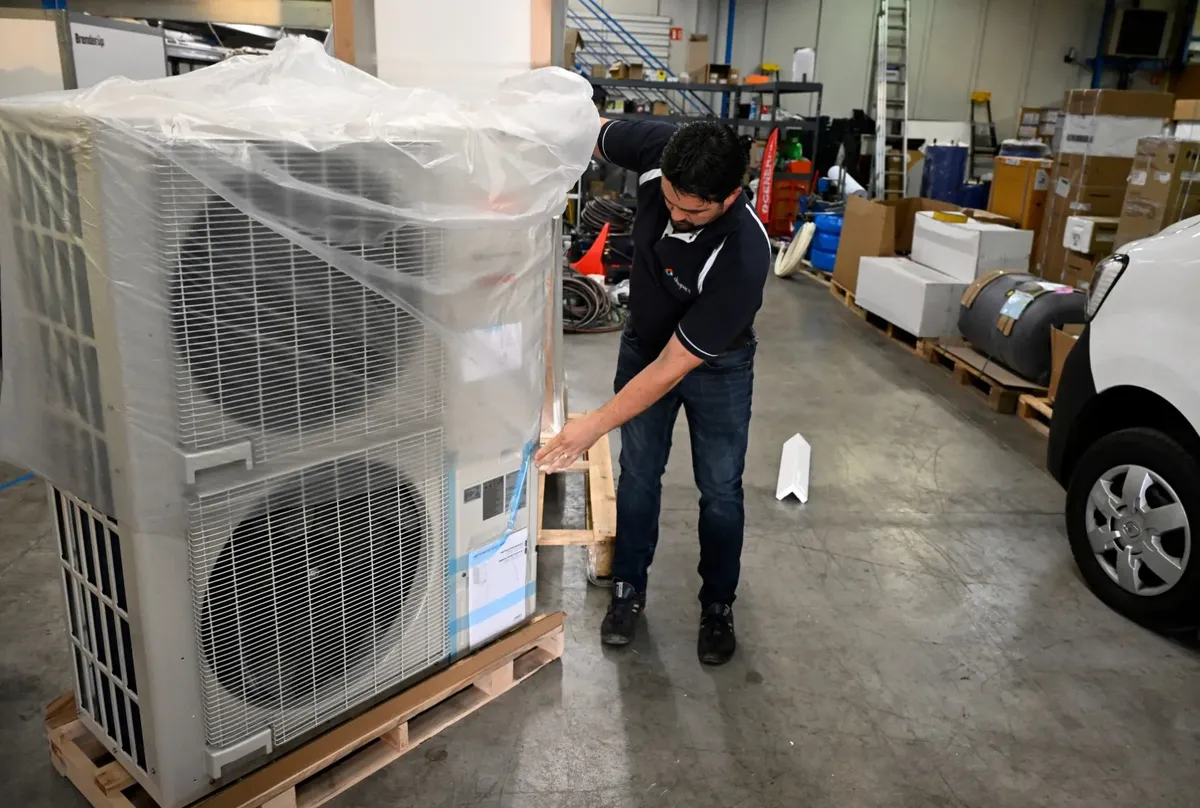
France targets 109 rural zones in nationwide electrification push
France selected 109 mostly rural territories from 196 local applications to lead its national electrification programme, covering 14.8 million people across…
France's electrification plan reduces reliance on imported fossil fuels
France selected 109 territories from 196 local applications to lead a national electrification programme spanning 6,676 communes and 14.8 million people.
France has named 109 towns, villages and intercommunal bodies as the starting points of a national electrification programme that already covers 6,676 communes and nearly one in four people living in the country — and the communities chosen are, overwhelmingly, rural.
--- THE CONTEXT ---
The French government unveiled its national plan for the electrification of energy use in April, covering electric vehicles, charging infrastructure, heating systems, industry and agriculture. The stated goal is to reduce France's reliance on imported oil and gas by making broader use of its relatively low-carbon electricity supply.
--- THE FACTS ---
On September 11th, authorities announced the 109 territories selected to begin putting the plan into practice. They were chosen from 196 applications submitted by local authorities. Eighty-seven percent of the selected areas are in rural zones. Together they cover 14.8 million people. The range is wide: from Saint-Maur in Val-de-Marne near Paris, a single commune of 76,000 residents, to the Communauté d'agglomération du Pays Basque in southwest France, an intercommunal body of 325,000, with territories in rural areas and Corsica also included.
For households, the programme could mean replacing an oil or gas boiler with a heat pump. For local transport, it implies more electric vehicles and charging points. Municipal fleets, public buildings and local businesses are also in scope. In some areas, authorities will work toward decommissioning sections of the public gas network where there is, according to the source, a sufficiently strong case for doing so.
The programme is not simply a list of 109 individual communes. Many selections are intercommunal bodies, meaning a single selection can cover dozens of municipalities at once.
--- THE POSITIONS ---
The programme was built on voluntary applications from local authorities, which gives it a degree of bottom-up legitimacy. The source does not record any statement from consumer groups, trade unions, energy sector operators or parliamentary opposition in response to the September announcement.
--- WHAT REMAINS UNKNOWN ---
The source does not specify how costs will be shared between the state and individual households, what financial support will be available to lower-income residents, or what timeline governs the pilot phase before the model is extended more broadly.
--- UNANSWERED QUESTIONS ---
• How much will rural households be expected to contribute out of pocket to replace heating systems, and will support be sufficient for those on lower incomes?
• What happens to the 87 communities that applied and were not selected?
• Under what precise conditions can a local authority begin decommissioning the public gas network, and who holds the final decision?
• What metrics will the government use to evaluate whether the 109 pilot territories have succeeded before scaling the programme?
--- EPM ANALYSIS ---
The heavy concentration in rural areas is not incidental. Dependence on heating oil and private vehicles is structurally higher in the French countryside than in cities, making the potential impact larger — but so is the financial exposure of residents who did not choose that dependence. The voluntary application structure distributes political responsibility downward without necessarily distributing resources in the same direction. That gap is where the programme's social legitimacy will be won or lost. 📌
📌
EPM Take:
In EPM's view, the geographic logic of this programme is sound, but its social logic remains unproven. Starting in rural areas makes energy sense; it does not automatically make equity sense. The 87 percent rural concentration means the programme's first test subjects are disproportionately communities with lower average incomes and fewer alternatives. Without a visible financing architecture that protects the most exposed households, this well-designed plan risks becoming a mandate that the most vulnerable are least equipped to fulfil.
France is reorganising its domestic energy architecture around a single strategic imperative — reducing dependence on imported oil and gas — and has now selected 109 territories to begin that transformation among 6,676 communes covering 14.8 million residents.
--- THE CONTEXT ---
The government announced its national electrification plan in April, encompassing electric vehicles, charging infrastructure, heating systems, industrial equipment and agriculture. The rationale, as stated in the source, is to reduce France's exposure to imported fossil fuel markets by capitalising on its relatively low-carbon electricity supply.
--- THE FACTS ---
On September 11th, the government published its selection of 109 territories drawn from 196 applications submitted by local authorities. Eighty-seven percent of the chosen areas are rural. Collectively they cover 14.8 million people — close to one in four residents of France. Territories range from the single commune of Saint-Maur in Val-de-Marne, population 76,000, to the Communauté d'agglomération du Pays Basque in the southwest, population 325,000, with zones in rural areas and Corsica also included.
The programme's scope is broad: heat pumps replacing gas and oil boilers in homes; expanded electric vehicle fleets and charging networks for transport; electrification of municipal vehicle fleets and public buildings; support for local businesses and industries. In territories where conditions justify it, authorities will also work toward decommissioning sections of the public gas network. The official government map distinguishes three categories — intercommunal bodies, groupings of local authorities, and individual communes — meaning one selection can encompass many municipalities.
--- THE POSITIONS ---
The voluntary application mechanism gives local governments institutional ownership of the programme. The source records no reaction from energy sector operators, business associations, opposition parties or institutional bodies within France's regulatory framework. This report does not establish whether such responses were made or are pending.
--- WHAT REMAINS UNKNOWN ---
The source does not identify the budgetary mechanism funding the programme, the objective criteria used to select among the 196 applications, or the conditions under which the pilot model would be extended to the remaining communes.
--- UNANSWERED QUESTIONS ---
• What supply security guarantees are in place for rural territories that begin decommissioning gas infrastructure before electric alternatives are fully operational?
• Were the selection criteria for the 109 territories published, and how were technical factors weighted against political ones?
• How does this plan integrate with France's energy commitments within broader European frameworks?
• What institutional body holds final authority over decisions to decommission sections of the public gas network?
--- EPM ANALYSIS ---
The strategic dimension of this plan extends beyond domestic energy policy. France is one of the Western economies most exposed to the consequences of energy dependence on external suppliers. A structured reduction in that dependence, anchored in local institutional buy-in and a decarbonised electricity grid, strengthens national resilience and, by extension, geopolitical manoeuvre room. The voluntary architecture is smart: it transfers ownership to municipalities while the central government retains design authority and, presumably, financial leverage. 📌
📌
EPM Take:
In EPM's view, this electrification programme deserves to be read alongside EPM's recent coverage of France's sovereign posturing in distant territories. A France less dependent on imported gas is a France with more credible options across multiple strategic fronts. The 109 pilot zones are not merely an energy experiment; they are the domestic foundation of a foreign policy aspiration. Whether the institutional architecture — voluntary, locally driven, centrally selected — can deliver at the scale required is the question that will define the programme's real significance.
Francia selecciona 109 zonas de electrificación en municipios rurales
Francia ha designado 109 territorios, el 87 por ciento en zonas rurales, como puntos de arranque de su plan nacional de electrificación, que cubre a 14,8…
Plan francés de electrificación busca reducir dependencia de combustibles importados
Francia seleccionó 109 territorios piloto de entre 196 candidaturas locales para ejecutar su plan nacional de electrificación, que abarca 6.676 municipios y…
Francia ha convertido a 6.676 municipios en el territorio piloto de una apuesta energética sin precedentes: sustituir calderas, vehículos y maquinaria industrial que funcionan con combustibles fósiles por alternativas eléctricas. El impacto directo afecta a casi una de cada cuatro personas que viven en el país.
--- EL CONTEXTO ---
El Gobierno francés anunció en abril su plan nacional de electrificación del uso de la energía, un programa que abarca desde coches eléctricos y puntos de recarga hasta calefacción, industria y agricultura. El plan busca reducir la dependencia de Francia del petróleo y el gas importados, aprovechando su red eléctrica de bajo contenido en carbono.
--- LOS HECHOS ---
El 11 de septiembre el Gobierno dio a conocer los 109 territorios seleccionados para arrancar la ejecución del plan. Fueron elegidos de entre 196 candidaturas presentadas por autoridades locales. Los territorios van desde municipios individuales, como Saint-Maur en Val-de-Marne, con 76.000 habitantes, hasta grandes áreas intermunicipales como la Communauté d'agglomération du Pays Basque, con 325.000 residentes, pasando por zonas rurales y Córcega. En conjunto, el 87 por ciento de los territorios seleccionados está en zonas rurales, lo que evidencia hacia dónde apunta el esfuerzo inicial del Estado.
Para los hogares, la electrificación se traduce en la sustitución de calderas de gasoil o gas por bombas de calor. Para el transporte, implica ampliar la flota de vehículos eléctricos y la red de recarga. Para los ayuntamientos, puede significar convertir su parque municipal de vehículos, instalar infraestructuras de carga o renovar los sistemas de calefacción de edificios públicos. En algunos territorios se prevé incluso el desmantelamiento parcial de la red pública de gas.
--- LAS POSICIONES ---
El programa, según la fuente, es una iniciativa del Gobierno que recoge candidaturas voluntarias de las autoridades locales. No se registra en la fuente ninguna declaración pública de oposición ni respuesta de asociaciones de consumidores, sindicatos o grupos de presión del sector energético ante el anuncio.
--- LO QUE FALTA SABER ---
La fuente no detalla quién financia la transición ni en qué proporción recae el coste en los hogares. Tampoco especifica plazos concretos de ejecución, criterios de evaluación del programa ni qué sucede con los municipios excluidos de las 196 candidaturas.
--- PREGUNTAS SIN RESPUESTA ---
• ¿Cuánto deberán invertir de su bolsillo los hogares rurales para sustituir sus sistemas de calefacción, y existirán ayudas suficientes para quienes tienen menores ingresos?
• ¿Qué ocurre con las familias y empresas de los 87 municipios candidatos que no fueron seleccionados?
• ¿Bajo qué criterios exactos se puede iniciar el desmantelamiento de la red de gas en un territorio, y quién toma esa decisión?
• ¿Qué indicadores usará el Gobierno para evaluar si los 109 territorios piloto han alcanzado sus objetivos antes de extender el programa?
--- ANÁLISIS EPM ---
La concentración del 87 por ciento de los territorios seleccionados en zonas rurales revela que el Estado apuesta por empezar donde la dependencia del gasoil de calefacción y el vehículo privado son más altas y donde la alternativa eléctrica puede tener mayor impacto. El riesgo concreto es que los hogares de menor renta, que predominan en esas zonas, soporten el coste de una transición que no han diseñado ni pueden pagar con igual facilidad. 📌
📌
Conclusion EPM:
A juicio de EPM, este programa tiene la geometría correcta —local, voluntaria, priorizada— pero su mayor vulnerabilidad es económica, no técnica. Arrancar por zonas rurales tiene sentido energético, pero el perfil socioeconómico de esos municipios exige que el Estado garantice financiación suficiente para los hogares con menos recursos antes de que la electrificación pase de oportunidad a carga. Sin esa garantía, el plan corre el riesgo de ampliar la desigualdad territorial que dice querer reducir.
Francia ha puesto en marcha una de las apuestas de soberanía energética más ambiciosas de Europa occidental: sustituir en 6.676 municipios el consumo de petróleo y gas importados por electricidad de producción nacional, apostando por los 109 territorios seleccionados el 11 de septiembre como palanca inicial.
--- EL CONTEXTO ---
En abril, el Gobierno anunció su plan nacional de electrificación del uso de la energía. El objetivo declarado es reducir la dependencia de Francia respecto al petróleo y el gas importados mientras incrementa el uso de su red eléctrica, descrita en la fuente como de relativamente bajo contenido en carbono.
--- LOS HECHOS ---
De 196 candidaturas presentadas por autoridades locales, el Gobierno seleccionó 109 territorios que en conjunto cubren 14,8 millones de personas, casi una de cada cuatro en Francia. El 87 por ciento de los seleccionados son zonas rurales, desde el municipio de Saint-Maur, con 76.000 habitantes, en Val-de-Marne, hasta la Communauté d'agglomération du Pays Basque, con 325.000 residentes, incluyendo territorios en Córcega.
La estructura del programa distingue tres tipos de entidad territorial: EPCI (organismos intermunicipales), agrupaciones de autoridades locales y municipios individuales, representados en el mapa oficial del Gobierno en colores morado, verde y naranja respectivamente. Esto implica que una sola selección puede abarcar decenas de municipios.
Las medidas concretas incluyen instalación de bombas de calor en sustitución de calderas de gas o gasoil, ampliación de la red de puntos de recarga eléctrica, electrificación de flotas municipales y de empresas locales, y en ciertos casos el desmantelamiento de tramos de la red pública de gas donde exista justificación suficiente.
--- LAS POSICIONES ---
El programa se articula sobre candidaturas voluntarias de las autoridades locales, lo que implica un grado de apropiación institucional desde el nivel municipal. La fuente no recoge declaraciones de operadores del sector energético, asociaciones empresariales ni grupos parlamentarios de oposición ante el anuncio.
--- LO QUE FALTA SABER ---
La fuente no revela qué mecanismo presupuestario financia el programa, ni qué condiciones deben cumplir los territorios piloto para extender el modelo al resto de las 6.676 comunas. Los criterios de selección entre las 196 candidaturas tampoco han sido publicados según este reporte.
--- PREGUNTAS SIN RESPUESTA ---
• ¿Qué garantías de suministro eléctrico continuo se han establecido para territorios rurales que desmantelarían su red de gas sin una alternativa plenamente operativa?
• ¿En qué medida la selección de candidaturas responde a criterios técnicos objetivos frente a consideraciones políticas territoriales?
• ¿Cuál es el marco regulatorio aplicable al desmantelamiento de la red pública de gas y qué instancia tiene la decisión final?
• ¿Cómo se integra este plan con los compromisos de defensa energética colectiva en el marco de la Unión Europea?
--- ANÁLISIS EPM ---
Desde una perspectiva de seguridad nacional y orden institucional, la apuesta francesa tiene coherencia estratégica: reducir la exposición a mercados volátiles de gas y petróleo es una forma de reforzar la resiliencia del Estado. La arquitectura voluntaria —candidaturas locales, selección central— distribuye la responsabilidad política y reduce la fricción institucional. El riesgo es que la velocidad de ejecución quede por debajo de la ambición declarada si el marco financiero no es suficientemente sólido. 📌
📌
Conclusion EPM:
A juicio de EPM, la dimensión más relevante de este plan no es técnica sino geopolítica. En un contexto donde EPM ha cubierto cómo Francia afirma su posición soberana en escenarios como Saint-Pierre-and-Miquelon, la electrificación rural debe leerse también como un esfuerzo de consolidación interior: un país menos dependiente del gas importado es un país con mayor libertad de maniobra en política exterior. Esa variable —la soberanía energética como instrumento de poder— es la que el debate doméstico sobre bombas de calor tiende a ignorar y la que más debería importar.