Canada and the EU move closer, but citizens must weigh the real-life stakes
On September 16, 2026, Ursula von der Leyen offered Canada EU associate membership; Prime Minister Carney accepted the next day.
Canada pivots to Europe in a strategic realignment that reshapes Atlantic order
On September 16, 2026, Ursula von der Leyen offered Canada EU associate membership; Carney accepted the next day, citing critical minerals and Canada's World…
A public offer to make Canada the European Union's first ever associate member has captured global attention — and raised immediate questions about what the arrangement would actually mean for ordinary workers, consumers and communities on both sides of the Atlantic.
--- THE CONTEXT ---
Mandy Pipher, The Local's resident Canadian columnist, examines whether Canadians would genuinely accept deeper ties with Europe. Her analysis centres on the speeches delivered on September 16 and 17, 2026, and on the domestic conditions that shape Canadian public opinion.
--- THE FACTS ---
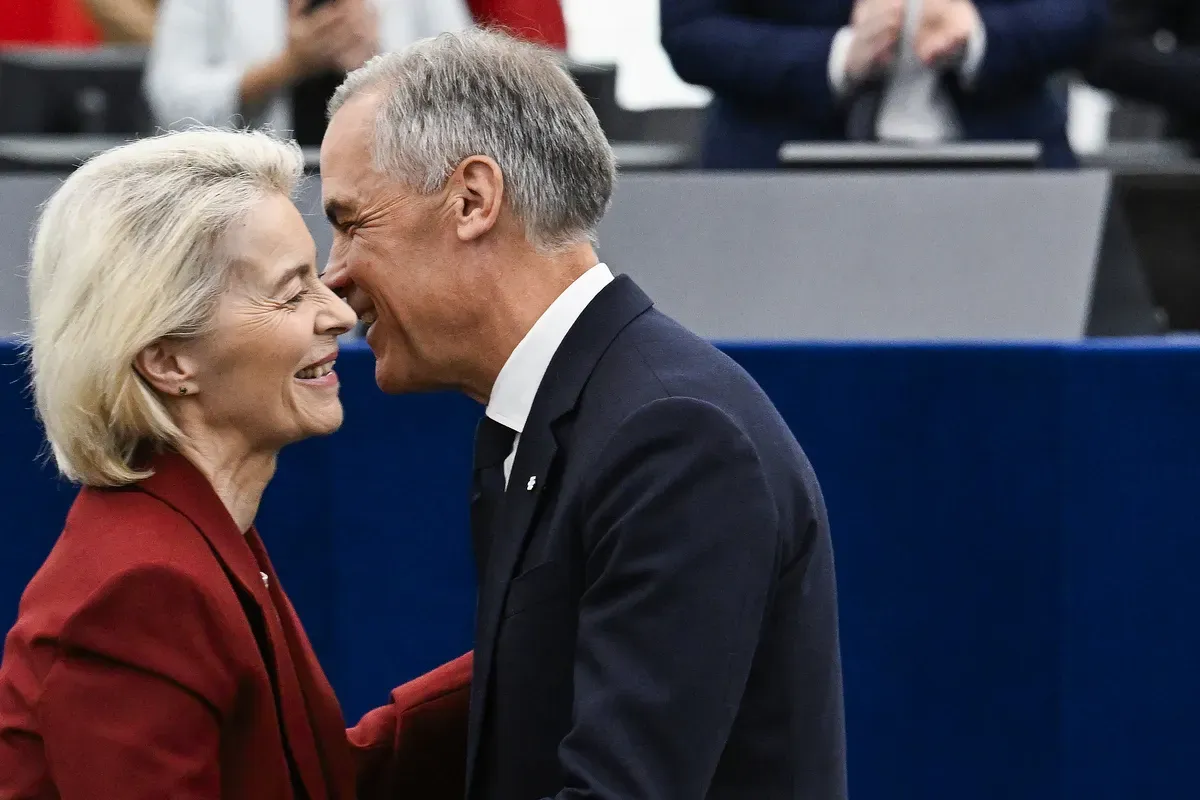
On September 16, 2026, European Commission President Ursula von der Leyen used her State of the Union address to the European Parliament to propose that Canada become the EU's first associate member. Prime Minister Mark Carney — referred to by von der Leyen as "dear Mark" — was seated in the front row. After the offer was made, Carney rose amid applause and met von der Leyen between the seats and the podium. The next day Carney addressed the Parliament himself, formally accepted the associate member title, referenced Canada's role in both European World Wars and highlighted Canada's critical minerals as a strategic asset for the EU.
--- THE POSITIONS ---
Carney framed the overture as both genuine and strategically necessary, pointing to Canada's over-reliance on the United States economy. Von der Leyen presented the proposal as a mutual opportunity. Pipher argues most Canadians would support closer EU ties primarily for reasons of economic self-interest. No formal dissenting voice from a Canadian institution appears in this source.
--- WHAT REMAINS UNKNOWN ---
This source does not specify what rights, obligations or regulatory conditions the associate member status would create, nor what consultation processes — in Canada or the EU — would be required before any agreement took legal effect.
--- UNANSWERED QUESTIONS ---
• What would associate member status mean in practice for Canadian workers seeking access to European labour markets?
• How would consumers in Canada and the EU experience any new trade or regulatory alignment?
• Which Canadian communities — including Indigenous communities with stakes in critical minerals — were consulted before Carney accepted the proposal?
• What legislative or democratic ratification is required on the Canadian side for this arrangement to become binding?
--- EPM ANALYSIS ---
The Canada-EU rapprochement matters most for people whose livelihoods depend on trade flows that the current moment has made precarious. Pipher's core argument — that Canada's economic over-dependence on the United States has produced a rude awakening — is the human story beneath the parliamentary pageantry. The decisive variable is whether the associate member framework delivers concrete protections or remains a declaration without enforceable content.
📌 EPM Take:
In EPM's view, the September 16 and 17, 2026 speeches mark a genuine turning point, not merely diplomatic theatre — but the distance between a warm reception in Strasbourg and tangible benefit for Canadian and European workers is vast. EPM's prior coverage of the EU directive on qualification recognition for non-EU workers shows how slowly institutional promises translate into daily realities. The people most exposed to that gap deserve far more detail than either speech provided. 📌 Winners in the short term are those in sectors that could diversify toward European markets.
A formal offer to grant Canada the status of first associate member of the European Union, made publicly on September 16, 2026, has introduced a consequential new variable into the institutional architecture of the Western alliance — one whose full implications remain unresolved.
--- THE CONTEXT ---
Mandy Pipher, The Local's resident Canadian columnist, provides an informed observer's assessment of the September 16 and 17, 2026 parliamentary speeches and examines whether Canadian public opinion would genuinely sustain the relationship von der Leyen and Carney are proposing.
--- THE FACTS ---
On September 16, 2026, European Commission President Ursula von der Leyen, in her State of the Union address to the European Parliament, offered to make Canada the EU's first associate member. Prime Minister Mark Carney — addressed by von der Leyen as "dear Mark" — sat in the front row; after the offer, he rose to meet her amid parliamentary applause. The following day Carney addressed the Parliament directly, formally accepted the title, invoked Canada's military contribution to both European World Wars and identified Canada's critical minerals endowment as a concrete strategic asset for the EU. Both leaders were diplomatically indirect about the role of current American policy in precipitating this realignment, though Pipher's analysis makes the connection explicit.
--- THE POSITIONS ---
Carney positioned the overture as a genuine strategic reorientation, not a temporary gesture toward Washington. Pipher concludes he is sincere but acknowledges the move also signals to the United States that Canada will not capitulate under trade pressure. Von der Leyen framed the proposal as a mutual opening. No opposing institutional voice — from Canada's Parliament, from member states or from other established partners — is cited in this source.
--- WHAT REMAINS UNKNOWN ---
This source does not identify what defence commitments, legal frameworks, institutional oversight mechanisms or ratification procedures would govern the associate member arrangement, nor what timeline either party has in mind.
--- UNANSWERED QUESTIONS ---
• What collective security obligations, if any, would associate membership place on Canada relative to its existing alliance commitments?
• How would critical minerals negotiations proceed — through a preferential access framework or under existing trade agreements?
• Which legislative bodies in Canada and the EU must ratify the arrangement before it carries legal force?
• If American trade pressure recedes, does the political will to complete a binding agreement persist on both sides?
--- EPM ANALYSIS ---
This realignment serves identifiable strategic interests: Canada gains market leverage and institutional footing outside a destabilised bilateral relationship; the EU gains access to critical minerals and a credible democratic partner with an established military history on the continent. The risk is institutional: a declaration without binding architecture can dissolve as quickly as political conditions shift. The decisive variable is whether both sides construct enforceable mechanisms before the domestic political windows close on either side of the Atlantic. 📌
📌 EPM Take:
In EPM's view, the September 16, 2026 offer is the most significant Western institutional signal since the fractures in the Atlantic alliance became visible. EPM's earlier reporting on the Macron-Carney meeting and Carney's parliamentary address shows this is a sustained effort, not a one-day headline. Canada's critical minerals, democratic legitimacy and European military history give it real leverage. The test is institutional architecture, not diplomatic warmth — and that test has not yet been met.
Canada y la UE se acercan mientras sus ciudadanos procesan un giro historico
El 16 de septiembre de 2026, von der Leyen ofreció a Canada ser el primer «miembro asociado» de la UE. Carney aceptó al día siguiente.
Canada busca ancla estrategica en Europa mientras Washington presiona desde el sur
Von der Leyen ofreció el 16 de septiembre de 2026 convertir a Canada en el primer «miembro asociado» de la UE.
La propuesta de la Comisión Europea de convertir a Canada en el primer «miembro asociado» de la UE ha encendido un debate que va mucho más allá del protocolo diplomático: afecta directamente a trabajadores, consumidores y comunidades que dependen del comercio transatlántico.
--- EL CONTEXTO ---
La columnista Mandy Pipher, residente canadiense de The Local, analiza si sus compatriotas respaldarían realmente una integración más profunda con Europa. Su pieza parte de los discursos del 16 y 17 de septiembre de 2026 ante el Parlamento Europeo.
--- LOS HECHOS ---
El 16 de septiembre de 2026, la presidenta de la Comisión Europea, Ursula von der Leyen, ofreció a Canada convertirse en el primer «miembro asociado» de la UE durante su discurso sobre el Estado de la Unión. El primer ministro Mark Carney, sentado en primera fila, se levantó entre aplausos para saludarla. Al día siguiente, Carney pronunció su propio discurso ante el Parlamento Europeo, aceptó el título propuesto y subrayó el papel histórico de Canada en las dos guerras mundiales europeas, así como el valor estratégico de sus minerales críticos.
--- LAS POSICIONES ---
Carney presentó el acercamiento como genuino y estructural, no meramente simbólico. Von der Leyen lo enmarcó como una oportunidad mutua. Pipher sostiene que la mayoría de los canadienses apoyaría el movimiento por razones de interés económico propio, dado el nivel actual de dependencia respecto a Estados Unidos. Ninguna voz oficial canadiense de oposición aparece citada en la fuente.
--- LO QUE FALTA SABER ---
La fuente no detalla qué derechos o condiciones concretas implicaría la figura de «miembro asociado», ni qué marcos legislativos o comerciales deberían modificarse en Canada o en la UE para hacerla efectiva.
--- PREGUNTAS SIN RESPUESTA ---
• ¿Qué obligaciones específicas tendría Canada como «miembro asociado» en materia de seguridad, comercio o movilidad de personas?
• ¿Cómo afectaría este nuevo estatus a los trabajadores canadienses cuya industria depende del mercado estadounidense?
• ¿Qué sectores de la sociedad canadiense —regiones, sindicatos, comunidades indígenas— no están representados en los discursos parlamentarios citados?
• ¿Existe en Canada un proceso legislativo o de consulta pública previsto para validar este acercamiento?
--- ANALISIS EPM ---
El acercamiento Canada-UE responde a una lógica de diversificación económica con consecuencias reales para las familias que viven del comercio bilateral. Si la dependencia canadiense respecto a Estados Unidos es el problema, una alianza con Europa puede aliviar presión sobre empleos y precios, pero solo si los marcos concretos —movilidad, minerales, regulación— se negocian con transparencia. Los perdedores a corto plazo podrían ser los sectores sin capacidad de adaptarse rápidamente a nuevos mercados. 📌
📌 Conclusion EPM:
A juicio de EPM, el entusiasmo parlamentario del 16 y 17 de septiembre de 2026 es real pero insuficiente como garantía. La historia reciente de EPM sobre el reconocimiento de cualificaciones para trabajadores no comunitarios en Europa revela que la brecha entre una declaración política y sus consecuencias cotidianas puede ser enorme. Canada y la UE han dado un paso simbólico poderoso; el siguiente, y el más difícil, es traducirlo en beneficios concretos para los ciudadanos de ambos lados del Atlántico.
La oferta de Ursula von der Leyen de convertir a Canada en el primer «miembro asociado» de la Unión Europea introduce una nueva variable en el orden de seguridad y comercio transatlántico, con implicaciones que ninguno de los dos discursos del 16 y 17 de septiembre de 2026 terminó de resolver.
--- EL CONTEXTO ---
La columnista Mandy Pipher, residente canadiense de The Local, analiza los discursos pronunciados ante el Parlamento Europeo. Su pieza aporta la perspectiva de una observadora canadiense sobre el alcance real y la receptividad interna de este acercamiento.
--- LOS HECHOS ---
El 16 de septiembre de 2026, durante su discurso sobre el Estado de la Unión, la presidenta de la Comisión Europea propuso que Canada se convirtiera en el primer «miembro asociado» de la UE. Mark Carney, presentado por von der Leyen como «querido Mark», asistió desde la primera fila y respondió con un gesto protocolario de bienvenida. Al día siguiente pronunció su propio discurso ante el Parlamento Europeo: aceptó la propuesta, evocó la contribución militar canadiense en las dos guerras mundiales europeas y destacó la dotación de minerales críticos de su país como activo estratégico para la UE.
--- LAS POSICIONES ---
Carney enmarcó el acercamiento como un reequilibrio estratégico genuino, no solo como señal hacia Washington. Von der Leyen presentó la propuesta como una apertura mutua. Pipher concluye que Carney es sincero en su intención, aunque admite que la jugada también busca demostrar a Estados Unidos que Canada no cederá ante presiones comerciales. No consta en la fuente ninguna reacción formal de institución canadiense de oposición.
--- LO QUE FALTA SABER ---
La fuente no especifica qué marco jurídico, compromisos de defensa o mecanismos de supervisión institucional conllevaría la figura de «miembro asociado», ni en qué plazo se negociarían.
--- PREGUNTAS SIN RESPUESTA ---
• ¿Qué compromisos de seguridad colectiva implicaría para Canada la condición de «miembro asociado» de la UE?
• ¿Cómo gestionaría Canada posibles tensiones entre sus obligaciones con la OTAN, con Estados Unidos y con una nueva relación estructural europea?
• ¿Los minerales críticos canadienses se negociarían bajo un marco de acceso preferencial o conforme a acuerdos comerciales ya existentes?
• ¿Qué parlamentos o instituciones —canadienses y europeos— deben ratificar este acuerdo antes de que tenga efecto legal?
--- ANALISIS EPM ---
La propuesta reconfigura el mapa de alianzas del Atlántico norte en un momento de presión sobre el orden liberal. Canada aporta minerales críticos, profundidad estratégica y legitimidad democrática; la UE ofrece mercado, marcos regulatorios e influencia institucional. El acuerdo beneficia a ambas partes si se concreta, pero el riesgo es que quede en declaración sin arquitectura jurídica. La variable decisiva es si ambos lados pueden construir mecanismos vinculantes antes de que el contexto político cambie. 📌
📌 Conclusion EPM:
A juicio de EPM, el gesto del 16 de septiembre de 2026 tiene valor estratégico real, no solo simbólico, precisamente porque Canada posee activos —minerales críticos, peso democrático, historia militar en Europa— que la UE necesita. La cobertura previa de EPM sobre la reunión Macron-Carney y el discurso de Carney ante el Parlamento Europeo confirma que este acercamiento tiene raíces. El peligro no es la intención, sino la ausencia de una arquitectura institucional concreta que convierta la declaración en compromiso duradero y verificable.