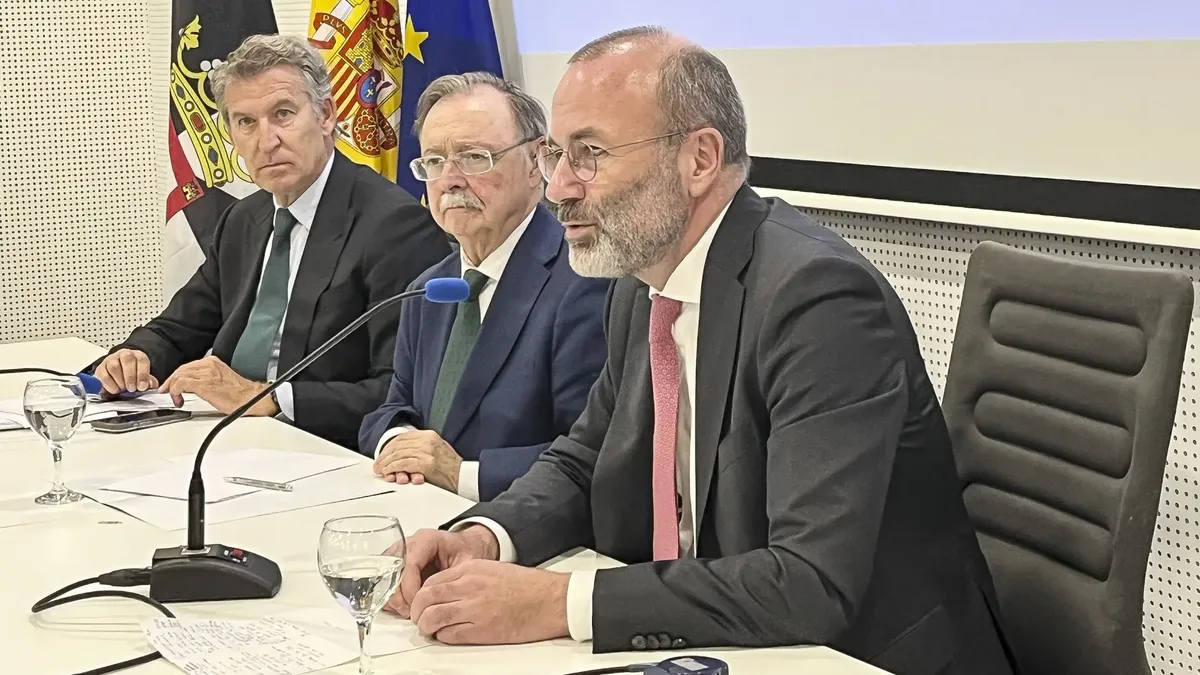
Feijóo brings European ally to Ceuta to press for returns the Government has not triggered
Feijóo visited Ceuta for the fourth time alongside EPP president Manfred Weber, demanding Spain activate EU return mechanisms that the PP says the Sánchez…
PP and EPP build a European front in Ceuta as Madrid leaves return tools unused
Feijóo and EPP president Weber visited Ceuta together to demand Spain formally activate EU return mechanisms, accusing the Sánchez Government of ignoring…
Alberto Núñez Feijóo visited Ceuta for the fourth time, this time alongside Manfred Weber, president of the European People's Party, in what the PP leader framed as an effort to «Europeanize» a migration crisis that has remained unresolved for weeks since a mass crossing at the border. For the people still in Ceuta under irregular status, the political standoff has real daily consequences that neither side has addressed concretely.
--- THE CONTEXT ---
Feijóo cited two existing European instruments — the Migration and Asylum Pact and the European Return Regulation — as legal grounds for the immediate return of people who crossed into Spanish territory at the end of July. Weber noted that 22 EU countries had signed a communiqué criticizing the Spanish Government's regularization policy. This source does not clarify how many people currently remain in Ceuta.
--- THE FACTS ---
At the visit, Feijóo accused the Sánchez Government of having «ignored» available European tools and demanded that Spain formally request an expedited return procedure from Brussels and seek additional officials through Frontex to speed up individual case files. Weber added that the 22-country communiqué leaves Sánchez isolated «even among his own Socialist colleagues» in Europe. Feijóo also defended Ceuta's president, Juan Jesús Vivas, calling it «miserable» that Sánchez had attacked Vivas in what the PP leader characterized as an attempt to spread responsibility for the crisis. Feijóo argued that Vivas deserved thanks for remaining at his post when — in an indirect reference to the prime minister's uninterrupted vacation — border authorities had departed.
--- THE POSITIONS ---
Feijóo and Weber presented a unified position: Spain must use existing European return mechanisms without delay. The Spanish Government did not respond publicly to these demands according to this source. Vivas's own position was not directly reported at the event.
--- WHAT REMAINS UNKNOWN ---
This source does not confirm whether Spain has submitted any formal request to Frontex, how many individual case files are open, what living conditions migrants face while awaiting decisions, or the Government's official reply to the 22-country communiqué.
--- UNANSWERED QUESTIONS ---
• How many people remain in irregular status in Ceuta and what concrete support, if any, are they receiving while their cases are processed?
• Has the Spanish Government filed any formal request with Frontex or invoked the European Return Regulation since the mass crossing?
• What is the Government's official position on the communiqué signed by 22 EU countries?
• What timeline does the European Commission have for processing a potential Frontex reinforcement request for Ceuta?
--- EPM ANALYSIS ---
Feijóo's four visits to Ceuta, each escalating in symbolic weight, suggest a deliberate strategy to own the European dimension of the crisis. Weber's presence converts a domestic argument into an institutional signal toward Brussels. Workers, families and individuals still awaiting resolution remain caught between two competing political narratives while the concrete mechanisms — Frontex staffing, individual files, return timelines — stay publicly unactivated. 📌
📌
📌 EPM Take:
In EPM's view, the human cost of this standoff is being obscured by its political choreography. The people in Ceuta awaiting decisions did not choose to become bargaining chips between Madrid and Brussels. Whether or not the Government has quietly engaged European mechanisms — something this source does not establish — the visible absence of executive leadership is damaging in itself. Opposition parties should not have to substitute for government action on border management. That substitution, however theatrically staged, points to a genuine accountability gap.
The image carries institutional weight: the leader of Spain's main opposition party stood in Ceuta alongside the president of the European People's Party, demanding that the Spanish Government activate border-return mechanisms that European law already provides. Feijóo's warning was direct — if the Executive does not change course, the crisis will drag on.
--- THE CONTEXT ---
Feijóo grounded his demands in two concrete instruments: the EU Migration and Asylum Pact and the European Return Regulation, which he said permit the immediate return of people who crossed into Spanish territory at the end of July. Weber reinforced the case by noting that 22 EU member states signed a communiqué criticizing the Spanish Government's regularization approach.
--- THE FACTS ---
At his fourth visit to Ceuta, Feijóo accused the Sánchez Government of having «ignored» available European mechanisms and demanded two specific actions: a formal request to Brussels for an expedited return procedure, and a request for additional Frontex officials to accelerate individual case processing. Weber framed Sánchez as isolated in Europe — a charge he supported by invoking the 22-country communiqué, adding that the isolation extends even to Sánchez's fellow European Socialists. Feijóo also mounted a direct defense of Ceuta's president, Juan Jesús Vivas, describing Sánchez's attacks on Vivas as «miserable» and arguing that Vivas merited gratitude for remaining at his post while, in Feijóo's indirect framing, senior border officials were absent during the crisis.
--- THE POSITIONS ---
Feijóo and Weber presented a joint institutional case for immediate activation of European return law. The Sánchez Government did not respond publicly according to this source. President Vivas's own public position was not reported at the event.
--- WHAT REMAINS UNKNOWN ---
This source does not confirm whether Spain has formally invoked the Return Regulation, how many Frontex officials would be needed or available, what the European Commission's response to a potential request would be, or how many people currently remain in Ceuta awaiting decisions.
--- UNANSWERED QUESTIONS ---
• Has the Spanish Government formally engaged Frontex or invoked the European Return Regulation at any point since the mass crossing?
• What is Madrid's official response to the 22-country communiqué, and does it dispute Weber's characterization of Sánchez's isolation?
• What institutional consequences would Spain face within the EU if it continues to leave available return mechanisms dormant?
• How does Ceuta's local administration assess its capacity to sustain the current situation while national and European processes remain unresolved?
--- EPM ANALYSIS ---
Weber's presence in Ceuta is not ceremonial. It signals that the PP is framing this as a European-order issue, not merely a Spanish domestic dispute. If the 22-country communiqué stands as described, Spain's negotiating leverage in future EU migration talks is already diminished. Order and institutional credibility require that governments — not opposition leaders — command the instruments their legal frameworks provide. The decisive variable is not Feijóo's rhetoric but whether Brussels receives a formal Spanish request. 📌
📌
📌 EPM Take:
In EPM's view, the strategic failure in Ceuta is not rhetorical — it is institutional. A government that allows the opposition to serve as its surrogate before Brussels on a question of border law has already ceded the commanding ground. EPM has previously noted Spain's economy minister linking Ceuta relief to Moroccan loyalty; the pattern of reactive, transactional management reinforces the view that Madrid lacks a coherent border doctrine. Europe's credibility as a rules-based order depends on member states actually using the rules. Spain's visible hesitation undermines both.
Feijóo lleva a Weber a Ceuta para forzar una respuesta europea que el Gobierno no ha dado
Feijóo visitó Ceuta por cuarta vez junto al líder del PPE, Manfred Weber, para exigir al Gobierno que active los mecanismos europeos de retorno que, según el…
PP y PPE presentan frente europeo en Ceuta contra la inacción del Gobierno
Feijóo y el líder del PPE, Weber, exigieron en Ceuta que el Gobierno active el Pacto de Migración y el Reglamento de Retorno europeos para gestionar la crisis.
Alberto Núñez Feijóo visitó Ceuta por cuarta vez, esta vez junto al presidente del Partido Popular Europeo, Manfred Weber, con el argumento de que la oposición no debería ser quien «europeíce» una crisis migratoria que sigue sin resolverse semanas después de la entrada masiva de personas por la frontera. Los migrantes que permanecen en situación irregular en la ciudad autónoma son el centro del debate, y su destino concreto —retorno, regularización o limbo administrativo— sigue sin definirse.
--- EL CONTEXTO ---
El Pacto de Migración y Asilo y el Reglamento de Retorno europeos permiten, según Feijóo, la devolución inmediata de personas que entraron en territorio español a finales de julio y permanecen en la ciudad. El Gobierno central no ha confirmado haber activado estos mecanismos. Esta fuente no aclara cuántas personas permanecen actualmente en Ceuta.
--- LOS HECHOS ---
Feijóo acusó al Ejecutivo de Pedro Sánchez de «ignorar» los mecanismos europeos disponibles y exigió que España solicite a Bruselas una «gestión agilizada de retornos» y refuerzo de funcionarios a través de Frontex. Weber respaldó esa posición y recordó que 22 países de la Unión Europea firmaron un comunicado criticando la regularización impulsada por el Gobierno español. Feijóo también defendió al presidente de Ceuta, Juan Jesús Vivas, calificando de «miserable» el ataque que, según él, Sánchez lanzó contra Vivas para corresponsabilizarlo de la crisis. Añadió que Vivas merece agradecimiento, no rendición de cuentas, por haber permanecido en funciones cuando —dijo en referencia velada— los máximos responsables de la frontera se ausentaron.
--- LAS POSICIONES ---
Feijóo y Weber sostienen que el Gobierno español está «aislado» en Europa por su gestión migratoria, apoyándose en el comunicado de los 22 países. El Gobierno de Sánchez no respondió públicamente a estas acusaciones según esta fuente. La posición del presidente Vivas no fue recogida directamente en el acto.
--- LO QUE FALTA SABER ---
Esta fuente no detalla cuántas personas permanecen en Ceuta, qué expedientes individualizados están en curso, si Frontex ha recibido alguna solicitud formal de España, ni cuáles son las condiciones materiales en que viven quienes aguardan resolución.
--- PREGUNTAS SIN RESPUESTA ---
• ¿Cuántas personas siguen en situación irregular en Ceuta y en qué condiciones concretas esperan resolución de sus expedientes?
• ¿Ha solicitado el Gobierno español en algún momento asistencia formal a Frontex o activado el Reglamento de Retorno europeo?
• ¿Qué posición mantiene el Gobierno sobre las críticas vertidas contra Vivas, y en qué consistieron exactamente esas críticas?
• ¿Qué organismos europeos han respondido a la iniciativa de Weber y cuál es el calendario real para cualquier decisión de retorno?
--- ANALISIS EPM ---
La cuarta visita de Feijóo a Ceuta consolida una estrategia de presión simbólica que aprovecha el vacío dejado por el Gobierno. El desplazamiento de Weber convierte una disputa doméstica en un argumento ante Bruselas. Los trabajadores y familias que esperan resolución en Ceuta quedan atrapados entre dos relatos políticos mientras los mecanismos concretos —Frontex, expedientes, plazos— permanecen sin activarse públicamente. 📌
📌
📌 Conclusion EPM:
A juicio de EPM, la ausencia del Gobierno en este debate europeo es su error más costoso. Feijóo no debería necesitar llevar al líder del PPE a Ceuta para recordarle a España que existen herramientas comunitarias disponibles. Que sea la oposición quien agite esos mecanismos ante Bruselas, mientras las personas afectadas permanecen en un limbo sin fecha de resolución, revela una parálisis ejecutiva difícil de justificar políticamente. La variable decisiva no es retórica: es si España activa o no esas herramientas formalmente.
Que sea la oposición española, y no el Gobierno, quien movilice al presidente del Partido Popular Europeo hasta Ceuta para reclamar la activación de mecanismos comunitarios de retorno dice mucho sobre el estado institucional de la crisis. Feijóo lo formuló sin ambages: si el Ejecutivo no cambia de actitud, «me temo que esto va para largo».
--- EL CONTEXTO ---
El Pacto de Migración y Asilo y el Reglamento de Retorno de la Unión Europea contemplan, según Feijóo, la devolución inmediata de personas que cruzaron a territorio español a finales de julio. Veintidós países de la UE suscribieron un comunicado crítico con la política de regularización del Gobierno de Sánchez, según recordó Weber.
--- LOS HECHOS ---
En su cuarta visita a Ceuta, Feijóo exigió al Gobierno activar todos los mecanismos disponibles: invocar ante Bruselas una gestión agilizada de retornos y solicitar refuerzo de funcionarios a través de Frontex para acelerar los expedientes individualizados. Acusó al Ejecutivo de haber «ignorado» herramientas que la legislación europea pone a disposición de los Estados miembros. Weber reforzó ese argumento señalando que el comunicado de los 22 países deja a Sánchez «aislado» incluso entre sus propios compañeros socialistas europeos. Feijóo defendió además al presidente de Ceuta, Juan Jesús Vivas, calificando de «miserable» el ataque que Sánchez dirigió contra él para intentar corresponsabilizarlo de la crisis. Sostuvo que Vivas merece agradecimiento por haber permanecido en su puesto cuando, en alusión velada a las vacaciones del presidente, los máximos responsables de la frontera se ausentaron.
--- LAS POSICIONES ---
Feijóo y Weber presentaron una posición conjunta: España debe usar los instrumentos europeos ya existentes. El Gobierno español no ha respondido públicamente a estas demandas según esta fuente. La posición de Vivas no fue recogida directamente en el acto reportado.
--- LO QUE FALTA SABER ---
Esta fuente no aclara si España ha cursado alguna solicitud formal a Frontex, cuántos expedientes individualizados están abiertos, ni cuál es la posición oficial del Gobierno sobre el comunicado de los 22 países.
--- PREGUNTAS SIN RESPUESTA ---
• ¿Ha presentado el Gobierno español alguna solicitud formal ante Bruselas para activar el Reglamento de Retorno desde la entrada masiva de julio?
• ¿Cuál es la posición oficial del Ejecutivo ante el comunicado firmado por 22 países de la UE?
• ¿Qué consecuencias institucionales tendría para España mantener la inacción frente a los mecanismos europeos disponibles?
• ¿Qué calendario maneja la Comisión Europea para procesar una eventual solicitud de refuerzo de Frontex en Ceuta?
--- ANALISIS EPM ---
La presencia de Weber transforma una visita doméstica en una operación de presión institucional ante Bruselas. El aislamiento de Sánchez —si el comunicado de 22 países confirma lo que Weber afirma— no es solo retórico: erosiona la capacidad negociadora de España en futuros debates migratorios europeos. El orden institucional exige que sea el Ejecutivo, y no la oposición, quien gestione los instrumentos comunitarios. Ese vacío es el verdadero indicador de la crisis. 📌
📌
📌 Conclusion EPM:
A juicio de EPM, cuando la oposición debe sustituir al Gobierno en la interlocución europea sobre seguridad fronteriza, el problema ha dejado de ser solo migratorio para convertirse en un déficit de autoridad estatal. España dispone de herramientas comunitarias; no activarlas formalmente no es una posición política legítima, sino una abdicación de responsabilidad. El aislamiento de Sánchez entre sus propios aliados socialistas europeos, si se sostiene, debilita a España en un momento en que la cohesión occidental es una variable estratégica, no un adorno diplomático.