United States • • EPM Editorial Desk • 🌿 Progressive
Trump at the U.N.: the words on annihilation that no postwar president dared to say
NPR documents how Trump's September 22 speech to the 81st U.N. General Assembly broke with decades of presidential restraint on nuclear language.
Trump resets nuclear deterrence language at U.N. in strategic shift on Iran
NPR documents that Trump's address to the 81st U.N. General Assembly on September 22 broke sharply with the deterrence language of Reagan, Kennedy, Ford and…
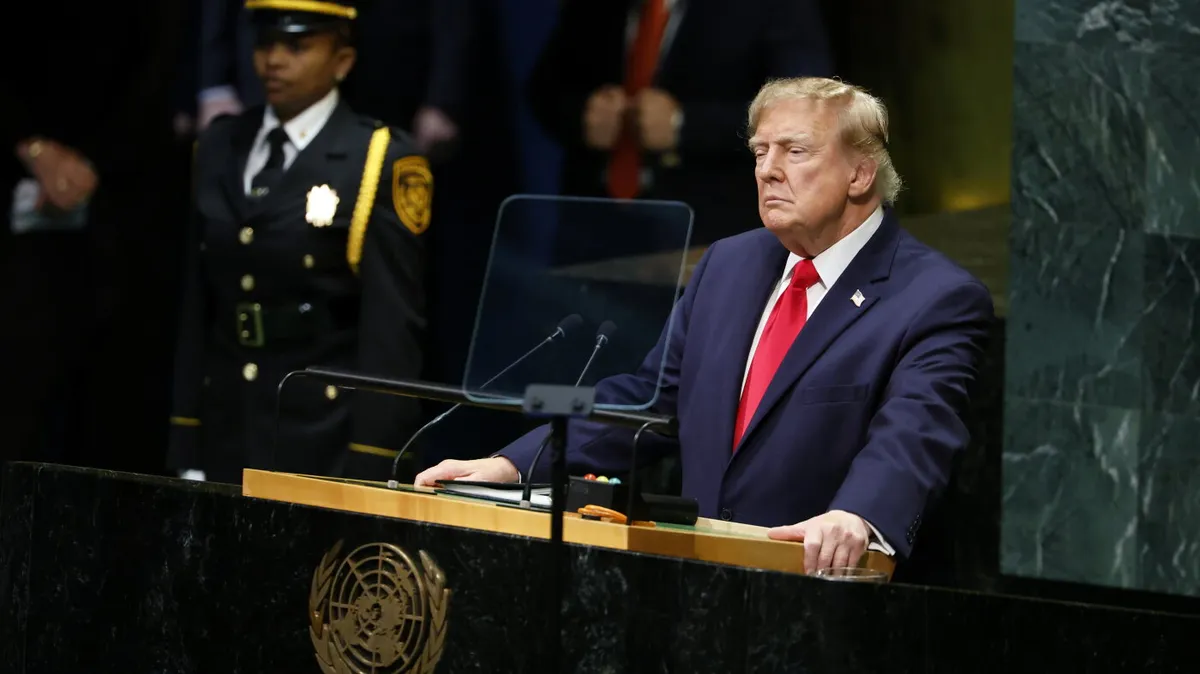
At the 81st session of the United Nations General Assembly on September 22, President Trump said aloud what his predecessors had, for decades, kept out of presidential language: the explicit choice between a deal with Iran and driving them into hell with no chance of survival and no hope of future greatness or generations. For ordinary people living under the shadow of any military escalation, those words are not abstract.
--- THE CONTEXT ---
NPR reports on Trump's speech and sets it against a documented series of statements by American presidents on nuclear weapons and the limits of force. The immediate backdrop is the ongoing tension with Iran, which EPM has previously covered in the context of Trump's rejection of Iran's Hormuz proposals.
--- THE FACTS ---
According to NPR, Trump asked publicly whether to make a deal with Iran or to drive them into hell with no chance of survival and no hope of future greatness or generations. On August 6, 1945, President Harry Truman announced the United States had dropped the first atomic bomb on Hiroshima, Japan, killing an estimated 70,000 people instantly. Around 40,000 more died days later in Nagasaki, and tens of thousands more from radiation illnesses over time. Since then, nuclear weapons have not been used in war. Every president in the intervening decades chose a language of restraint: Reagan stated that a nuclear war cannot be won and must never be fought; Kennedy said in 1962 he would not unnecessarily risk the costs of worldwide nuclear war; Ford told the U.N. General Assembly in 1974 that prevention of full-scale warfare is everybody's responsibility; Obama visited Hiroshima's Peace Park in 2017 and called for the courage to pursue a world without nuclear stockpiles.
--- THE POSITIONS ---
NPR frames Trump's statement as a stark departure from that tradition. This report does not include a response from the White House to that characterization, nor a formal reaction from any U.N. member state to the specific passage cited.
--- WHAT REMAINS UNKNOWN ---
The full text of Trump's speech is not published in this report. It is unclear whether any allied government, nuclear power, or U.N. body issued a formal response to the passage NPR reproduces, or whether the administration classified it as official policy.
--- UNANSWERED QUESTIONS ---
• What specific conditions or thresholds did Trump outline that would determine which option — deal or destruction — he would choose?
• How did Iran's delegation at the U.N. formally respond to the language directed at their country?
• Did any NATO ally or nuclear-armed state issue a public statement in reaction to Trump's words at the General Assembly?
• What are the concrete diplomatic and humanitarian protocols that activate — or fail to activate — when a head of state uses this category of language at the U.N.?
--- EPM ANALYSIS ---
The human stakes embedded in this rhetorical shift are real. Workers, families and communities in regions of active tension with the United States absorb the psychological and economic cost of uncertainty every time a leader converts annihilation into a publicly stated option. NPR's comparison is not polemical: it is historical. 📌
📌 EPM Take:
In EPM's view, the distance between a threat and its execution runs through language, and Trump has shortened that distance in a way that matters beyond diplomacy. This publication has reported on Iran tensions and their fallout for workers and consumers in the Gulf region; those stories now carry a heavier backdrop. When a president names annihilation as a live option before the world's primary multilateral body, the people most exposed are not the generals who plan the options — they are the civilians who cannot plan around them.
President Trump's address to the 81st United Nations General Assembly on September 22 marked a deliberate break from the measured deterrence doctrine American presidents have upheld since 1945: he named the alternative to a deal with Iran as driving them into hell with no chance of survival and no hope of future greatness or generations. Whether that break strengthens or undermines U.S. strategic leverage is the central question the speech leaves open.
--- THE CONTEXT ---
NPR reports and documents the contrast between Trump's language and statements by Presidents Reagan, Kennedy, Ford and Obama on the use or threat of nuclear force. EPM has previously reported on Trump's rejection of Iran's Hormuz proposals and on U.S.-China tariff negotiations, making this statement part of a broader pattern of pressure-based diplomacy the administration has pursued across multiple theaters.
--- THE FACTS ---
According to NPR, Trump publicly asked whether to make a deal with Iran or drive them into hell with no chance of survival and no hope of future greatness or generations. The historical record NPR cites is precise: on August 6, 1945, President Truman announced the atomic bombing of Hiroshima, which instantly killed an estimated 70,000 people; around 40,000 more died in Nagasaki days later, and tens of thousands more from radiation exposure. Since that moment, no president has used nuclear weapons in war, and each has framed the subject with institutional caution. Reagan held that a nuclear war cannot be won and must never be fought. Kennedy stated in 1962 that he would not prematurely or unnecessarily risk worldwide nuclear war. Ford told the U.N. in 1974 that preventing full-scale warfare is everybody's responsibility. Obama called in 2017 for courage to escape the logic of fear.
--- THE POSITIONS ---
NPR frames Trump's statement as a stark contrast with that institutional tradition. This report does not include a White House response to that framing, nor does it document a formal reaction from any state or multilateral body to the specific passage Trump delivered.
--- WHAT REMAINS UNKNOWN ---
The full speech text is not reproduced. This report does not establish whether the administration formally classified the statement as policy, or how U.S. allies with nuclear capabilities interpreted the signal.
--- UNANSWERED QUESTIONS ---
• Did the administration subsequently clarify whether the passage on Iran represented formal U.S. deterrence policy or political rhetoric?
• How did permanent members of the U.N. Security Council respond, on or off the record, to the language Trump used?
• Does this rhetorical posture align with or deviate from any published U.S. national security doctrine?
• What diplomatic channel, if any, was activated between Washington and Tehran following the speech?
--- EPM ANALYSIS ---
Deterrence theory holds that credibility requires willingness — not execution. Trump's calculation appears to be that explicit language sharpens the signal Iran receives. The institutional risk, however, is measurable: allies who rely on U.S. predictability to anchor their own security arrangements now face a harder question about Washington's decision-making framework. Markets, treaty structures and alliance commitments all price in the expectation of restraint. 📌
📌 EPM Take:
In EPM's view, Trump's language at the U.N. is a high-stakes wager on the proposition that clarity of threat is more stabilizing than ambiguity. The problem is that the same clarity that may pressure Tehran also signals to allies, adversaries and multilateral institutions that the postwar restraint framework is negotiable. EPM has covered Hormuz tensions and Indo-Pacific tariff realignments: in every one of those files, U.S. credibility as a rule-based actor is the load-bearing variable. A president who names annihilation openly bets that variable can absorb the pressure. History suggests that bet carries compounding interest.
Trump en la ONU: palabras sobre exterminio que presidentes anteriores evitaron
NPR contrasta el discurso de Trump ante la 81ª Asamblea General de la ONU con el lenguaje de contención nuclear de Reagan, Kennedy, Ford y Obama.
Trump reordena el lenguaje disuasivo nuclear en la ONU frente a Irán
Trump usó ante la 81ª Asamblea General de la ONU un lenguaje de amenaza explícita contra Irán que contrasta con la doctrina de contención de Reagan, Kennedy…
El discurso que el presidente Trump pronunció ante la 81ª sesión de la Asamblea General de las Naciones Unidas el 22 de septiembre puso sobre la mesa una pregunta que sus predecesores, de Truman a Obama, sistemáticamente mantuvieron fuera del lenguaje presidencial: la posibilidad de conducir a una nación entera hacia la destrucción total. El ángulo que conecta esa retórica con consecuencias concretas es simple: las palabras de un líder con mando sobre ejércitos y misiles no son neutrales.
--- EL CONTEXTO ---
La cobertura es de NPR, que reproduce fragmentos del discurso y los contrasta con declaraciones históricas de presidentes anteriores. El foro elegido —la Asamblea General de la ONU— amplifica cualquier señal sobre el uso potencial de la fuerza, especialmente en un momento de tensión con Irán que EPM ya reportó en ediciones recientes.
--- LOS HECHOS ---
Trump preguntó públicamente, según NPR, si debía llegar a un acuerdo con Irán o, en cambio, llevarlos al infierno sin posibilidad de supervivencia ni esperanza de grandeza futura. El 6 de agosto de 1945, Harry Truman anunció que Estados Unidos había lanzado la primera bomba atómica sobre Hiroshima, matando en el instante a un estimado de 70.000 personas; días después, alrededor de 40.000 más murieron en Nagasaki, y decenas de miles adicionales fallecieron por enfermedades de radiación. Desde entonces, ningún presidente ha vuelto a usar armas nucleares en guerra, y todos han elegido un lenguaje de contención: Reagan sostuvo que una guerra nuclear no puede ganarse ni debe librarse jamás; Kennedy advirtió en 1962 que no arriesgaría innecesariamente los costos de una guerra nuclear mundial; Ford dijo en 1974 ante la propia ONU que la prevención de la guerra a escala total es responsabilidad de todos; Obama visitó el Parque de la Paz en Hiroshima en 2017 y llamó a escapar de la lógica del miedo.
--- LAS POSICIONES ---
NPR encuadra el discurso de Trump como un contraste marcado con esa tradición de contención. El texto no registra respuesta oficial de la Casa Blanca a esa caracterización, ni tampoco posición de gobierno alguno ante la ONU en reacción directa al pasaje citado.
--- LO QUE FALTA SABER ---
No se publican el texto íntegro del discurso de Trump ni el contexto inmediato del pasaje sobre Irán. Tampoco se conoce la reacción formal de países con arsenales nucleares, ni si la frase constituyó posición de política exterior oficial.
--- PREGUNTAS SIN RESPUESTA ---
• ¿Qué condiciones concretas señaló Trump ante la ONU como detonante de esa elección entre acuerdo y destrucción?
• ¿Respondió algún gobierno con capacidad nuclear a las palabras del presidente estadounidense en ese foro?
• ¿En qué difiere esta declaración, jurídica o diplomáticamente, de anteriores amenazas presidenciales documentadas?
• ¿Cómo interpretaron los representantes de Irán ante la ONU el pasaje específico reproducido por NPR?
--- ANALISIS EPM ---
La brecha entre la retórica de Trump y la de sus predecesores es un hecho documentado por NPR, no una interpretación. Lo que sí es análisis: esa brecha tiene consecuencias humanas medibles. Familias iraníes, comunidades en zonas de tensión y trabajadores dependientes de la estabilidad regional perciben ese lenguaje como señal de riesgo real. 📌
📌 Conclusion EPM:
A juicio de EPM, el peligro no está solo en las armas sino en la normalización del lenguaje que las convoca. Cada vez que un presidente convierte la aniquilación en opción retórica aceptable, reduce el umbral de lo imaginable para quienes lo suceden y para quienes lo imitan en otras latitudes. EPM ya cubrió la tensión con Irán por el estrecho de Ormuz: ese contexto convierte estas palabras en algo más que retórica de tribuna. Son una variable en una ecuación con consecuencias reales para personas reales.
Ante la 81ª sesión de la Asamblea General de las Naciones Unidas, el 22 de septiembre, el presidente Trump eligió un lenguaje que ninguno de sus predecesores había empleado desde el foro multilateral más vigilado del mundo: la alternativa explícita entre acuerdo diplomático y destrucción total. Esa elección retórica no es un accidente; es una señal dirigida a actores estatales que miden la credibilidad de la disuasión.
--- EL CONTEXTO ---
NPR reproduce fragmentos del discurso y los compara con declaraciones históricas de presidentes estadounidenses sobre el uso o la amenaza de armas nucleares. El telón de fondo inmediato es la tensión con Irán, que EPM ya ha cubierto al reportar el rechazo de Trump al plan iraní sobre el estrecho de Ormuz.
--- LOS HECHOS ---
Trump preguntó públicamente ante la ONU si debía llegar a un acuerdo con Irán o conducirlos al infierno sin posibilidad de supervivencia ni esperanza de grandeza futura, según NPR. El precedente histórico es preciso: el 6 de agosto de 1945, Truman anunció el primer uso de la bomba atómica sobre Hiroshima, que mató en el acto a un estimado de 70.000 personas; días después, alrededor de 40.000 murieron en Nagasaki, y decenas de miles más por radiación. Desde entonces, la doctrina presidencial se articuló en torno a la contención: Reagan afirmó que una guerra nuclear no puede ganarse ni debe librarse; Kennedy, en 1962, descartó arriesgar innecesariamente una guerra nuclear mundial; Ford, en 1974 ante la ONU, declaró que prevenir la guerra a escala total es responsabilidad de todos; Obama visitó Hiroshima en 2017 y convocó a escapar de la lógica del miedo. Ninguno de estos líderes formuló la aniquilación como opción enunciada públicamente.
--- LAS POSICIONES ---
NPR enmarca el discurso de Trump como contraste nítido con esa tradición de contención institucionalizada. Este informe no recoge respuesta de la Casa Blanca a esa caracterización, ni reacción formal de ningún Estado ante la ONU frente al pasaje específico.
--- LO QUE FALTA SABER ---
No se publica el texto completo del discurso. Se desconoce si otros miembros permanentes del Consejo de Seguridad emitieron respuesta formal, y si el Departamento de Estado calificó la declaración como posición oficial de política exterior.
--- PREGUNTAS SIN RESPUESTA ---
• ¿Qué condiciones o umbrales fijó Trump ante la ONU para que la opción de fuerza máxima se activara?
• ¿Reaccionaron formalmente aliados de la OTAN o potencias nucleares a las palabras pronunciadas en ese foro?
• ¿Cómo afecta esta declaración a las negociaciones en curso entre Estados Unidos e Irán reportadas por EPM?
• ¿Tiene este lenguaje respaldo en alguna doctrina de seguridad nacional publicada por la administración?
--- ANALISIS EPM ---
La disuasión funciona precisamente porque su credibilidad no requiere ser ejecutada. Trump parece apostar a que el lenguaje explícito refuerza esa credibilidad frente a Teherán. El riesgo institucional, en cambio, es que los aliados y los organismos multilaterales lean el mensaje como erosión de la arquitectura de no uso construida desde 1945. Ganadores posibles: la posición negociadora de Washington. Perdedores posibles: la estabilidad del orden nuclear multilateral. 📌
📌
📌 Conclusion EPM:
A juicio de EPM, la ruptura retórica de Trump no es un error de comunicación: es una apuesta deliberada por la ambigüedad calculada como instrumento de presión. El problema es que la ambigüedad que intimida a Irán también inquieta a aliados que dependen de la previsibilidad estadounidense. EPM cubrió la tensión en Ormuz y el impacto de los aranceles en Asia: en todos esos escenarios, la variable decisiva es la confianza en que Washington distingue entre señal y acción. Esa confianza acaba de recibir una prueba de estrés.