United Kingdom • • EPM Editorial Desk • 🌿 Progressive
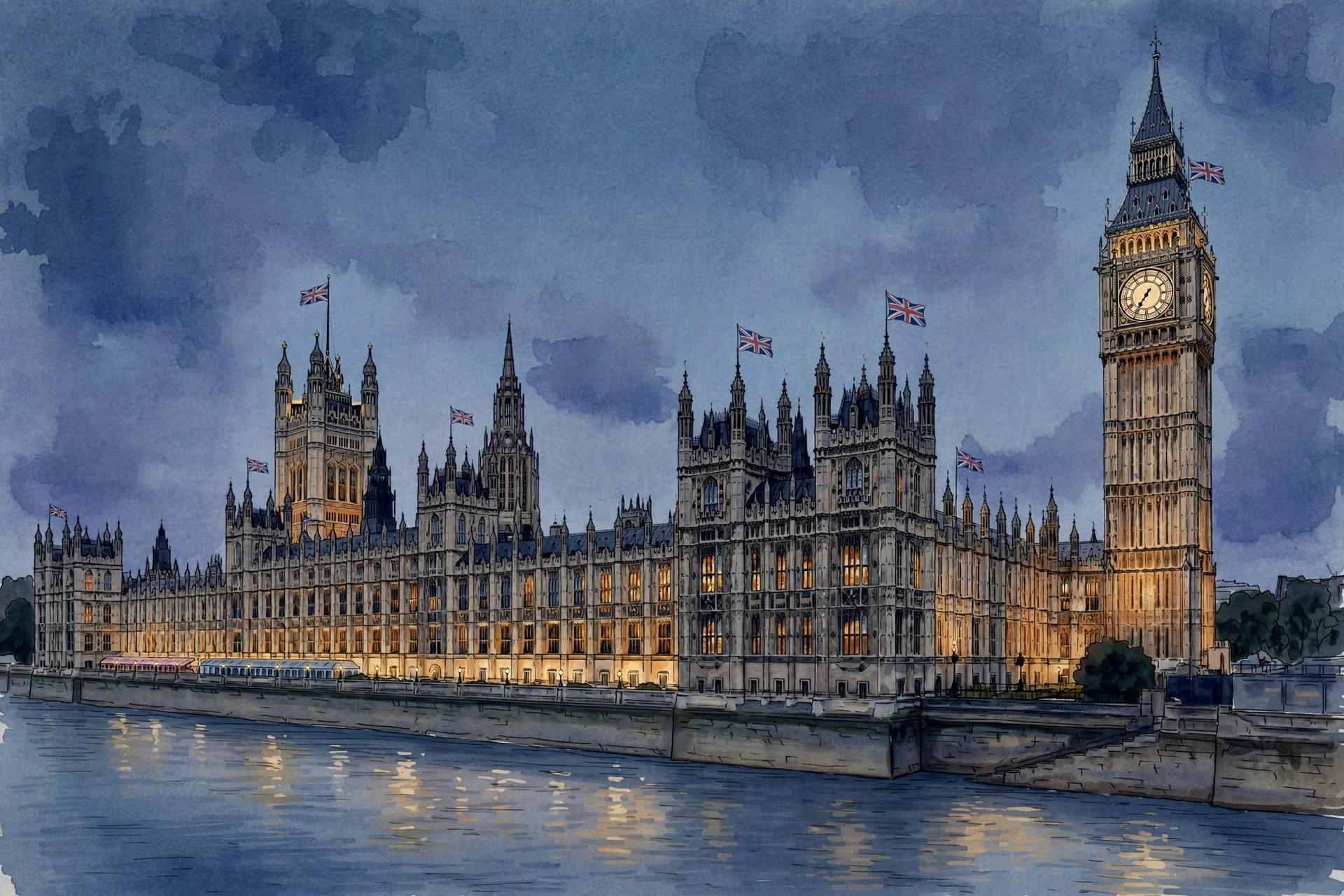
El Parlamento de Westminster al atardecer. Ilustración generada por IA para EPM. · Ilustración generada por IA
Burnham unveils programme and bets on reformed social care
Andy Burnham set out a long-term programme at the Labour conference: revamping social care in England, trimming the pensions triple lock from April 2030…
Burnham sets out vision as delivery doubts linger
Burnham's Labour conference speech blended personal grief and political ambition: social care reform, a triple lock cut from April 2030, voting system change…
--- The context ---
Andy Burnham's speech to the Labour conference read on two levels at once: that of a new prime minister and that of a grieving son. His father, Roy, died recently, and the funeral will take place in a few days' time.
Reflections on his father's life and influence formed the personal spine of a deeply political speech that lasted more than an hour and ranged across a wide set of themes.
--- The facts ---
The pitch was ordered around two horizons: the short term, what he hopes to achieve before a general election, and the long term, the prospectus he is beginning to assemble for when polling day comes around inside the next three years.
The headline grabber was a revamp of social care in England. Previous attempts, by both Labour and the Conservatives, did not survive the intensity of a general election campaign.
Funding would come through pensions: from 2030, increases in the state pension would be less generous. The current triple lock raises the pension each year in line with inflation, average wage growth or 2.5%, whichever is highest. From April 2030, if Labour win the next election, the annual earnings link would be dropped, with a commitment to keep the pension above 30% of the full-time average wage.
The next Labour manifesto would also include a change to the Westminster voting system and, after a pending review, the idea of a closer relationship with the European Union.
--- The positions ---
Labour figures are enthused: they describe a leader with a clear sense of purpose that can be easily articulated, in a tacit and unflattering comparison with former prime minister Sir Keir Starmer.
The Unite union and Labour's political rivals reacted harshly to the triple lock reform. Anticipating that criticism, the prime minister offered a more reassuring level of detail than many expected at this stage.
In the short term, the speech promised housing reform in England and more public control of the water industry and the electricity grid. The cabinet and many in the party are relishing the battle of ideas the prime minister has set up.
--- What remains unknown ---
The degree of closeness with the European Union that the review will propose, its trade-offs and the reactions it will prompt remain unknown. The debate on social care is only just beginning.
--- Unanswered questions ---
Does the government have the capacity to deliver on this programme? Will it convince the voter that its vision is coherent, appealing and affordable? Will seeding the debate now be enough for social care reform to survive the next campaign? How will older voters respond to the triple lock cut?
--- EPM analysis ---
Burnham is betting on winning the argument before the campaign: he is opening the conversation on social care years in advance so the idea arrives mature at the ballot box. It is a long-game move in a trade used to short-termism, and it draws clear dividing lines with the opposition.
📌 EPM Take:
In EPM's view, the speech marks Burnham's most ambitious attempt to define an era of his own: it weaves personal grief for his father into a reform programme touching pensions, social care, housing and Europe. The risk lies in the distance between ambition and delivery, against a backdrop of a persistently sclerotic economy and a turbulent international picture. If social care reform survives the debate that is only just beginning, it will be the measure of his leadership; if it founders like previous attempts, the comparison with Starmer will stop flattering him.
--- The context ---
Andy Burnham's speech to the Labour conference blended political ambition with personal weight: his father, Roy, died recently and the funeral will take place in a few days' time. It was a speech of more than an hour, with an intimate spine — reflections on his father's life and influence — and a very wide thematic range.
Labour figures celebrate finally having a leader with a clear sense of purpose that can be easily articulated. The tacit comparison with former prime minister Sir Keir Starmer, unflattering to the latter, is obvious.
--- The facts ---
Burnham split his offer into two timeframes: the short term, what he hopes to achieve before a general election, and the long term, the prospectus he is beginning to assemble for when polling day comes around inside the next three years.
The big bet is a revamp of social care in England. Previous attempts by Labour and the Conservatives did not survive the intensity of a general election campaign, and the idea now is to seed the conversation early to win the argument in advance.
To fund it, state pension increases would be less generous from 2030. The current triple lock raises the pension each year in line with inflation, average wage growth or 2.5%, whichever is highest. From April 2030, if Labour win the next election, the annual earnings link would be dropped, with a pledge to keep the pension above 30% of the full-time average wage.
The next Labour manifesto would also include a change to the Westminster voting system and, after a review, a closer relationship with the European Union.
--- The positions ---
The Unite union and political rivals criticised the triple lock reform harshly. The prime minister answered with a more reassuring level of detail than expected, aware of the issue's sensitivity among older voters.
The short term brought promises of housing reform in England and more public control of the water industry and the electricity grid. Beyond a broad reference to the Right, the party's rivals got no mention in the entire speech.
--- What remains unknown ---
The degree of EU closeness the review will propose, its trade-offs and the reactions it will prompt are unknown. Nor is there operational detail on how the new social care system would be funded.
--- Unanswered questions ---
Does the government have the capacity to deliver this programme? Will it convince the voter that its vision is coherent, appealing and affordable? With a persistently sclerotic economy and a turbulent international picture, will the reform not meet the same fate as previous attempts?
--- EPM analysis ---
The energy and urgency of the pitch contrast with the question the analysis itself leaves hanging: the capacity to deliver. The dividing lines with the opposition are drawn and the party is enjoying the battle of ideas, but recent history shows ambitious programmes crashing against the economy and the international context.
📌 EPM Take:
In EPM's view, Burnham has sketched a broad and divisive programme that gives him an identity of his own beyond the Starmer era, but ambition currently outruns certainty: reforming social care and the triple lock at once is politically costly, and the test will be delivery, not rhetoric. Against a sclerotic economy and a turbulent world, the risk is that today's promises become tomorrow's frustrations if the government cannot demonstrate the capacity to execute.
Burnham presenta su programa y apuesta por una asistencia social reformada
Andy Burnham presentó ante la conferencia laborista un programa de largo plazo que incluye reformar la asistencia social en Inglaterra, modificar el triple…
Burnham despliega su programa entre dudas sobre la capacidad de entrega
El discurso de Burnham ante la conferencia laborista combinó duelo personal y ambición política: reforma de la asistencia social, recorte del triple lock desde…
--- El contexto ---
El discurso de Andy Burnham ante la conferencia laborista se leyó en dos claves a la vez: la de un nuevo primer ministro y la de un hijo en duelo. Su padre, Roy, falleció recientemente y su funeral se celebrará en unos días.
Las reflexiones sobre la vida y la influencia de su padre dieron el eje personal a un discurso profundamente político que duró más de una hora y abarcó un temario amplio.
--- Los hechos ---
El mensaje se ordenó en dos horizontes: el corto plazo, lo que espera lograr antes de las próximas elecciones generales, y el largo plazo, el programa que empieza a armar para cuando llegue la jornada electoral, dentro de los próximos tres años.
La propuesta estrella fue reformar la asistencia social (social care) en Inglaterra. Intentos anteriores de laboristas y conservadores no sobrevivieron a la intensidad de una campaña electoral.
La financiación llegaría por las pensiones: desde 2030 sus subidas serían menos generosas. El triple lock actual eleva la pensión cada año según la inflación, el crecimiento salarial promedio o 2,5%, el valor que sea mayor. Desde abril de 2030, si Labour gana las próximas elecciones, se eliminaría el vínculo con los ingresos anuales y la pensión subiría lo necesario para mantenerse por encima del 30% del salario promedio de tiempo completo.
También figurarían en el próximo manifiesto laborista un cambio del sistema electoral de Westminster y, tras una revisión pendiente, la idea de una relación más estrecha con la Unión Europea.
--- Las posiciones ---
Figuras laboristas se muestran entusiasmadas: describen un líder con propósito claro y fácil de articular, en comparación tácita poco halagadora con el ex primer ministro Sir Keir Starmer.
El sindicato Unite y los rivales políticos reaccionaron con dureza contra la reforma del triple lock. Anticipando esas críticas, el primer ministro ofreció un nivel de detalle tranquilizador mayor de lo esperado en esta fase.
En el corto plazo prometió reforma de la vivienda en Inglaterra y mayor control público de la industria del agua y de la red eléctrica. El gabinete y buena parte del partido disfrutan la batalla de ideas planteada.
--- Lo que falta saber ---
El grado de cercanía con la UE que saldrá de la revisión, sus contrapartidas y las reacciones que provocará siguen sin conocerse. El debate sobre la asistencia social apenas comienza.
--- Preguntas sin respuesta ---
¿Tiene el gobierno la capacidad de entrega para convertir este programa en realidad? ¿Logrará convencer al votante de que su visión es coherente, atractiva y asequible? ¿Bastará sembrar el debate ahora para que la reforma de la asistencia social sobreviva a la próxima campaña? ¿Cómo responderá el electorado de más edad al recorte del triple lock?
--- Análisis EPM ---
Burnham apuesta por ganar el argumento antes de la campaña: abre la conversación sobre asistencia social con años de antelación para que la idea llegue madura a las urnas. Es una jugada de largo aliento que crea líneas divisivas claras con la oposición.
📌 Conclusion EPM:
A juicio de EPM, el discurso marca el intento más ambicioso de Burnham por definir una era propia: combina el duelo por su padre con un programa que toca pensiones, asistencia social, vivienda y Europa. El riesgo está en la distancia entre la ambición y la entrega, con una economía esclerótica y un panorama internacional turbulento de fondo. Si la reforma de la asistencia social sobrevive al debate que apenas empieza, será la medida de su liderazgo; si naufraga como los intentos anteriores, la comparación con Starmer dejará de serle favorable.
--- El contexto ---
El discurso de Andy Burnham ante la conferencia laborista combinó ambición política y carga personal: su padre, Roy, falleció recientemente y el funeral será en unos días. Fue un discurso de más de una hora, con un eje íntimo —las reflexiones sobre la vida y la influencia de su padre— y un alcance temático muy amplio.
Figuras laboristas celebran que por fin tienen un líder con un propósito claro y fácil de articular. La comparación tácita con el ex primer ministro Sir Keir Starmer, poco halagadora para este último, es evidente.
--- Los hechos ---
Burnham dividió su oferta en dos tiempos: el corto plazo, lo que espera lograr antes de las próximas elecciones generales, y el largo plazo, el programa que empieza a armar para cuando llegue la jornada electoral, dentro de los próximos tres años.
La gran apuesta es reformar la asistencia social (social care) en Inglaterra. Intentos previos de laboristas y conservadores no sobrevivieron a la intensidad de una campaña electoral, y la idea ahora es sembrar la conversación con tiempo para ganar el argumento por anticipado.
Para financiarla, las subidas de la pensión estatal serían menos generosas desde 2030. El triple lock actual aumenta la pensión cada año según la inflación, el crecimiento salarial promedio o 2,5%, lo que sea mayor. Desde abril de 2030, si Labour gana las próximas elecciones, se suprimiría el vínculo con los ingresos anuales, con el compromiso de mantener la pensión por encima del 30% del salario promedio de tiempo completo.
El próximo manifiesto laborista incluiría además un cambio del sistema electoral de Westminster y, tras una revisión, una relación más estrecha con la Unión Europea.
--- Las posiciones ---
El sindicato Unite y los rivales políticos criticaron con dureza la reforma del triple lock. El primer ministro respondió con un detalle tranquilizador mayor de lo esperado, consciente de la sensibilidad del tema entre los votantes de más edad.
En el corto plazo se anunciaron reforma de la vivienda en Inglaterra y mayor control público de la industria del agua y de la red eléctrica. Más allá de una referencia amplia a la derecha, los rivales no fueron mencionados en todo el discurso.
--- Lo que falta saber ---
Se desconoce el grado de cercanía con la UE que propondrá la revisión, sus contrapartidas y las reacciones que generará. Tampoco hay detalle operativo de cómo se financiará el nuevo sistema de asistencia social.
--- Preguntas sin respuesta ---
¿Tiene el gobierno la capacidad de entrega para hacer realidad este programa? ¿Convencerá al votante de que su visión es coherente, atractiva y asequible? Con una economía persistentemente esclerótica y un panorama internacional turbulento, ¿no corre la reforma el mismo destino que los intentos anteriores?
--- Análisis EPM ---
La energía y la urgencia del discurso contrastan con la pregunta que el propio análisis deja flotando: la capacidad de entrega. Las líneas divisivas con la oposición están trazadas y el partido disfruta la batalla de ideas, pero la historia reciente muestra que los programas ambiciosos se estrellan contra la economía y el contexto internacional.
📌 Conclusion EPM:
A juicio de EPM, Burnham ha dibujado un programa amplio y divisivo que le da identidad propia frente a la era Starmer, pero la ambición supera por ahora a las certezas: reformar la asistencia social y el triple lock a la vez es políticamente costoso, y la prueba será la entrega, no el discurso. Con el telón de fondo de una economía esclerótica y un mundo turbulento, el riesgo es que las promesas de hoy se conviertan en las frustraciones de mañana si el gobierno no demuestra capacidad de ejecución.