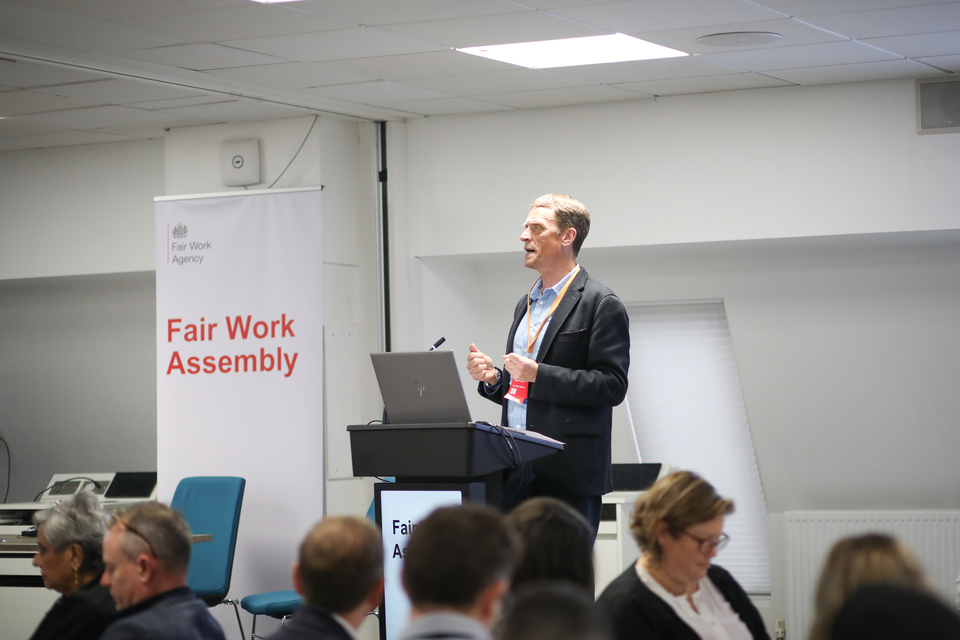
More than 100 delegates gathered in Birmingham for the first Fair Work Assembly to discuss employment rights and labour market priorities. · Fair Work Agency / GOV.UK (OGL)
Over 100 delegates gather in Birmingham to champion fair work
The first Fair Work Assembly brought more than 100 delegates to Birmingham to debate employment rights enforcement, emerging labour market risks and the…
Fair Work Agency puts responsible employers at heart of plan
The first Fair Work Assembly brought more than 100 delegates to Birmingham to debate employment rights and the priorities of the Fair Work Agency.
More than 100 delegates gathered in Birmingham for the first-ever Fair Work Assembly, a day of debate on employment rights enforcement, emerging labour market risks and the future priorities of the Fair Work Agency (FWA).
--- The context ---
The event brought together trade unions, employers, civil society organisations and academics, alongside the agency's chief executive, Lisa Pinney, the chair of its advisory board, Matthew Taylor, and other board members. Through panel discussions and interactive sessions, delegates shared information and perspectives on the challenges facing workers and employers today.
--- The facts ---
Discussions covered the employment rights agenda, emerging labour market issues, lessons from people with lived experience of labour abuse or exploitation, and examples of best practice that can support compliance and drive positive outcomes across the labour market.
The advisory board chair welcomed the willingness of different sectors to work collaboratively and said tackling non-compliance and exploitation cannot be achieved by any single organisation acting alone. He thanked delegates, panel speakers and board members, saying their contributions will help shape the agency's approach in the years ahead.
--- The positions ---
The agency's chief executive said building strong partnerships is fundamental to creating a fair labour market and argued that, while enforcement is an important part of its role, it also wants to be recognised as an organisation that supports businesses to do the right thing and helps improve compliance. She described listening to delegates as invaluable.
--- What remains unknown ---
The agency did not set out what concrete measures will follow from the discussions, nor a timetable for turning the identified priorities into action. It also left unclear what resources it will devote to fighting exploitation and how it will measure the impact of the announced partnerships.
--- Unanswered questions ---
What concrete steps will the agency take against non-compliance and labour exploitation? How will it ensure the voices of those who suffered abuse first-hand influence its decisions? What follow-up mechanisms will it use to verify that best practice spreads across the market?
--- EPM analysis ---
From a progressive standpoint, this inaugural assembly marks a shift: the state recognises that dignity at work is defended not only through rules, but by involving those who live the labour market every day. The emphasis on collaboration and on supporting compliant businesses points to a model where protecting the most vulnerable worker is the measure of success. The risk is that dialogue replaces action: without deadlines, funding and real enforcement power, the conversation begun in Birmingham will remain a well-meaning gesture.
📌 EPM Take:
In EPM's view, the first Fair Work Assembly confirms that protecting workers requires collective effort, not just sanctions: unions, employers, civil society and academia agree that collaboration is the path to a fairer labour market. The agency is right to put exploitation and non-compliance at the centre of its agenda and to promise support for those who comply. But goodwill is not enough: without concrete measures, clear deadlines and sufficient resources for enforcement, this conversation risks remaining mere words.
More than 100 delegates met in Birmingham for the first Fair Work Assembly, debating employment rights enforcement, emerging labour market risks and the priorities of the Fair Work Agency (FWA).
--- The context ---
Trade unions, employers, civil society organisations and academics attended, together with the agency's chief executive, Lisa Pinney, advisory board chair Matthew Taylor and other board members. The day combined panel discussions and interactive sessions in which participants offered perspectives on the challenges and priorities of today's labour market.
--- The facts ---
Debate ranged over the employment rights agenda, emerging market issues, the experiences of those who lived through labour abuse or exploitation, and best practice that supports compliance and positive outcomes.
The advisory board chair highlighted the willingness of sectors to collaborate and said no organisation can fight non-compliance and exploitation alone. He argued that working with businesses, academics, unions and voluntary organisations will help create a fairer labour market that protects workers and responsible employers.
--- The positions ---
The chief executive said the agency should be recognised not only for enforcement but for helping businesses do the right thing and improving compliance across the market. She called hearing delegates' views invaluable and described the assembly as the beginning of a conversation with stakeholders.
--- What remains unknown ---
No concrete support programme for already-compliant employers was announced, nor was it explained how effective enforcement will be distinguished from extra red tape for responsible firms. Timelines and budgets were not detailed either.
--- Unanswered questions ---
How will the agency prevent enforcement from becoming more paperwork for those who already comply? What incentives will it offer responsible employers? How will it measure whether its partnerships deliver real results rather than just statements?
--- EPM analysis ---
From a conservative standpoint, the value of this assembly lies in its promise of balance: an agency that polices offenders while backing the businesses that comply. Responsible employers do not need more regulation; they need clear rules, even application and enforcement against abuse that does not raise costs for those already doing the right thing. Pinney's message points in the right direction, but the compliance machinery must be watched so it does not grow at the expense of private initiative.
📌 EPM Take:
In EPM's view, the first Fair Work Assembly will prove useful if the agency keeps its promise to support responsible businesses and focus its strength on those who break the rules and exploit workers. A fair labour market needs effective enforcement, not more bureaucracy for those already compliant. Collaboration between unions, employers and academia is welcome, but it must translate into clear rules, measurable deadlines and verifiable results. Without that discipline, the conversation begun in Birmingham will become another forum that promises much and changes little.
Más de 100 voces reunidas en Birmingham por el trabajo digno
La primera Fair Work Assembly reunió a más de 100 delegados en Birmingham para debatir la aplicación de los derechos laborales, los riesgos emergentes del…
Empleadores responsables, en el centro del plan de la Fair Work Agency
La primera Fair Work Assembly reunió a más de 100 delegados en Birmingham para debatir los derechos laborales y las prioridades de la Fair Work Agency.
Birmingham acogió la primera Fair Work Assembly, un encuentro que reunió a más de 100 delegados para debatir la aplicación de los derechos laborales, los riesgos emergentes del mercado de trabajo y las prioridades futuras de la Fair Work Agency (FWA).
--- El contexto ---
La cita congregó a representantes de sindicatos, empleadores, organizaciones de la sociedad civil y académicos, junto a la directora ejecutiva de la agencia, Lisa Pinney, el presidente de su consejo asesor, Matthew Taylor, y otros miembros de ese consejo. Durante una jornada de debates e intercambio, los asistentes compartieron información y perspectivas sobre los desafíos que enfrentan hoy trabajadores y empleadores.
--- Los hechos ---
Entre los temas tratados figuraron la agenda de derechos laborales, los problemas emergentes del mercado laboral, las lecciones de quienes han sufrido abuso o explotación laboral en primera persona y ejemplos de buenas prácticas que pueden impulsar el cumplimiento y lograr resultados positivos en todo el mercado.
El presidente del consejo asesor destacó la disposición de los distintos sectores a trabajar de forma colaborativa y sostuvo que la lucha contra el incumplimiento y la explotación no puede lograrla ninguna organización actuando en solitario. Agradeció a delegados, ponentes y miembros del consejo sus aportaciones, que, según dijo, ayudarán a dar forma al enfoque de la agencia en los próximos años.
--- Las posiciones ---
La directora ejecutiva de la agencia subrayó que construir alianzas sólidas es fundamental para crear un mercado laboral justo y afirmó que, aunque la fiscalización es una parte importante de su función, también quieren ser reconocidos como una organización que ayuda a las empresas a hacer lo correcto y a mejorar el cumplimiento. Añadió que escuchar a los delegados y conocer sus puntos de vista sobre los desafíos y oportunidades ha sido inestimable.
--- Lo que falta saber ---
La agencia no precisó qué medidas concretas adoptará a partir de lo debatido, ni con qué calendario convertirá las prioridades identificadas en acciones. Tampoco se detallaron los recursos que dedicará a combatir la explotación ni cómo medirá el impacto de las alianzas anunciadas.
--- Preguntas sin respuesta ---
¿Qué pasos concretos seguirá la agencia contra el incumplimiento y la explotación laboral? ¿Cómo garantizará que las voces de quienes sufrieron abuso en carne propia influyan en las decisiones? ¿Qué mecanismos de seguimiento pondrá en marcha para verificar que las buenas prácticas se extienden por todo el mercado?
--- Análisis EPM ---
Para la mirada progresista, esta asamblea inaugural marca un cambio de época: el Estado reconoce que la dignidad en el trabajo no se defiende solo con normas, sino con la participación de quienes viven el mercado laboral cada día. El énfasis en la colaboración y en apoyar a las empresas que cumplen apunta a un modelo donde proteger al trabajador más vulnerable es la medida del éxito. El riesgo es que el diálogo sustituya a la acción: sin plazos, presupuesto y poder real de fiscalización, la conversación iniciada en Birmingham quedará como un gesto bienintencionado.
📌 Conclusion EPM:
A juicio de EPM, la primera Fair Work Assembly confirma que la protección de los trabajadores exige un esfuerzo colectivo y no solo sanciones: sindicatos, empleadores, sociedad civil y academia coinciden en que la colaboración es la vía hacia un mercado laboral más justo. La agencia acierta al situar la explotación y el incumplimiento en el centro de su agenda y al prometer apoyar a quienes cumplen. Pero la buena voluntad no basta: sin medidas concretas, plazos claros y recursos para fiscalizar, la conversación corre el riesgo de quedarse en palabras.
Más de 100 delegados se reunieron en Birmingham para la primera Fair Work Assembly, donde debatieron la aplicación de los derechos laborales, los riesgos emergentes del mercado de trabajo y las prioridades de la Fair Work Agency (FWA).
--- El contexto ---
Al encuentro asistieron sindicatos, empleadores, organizaciones de la sociedad civil y académicos, junto a la directora ejecutiva de la agencia, Lisa Pinney, el presidente del consejo asesor, Matthew Taylor, y miembros de ese consejo. La jornada combinó mesas de debate y sesiones interactivas en las que los participantes aportaron sus perspectivas sobre los retos y prioridades del mercado laboral actual.
--- Los hechos ---
Los debates abordaron la agenda de derechos laborales, los problemas emergentes del mercado, las experiencias de quienes vivieron el abuso o la explotación laboral y las buenas prácticas que favorecen el cumplimiento y generan resultados positivos.
El presidente del consejo asesor resaltó la voluntad de colaboración entre sectores y afirmó que ninguna organización puede combatir por sí sola el incumplimiento ni la explotación. Sostuvo que trabajar junto a empresas, académicos, sindicatos y organizaciones voluntarias ayudará a crear un mercado laboral más justo que proteja a los trabajadores y a los empleadores responsables.
--- Las posiciones ---
La directora ejecutiva defendió que la agencia debe ser reconocida no solo por fiscalizar, sino por ayudar a las empresas a hacer lo correcto y mejorar el cumplimiento en todo el mercado. Calificó de inestimable haber escuchado a los delegados y aseguró que la asamblea es solo el comienzo de una conversación con los actores involucrados.
--- Lo que falta saber ---
No se anunció ningún programa de apoyo concreto para empleadores que ya cumplen, ni se explicó cómo se distinguirá la fiscalización eficaz de una carga burocrática adicional para las empresas responsables. Tampoco se detallaron plazos ni presupuestos.
--- Preguntas sin respuesta ---
¿Cómo evitará la agencia que la fiscalización se convierta en más trámites para quienes ya cumplen? ¿Qué incentivos ofrecerá a los empleadores responsables? ¿Cómo medirá que sus alianzas producen resultados reales y no solo declaraciones?
--- Análisis EPM ---
Desde la perspectiva conservadora, el valor de esta asamblea está en su promesa de equilibrio: una agencia que fiscalice a los infractores y, a la vez, apoye a las empresas que cumplen. Los empleadores responsables no necesitan más regulación, sino reglas claras, aplicación pareja y que la persecución del abuso no se traduzca en costos para quienes ya hacen lo correcto. El mensaje de Pinney va en la dirección adecuada, pero habrá que vigilar que la maquinaria de cumplimiento no crezca a costa de la iniciativa privada.
📌 Conclusion EPM:
A juicio de EPM, la primera Fair Work Assembly será útil si la agencia cumple su promesa de apoyar a las empresas responsables y concentrar su fuerza en quienes incumplen y explotan. Un mercado laboral justo necesita fiscalización eficaz, no más burocracia para quienes ya cumplen. La colaboración entre sindicatos, empleadores y academia es bienvenida, pero debe traducirse en reglas claras, plazos medibles y resultados verificables. Sin esa disciplina, la conversación iniciada en Birmingham se convertirá en otro foro que promete mucho y cambia poco.