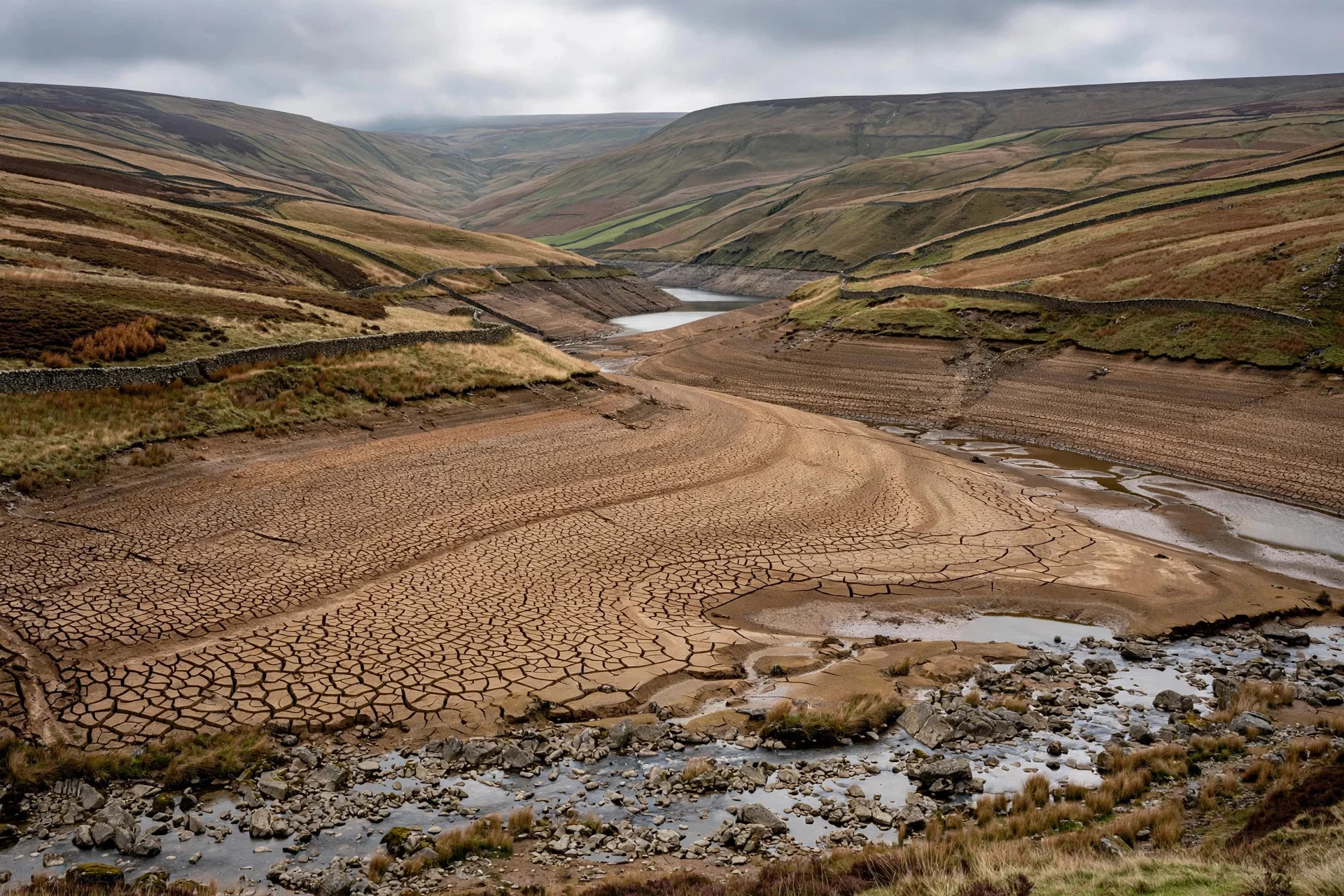
Yorkshire entró en estado oficial de sequía el 9 de octubre de 2026 tras registrar los niveles de agua más bajos en embalses y ríos, con el quinto periodo de abril a septiembre más seco jamás registrado. · Imagen generada por IA para EPM
Yorkshire declared in drought as reservoirs and rivers run low
Yorkshire officially entered drought status on 9 October as reservoirs and rivers hit low levels, joining central, southern and eastern England.
Yorkshire enters drought status as reservoir levels fall
The Environment Agency declared drought status in Yorkshire on 9 October as reservoirs and rivers hit low levels, after the driest April-to-September stretch…
The Environment Agency declared drought status in Yorkshire on Friday 9 October, citing low water levels in reservoirs and rivers. The move follows a prolonged dry weather declaration at the end of July, after a spring and summer with little rainfall.
--- The context ---
Yorkshire now joins all of central, southern and eastern England in drought status, while the North East and North West remain in prolonged dry weather.
It is the third drought in five years, after 2022 and 2025. The agency blames a changing climate: longer, hotter summers and more intense winter rainfall that raise the odds of drought and flooding alike.
--- The facts ---
The government and the Environment Agency said they are closely scrutinising water company actions to ensure the firms follow their statutory drought plans, conserve supplies and support communities.
The National Drought Group —government, Met Office, regulators, water companies, farmers, the Canal & River Trust, anglers and conservation experts— now meets weekly to monitor the situation and coordinate the heightened incident response.
Water Minister Emma Hardy warned that recent rainfall is not enough to replenish the water used over spring and summer. She expects companies to follow their drought plans, fix leaks quickly and cut demand.
Vicki Townend, the agency's Area Environment Manager in Yorkshire, said Yorkshire endured its 5th driest April to September on record, and that low river flows and groundwater levels hit the trigger. Even a few weeks of rain, she added, could not undo the effects of such a dry spring and summer.
The agency is fast-tracking drought permits so water companies can reduce the water they must release into local rivers, which it says protects public supplies without neglecting the environment. It stepped up checks on abstractors and reminded the public to report incidents to its 24-hour hotline on 0800 80 70 60.
--- The positions ---
Hardy argued that long-term resilience to climate change is a government priority and announced a strengthened Water Bill starting a decade-long journey toward a very different water system, including nine new major reservoirs to secure supplies.
Townend urged the public to stay aware of drought impacts and to use a little less water to speed recovery, warning that heavier rainfall and drier summers will grow more frequent.
--- What remains unknown ---
New research cited by the agency found it would take 120% of long-term average rainfall over the next seven months for all areas of England to be considered out of drought. The figure captures the scale of the deficit, but not how fast Yorkshire will recover.
--- Unanswered questions ---
Will water company drought plans hold if winter also runs dry? What is the timetable for the Water Bill and the nine promised reservoirs? How will river wildlife be protected if minimum flows keep falling?
--- EPM analysis ---
The declaration is not a late diagnosis: the technical trigger tripped when groundwater and rivers hit their lows, but Britain's water system needs the official stamp to unlock the permits that keep supplies running. The deeper issue is frequency: three droughts in five years turn the exception into the norm.
📌 EPM Take:
In EPM's view, Yorkshire shows the cost of deferred infrastructure: new reservoirs and decade-long plans answer the future, but the emergency is now and it repeats every other year. If Britain's climate is going to alternate droughts and floods as the agency says, the water system needs operational reform today, not only legislative promises. Scrutinising companies is necessary, but not enough if leaks and demand do not truly fall soon.
The Environment Agency announced on Friday 9 October that Yorkshire has officially entered drought status after low water levels were recorded in reservoirs and rivers. The decision follows the prolonged dry weather declaration at the end of July, driven by a lack of spring and summer rainfall.
--- The context ---
Yorkshire now joins all of central, southern and eastern England in drought status. The North East and North West remain in prolonged dry weather.
The agency noted it is the third drought in five years, after 2022 and 2025, and said climate change is lengthening hot summers and intensifying winter rainfall, raising the risk of drought and flooding alike.
--- The facts ---
The government and the Environment Agency said they are examining water company actions to ensure firms comply with statutory drought plans, conserve supplies and support communities.
The National Drought Group —government, Met Office, regulators, water companies, farmers, the Canal & River Trust, anglers and conservation experts— now meets weekly to monitor the situation and coordinate the heightened response.
Water Minister Emma Hardy said recent rainfall is not enough to replenish the water used over spring and summer, and that the declaration shows the situation is still serious. The government is monitoring companies and expects them to follow drought plans and reduce demand.
Vicki Townend, the agency's Area Environment Manager in Yorkshire, said Yorkshire recorded its 5th driest April to September on record, and that low river flows and groundwater levels reached the declaration trigger. She added that even weeks of rain would not reverse the effects of such a dry spring and summer.
The agency said it is processing drought permits to let companies reduce the water they must put into rivers, which protects public supplies while balancing the needs of the environment and wildlife. It increased checks on abstractors and asked the public to report incidents to its 24-hour hotline on 0800 80 70 60.
--- The positions ---
Hardy defended long-term resilience as a government priority and presented a strengthened Water Bill starting a decade of change toward a very different water system, with nine new major reservoirs to secure supplies.
Townend urged the public to be aware of drought impacts and use a little less water to speed recovery, warning that heavier rainfall and drier summers will grow more frequent.
--- What remains unknown ---
Research cited by the agency found it would take 120% of long-term average rainfall over seven months for all areas of England to be considered out of drought. The figure measures the deficit, but not Yorkshire's pace of recovery.
--- Unanswered questions ---
Will company drought plans suffice if winter also proves dry? What is the planned timetable for the Water Bill and the nine reservoirs? What concrete steps will protect river wildlife if flows keep declining?
--- EPM analysis ---
The announcement confirms what the data showed: the trigger tripped when aquifers and rivers hit their lows, and the formal declaration unlocks the legal tools that sustain supply. The most serious note is repetition: three droughts in five years force the phenomenon to be treated as a structural risk.
📌 EPM Take:
In EPM's view, Britain's water management faces a test of staying power: the Water Bill and the nine promised reservoirs point to the long term, but the water deficit is a present problem that repeats on a biennial cadence. Scrutiny of companies and faster permits are correct steps; the open question is whether the regulatory and infrastructure system will move as fast as the climate it aims to govern soon.
Yorkshire entra en sequía oficial: la tercera en cinco años
Yorkshire entró el 9 de octubre en estado oficial de sequía por los bajos niveles de embalses y ríos, sumándose al centro, sur y este de Inglaterra.
Yorkshire entra en estado de sequía por los bajos niveles de agua
La Environment Agency declaró el 9 de octubre el estado de sequía en Yorkshire por los bajos niveles de embalses y ríos, tras el periodo de abril a septiembre…
La Environment Agency declaró el viernes 9 de octubre el estado de sequía en Yorkshire por los bajos niveles de agua en embalses y ríos. La región se suma al centro, sur y este de Inglaterra, ya en sequía, mientras el noreste y el noroeste siguen en tiempo seco prolongado.
--- El contexto ---
El paso se esperaba desde que a finales de julio se declarara tiempo seco prolongado por la falta de lluvias en primavera y verano. Fue el quinto periodo de abril a septiembre más seco jamás registrado.
Es la tercera sequía en cinco años: 2022, 2025 y ahora 2026. La agencia la atribuye a un clima cambiante, con veranos más largos y calurosos e inviernos de lluvias más intensas, lo que eleva el riesgo de sequías y de inundaciones.
--- Los hechos ---
El Gobierno y la Environment Agency dijeron que vigilan de cerca a las compañías de agua para que cumplan sus planes legales de sequía. El Grupo Nacional de Sequía —Gobierno, Met Office, reguladores, compañías, agricultores, la Canal & River Trust, pescadores y expertos en conservación— se reúne cada semana para coordinar la respuesta.
La ministra del Agua, Emma Hardy, advirtió que las lluvias recientes no bastan para reponer el agua gastada en primavera y verano. Exigió a las compañías cumplir sus planes de sequía, reparar fugas y reducir la demanda, y anunció una ley del agua reforzada que abrirá un camino de una década hacia un sistema distinto, con nueve grandes embalses.
Vicki Townend, responsable de la agencia en Yorkshire, explicó que el caudal de los ríos y los niveles freáticos tocaron el umbral de la declaración, y que ni semanas de lluvia revertirían los efectos de meses secos. Pidió usar un poco menos de agua para acelerar la recuperación.
La agencia agiliza los permisos de sequía para que las compañías reduzcan el caudal que deben liberar en los ríos, lo que protege el abastecimiento sin descuidar el medio ambiente. También reforzó los controles sobre quienes extraen agua y recordó su línea 24 horas, el 0800 80 70 60.
--- Las posiciones ---
Hardy defendió la resiliencia a largo plazo como prioridad del Gobierno y presentó la ley del agua para una década de cambios, con nueve nuevos embalses para asegurar suministros.
--- Lo que falta saber ---
Una investigación citada por la agencia calcula que haría falta 120 % de la lluvia media durante siete meses para que toda Inglaterra saliera de la sequía. El dato ilustra el déficit, sin detallar la recuperación de cada cuenca.
--- Preguntas sin respuesta ---
¿Aguantarán los planes de sequía si el invierno tampoco trae lluvias? ¿Qué calendario maneja el Gobierno para la ley del agua y los nueve embalses? ¿Cómo se protegerá la fauna fluvial si los caudales siguen cayendo?
--- Análisis EPM ---
La declaración no es un diagnóstico tardío: el umbral se cruzó cuando cayeron los niveles freáticos, pero el sistema necesita el sello para liberar los permisos que sostienen el suministro. El problema es la frecuencia: tres sequías en cinco años convierten la excepción en norma.
📌 Conclusion EPM:
A juicio de EPM, Yorkshire muestra el precio de aplazar la infraestructura: embalses nuevos y planes decenales miran al futuro, pero la emergencia es de hoy y se repite cada dos años. Si el clima británico va a alternar sequías e inundaciones como dice la agencia, el sistema del agua necesita reforma operativa ya, no solo promesas legislativas. Vigilar a las compañías es necesario, pero insuficiente si las fugas y la demanda no bajan.
La Environment Agency anunció el viernes 9 de octubre que Yorkshire entra oficialmente en estado de sequía, tras registrar bajos niveles de agua en embalses y ríos. La medida sigue a la declaración de tiempo seco prolongado de finales de julio, por la falta de lluvias en primavera y verano.
--- El contexto ---
Con esta medida, Yorkshire se une al centro, sur y este de Inglaterra en estado de sequía. El noreste y el noroeste permanecen en la fase previa de tiempo seco prolongado.
La agencia recordó que es la tercera sequía en cinco años, tras las de 2022 y 2025. El cambio climático alarga los veranos e intensifica las lluvias invernales, lo que eleva el riesgo de sequías y de inundaciones, que pueden darse al mismo tiempo.
--- Los hechos ---
El Gobierno y la Environment Agency afirmaron que examinan las acciones de las compañías para que cumplan sus planes legales de sequía. El Grupo Nacional de Sequía —Gobierno, Met Office, reguladores, compañías, agricultores, la Canal & River Trust, pescadores y expertos en conservación— se reúne cada semana para coordinar la respuesta.
La ministra del Agua, Emma Hardy, señaló que las lluvias recientes no bastan para reponer el agua usada en primavera y verano y que la declaración muestra que la situación sigue siendo seria. El Gobierno vigila a todas las compañías y espera que apliquen sus planes de sequía, arreglen las fugas con prontitud y reduzcan la demanda.
Vicki Townend, gerente de la agencia en Yorkshire, indicó que la zona registró el quinto periodo de abril a septiembre más seco de su historia y que los caudales y niveles freáticos alcanzaron el umbral de la declaración, sin que semanas de lluvia puedan revertir los efectos de meses tan secos.
La agencia tramita rápido los permisos de sequía para que las compañías reduzcan el agua que devuelven a los ríos, lo que protege el suministro sin descuidar el medio ambiente. Intensificó la vigilancia sobre quienes extraen agua y pidió reportar incidentes a su línea gratuita, el 0800 80 70 60.
--- Las posiciones ---
Hardy defendió la resiliencia a largo plazo como prioridad del Gobierno y presentó una ley del agua reforzada que iniciará una década de cambios, con nueve grandes embalses para garantizar los suministros.
--- Lo que falta saber ---
Según una investigación citada por la agencia, harían falta 120 % de la lluvia media durante siete meses para que toda Inglaterra saliera de la sequía. La cifra mide el déficit, pero no anticipa la velocidad de recuperación de Yorkshire.
--- Preguntas sin respuesta ---
¿Bastarán los planes de sequía si el invierno resulta también seco? ¿Cuál es el calendario de la ley del agua y los nueve embalses? ¿Qué medidas protegerán la fauna fluvial si los caudales siguen a la baja?
--- Análisis EPM ---
El anuncio confirma lo que los datos mostraban: el umbral se cruzó cuando acuíferos y ríos tocaron mínimos y la declaración habilita los instrumentos legales del suministro. Lo más serio es la repetición: tres sequías en cinco años obligan a tratar el fenómeno como riesgo estructural.
📌 Conclusion EPM:
A juicio de EPM, la gestión británica del agua afronta una prueba de constancia: la ley del agua y los nueve embalses prometidos apuntan al largo plazo, pero el déficit hídrico es un problema del presente que se repite con cadencia bienal. La vigilancia sobre las compañías y la agilización de permisos son pasos correctos; la incógnita es si el sistema regulatorio se moverá tan rápido como el clima que pretende gobernar.