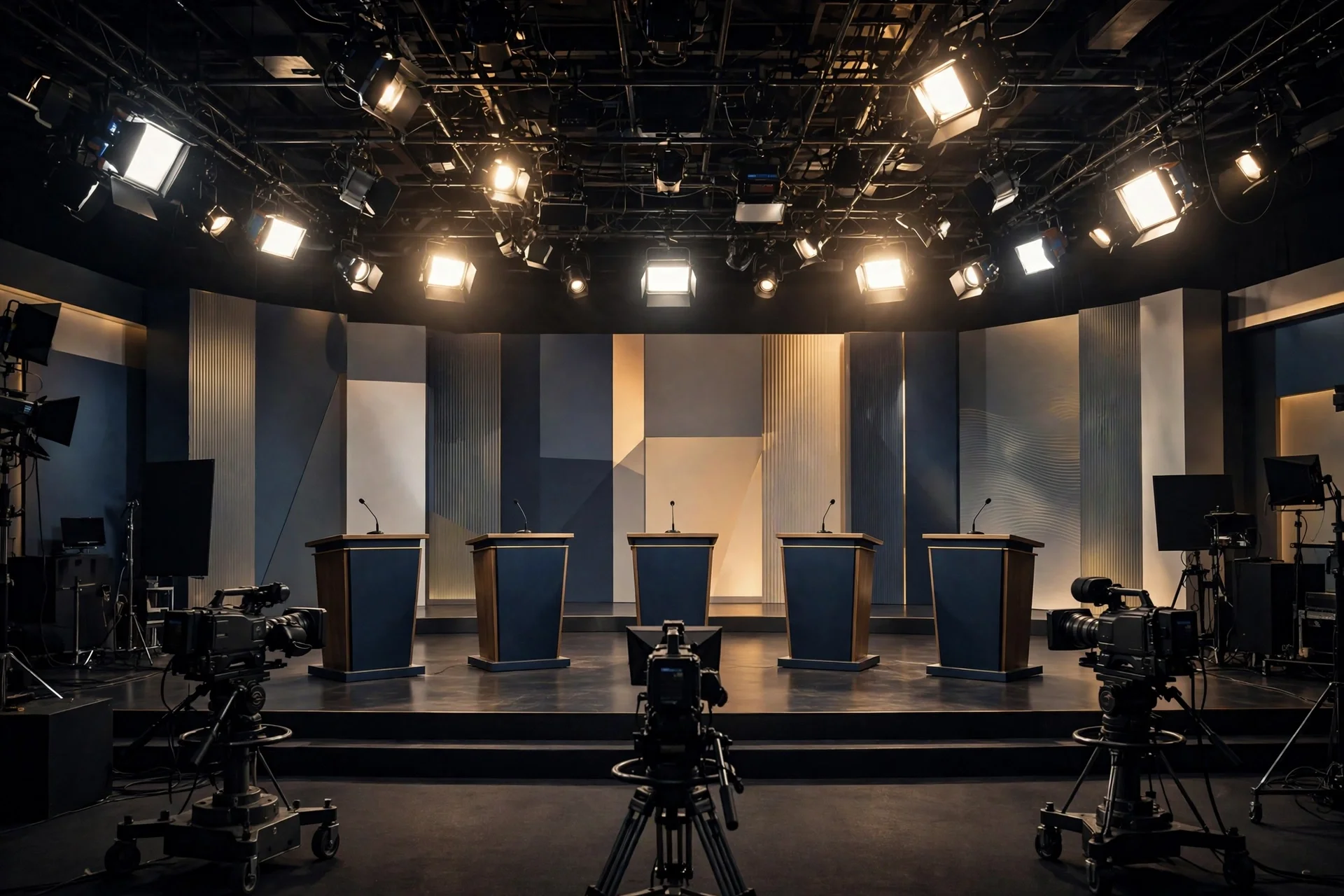
Un plató preparado para un debate televisivo a cinco, con los atriles vacíos a la espera de los candidatos. · Imagen generada con IA para Erick Prometeo Media
Popular Party accepts five-way debate if the left fails to unite
The Popular Party will not oppose a five-way televised debate on November 26 with Frente Amplio and Podemos if the left fails to agree a single candidacy…
Five-way debate: PP unafraid to let the left show its division
The Popular Party accepts a five-way debate on November 26 with Frente Amplio and Podemos if left-wing talks stall and there is no single candidacy for the…
The Popular Party will not oppose holding the televised debate on Thursday, November 26, three days before the November 29 general election, as a five-way debate including the candidates of Frente Amplio and Podemos, if talks between the two left-wing forces stall and they fail to agree a single ticket, according to sources from the party's campaign committee.
--- The context ---
The space to the left of the PSOE arrives divided at the final stretch, after years of successive alliances under different formulas in 2015, 2016, 2019 and 2023. This Friday is the deadline to register coalitions, so the decision on a single ticket or separate candidacies will be settled within hours and will shape the whole campaign.
--- The facts ---
The Popular Party already agreed to take part in three debates. On November 16 there will be a head-to-head between Pedro Sánchez and Alberto Núñez Feijóo on a private channel. On November 23, public television will bring together the spokespersons of the groups with parliamentary representation. On November 26, another private channel will air the debate among the main parties' candidates, and campaign committee sources indicated the party would be open to also including the Podemos candidate, Irene Montero.
--- The positions ---
Frente Amplio agreed to put forward former mayor Ada Colau as its candidate for prime minister, and she opened the door to stepping aside if that helps an agreement with Podemos, saying there is still time and extending a hand to ERC as well. Podemos reached a collaboration agreement with ERC in Catalonia and is championing Irene Montero as its candidate. Montero declined to comment on the invitation and conveyed, as reported indirectly, that she preferred to keep her silence because it was what could best help things go well.
--- What remains unknown ---
It is unknown whether Frente Amplio and Podemos will close a single candidacy before Friday's deadline, or who would head it. Nor is the final format of the November 26 debate confirmed, since it depends on those talks. The landscape of the alternative left will only become clear once coalition registration closes.
--- Unanswered questions ---
Will Frente Amplio and Podemos manage to register a single candidacy before Friday's deadline expires? Would Ada Colau head that ticket, or step aside to make unity possible? Will Irene Montero agree to share the stage in a five-way debate if they run separately? How will left-wing voters be affected by arriving united or divided on November 29?
--- EPM analysis ---
The Popular Party's willingness to accept a five-way debate has an inclusive reading: ensuring every sensibility with a chance of representation explains itself to citizens, whether they run together or separately. For progressive voters, hearing Colau and Montero on the same stage would let them compare projects without intermediaries. Plurality on stage, well organized, strengthens the democratic quality of the campaign's final stretch.
📌 EPM Take: In EPM's view, a five-way debate is good news for voters if the left fails to unite, because no one should be left voiceless in the only major face-off before November 29 over a failed negotiation between parties. Colau's offer to step aside to ease unity and Montero's silence so as not to hinder it are gestures worth valuing. It is now up to both forces to decide before Friday whether they put agreement above party labels, and up to citizens to judge that with every candidate on stage.
The Popular Party will raise no objections to the televised debate on Thursday, November 26, three days before the November 29 general election, being held as a five-way contest including the candidates of Frente Amplio and Podemos, if left-wing talks on a single candidacy end up stalling, according to sources from the party's campaign committee.
--- The context ---
The space to the left of the PSOE reaches this election marked by years of fragmentation, with formulas that replaced one another in 2015, 2016, 2019 and 2023 without consolidating a stable alternative. This Friday is the deadline to register coalitions, and the absence of an agreement at this stage portrays a left arguing over labels and leaderships while the other parties already prepare their campaigns.
--- The facts ---
The Popular Party agreed to take part in three debates. On November 16, a head-to-head between Pedro Sánchez and Alberto Núñez Feijóo will be held on a private channel. On November 23, public television will host the debate of spokespersons of the groups with parliamentary representation. On November 26, another private channel will air the debate among the main parties' candidates, and campaign committee sources noted the party would be open to also including the Podemos candidate, Irene Montero.
--- The positions ---
Frente Amplio agreed to put forward former mayor Ada Colau as its candidate for prime minister, and she opened the door to resigning if that facilitates an agreement with Podemos, saying there is still time. Podemos, by contrast, closed a collaboration agreement with ERC in Catalonia and is championing Irene Montero as its candidate. Montero declined to comment and conveyed, as reported indirectly, that she preferred her silence because it was what could best help things go well.
--- What remains unknown ---
It is still unknown whether there will be a single candidacy before registration closes this Friday, who would lead it, or the closed format of the November 26 debate. Until registration closes, the landscape of the alternative left will remain unclear, and with it the final line-up of the campaign's main debate.
--- Unanswered questions ---
Why does the left reach the eve of the coalition deadline without knowing whether it will run united or divided? Is a unity candidacy credible when its proposed leader is already offering to resign before starting? What common project could Colau and Montero defend if they have not even closed an agreement between themselves? Will voters reward or punish so much uncertainty on November 29 in a space that aspires to govern?
--- EPM analysis ---
The Popular Party's acceptance of a five-way debate reveals confidence: it does not fear contrast and prefers each left-wing option to defend its project in public. That format would also show the difference between a bloc that arrives with its homework done and another negotiating its own existence at the last minute. Governability and clarity of alternatives are also measured in these gestures.
📌 EPM Take: In EPM's view, what is right is right and what is wrong is wrong, whoever it comes from. It is right that no candidate is left out of the November 26 debate and that voters see everyone on the same stage. It is wrong, however, that the alternative left reaches the eve of coalition registration with no clear candidate and no closed agreement, offering resignations and silences instead of a project. Coherence is demonstrated before asking for the vote, and on that point the contrast between the blocs is already eloquent.
El PP acepta un debate a cinco si la izquierda no logra unirse
El PP no se opondrá a un debate televisivo a cinco el 26 de noviembre con Frente Amplio y Podemos si la izquierda no cierra una candidatura única antes del…
Debate a cinco: el PP no teme que la izquierda muestre su división
El PP acepta que el debate del 26 de noviembre sea a cinco con Frente Amplio y Podemos si la negociación de la izquierda encalla y no hay candidatura única…
El Partido Popular no se opondrá a que el debate televisivo del jueves 26 de noviembre, a tres días de las elecciones generales del 29 de noviembre, se celebre a cinco e incluya a los candidatos de Frente Amplio y de Podemos, si la negociación entre ambas formaciones encalla y no logran una candidatura única, según indicaron fuentes del comité de campaña popular.
--- El contexto ---
El espacio a la izquierda del PSOE llega dividido a la recta final, tras años de confluencias sucesivas en 2015, 2016, 2019 y 2023. Este viernes vence el plazo para registrar coaliciones, y la decisión sobre una lista unitaria o candidaturas separadas condicionará toda la campaña.
--- Los hechos ---
Los populares ya aceptaron participar en tres debates. El 16 de noviembre habrá un cara a cara entre Pedro Sánchez y Alberto Núñez Feijóo en una cadena privada. El 23 de noviembre, la televisión pública reunirá a los portavoces de los grupos con representación parlamentaria. El 26 de noviembre, otra cadena privada emitirá el debate entre los candidatos de los principales partidos, y fuentes del comité de campaña indicaron que el partido estaría abierto a incluir también en él a la candidata de Podemos, Irene Montero.
--- Las posiciones ---
Frente Amplio acordó presentar a la exalcaldesa Ada Colau como candidata a la Presidencia del Gobierno, y ella abrió la puerta a renunciar si ello facilita un acuerdo con Podemos, afirmando que todavía hay tiempo y tendiendo la mano también a ERC. Podemos alcanzó un acuerdo de colaboración con ERC en Cataluña y reivindica a Irene Montero como su candidata. Montero evitó pronunciarse sobre la invitación y trasladó, en indirecto, que prefería guardar silencio porque era lo que mejor podía contribuir a que las cosas fueran bien.
--- Lo que falta saber ---
No se sabe si Frente Amplio y Podemos cerrarán una candidatura única antes del plazo de este viernes ni quién la encabezaría. Tampoco está confirmado el formato del debate del 26 de noviembre, pendiente de esa negociación.
--- Preguntas sin respuesta ---
¿Lograrán Frente Amplio y Podemos registrar una candidatura única antes de que venza el plazo de este viernes? ¿Encabezaría Ada Colau esa lista, o cedería el puesto para facilitar la unidad? ¿Aceptará Irene Montero compartir atril en un debate a cinco si concurren por separado? ¿Cómo afectará al voto de la izquierda llegar unida o dividida al 29 de noviembre?
--- Análisis EPM ---
La disposición popular a un debate a cinco tiene una lectura inclusiva: que todas las sensibilidades con opciones de representación se expliquen ante la ciudadanía, concurran juntas o por separado. Para el electorado progresista, escuchar en un mismo plató a Colau y a Montero permitiría comparar proyectos sin intermediarios. La pluralidad en el atril, bien ordenada, fortalece la calidad democrática del tramo final de campaña.
📌 Conclusion EPM: A juicio de EPM, un debate a cinco es una buena noticia para los votantes si la izquierda no logra unirse, porque nadie debería quedarse sin voz en el único gran cara a cara previo al 29 de noviembre por una negociación fallida entre partidos. Que Colau ofrezca renunciar para facilitar la unidad y que Montero guarde silencio para no entorpecerla son gestos que merecen ser valorados. Ahora corresponde a ambas formaciones decidir antes del viernes si anteponen el acuerdo a las siglas, y a la ciudadanía juzgarlo con todos los candidatos en el plató.
El Partido Popular no pondrá objeciones a que el debate televisivo del jueves 26 de noviembre, a tres días de las elecciones generales del 29 de noviembre, se celebre a cinco e incluya a los candidatos de Frente Amplio y de Podemos, si la negociación de la izquierda para una candidatura única termina encallando, según indicaron fuentes del comité de campaña popular.
--- El contexto ---
El espacio a la izquierda del PSOE llega marcado por años de fragmentación, con fórmulas que se relevaron en 2015, 2016, 2019 y 2023 sin consolidar una alternativa estable. Este viernes vence el plazo para registrar coaliciones, y la falta de acuerdo dibuja una izquierda que discute siglas mientras los demás ya preparan la campaña.
--- Los hechos ---
Los populares aceptaron participar en tres debates. El 16 de noviembre se celebrará un cara a cara entre Pedro Sánchez y Alberto Núñez Feijóo en una cadena privada. El 23 de noviembre, la televisión pública acogerá el debate de los portavoces de los grupos con representación parlamentaria. El 26 de noviembre, otra cadena privada emitirá el debate entre los candidatos de los principales partidos, y fuentes del comité de campaña señalaron que el partido estaría abierto a incluir también a la candidata de Podemos, Irene Montero.
--- Las posiciones ---
Frente Amplio acordó presentar a la exalcaldesa Ada Colau como candidata a la Presidencia del Gobierno, y ella abrió la puerta a renunciar si eso facilita un acuerdo con Podemos, asegurando que todavía hay tiempo. Podemos, en cambio, cerró un acuerdo de colaboración con ERC en Cataluña y reivindica a Irene Montero como su candidata. Montero evitó pronunciarse y trasladó, en indirecto, que prefería su silencio porque era lo que mejor podía contribuir a que las cosas fueran bien.
--- Lo que falta saber ---
Aún no se conoce si habrá candidatura única antes del cierre del registro de este viernes, ni quién la lideraría, ni el formato del debate del 26 de noviembre.
--- Preguntas sin respuesta ---
¿Por qué la izquierda llega a la víspera del cierre de coaliciones sin saber si concurrirá unida o dividida? ¿Es creíble una candidatura de unidad encabezada por quien ya se ofrece a renunciar antes de empezar? ¿Qué proyecto común defenderían Colau y Montero si ni siquiera han cerrado un acuerdo entre ellas? ¿Premiarán o castigarán los votantes el 29 de noviembre tanta incertidumbre en un espacio que aspira a gobernar?
--- Análisis EPM ---
Que los populares acepten un debate a cinco revela seguridad: no temen el contraste y prefieren que cada opción de la izquierda defienda su proyecto en público. Ese formato mostraría además la diferencia entre un bloque que llega con los deberes hechos y otro que negocia su propia existencia a última hora. La gobernabilidad y la claridad de las alternativas también se miden en estos gestos.
📌 Conclusion EPM: A juicio de EPM, lo que está bien está bien y lo que está mal está mal, venga de quien venga. Está bien que ningún candidato se quede fuera del debate del 26 de noviembre y que los votantes vean a todos en el mismo plató. Está mal, en cambio, que la izquierda alternativa llegue a la víspera del registro de coaliciones sin candidato claro ni acuerdo cerrado, ofreciendo renuncias y silencios en lugar de un proyecto. La coherencia se demuestra antes de pedir el voto, y en eso el contraste entre bloques ya es elocuente.