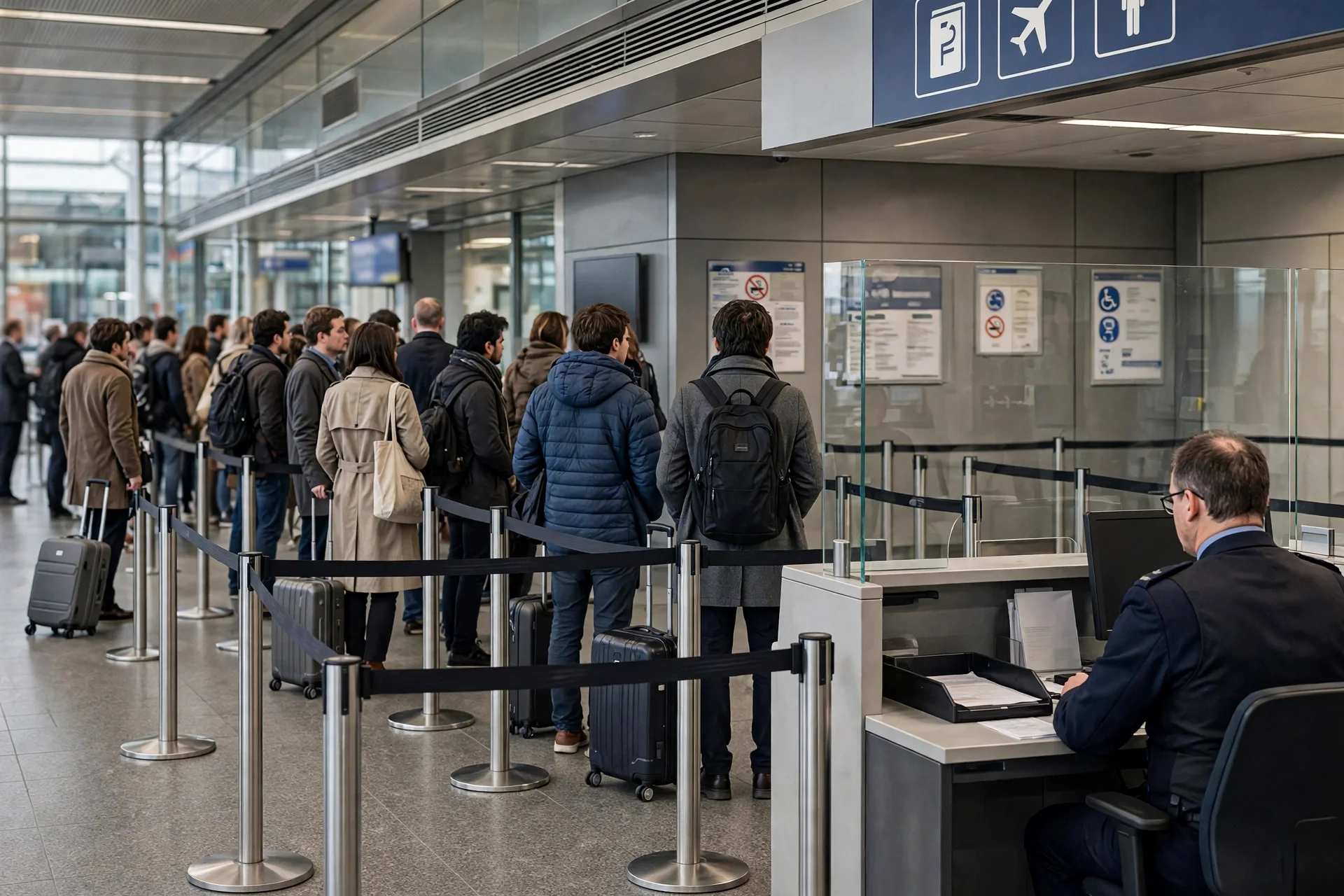
Imagen ilustrativa del control de pasaportes en un aeropuerto británico. · Imagen generada con IA para Erick Prometeo Media
UK strips Eritrea of fast-track visa access over returns
From today, the UK is scrapping preferential visa processing for Eritrean VIPs and officials.
London penalises Eritrea for refusing to take back nationals
Eritrea loses preferential visa processing for its VIPs and officials from today.
--- The context ---
The United Kingdom has stepped up its pressure on countries that refuse to take back their own nationals when those people have no right to remain in Britain. Returns arrangements are regarded as vital to removing failed asylum seekers and foreign criminals, and the government has turned cooperation on returns into a condition with direct migration consequences for states that decline to engage.
--- The facts ---
From today, the Home Office is scrapping preferential visa processing for Eritrean VIPs and government officials. Home Secretary Shabana Mahmood has warned that she will block all visas for Eritreans if Eritrea does not rapidly agree to the return of its nationals with no right to be in the UK, raising the prospect of a total visa shutdown.
The move follows Eritrea's abrupt withdrawal of returns cooperation earlier this year and months of private British efforts that met no constructive engagement. Eritreans were also the most common nationality among small boat arrivals in the year ending June 2026. In addition, Eritrean diplomats will now be barred from travelling 60 kilometres (37 miles) beyond London without permission from the Foreign Office, mirroring similar restrictions placed on British officials in Asmara.
--- The positions ---
Mahmood said, in substance, that Eritrea has had every chance to accept the return of criminals and of those with no right to be in the UK and that, unlike other countries, it has refused. She conveyed a simple message to the Eritrean government: take back its nationals or face a complete ban on its citizens entering the UK, and she added that she would not hesitate to impose further measures on other countries refusing to cooperate. Eritrea, for its part, has refused to engage constructively after months of private approaches.
--- What remains unknown ---
The precise deadline London is giving Eritrea before a full visa block has not been made public, and it is unclear whether Asmara will respond to the ultimatum. It also remains unknown how many people will be affected by the removal of preferential processing, or what will happen to pending returns while the standoff between the two governments continues.
--- Unanswered questions ---
Will Eritrea resume returns cooperation before a total visa ban is imposed? How much time will the British government allow before applying that complete prohibition? What effect will the travel restriction on Eritrean diplomats have on bilateral relations? Will other countries follow the path of refusal or the path of enhanced cooperation?
--- EPM analysis ---
The Eritrean case is presented alongside a deliberate contrast: all 3 countries previously threatened with visa penalties chose to improve cooperation. Angola and Namibia quickly agreed enhanced arrangements after last autumn's threat, while the Democratic Republic of Congo was slower, faced imposed measures, and then, after 6 months of sustained cooperation with returns flights now running, saw those restrictions lifted. In parallel, a new migration deal with Egypt will cut the time taken to return Egyptian nationals by around 90%, from around 30 weeks to 3 weeks, reinforcing the idea that the pressure seeks practical results rather than punishment alone.
📌 EPM Take: In EPM's view, the ultimatum to Eritrea tests the credibility of a strategy that has already produced agreements with three countries, but whose success depends on the threat being carried out if Asmara does not yield. The risk is that the measure also penalises Eritreans unconnected to the returns dispute, while the British government gains domestic political room. What matters will be the real deadlines and whether cooperation, when it comes, is sustained through actual flights rather than last-minute formal diplomatic promises alone today.
--- The context ---
A state's ability to remove people who have no right to remain on its territory is a basic element of border control. The British government argues that returns arrangements are vital to removing failed asylum seekers and foreign criminals, and that no country should benefit from preferential visa treatment while refusing to take back its own nationals.
--- The facts ---
From today, Eritrea loses preferential visa processing for its VIPs and government officials. Home Secretary Shabana Mahmood has warned that she will block all visas for Eritreans if the country does not rapidly agree to the return of its nationals with no right to be in the UK. The threatened sanction is a total visa shutdown if cooperation does not improve quickly.
Eritrea abruptly withdrew returns cooperation earlier this year and, after months of private British efforts, has refused to engage constructively. Its nationals were the most common nationality among small boat arrivals in the year ending June 2026. From today, Eritrean diplomats will also be barred from travelling 60 kilometres (37 miles) beyond London without permission from the Foreign Office, mirroring similar restrictions placed on British officials in Asmara.
--- The positions ---
Mahmood said, in substance, that Eritrea has had every chance to accept the return of criminals and those with no right to be in the UK and that, unlike other countries, it has refused. Her message to the Eritrean government, as she put it, is to take back its nationals or face a complete ban on its citizens entering the UK, and she warned that she would not hesitate to impose further measures on other countries refusing to cooperate. In her first week in post, Mahmood had already vowed to impose visa penalties on countries that refuse to take back their citizens.
--- What remains unknown ---
The exact deadline Eritrea faces before a total block has not been made public, nor has the number of returns stalled by the lack of cooperation. It is also unknown whether Asmara will now negotiate once the pressure is public, or which further measures might be applied to other countries.
--- Unanswered questions ---
Will the British government carry out the total visa block if Eritrea maintains its refusal? How many returns of foreign criminals and failed asylum seekers are currently stalled by this lack of cooperation? Will Asmara answer with new restrictions on British officials? Will these penalties be extended to other countries that refuse to take back their nationals?
--- EPM analysis ---
Recent experience supports the pressure: all 3 countries previously threatened with visa penalties improved their cooperation. Angola and Namibia quickly agreed enhanced arrangements following last autumn's threat. The Democratic Republic of Congo was slower to act, prompting visa measures including restrictions on officials, and after 6 months of sustained cooperation, with returns flights now running, those restrictions have been lifted, a model of reversible sanctions tied to results. The new deal with Egypt, cutting the time to return Egyptian nationals by around 90%, from around 30 weeks to 3 weeks, shows the route offered to those who cooperate.
📌 EPM Take: In EPM's view, withdrawing privileges from the officials of a country that refuses to take back its own nationals is a proportionate response with a demonstrated record across three earlier recent cases. The measure is right to start with elites rather than the general population, although its credibility will require the total block to follow if Asmara persists in its current refusal today. Without real consequences, the threat would lose its value, and with it the British government's wider returns policy as a whole overall.
Reino Unido retira el trato preferente de visados a Eritrea
Desde hoy, el Reino Unido elimina el procesamiento preferente de visados para VIPs y funcionarios de Eritrea.
Londres sanciona a Eritrea por negarse a readmitir a sus nacionales
Eritrea pierde desde hoy el procesamiento preferente de visados para sus VIPs y funcionarios.
--- El contexto ---
El Reino Unido ha endurecido su presión sobre los países que se niegan a readmitir a sus propios nacionales cuando estos no tienen derecho a permanecer en territorio británico. Los acuerdos de retorno se consideran esenciales para retirar a solicitantes de asilo rechazados y a delincuentes extranjeros, y el Gobierno ha convertido esa cooperación en una condición con consecuencias migratorias.
--- Los hechos ---
Desde hoy, el Ministerio del Interior elimina el procesamiento preferente de visados para personas muy importantes y funcionarios de Eritrea. La ministra del Interior, Shabana Mahmood, ha advertido de que bloqueará todos los visados para los eritreos si Eritrea no acepta rápidamente el retorno de sus nacionales sin derecho a estar en el Reino Unido, hasta llegar a un cierre total de visados.
La medida llega después de que Eritrea retirara abruptamente su cooperación en retornos a principios de este año y de meses de gestiones privadas británicas sin respuesta constructiva. Los eritreos fueron, además, la nacionalidad más común entre las llegadas en pequeñas embarcaciones durante el año terminado en junio de 2026. Como medida adicional, los diplomáticos eritreos no podrán viajar a más de 60 kilómetros (37 millas) de Londres sin permiso del Foreign Office, en reciprocidad con las restricciones a funcionarios británicos en Asmara.
--- Las posiciones ---
Según lo expresado por Mahmood, Eritrea ha tenido todas las oportunidades de aceptar el retorno de delincuentes y de personas sin derecho a permanecer en el país, y a diferencia de otros países se ha negado a hacerlo. La ministra trasladó al Gobierno eritreo un mensaje sencillo: que readmita a sus nacionales o se enfrente a una prohibición completa de entrada de sus ciudadanos, y aseguró que no dudará en imponer medidas adicionales a otros países que se nieguen a cooperar.
--- Lo que falta saber ---
Todavía no se conoce el plazo concreto que Londres concede a Eritrea antes de aplicar el bloqueo total de visados, ni si Asmara responderá al ultimátum. Tampoco se ha detallado cuántas personas podrían verse afectadas por la retirada del trato preferente ni qué ocurrirá con los retornos pendientes.
--- Preguntas sin respuesta ---
¿Aceptará Eritrea reanudar la cooperación en retornos antes del bloqueo total de visados? ¿Cuánto tiempo dará Londres antes de aplicar esa prohibición completa? ¿Qué efectos tendrá la restricción de movimientos de los diplomáticos eritreos sobre la relación bilateral? ¿Seguirán otros países el camino de la negativa o el de la cooperación?
--- Análisis EPM ---
El caso eritreo se presenta junto a un contraste deliberado: los 3 países amenazados anteriormente con sanciones de visados optaron por mejorar su cooperación. Angola y Namibia acordaron rápidamente arreglos reforzados tras la amenaza del otoño pasado, mientras que la República Democrática del Congo tardó más, se le impusieron medidas y, tras 6 meses de cooperación sostenida con vuelos de retorno en marcha, estas se levantaron. En paralelo, un nuevo acuerdo con Egipto reducirá el tiempo de retorno de nacionales egipcios en torno a un 90%, de unas 30 semanas a 3 semanas, lo que refuerza la idea de que la presión busca resultados prácticos.
📌 Conclusion EPM: A juicio de EPM, el ultimátum a Eritrea pone a prueba la credibilidad de una estrategia que ya produjo acuerdos con tres países, pero cuyo éxito depende de que la amenaza se ejecute si Asmara no cede. El riesgo es que la medida castigue también a eritreos sin relación con el conflicto de retornos, mientras el Gobierno británico gana margen político interno. La clave estará en los plazos reales y en si la cooperación, cuando llegue, se sostiene con vuelos efectivos y no solo con promesas diplomáticas formales de última hora siempre.
--- El contexto ---
La capacidad de un Estado para retirar a quienes no tienen derecho a permanecer en su país es una pieza básica del control migratorio. El Gobierno sostiene que los acuerdos de retorno son vitales para retirar a solicitantes de asilo rechazados y delincuentes extranjeros, y que ningún país debería beneficiarse de un trato preferente mientras se niega a readmitir a sus nacionales.
--- Los hechos ---
Desde hoy, Eritrea pierde el procesamiento preferente de visados para sus personas muy importantes y funcionarios. La ministra del Interior, Shabana Mahmood, ha advertido de que bloqueará todos los visados para los eritreos si el país no acepta rápidamente el retorno de sus nacionales sin derecho a estar en el Reino Unido. La amenaza es un cierre total si la cooperación no mejora con rapidez.
Eritrea retiró abruptamente su cooperación en retornos a principios de este año y, tras meses de gestiones privadas británicas, se ha negado a colaborar. Sus nacionales fueron la nacionalidad más común entre las llegadas en pequeñas embarcaciones en el año terminado en junio de 2026. Además, los diplomáticos eritreos no podrán alejarse más de 60 kilómetros (37 millas) de Londres sin permiso del Foreign Office, en reciprocidad con las restricciones a funcionarios británicos en Asmara.
--- Las posiciones ---
Mahmood afirmó, en síntesis, que Eritrea ha tenido todas las oportunidades de aceptar el retorno de delincuentes y de personas sin derecho a estar en el Reino Unido y que, a diferencia de otros países, se ha negado. Según trasladó la ministra, el mensaje a Asmara es que readmita a sus nacionales o se enfrente a una prohibición completa de entrada de sus ciudadanos, y advirtió de que no dudará en sancionar a otros países que se nieguen a cooperar. En su primera semana en el cargo, Mahmood ya había prometido sanciones de visados contra los países que no readmitan a sus ciudadanos.
--- Lo que falta saber ---
No se ha hecho público el plazo que tiene Eritrea para responder antes del bloqueo total, ni el número de retornos bloqueados por la falta de cooperación. Tampoco se sabe si Asmara aceptará negociar ahora que la presión es pública, ni qué medidas adicionales podrían aplicarse a otros países.
--- Preguntas sin respuesta ---
¿Cumplirá el Gobierno británico el bloqueo total si Eritrea mantiene su negativa? ¿Cuántos retornos de delincuentes extranjeros y solicitantes rechazados están hoy paralizados por esta falta de cooperación? ¿Responderá Asmara con nuevas restricciones a los funcionarios británicos? ¿Se extenderán estas sanciones a otros países que no readmitan a sus nacionales?
--- Análisis EPM ---
La experiencia reciente respalda la presión: los 3 países amenazados antes mejoraron su cooperación. Angola y Namibia acordaron rápidamente arreglos reforzados tras la amenaza del otoño pasado. La República Democrática del Congo fue más lenta, sufrió medidas sobre sus funcionarios y visados y, tras 6 meses de cooperación sostenida con vuelos de retorno en marcha, vio levantadas las restricciones. El nuevo acuerdo con Egipto, que reducirá el tiempo de retorno de nacionales egipcios en torno a un 90%, de unas 30 semanas a 3 semanas, muestra la vía que se ofrece a quien coopera.
📌 Conclusion EPM: A juicio de EPM, retirar privilegios a los funcionarios de un país que se niega a readmitir a sus propios nacionales es una respuesta proporcionada y con precedentes de eficacia demostrada en tres casos anteriores recientes. La medida acierta al empezar por las élites y no por la población general, aunque su credibilidad exigirá aplicar el bloqueo total si Asmara persiste en su negativa actual. Sin consecuencias reales, la amenaza se devaluaría y con ella toda la política de retornos del Gobierno británico en su conjunto general.