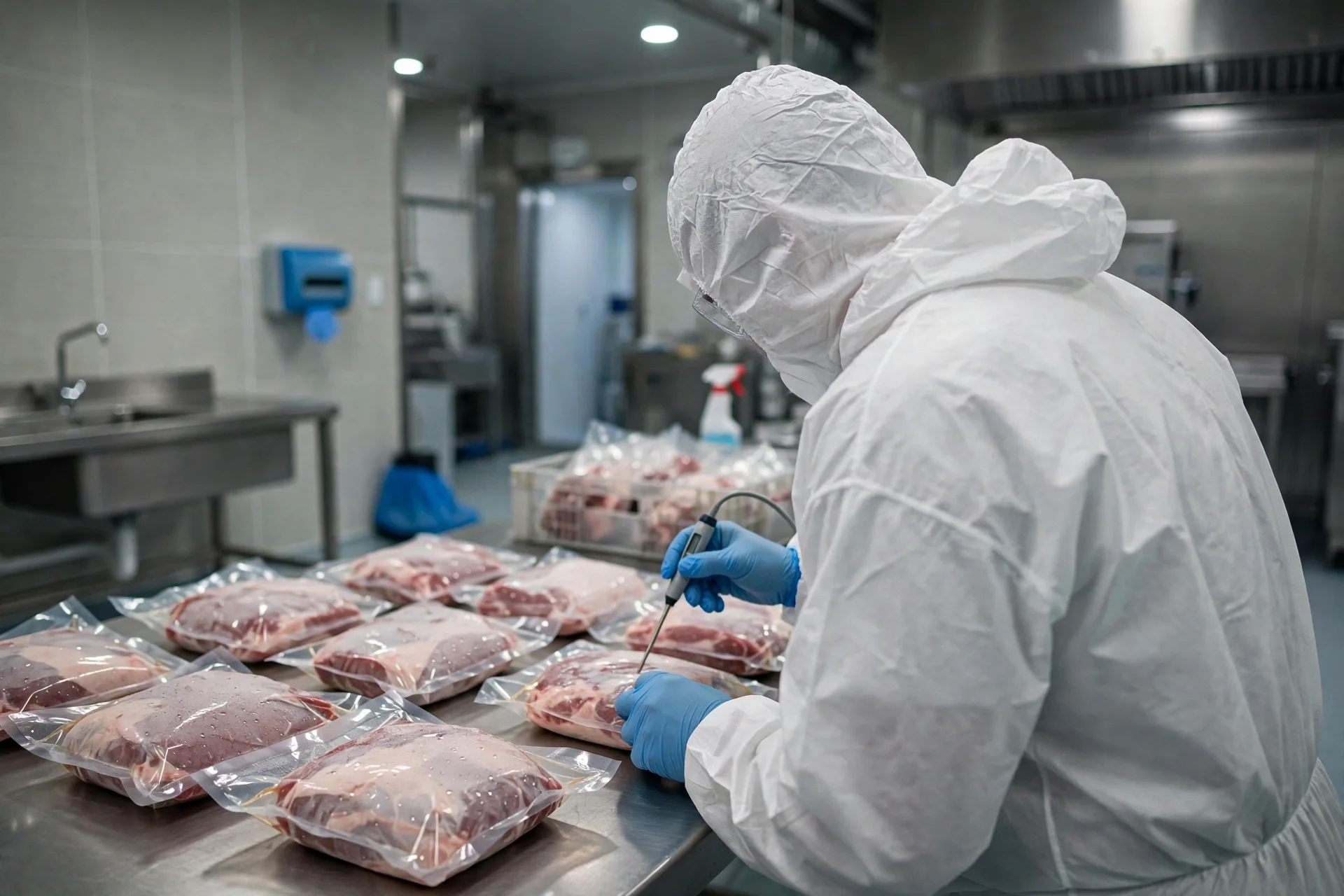
Imagen alusiva a una inspección de seguridad alimentaria en una planta de procesamiento de carne. · Imagen generada con IA para Erick Prometeo Media
Seven men charged over unfit meat and animal cruelty claims
Seven men appeared before Westminster Magistrates after a lengthy and complex food crime investigation.
Seven men charged over unfit meat and sent to crown court
Seven men appeared before Westminster Magistrates after a lengthy and complex food crime investigation.
--- The context ---
Consumer protection and animal welfare stand at the heart of this case, opened after a lengthy and complex investigation by the national food crime unit of the food standards agency. Prosecutors authorised the charges and are leading the prosecution while court proceedings continue, with safeguards in place for every defendant involved in the process.
--- The facts ---
Seven men appeared on Wednesday 14 October 2026 before Westminster Magistrates Court. Four appeared by video link: Tudor Organ, aged 30 and from Carmarthen, William Organ, aged 54 and from Carmarthen, Simon Jones, aged 36 and from Carmarthen, and David Hird, aged 29 and from Ceredigion, as recorded at the initial hearing.
Three attended in person and are based in London: Richard Agyemang, aged 58, Amjad Buttar, aged 58, and Abdul Rahman, aged 56. All were charged with conspiring to supply unfit meat. Tudor Organ and William Organ were also charged with animal cruelty, in that they carried out an act causing an animal to suffer.
--- The positions ---
Neil Castle, deputy head of the food crime unit, said indirectly that the appearance followed the prosecution decision after the lengthy investigation. Dean Quick, a prosecutor from the serious economic, organised crime and international directorate, said indirectly that prosecutors found sufficient evidence and a public interest in proceeding, while reminding everyone that proceedings are active and defendants retain fair trial rights.
--- What remains unknown ---
Further public detail about the alleged conduct remains limited because proceedings are active and authorities urged caution against prejudicial commentary. All seven men were committed to Southwark Crown Court to appear on 11 November 2026 and were placed on unconditional bail, so the next hearing will shape how the allegations are formally tested.
--- Unanswered questions ---
What precise scope does the prosecution attribute to the alleged conspiracy to supply unfit meat in this case? What specific facts support the additional animal cruelty charge faced by two of the defendants? How will the case progress when it reaches Southwark Crown Court for the hearing scheduled in November?
--- EPM analysis ---
The case underlines why food safety depends on patient investigation and on accountability when alleged offences threaten public trust. Protecting consumers and animals matters deeply, yet accountability retains force only when evidence is tested fairly before a court, without prejudging guilt.
📌 EPM Take: In EPM's view, protecting consumers and animals requires this case to be heard firmly, openly and fairly, with full respect for the presumption of innocence. The charges are serious because public confidence in food safety is at stake, but no allegation can replace evidence tested in court. The lengthy and complex investigation deserves calm public scrutiny, without commentary that could prejudice active proceedings, until the November hearing allows the complete evidence to be examined under proper judicial safeguards for everyone.
--- The context ---
Law, order and due process frame this proceeding, which follows a lengthy and complex investigation by the national food crime unit of the food standards agency. Prosecutors authorised the charges and are prosecuting the case as proceedings continue, while stressing that every defendant keeps the right to a fair trial under the law.
--- The facts ---
Seven men appeared on Wednesday 14 October 2026 before Westminster Magistrates Court. Appearing by video link were Tudor Organ, aged 30 and from Carmarthen, William Organ, aged 54 and from Carmarthen, Simon Jones, aged 36 and from Carmarthen, and David Hird, aged 29 and from Ceredigion, according to the initial court appearance.
Attending in person were Richard Agyemang, aged 58, Amjad Buttar, aged 58, and Abdul Rahman, aged 56, all based in London. Prosecutors allege that all conspired to supply unfit meat. Tudor Organ and William Organ were also charged with animal cruelty, linked to an act said to have caused an animal to suffer.
--- The positions ---
Neil Castle, deputy head of the investigating unit, said indirectly that the court appearance followed the prosecution decision after the lengthy and complex inquiry. Dean Quick, from the serious economic, organised crime and international directorate, said indirectly that there was sufficient evidence and a public interest in pursuing proceedings, and he warned against reporting or commentary that could prejudice the active case.
--- What remains unknown ---
The full evidence has not been made public and proceedings remain active, so early judgement would be misplaced and potentially unfair. All seven defendants were committed to Southwark Crown Court to appear on 11 November 2026 on unconditional bail, where the formal process will continue under judicial control and established legal safeguards.
--- Unanswered questions ---
What evidence will prosecutors present to support the shared conspiracy charge before the Crown Court in November? What safeguards will protect each defendant and their right to a fair trial throughout the proceedings? What specific facts underpin the additional animal cruelty charge brought against two of the seven defendants?
--- EPM analysis ---
Firm enforcement is the proper response to alleged food crime, because it protects the public without turning an accusation into a premature verdict. Sufficient evidence, public interest and fair process, as invoked by prosecutors, must be demonstrated in open court and tested through the ordinary discipline of the law.
📌 EPM Take: In EPM's view, this case should proceed with order, evidence and due process, without shortcuts or parallel verdicts that weaken justice itself. The presumption of innocence protects all seven defendants until a court assesses the evidence, while the law must still be applied firmly if prosecutors prove their case. Commitment to Southwark on unconditional bail shows an active and controlled process that deserves sober attention and strict respect for the judicial decisions still to come in November.
Siete hombres acusados por carne no apta y crueldad animal
Siete hombres comparecieron ante Westminster tras una investigación larga y compleja sobre delitos alimentarios.
Siete acusados por carne no apta, remitidos a otro tribunal
Siete hombres comparecieron ante Westminster tras una investigación larga y compleja sobre delitos alimentarios.
--- El contexto ---
La protección de los consumidores y el bienestar animal están en el centro de este caso, abierto tras una investigación larga y compleja de la unidad contra delitos alimentarios de la agencia de seguridad alimentaria. La fiscalía autorizó los cargos y asume la acusación.
--- Los hechos ---
Siete hombres comparecieron el miércoles 14 de octubre de 2026 ante el tribunal de magistrados de Westminster. Cuatro lo hicieron por videoconferencia: Tudor Organ, de 30 años y de Carmarthen, William Organ, de 54 años y de Carmarthen, Simon Jones, de 36 años y de Carmarthen, y David Hird, de 29 años y de Ceredigion.
Tres comparecieron en persona y residen en Londres: Richard Agyemang, de 58 años, Amjad Buttar, de 58 años, y Abdul Rahman, de 56 años. Todos enfrentan un cargo por conspirar para suministrar carne no apta. Tudor Organ y William Organ enfrentan además un cargo por crueldad animal, por un acto que habría causado sufrimiento a un animal.
--- Las posiciones ---
El subjefe de la unidad contra los delitos alimentarios, Neil Castle, señaló en forma indirecta que la comparecencia sigue a la decisión de la fiscalía tras la investigación prolongada. El fiscal Dean Quick, de la dirección especializada en crimen económico grave, organizado e internacional, sostuvo de manera indirecta que existe evidencia suficiente y que proseguir responde al interés público, recordando que el proceso está activo.
--- Lo que falta saber ---
Todavía no se conocen más detalles públicos sobre los hechos atribuidos, porque el procedimiento sigue activo y las autoridades pidieron cautela. Los siete quedaron en libertad bajo fianza incondicional y fueron remitidos al tribunal de la Corona de Southwark, donde deben comparecer el 11 de noviembre de 2026 para la siguiente etapa del proceso.
--- Preguntas sin respuesta ---
¿Qué alcance exacto atribuye la acusación a la presunta conspiración para suministrar carne no apta? ¿Qué hechos concretos sostienen el cargo adicional por crueldad animal contra dos de los acusados? ¿Cómo avanzará el caso cuando llegue al tribunal de la Corona de Southwark en noviembre?
--- Análisis EPM ---
El caso muestra cómo la seguridad alimentaria depende de investigaciones pacientes y controles eficaces. La rendición de cuentas, apoyada en evidencia verificada y un juicio justo, protege a los consumidores sin sacrificar las garantías de cada acusado.
📌 Conclusion EPM: A juicio de EPM, proteger al consumidor y a los animales exige que este caso se juzgue con toda la firmeza de la ley y con pleno respeto a la presunción de inocencia. Son cargos graves por su posible impacto en la confianza alimentaria, pero ningún señalamiento sustituye a la prueba presentada ante un tribunal. La investigación larga y compleja merece escrutinio público sereno, sin comentarios que perjudiquen el proceso, hasta que la audiencia de noviembre permita conocer la evidencia completa y contrastada en sede judicial con garantías.
--- El contexto ---
El orden y el respeto a la ley sostienen este procedimiento, iniciado tras una investigación larga y compleja de la unidad contra delitos alimentarios de la agencia de seguridad alimentaria. La fiscalía autorizó los cargos y lidera la acusación.
--- Los hechos ---
Siete hombres comparecieron el miércoles 14 de octubre de 2026 ante el tribunal de magistrados de Westminster. Por videoconferencia declararon Tudor Organ, de 30 años y de Carmarthen, William Organ, de 54 años y de Carmarthen, Simon Jones, de 36 años y de Carmarthen, y David Hird, de 29 años y de Ceredigion, según consta en la comparecencia inicial.
En persona asistieron Richard Agyemang, de 58 años, Amjad Buttar, de 58 años, y Abdul Rahman, de 56 años, todos residentes en Londres. La acusación sostiene que todos conspiraron para suministrar carne no apta. Tudor Organ y William Organ suman un cargo por crueldad animal, vinculado a un acto que habría causado sufrimiento a un animal.
--- Las posiciones ---
Neil Castle, subjefe de la unidad investigadora, indicó de forma indirecta que la comparecencia deriva de la decisión de la fiscalía después de la investigación prolongada y compleja. Dean Quick, fiscal de la dirección contra el crimen económico grave, organizado e internacional, afirmó indirectamente que hay evidencia suficiente e interés público para proceder, e insistió en evitar comentarios que puedan perjudicar el proceso activo.
--- Lo que falta saber ---
El expediente completo aún no es público y el procedimiento permanece activo, por lo que cualquier valoración anticipada sería imprudente. Los siete acusados quedaron en libertad bajo fianza incondicional y fueron remitidos al tribunal de la Corona de Southwark, con comparecencia prevista para el 11 de noviembre de 2026, donde continuará la tramitación.
--- Preguntas sin respuesta ---
¿Qué pruebas presentará la fiscalía para sostener el cargo común de conspiración ante el tribunal de la Corona? ¿Qué garantías concretas protegerán el derecho a un juicio justo de cada acusado durante el proceso? ¿Qué hechos específicos fundamentan el cargo adicional por crueldad animal atribuido a dos acusados?
--- Análisis EPM ---
La aplicación firme de la ley es la vía correcta frente a presuntos delitos alimentarios, porque protege a la sociedad sin convertir la acusación en condena anticipada. El debido proceso y la evidencia deben demostrarse en audiencia bajo control judicial.
📌 Conclusion EPM: A juicio de EPM, este caso debe avanzar con orden, evidencia y debido proceso, sin atajos ni juicios paralelos que debiliten la justicia. La presunción de inocencia protege a los siete acusados hasta que un tribunal valore las pruebas, y al mismo tiempo la ley debe aplicarse con firmeza si la acusación demuestra los hechos. La remisión a Southwark y la fianza incondicional muestran un procedimiento activo y controlado, que merece seguimiento sobrio y respeto estricto a las decisiones judiciales venideras en noviembre próximo.