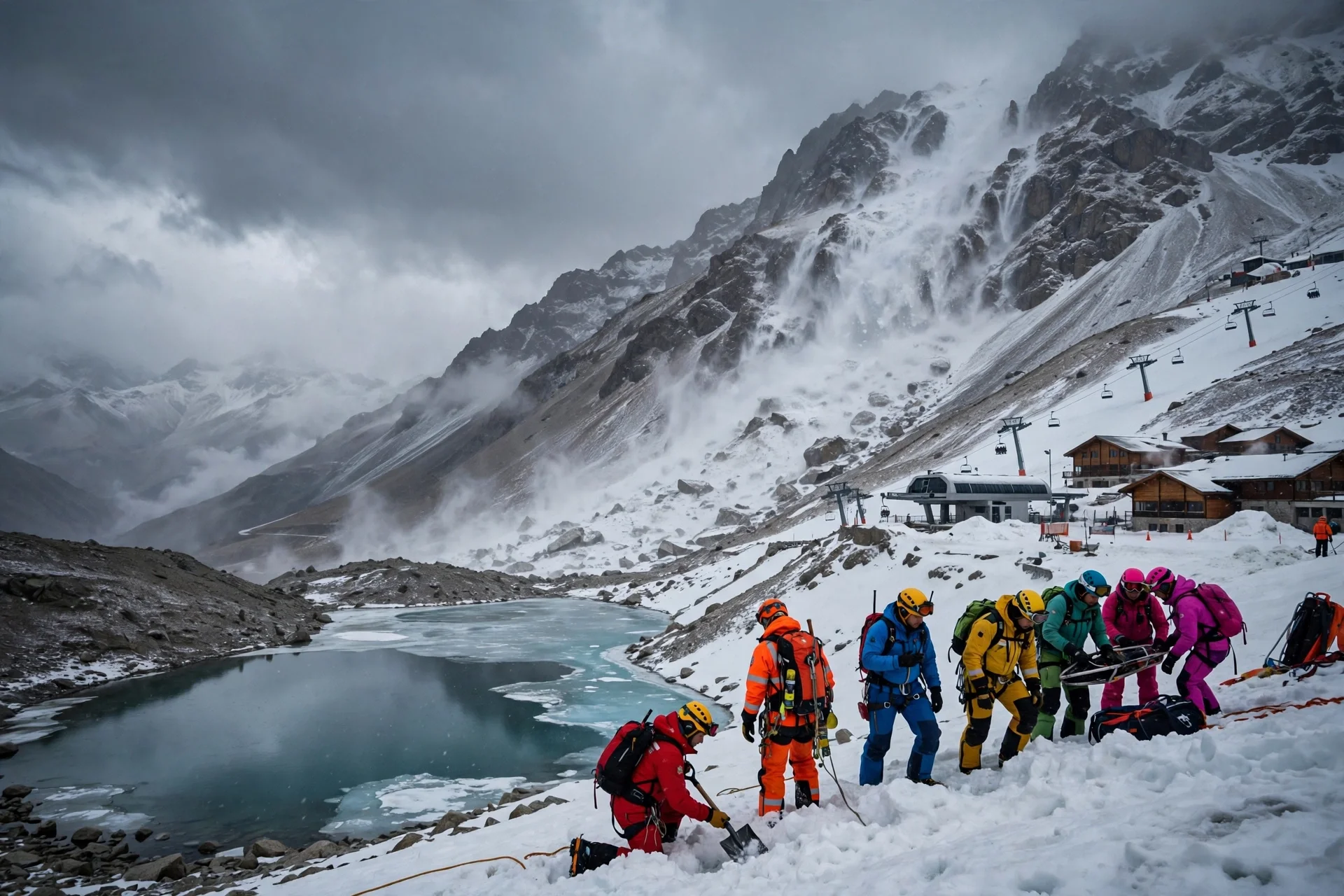
Rescatistas en la zona de Portillo, junto a la Laguna del Inca, tras la avalancha que dejó tres muertos y cuatro heridos. · Imagen generada EPM
Chile declares preventive climate emergency after Portillo avalanche
Chile decreed a preventive climate emergency between Coquimbo and Biobío from October 18 to 23 after the avalanche at Portillo, beside Laguna del Inca, which…
Portillo avalanche kills three as Chile orders preventive emergency
After the avalanche in an unauthorized sector of Portillo that left three dead and four injured, Chile activated a preventive climate emergency between…
--- The context ---
Chile faces a week of risk after an avalanche in the Andes mountain range left three dead and four injured. President José Antonio Kast decreed late on Saturday a preventive climate emergency between the regions of Coquimbo and Biobío, in force from October 18 to October 23 ahead of a new frontal system.
This season's snow accumulation reached levels not recorded in more than four decades. The ski season was extended until October 12, something that had not happened in 40 years, since the usual closing was in September. Despite that, people kept approaching the area, at 4,000 meters above sea level.
--- The facts ---
The slide occurred at around 14:45 beside Laguna del Inca, in a sector not authorized for skiing. The avalanche dragged the group of hikers toward the waters of the lagoon. Seven people were affected in total, all of them Chilean, and none was staying at the Hotel Portillo, close to the place.
The toll corrected by the authorities stands at three dead and four injured, after an initial report of four fatalities. The four survivors received care for hypothermia of varying severity. Rescue teams recovered two bodies, and the extraction of the third was still pending due to a lack of machinery, according to the presidential delegate of Valparaíso, Manuel Millones.
--- The positions ---
Kast held, in indirect terms, that the technical reports of Senapred and the meteorological projections lead to acting preventively in view of intense rains, hail and mass movements, and that the order will provide resources and a special alert. Millones warned, in indirect terms, that this snow is very dangerous because it is more likely to break loose.
The general manager of Portillo, Miguel Purcell, regretted the event and stated, in indirect terms, that the accident sector lies outside the authorized skiable area. He also indicated that entering unauthorized zones or continuing an activity despite the warnings means exposing oneself to grave dangers.
--- What remains unknown ---
The operation was not closed: the third body still had to be extracted due to a lack of machinery. The recovery of the four injured people is not yet known either. The investigation into the details of the accident continues, while the preventive emergency remains in force and the new frontal system develops.
--- Unanswered questions ---
How will the four injured people treated for hypothermia after the avalanche recover in the coming days? When will the extraction of the third body, pending due to a lack of machinery, finally be completed? What concrete measures will the preventive emergency activate between Coquimbo and Biobío? How will entry into unauthorized high mountain sectors be prevented?
--- EPM analysis ---
Acting before the frontal system unleashes its force recognizes that prevention saves lives. A season with snow not seen in more than 40 years changed the usual conditions of the mountain and demands proportionate responses. The correction of the toll, from four fatalities to three dead, also recalls the importance of reporting verified figures.
📌 EPM Take: In EPM's view, the preventive climate emergency shows that acting early protects more than reacting late, because it releases resources before intense rains, hail and mass movements strike communities between Coquimbo and Biobío. The Portillo tragedy, with three dead and four injured in an unauthorized sector, requires stronger prevention, clear risk information and support for the people affected. Protecting those who live in and visit the high mountains must guide every public decision during this critical week ahead for the region.
--- The context ---
Chile's President José Antonio Kast decreed late on Saturday a preventive climate emergency between the regions of Coquimbo and Biobío. The measure will run from October 18 to October 23 ahead of a new frontal system and seeks to speed up resources in view of possible intense rains, hail and mass movements.
The accident occurred at the Portillo Ski Center, beside Laguna del Inca, inside a sector not authorized for skiing. The snow accumulation had not been recorded in more than four decades, and the season was extended until October 12, something that had not happened in 40 years. The area lies at 4,000 meters above sea level.
--- The facts ---
The slide occurred at around 14:45, while a group of hikers crossed the high mountains. The avalanche dragged the group toward the waters of Laguna del Inca. The seven people affected were Chilean and were not staying at the Hotel Portillo, close to the place of the emergency.
The corrected toll stands at three dead and four injured, after an initial report of four fatalities released by Senapred. The four survivors received care for hypothermia of varying severity. Rescuers recovered two bodies, and the extraction of the third was still pending due to a lack of machinery, according to the presidential delegate of Valparaíso, Manuel Millones. Portillo lies about two hours from Santiago.
--- The positions ---
Kast stated, in indirect terms, that the technical reports of Senapred and the meteorological projections lead to acting preventively, and that the order will provide resources and a special state of alert. Millones warned, in indirect terms, that this snow is very dangerous because it is more likely to break loose.
The general manager of Portillo, Miguel Purcell, regretted the event and stated, in indirect terms, that the accident sector lies outside the authorized skiable area. He also indicated that entering unauthorized zones or continuing an activity despite the warnings means exposing oneself to grave dangers.
--- What remains unknown ---
The extraction of the third body remains pending, delayed by a lack of machinery, and the recovery of the four injured remains unknown. The investigation must establish how the group reached the unauthorized sector. Portillo lies about three kilometers from the border with Mendoza, near the Los Libertadores International Pass, framing the zone.
--- Unanswered questions ---
When will the machinery needed to complete the extraction of the third body finally arrive? What responsibilities will be established for entering a sector not authorized for skiing? Will the resources of the preventive emergency be enough to respond on time between Coquimbo and Biobío? Will access control in the high mountains be strengthened after this tragedy?
--- EPM analysis ---
A State that waits for the damage before moving its resources arrives late twice. Decreeing the special alert before the frontal system strikes is the correct way to govern an announced emergency. No official measure, however, replaces the personal responsibility to respect authorized zones and the warnings in force in the high mountains.
📌 EPM Take: In EPM's view, decreeing the emergency preventively is exercising authority on time, because order and foresight keep an announced threat from becoming a greater tragedy for the country. The Portillo avalanche, with three dead and four injured in an unauthorized sector, shows the cost of ignoring limits and warnings in the high mountains. Respecting authorized zones, supporting the rescue teams and allocating resources without delay are concrete duties of the State and of every responsible visitor in the mountains.
Chile decreta emergencia climática tras avalancha mortal en Portillo
Chile decretó una emergencia climática preventiva entre Coquimbo y Biobío del 18 al 23 de octubre tras la avalancha en Portillo, junto a la Laguna del Inca…
Avalancha en Portillo: tres muertos y emergencia preventiva en Chile
Tras la avalancha en un sector no habilitado de Portillo que dejó tres muertos y cuatro heridos, Chile activó una emergencia climática preventiva entre…
--- El contexto ---
Chile enfrenta una semana de riesgo tras una avalancha en la cordillera de Los Andes que dejó tres muertos y cuatro heridos. El presidente José Antonio Kast decretó a última hora del sábado una emergencia climática preventiva entre Coquimbo y Biobío, vigente del 18 al 23 de octubre ante un nuevo sistema frontal.
La acumulación de nieve alcanzó niveles no registrados en más de cuatro décadas. La temporada de esquí se extendió hasta el 12 de octubre, algo que no ocurría desde hacía 40 años, pues el cierre habitual era en septiembre. Pese a ello, personas siguieron acercándose al área, a 4.000 metros sobre el nivel del mar.
--- Los hechos ---
El deslizamiento ocurrió cerca de las 14:45 junto a la Laguna del Inca, en un sector no habilitado para esquiar. La avalancha arrastró al grupo de excursionistas hacia las aguas de la laguna. Fueron siete personas afectadas, todas chilenas, y ninguna se hospedaba en el Hotel Portillo, cercano al lugar.
El balance rectificado por las autoridades es de tres muertos y cuatro heridos, tras un reporte inicial de cuatro fallecidos. Los cuatro sobrevivientes fueron atendidos por hipotermia. Los equipos de rescate recuperaron dos cuerpos y la extracción del tercero seguía pendiente por falta de maquinaria, según indicó el delegado presidencial de Valparaíso, Manuel Millones.
--- Las posiciones ---
Kast sostuvo, en forma indirecta, que los informes técnicos de Senapred y las proyecciones meteorológicas llevan a actuar preventivamente ante lluvias intensas, granizadas y remociones en masa, y que la orden permitirá recursos y un alerta especial. Millones advirtió, en forma indirecta, que esta nieve es muy peligrosa porque es más posible que se desprenda.
El gerente general de Portillo, Miguel Purcell, lamentó el hecho y precisó, en forma indirecta, que el sector del accidente está fuera del área esquiable habilitada. También indicó que ingresar a zonas no habilitadas o seguir una actividad pese a las advertencias implica exponerse a peligros graves.
--- Lo que falta saber ---
El operativo no estaba cerrado: faltaba extraer el tercer cuerpo por falta de maquinaria. Tampoco se conoce la evolución completa de los cuatro heridos atendidos por hipotermia. La investigación sobre los detalles del accidente continúa, mientras rige la emergencia preventiva ante el nuevo sistema frontal.
--- Preguntas sin respuesta ---
¿Cómo evolucionarán los cuatro heridos atendidos por hipotermia tras la avalancha? ¿Cuándo podrá completarse la extracción del tercer cuerpo, pendiente por falta de maquinaria? ¿Qué medidas concretas activará la emergencia preventiva entre Coquimbo y Biobío? ¿Cómo se evitará el ingreso a sectores no habilitados de alta montaña?
--- Análisis EPM ---
Actuar antes de que el sistema frontal descargue su fuerza reconoce que la prevención salva vidas. Una temporada con nieve no vista en más de 40 años cambió las condiciones habituales de la montaña y exige respuestas proporcionales. La rectificación del balance, de cuatro fallecidos a tres muertos, recuerda la importancia de informar con cifras verificadas por las autoridades.
📌 Conclusion EPM: A juicio de EPM, la emergencia preventiva muestra que anticiparse protege más que reaccionar tarde, porque libera recursos antes de que lluvias intensas, granizadas y remociones en masa golpeen a las comunidades entre Coquimbo y Biobío. La tragedia de Portillo, con tres muertos y cuatro heridos en un sector no habilitado, obliga a reforzar la prevención, la información clara sobre riesgos y el apoyo a las personas afectadas. Cuidar a quienes viven y visitan la alta montaña debe guiar cada decisión pública en esta semana crítica.
--- El contexto ---
El presidente José Antonio Kast decretó a última hora del sábado una emergencia climática preventiva entre Coquimbo y Biobío. La medida regirá del 18 al 23 de octubre ante un nuevo sistema frontal y busca acelerar los recursos ante lluvias intensas, granizadas y remociones en masa.
El accidente ocurrió en el Centro de Esquí Portillo, junto a la Laguna del Inca, dentro de un sector no habilitado. La acumulación de nieve no se registraba desde hace más de cuatro décadas y la temporada se extendió hasta el 12 de octubre, algo que no ocurría desde hacía 40 años. El área está a 4.000 metros sobre el nivel del mar.
--- Los hechos ---
El deslizamiento ocurrió cerca de las 14:45, cuando un grupo circulaba por la alta montaña. La avalancha arrastró al grupo hacia las aguas de la Laguna del Inca. Las siete personas afectadas eran chilenas y no se hospedaban en el Hotel Portillo, cercano al lugar de la emergencia.
El balance rectificado es de tres muertos y cuatro heridos, tras un reporte inicial de cuatro fallecidos difundido por Senapred. Los cuatro sobrevivientes fueron atendidos por hipotermia de distinta gravedad. Los rescatistas recuperaron dos cuerpos y la extracción del tercero seguía pendiente por falta de maquinaria, según indicó el delegado presidencial de Valparaíso, Manuel Millones. Portillo está a unas dos horas de Santiago.
--- Las posiciones ---
Kast afirmó, en forma indirecta, que los informes técnicos de Senapred y las proyecciones meteorológicas llevan a actuar preventivamente, y que la orden permitirá contar con recursos y un estado de alerta especial. Millones advirtió, en forma indirecta, que esta nieve es muy peligrosa porque es más posible desprenderse.
El gerente general de Portillo, Miguel Purcell, lamentó el hecho y precisó, en forma indirecta, que el sector del accidente se encuentra fuera del área esquiable habilitada. Indicó además que ingresar a zonas no habilitadas o continuar una actividad pese a las advertencias implica exponerse a peligros graves.
--- Lo que falta saber ---
Queda pendiente la extracción del tercer cuerpo, demorada por falta de maquinaria, y por conocer la evolución de los cuatro heridos. La investigación debe precisar cómo llegó el grupo al sector no habilitado. Portillo se ubica a unos tres kilómetros de la frontera con Mendoza, cerca del Paso Internacional Los Libertadores, en la zona del operativo.
--- Preguntas sin respuesta ---
¿Cuándo llegará la maquinaria necesaria para completar la extracción del tercer cuerpo? ¿Qué responsabilidades se establecerán por el ingreso a un sector no habilitado? ¿Alcanzarán los recursos de la emergencia preventiva para responder a tiempo entre Coquimbo y Biobío? ¿Se reforzará el control de acceso a la alta montaña tras esta tragedia?
--- Análisis EPM ---
Un Estado que espera el daño para recién mover sus recursos llega tarde dos veces. Decretar el alerta especial antes del golpe del sistema frontal es gobernar una emergencia anunciada. Ninguna medida oficial sustituye la responsabilidad personal de respetar las zonas habilitadas y las advertencias vigentes en la alta montaña.
📌 Conclusion EPM: A juicio de EPM, decretar la emergencia de forma preventiva es ejercer la autoridad a tiempo, porque el orden y la previsión evitan que una amenaza anunciada se convierta en una tragedia mayor. La avalancha de Portillo, con tres muertos y cuatro heridos en un sector no habilitado, muestra el costo de ignorar los límites y las advertencias en la alta montaña. Respetar las zonas habilitadas, apoyar a los equipos de rescate y asignar los recursos sin demora son deberes concretos del Estado y de cada visitante responsable.