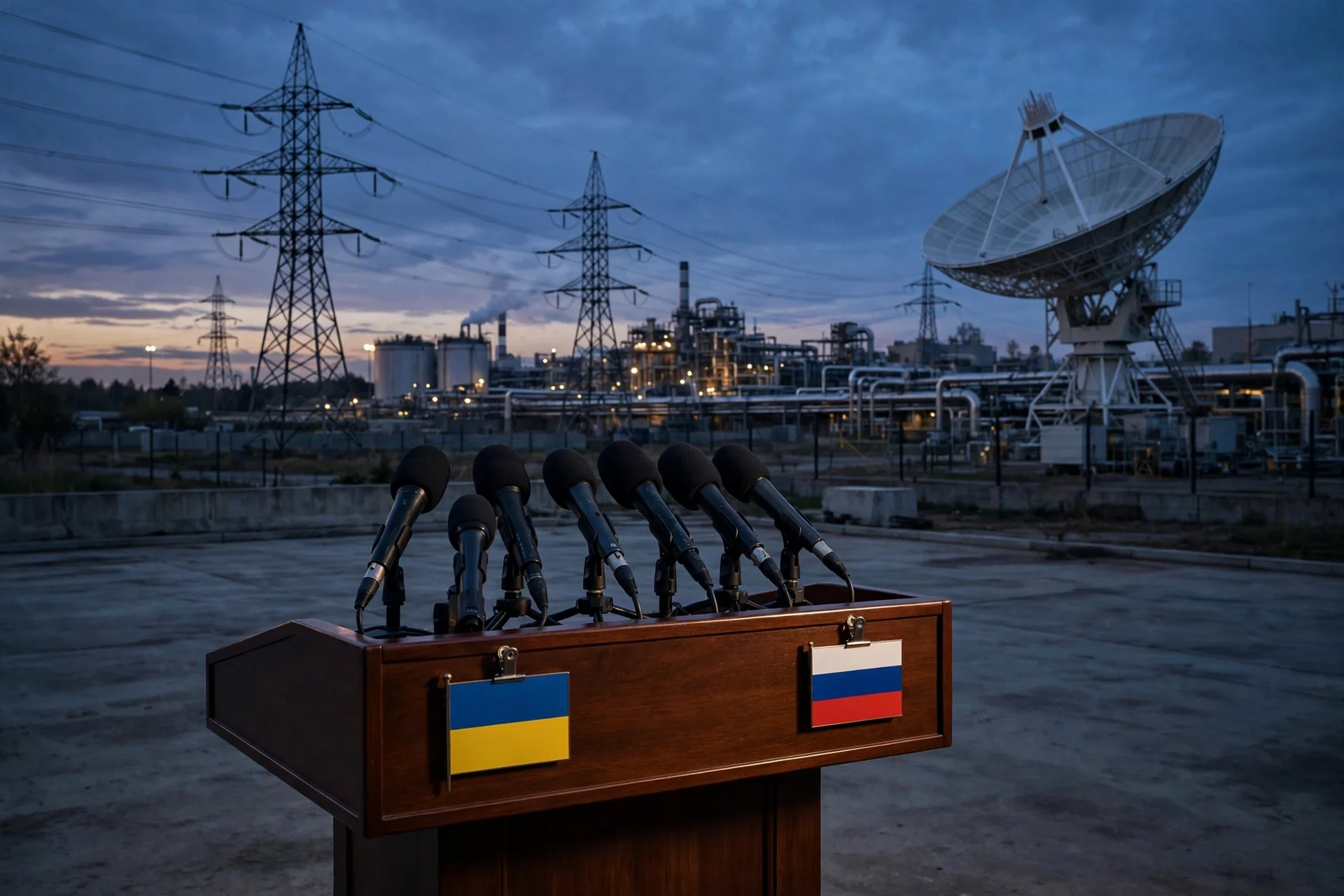
Rueda de prensa diplomática con el suministro energético de fondo. · Imagen generada EPM
Rubio defends pausing Russia sanctions to weigh global impact
Marco Rubio defended temporary sanctions exemptions for Russia as a 60-day pause to assess their global and energy impact, rejected claims that they favor…
Rubio denies gifts to Moscow and clarifies Starlink in Ukraine
Marco Rubio denied free concessions to Russia, defended a 60-day review of the combined effect of sanctions and tariffs on energy and the United States…
--- The context ---
Secretary of State Marco Rubio defended temporary exemptions linked to sanctions against Russia against accusations that Washington is favoring Russian President Vladimir Putin. He argued that the decision is meant to assess the impact of those measures on the international economy and on energy supply before they are fully applied.
The debate unfolds amid the war in Ukraine and tensions in the Middle East that, in his account, have begun to influence one another. That confluence, he argued, requires care in deciding how sanctions and tariffs should be combined.
--- The facts ---
Rubio explained that President Donald Trump intends to use a 60-day period to study the effects of applying sanctions and trade levies together, both worldwide and on the United States economy. He also noted that the measures were not applied only to Russia, since they also contemplate tariffs on other countries, among them India, which still depends largely on Russian energy.
He cited tensions involving Iran and the Strait of Hormuz, Houthi attacks against Saudi Arabia and strikes on energy infrastructure in the war between Russia and Ukraine. He also recalled that Washington had already granted a 60-day exemption related to Russian oil months earlier, when the Strait of Hormuz was under threat, as a precedent.
--- The positions ---
Ukrainian President Volodymyr Zelensky called the easing of sanctions against Moscow unfair, even as he expressed willingness to meet with Putin. Republican Senator Ted Cruz also considered the exemptions a serious mistake because he believes they benefit the Russian leader, a reading Rubio expressly rejected during his defense of the policy.
Asked about claims linking the exemptions and the diesel arrangement to supposed gifts to Moscow, Rubio argued that Russian fuel would have reached the world market one way or another anyway. In his explanation, the difference lies in how much of that fuel the United States could receive, not in Russia gaining a new route to sell it.
--- What remains unknown ---
It remains unclear what combination of sanctions and tariffs the Administration will consider appropriate once the review ends, or how the circumstances of countries dependent on Russian energy will weigh in that decision. Rubio said India has diversified its supply sources but still depends largely on Russian energy, and that changing overnight is difficult, without specifying future deadlines or conditions.
--- Unanswered questions ---
What concrete results must the 60-day review produce for the exemptions to be maintained, tightened or withdrawn? How will Ukraine be protected if the easing is read as a signal of weaker pressure on Moscow? What guarantees will ensure that the pause does not become, in practice, a lasting advantage for Russia?
--- EPM analysis ---
Rubio's defense places the emphasis on the shared effects of a decision that does not affect Moscow alone. By bringing India, energy supply and several open fronts into the argument, he shifts the focus from an isolated concession toward a review of global costs. The risk of that approach is that economic prudence may be read in Kyiv as a loss of political firmness at a delicate moment.
📌 EPM Take:
In EPM's view, the pause will only make sense if the 60-day review is demanding, transparent in its criteria and compatible with real pressure on Moscow, because measuring the global impact is necessary, but no energy complexity justifies weakening Ukraine or turning a temporary exemption into relief without clear, verifiable and time-limited conditions for the economy sustaining the war against its neighbor, with enough information for allies and affected countries to understand the final decision that is ultimately adopted in Washington after the review.
--- The context ---
Secretary of State Marco Rubio rejected claims that temporary exemptions linked to sanctions against Russia amount to favoring Russian President Vladimir Putin. He defended Washington's need to assess first the combined impact of sanctions and tariffs on the world economy, on energy supply and on the United States economy itself.
His explanation comes as several conflicts have begun to converge, in his description. Rubio cited the war between Russia and Ukraine, tensions with Iran and the Strait of Hormuz, and Houthi attacks against Saudi Arabia, all pressing on energy prices and supply.
--- The facts ---
The secretary explained that President Donald Trump intends to use a 60-day period to study what would happen if sanctions and trade levies were applied together. He stressed that the sanctions were included precisely to allow that margin of analysis given the international complexity, and that the measures also contemplate tariffs on other countries, among them India.
On Russian diesel, Rubio denied any free concession, arguing that the fuel would have been made available to the world market one way or another. The difference, in his view, lies in how much of it the United States could receive. He also recalled an earlier 60-day exemption on Russian oil, granted months ago with Hormuz under threat.
--- The positions ---
Ukrainian President Volodymyr Zelensky called the easing of sanctions unfair, although he showed willingness to meet with Putin. From within the Republican camp itself, Senator Ted Cruz considered the exemptions a serious mistake because he believes they benefit the Russian leader, a criticism Rubio answered by denying any gift to Moscow.
On the second front, Rubio denied that the United States had ordered a deliberate limitation of Starlink in Ukraine. He distinguished that service, a commercial product of Elon Musk, from Star Shield, a military technology Ukraine does not currently access, although Kyiv has requested it for long-range attacks and the matter is under discussion.
--- What remains unknown ---
No details have been given on what data will close the 60-day review or what final combination of sanctions and tariffs will emerge from it. Nor have the conditions of possible Ukrainian access to Star Shield been specified, an issue that, according to Rubio, remains under discussion. On Starlink, the secretary questioned whether Zelensky knows the causes of what happened and held to his categorical denial.
--- Unanswered questions ---
Will the 60-day review lead afterward to more effective pressure on Russia, rather than weaker pressure? What conditions will be required before any Ukrainian access to Star Shield is discussed? Will data clarify what happened with the commercial Starlink service so that Washington's denial does not remain just a statement?
--- EPM analysis ---
Rubio's central message is one of strategic order: a poorly calibrated sanction can damage the supply and the economy of the country imposing it without changing the behavior of the sanctioned one. That is why he defends measuring before striking, and separates the commercial from the military in the Starlink case. His response seeks to close two flanks: alleged softness toward Moscow and an alleged betrayal of Kyiv.
📌 EPM Take:
In EPM's view, defending the energy and economic interests of the United States is not giving in to Putin, as long as the 60-day pause leads to more precise and firmer measures, because poorly designed pressure that raises energy costs and harms allies dependent on Russia would weaken the very bloc seeking to contain Moscow without removing its ability to sell fuel on international markets or solving by itself the underlying problem that the sanctions are intended to correct in Moscow's conduct.
Rubio defiende pausar sanciones a Rusia para medir su impacto global
Marco Rubio defendió las exenciones temporales a las sanciones contra Rusia como una pausa de 60 días para evaluar su impacto global y energético, rechazó que…
Rubio niega regalos a Moscú y aclara el caso Starlink en Ucrania
Marco Rubio negó concesiones gratuitas a Rusia, defendió evaluar durante 60 días el efecto conjunto de sanciones y aranceles sobre la energía y la economía…
--- El contexto ---
Marco Rubio, secretario de Estado de Estados Unidos, defendió las exenciones temporales vinculadas a las sanciones contra Rusia frente a las acusaciones de que Washington favorece al presidente ruso, Vladimir Putin. Sostuvo que la decisión busca evaluar el impacto de esas medidas en la economía internacional y en el abastecimiento energético.
El debate surge en un contexto marcado por la guerra en Ucrania y por tensiones en Oriente Próximo que, según explicó, han empezado a influirse mutuamente. Esa confluencia obliga, en su planteamiento, a medir con cuidado cada decisión antes de aplicarla.
--- Los hechos ---
Rubio explicó que el presidente Donald Trump pretende usar un periodo de 60 días para estudiar las repercusiones de aplicar a la vez sanciones y gravámenes comerciales, tanto en el conjunto del mundo como en la economía estadounidense. Recordó además que esas medidas no se aplicaban únicamente a Rusia, porque también contemplan aranceles sobre otros países, entre ellos India.
Como factores de presión citó las tensiones relacionadas con Irán y el estrecho de Ormuz, los ataques de los hutíes contra Arabia Saudí y los bombardeos sobre infraestructuras energéticas en la guerra entre Rusia y Ucrania. También recordó la exención de 60 días sobre el petróleo ruso concedida meses atrás, con Ormuz bajo amenaza.
--- Las posiciones ---
El presidente ucraniano, Volodimir Zelenski, calificó de injusto el alivio de las sanciones contra Moscú, pese a mostrarse dispuesto a reunirse con Putin. El senador republicano Ted Cruz consideró además un grave error las exenciones, por entender que benefician al mandatario ruso, una lectura que Rubio rechazó de forma expresa.
Frente a quienes vinculan las exenciones y el acuerdo sobre el diésel con supuestos regalos a Moscú, Rubio sostuvo que ese combustible habría llegado igualmente al mercado mundial de una forma u otra. Según su explicación, la diferencia está en la cantidad que podría recibir Estados Unidos y no en una nueva vía de comercialización para Rusia.
--- Lo que falta saber ---
Todavía no se conoce qué combinación de sanciones y aranceles considerará adecuada la Administración al terminar la evaluación. Rubio señaló que India sigue dependiendo en buena medida de la energía rusa pese a haber diversificado sus fuentes, y que cambiar de un día para otro resulta difícil, sin precisar plazos ni condiciones.
--- Preguntas sin respuesta ---
¿Qué resultados concretos debe arrojar la evaluación de 60 días para mantener, endurecer o retirar las exenciones? ¿Cómo se protegerá a Ucrania si el alivio se interpreta como una señal de menor presión sobre Moscú? ¿Qué garantías habrá de que la pausa no se convierta, en la práctica, en una ventaja duradera para Rusia?
--- Análisis EPM ---
La defensa de Rubio pone el acento en los efectos compartidos de una decisión que no afecta solo a Moscú. Al incluir a India y el suministro energético, su argumento desplaza el foco desde una concesión aislada hacia una revisión de costes globales. El riesgo es que la prudencia económica se lea, en Kiev, como pérdida de firmeza.
📌 Conclusion EPM:
A juicio de EPM, la pausa solo tendrá sentido si la evaluación de 60 días es exigente, transparente en sus criterios y compatible con una presión real sobre Moscú, porque medir el impacto global es necesario, pero ninguna complejidad energética justifica debilitar a Ucrania ni convertir una exención temporal en un alivio sin contrapartidas claras, verificables y limitadas en el tiempo para la economía que sostiene la guerra contra su vecino y con información suficiente para que aliados y afectados entiendan la decisión final que finalmente se adopte en Washington.
--- El contexto ---
Marco Rubio, secretario de Estado de Estados Unidos, rechazó que las exenciones temporales vinculadas a las sanciones contra Rusia supongan favorecer al presidente ruso, Vladimir Putin. Defendió que Washington necesita evaluar primero el impacto conjunto de sanciones y aranceles en la economía mundial, en el suministro energético y en la propia economía estadounidense.
La explicación llega cuando varios conflictos han empezado a confluir, según su descripción. Rubio citó la guerra entre Rusia y Ucrania, las tensiones con Irán y el estrecho de Ormuz y los ataques de los hutíes contra Arabia Saudí, factores que presionan precios y abastecimiento energético.
--- Los hechos ---
El secretario explicó que el presidente Donald Trump pretende utilizar un periodo de 60 días para estudiar qué ocurriría si se aplican conjuntamente sanciones y gravámenes comerciales. Subrayó que las sanciones se incorporaron para disponer de ese margen de análisis, y que también contemplan aranceles sobre otros países, entre ellos India.
Sobre el diésel ruso, Rubio negó que exista una concesión gratuita, al sostener que ese combustible se habría puesto a disposición del mercado mundial de una forma u otra. La diferencia, a su juicio, radica en la cantidad que podría recibir Estados Unidos. También recordó una exención anterior de 60 días sobre el petróleo ruso, concedida meses atrás con Ormuz bajo amenaza.
--- Las posiciones ---
El presidente ucraniano, Volodimir Zelenski, calificó de injusto el alivio de las sanciones, aunque se mostró dispuesto a reunirse con Putin. Desde el propio campo republicano, el senador Ted Cruz consideró las exenciones un grave error por entender que benefician al mandatario ruso, crítica a la que Rubio respondió negando cualquier regalo a Moscú.
En el segundo frente, Rubio negó que Estados Unidos hubiera ordenado interrumpir o limitar deliberadamente Starlink en Ucrania. Distinguió ese servicio, al que describió como un producto comercial de Elon Musk, de Star Shield, una tecnología militar estadounidense a la que Ucrania no tiene acceso actualmente, aunque Kiev lo ha pedido para ataques de largo alcance y el asunto está en conversaciones.
--- Lo que falta saber ---
No se ha detallado qué datos cerrarán la evaluación de 60 días ni qué combinación final saldrá de ella. Tampoco se han precisado las condiciones de un posible acceso ucraniano a Star Shield, que sigue en conversaciones.
--- Preguntas sin respuesta ---
¿Servirá la evaluación de 60 días para aplicar después una presión más eficaz, y no más débil, sobre Rusia? ¿Qué condiciones se exigirán antes de hablar de cualquier acceso de Ucrania a Star Shield? ¿Se aclarará con datos qué ocurrió con el servicio comercial de Starlink para que la negativa de Washington no quede solo en una declaración?
--- Análisis EPM ---
El mensaje central de Rubio es de orden estratégico: una sanción mal calibrada puede dañar el suministro y la economía de quien la impone sin cambiar la conducta del sancionado. Por eso defiende medir antes de golpear. Su respuesta busca cerrar dos flancos: la supuesta blandura ante Moscú y una supuesta traición tecnológica a Kiev.
📌 Conclusion EPM:
A juicio de EPM, defender el interés energético y económico de Estados Unidos no es ceder ante Putin, siempre que la pausa de 60 días desemboque en medidas más precisas y firmes, porque una presión mal diseñada que encarezca la energía y dañe a aliados dependientes de Rusia debilitaría al propio bloque que pretende contener a Moscú y no le quitaría a este su capacidad de vender combustible en los mercados internacionales ni resolvería por sí sola el problema de fondo que se pretende corregir con las sanciones.