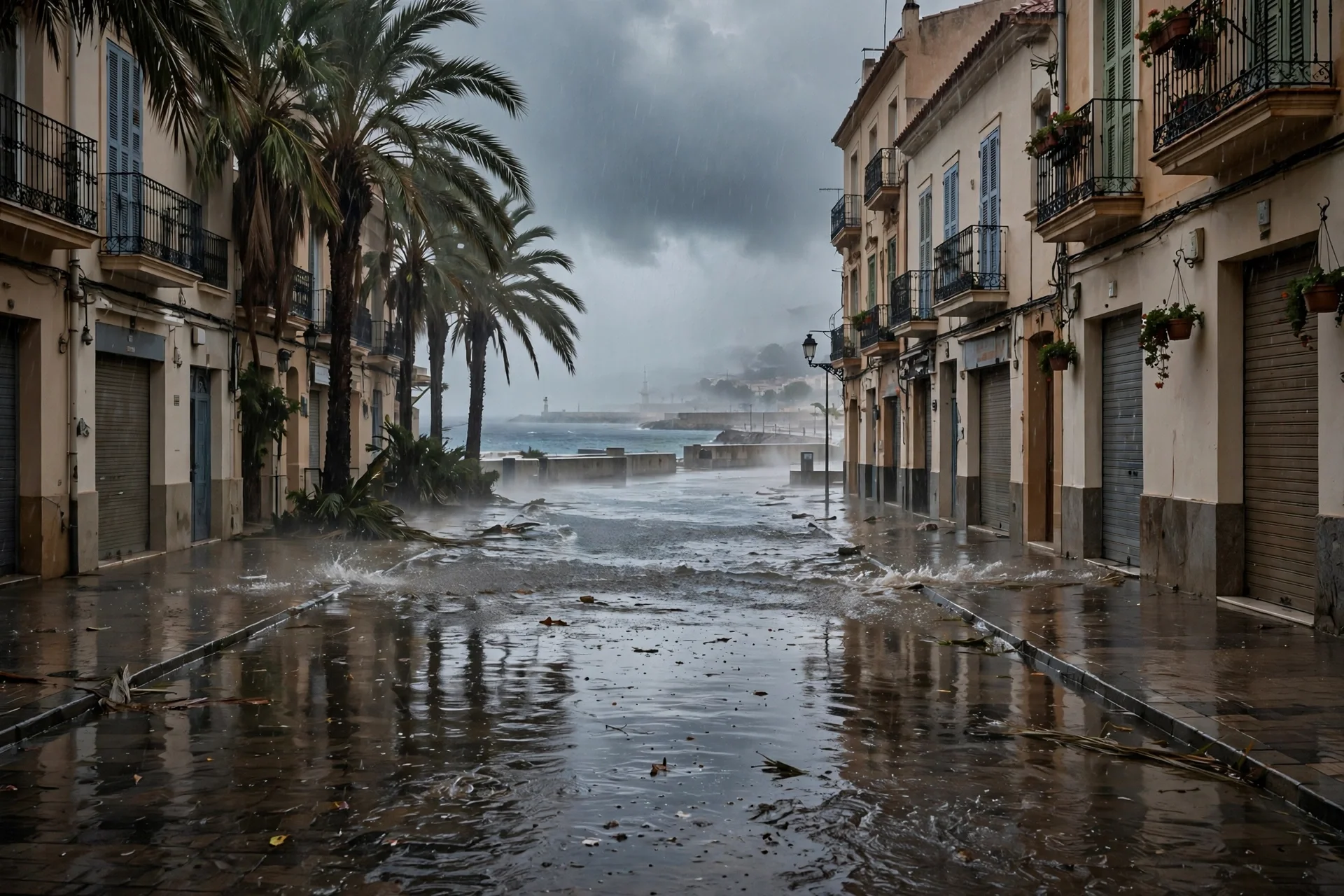
Calle del litoral valenciano bajo la lluvia, con agua acumulada durante el episodio de inundaciones. · Imagen generada EPM
Marina Alta and La Safor raised to situation 2 over flooding
Emergency authorities raised the flood plan to situation 2 in Marina Alta and La Safor and sent two ES-Alert warnings.
Order and disciplined response as floods strain the Valencian coast
The Generalitat raised the flood plan to situation 2 in Marina Alta and La Safor and activated situation 0 in the other districts named.
--- The context ---
Persistent and intense rainfall returned to the Valencian and Alicante coast, with overflows and water accumulation that tested how well the population was protected. In that setting, the warnings placed vulnerable people first and urged residents to stay away from rivers, ravines, channels, seafront promenades and coastal areas.
--- The facts ---
The Generalitat Emergency Coordination Centre raised the Special Flood Plan (PEI) to situation 2 in Marina Alta and La Safor, and activated situation 0 in Vall d'Albaida, La Costera, Marina Baixa and El Comtat. The step responded, as communicated, to renewed persistent and intense rainfall and to flooding already caused by overflows and water accumulation.
Emergency services handled 709 incidents from 13.57 on Saturday until 07.30 on Monday: 377 in Alicante, 327 in Valencia and five in Castellón. By municipality, Oliva recorded 172; Xàbia, 113; Pego, 58; Dénia, 55; Alicante, 46; and Gandia, 37. The most common incidents were water accumulation, rescues, blocked vehicles, material damage and problems on the road network.
--- The positions ---
The position of the emergency authorities, expressed through the ES-Alert warnings, was to ask people to avoid travel and not to cross flood-prone areas. The first warning recommended, in terms attributed to that message, seeking high ground or moving to upper floors, not going down to basements or garages or using lifts, and paying special attention to vulnerable people, calling 112 in an emergency.
The second warning, sent at around 08.00 to the southern Valencia coast and the northern Alicante coast, insisted on not driving or travelling, staying at home and keeping away from rivers, ravines and the coast, with 112 as the emergency number. For its part, the Integrated Operational Coordination Centre (Cecopi) met at 07.00 on Monday to assess the situation.
--- What remains unknown ---
The source does not say how many people needed rescue, nor the concrete extent of material damage, nor whether anyone was injured. It also does not specify how long situation 2 will remain in Marina Alta and La Safor, nor when situation 0 in the other districts named will be reviewed.
--- Unanswered questions ---
How long will situation 2 stay in force in Marina Alta and La Safor? What balance of rescues and damage will be known once the Cecopi assessment is complete? Will further ES-Alert warnings follow if persistent and intense rainfall returns again?
--- EPM analysis ---
The figure that orders the day is the concentration of incidents: Oliva, with 172, and Xàbia, with 113, account for a very visible share of the 709 recorded. That concentration, together with rescues and blocked vehicles, shows where vulnerability was greatest and where early warning matters most to protect the population.
📌 EPM Take:
In EPM's view, raising the plan to situation 2 and sending the ES-Alert warnings matter above all as advance protection: warning early, asking people not to cross flood-prone areas and looking after vulnerable people reduces risk when water is already building up. The Cecopi assessment should confirm whether that prevention reached, in time, the municipalities with the most incidents, starting with Oliva and Xàbia, and whether the road network returns to normal without further rescues or added damage in the districts hit by the rain.
--- The context ---
An episode of persistent and intense rain forced the public response to be ordered along the Valencia and Alicante coast, where overflows and water accumulation disrupted traffic and daily activity. Management ran through the Special Flood Plan (PEI) and through coordination meetings held from early on Monday.
--- The facts ---
The Generalitat Emergency Coordination Centre raised the Special Flood Plan (PEI) to situation 2 in Marina Alta and La Safor. In parallel it activated situation 0 in Vall d'Albaida, La Costera, Marina Baixa and El Comtat, a grading that concentrates the highest level of response where incidents were most numerous.
Between 13.57 on Saturday and 07.30 on Monday, 709 incidents were handled: 377 in Alicante, 327 in Valencia and five in Castellón. By municipality, Oliva totalled 172; Xàbia, 113; Pego, 58; Dénia, 55; Alicante, 46; and Gandia, 37. The most common cases were water accumulation, rescues, blocked vehicles, material damage and problems on the road network.
--- The positions ---
The instruction passed to the population in the ES-Alert warnings was one of basic discipline in the face of risk: avoid travel, do not cross flood-prone areas and stay away from rivers, ravines, channels, seafront promenades and coastal areas. The first message added, according to its attributed content, seeking high ground, not going down to basements or garages or using lifts, and calling 112 in an emergency.
At around 08.00 another warning was sent to the southern Valencia coast and the northern Alicante coast asking people not to drive or travel, to stay at home and to keep away from rivers, ravines and the coast. The Integrated Operational Coordination Centre (Cecopi) had met at 07.00 on Monday to assess the situation and order the response.
--- What remains unknown ---
The cost of the material damage has not been specified, nor have the details of the rescues and blocked vehicles. The source also does not state how long each situation level will last, nor what criteria will mark a return to normality on the road network of the worst-hit municipalities.
--- Unanswered questions ---
What cost will the material damage recorded on public roads leave behind? When can situation 2 be lifted in Marina Alta and La Safor? What ordering measures will be applied if incidents are repeated in Oliva and Xàbia?
--- EPM analysis ---
The distribution of the 709 incidents offers a clear measure of efficiency: the response must concentrate where the problem concentrates. Oliva and Xàbia head the municipal list, well ahead of Pego, Dénia, Alicante and Gandia, and that hierarchy should guide deployment and the later review of what was done.
📌 EPM Take:
In EPM's view, an emergency like this is managed with order, clear instructions and discipline in following them: raising situation 2 where incidents accumulate most and keeping situation 0 where risk is lower allows resources to be concentrated without dispersing them. The pending Cecopi balance should account, municipality by municipality, for rescues, damage and the road network, so that the response is judged by verifiable results and not by general impressions of the rainy spell.
Marina Alta y La Safor, en situación 2 por inundaciones
Emergencias elevó a situación 2 el Plan Especial de Inundaciones en la Marina Alta y La Safor y envió dos avisos ES-Alert.
Orden y disciplina en la respuesta ante las inundaciones valencianas
La Generalitat elevó a situación 2 el plan de inundaciones en la Marina Alta y La Safor y activó la situación 0 en las demás comarcas citadas.
--- El contexto ---
La lluvia persistente e intensa volvió a golpear el litoral valenciano y alicantino, con desbordamientos y acumulaciones de agua que pusieron a prueba la protección de la población. En ese escenario, la prioridad declarada en los avisos fue cuidar a las personas vulnerables y alejar a los vecinos de ríos, barrancos, cauces, paseos marítimos y zonas de costa.
--- Los hechos ---
El Centro de Coordinación de Emergencias de la Generalitat elevó a situación 2 el Plan Especial de Inundaciones (PEI) en la Marina Alta y La Safor, y activó la situación 0 en la Vall d'Albaida, la Costera, Marina Baixa y El Comtat. La medida respondió, según lo comunicado, a la reactivación de las precipitaciones y a las inundaciones ya producidas.
Emergencias gestionó 709 incidentes desde las 13.57 del sábado hasta las 07.30 del lunes: 377 en Alicante, 327 en Valencia y cinco en Castellón. Por municipios, Oliva registró 172; Xàbia, 113; Pego, 58; Dénia, 55; Alicante, 46; y Gandia, 37. Los incidentes más habituales fueron acumulaciones de agua, rescates, vehículos bloqueados, daños materiales e incidencias en la red viaria.
--- Las posiciones ---
La posición de Emergencias, expresada en los avisos ES-Alert, fue pedir que se evitaran los desplazamientos y que nadie cruzara zonas inundables. En el primer aviso se recomendó, en términos atribuidos a ese mensaje, buscar lugares elevados o subir a plantas superiores, no bajar a sótanos ni garajes ni usar ascensores, y prestar especial atención a las personas vulnerables, llamando al 112 en caso de emergencia.
El segundo aviso, remitido sobre las 08.00 al litoral sur de Valencia y al litoral norte de Alicante, insistió en no circular ni desplazarse, permanecer en casa y alejarse de ríos, barrancos y la costa, con el 112 como teléfono de emergencia. Por su parte, el Centro de Coordinación Operativa Integrado (Cecopi) se reunió a las 07.00 del lunes para evaluar la situación.
--- Lo que falta saber ---
La fuente no detalla cuántas personas necesitaron rescate, ni el alcance concreto de los daños materiales, ni si hubo heridos. Tampoco precisa cuánto durará la situación 2 en la Marina Alta y La Safor ni cuándo se revisará la situación 0 en las demás comarcas citadas.
--- Preguntas sin respuesta ---
¿Cuánto tiempo se mantendrá la situación 2 en la Marina Alta y La Safor? ¿Qué balance de rescates y de daños se conocerá cuando se complete la evaluación del Cecopi? ¿Seguirán llegando avisos ES-Alert si las precipitaciones persistentes e intensas se reactivan de nuevo?
--- Análisis EPM ---
El dato que ordena la jornada es la concentración de incidentes: Oliva, con 172, y Xàbia, con 113, suman una parte muy visible de los 709 registrados. Esa concentración, unida a rescates y vehículos bloqueados, muestra dónde la vulnerabilidad fue mayor y dónde la alerta temprana resulta más necesaria para proteger a la población.
📌 Conclusion EPM:
A juicio de EPM, la subida a situación 2 y los avisos ES-Alert valen sobre todo como protección anticipada: avisar antes, pedir que nadie cruce zonas inundables y cuidar a las personas vulnerables reduce el riesgo cuando el agua ya se acumula. La evaluación del Cecopi deberá confirmar si esa prevención llegó a tiempo a los municipios con más incidentes, empezando por Oliva y Xàbia, y si la red viaria recupera la normalidad sin nuevos rescates ni daños añadidos en las comarcas afectadas por las lluvias.
--- El contexto ---
Un episodio de lluvias persistentes e intensas obligó a ordenar la respuesta pública en el litoral de Valencia y Alicante, donde los desbordamientos y la acumulación de agua alteraron la circulación y la actividad diaria. La gestión se articuló a través del Plan Especial de Inundaciones (PEI) y de reuniones de coordinación desde primera hora del lunes.
--- Los hechos ---
El Centro de Coordinación de Emergencias de la Generalitat elevó a situación 2 el Plan Especial de Inundaciones (PEI) en la Marina Alta y La Safor. En paralelo activó la situación 0 en la Vall d'Albaida, la Costera, Marina Baixa y El Comtat, una graduación que concentra el mayor nivel de respuesta donde los incidentes fueron más numerosos.
Entre las 13.57 del sábado y las 07.30 del lunes se gestionaron 709 incidentes: 377 en Alicante, 327 en Valencia y cinco en Castellón. Por municipios, Oliva sumó 172; Xàbia, 113; Pego, 58; Dénia, 55; Alicante, 46; y Gandia, 37. Los casos más habituales fueron acumulaciones de agua, rescates, vehículos bloqueados, daños materiales e incidencias en la red viaria.
--- Las posiciones ---
La instrucción trasladada a la población en los avisos ES-Alert fue de disciplina básica ante el riesgo: evitar desplazamientos, no cruzar zonas inundables y alejarse de ríos, barrancos, cauces, paseos marítimos y zonas de costa. El primer mensaje añadió, según su contenido atribuido, buscar lugares elevados, no bajar a sótanos ni garajes ni usar ascensores y llamar al 112 en caso de emergencia.
Sobre las 08.00 se remitió otro aviso al litoral sur de Valencia y al litoral norte de Alicante que pidió no circular ni desplazarse, permanecer en casa y mantenerse lejos de ríos, barrancos y la costa. El Centro de Coordinación Operativa Integrado (Cecopi) se había reunido a las 07.00 del lunes para evaluar la situación y ordenar la respuesta.
--- Lo que falta saber ---
No se ha precisado el coste de los daños materiales ni el detalle de los rescates y de los vehículos bloqueados. Tampoco consta en la fuente cuánto durará cada nivel de situación ni qué criterios marcarán la vuelta a la normalidad en la red viaria de los municipios más afectados.
--- Preguntas sin respuesta ---
¿Qué coste dejarán los daños materiales registrados en la vía pública? ¿Cuándo podrá levantarse la situación 2 en la Marina Alta y La Safor? ¿Qué medidas de ordenación se aplicarán si los incidentes se repiten en Oliva y Xàbia?
--- Análisis EPM ---
La distribución de los 709 incidentes ofrece una medida clara de eficiencia: la respuesta debe concentrarse donde el problema se concentra. Oliva y Xàbia encabezan la lista municipal, muy por delante de Pego, Dénia, Alicante y Gandia, y esa jerarquía debería guiar el despliegue y la revisión posterior de lo actuado.
📌 Conclusion EPM:
A juicio de EPM, una emergencia así se gestiona con orden, instrucciones claras y disciplina en el cumplimiento: elevar a situación 2 donde más incidentes se acumulan y mantener la situación 0 donde el riesgo es menor permite concentrar recursos sin dispersarlos. El balance pendiente del Cecopi debería rendir cuentas de rescates, daños y red viaria, municipio a municipio, para que la respuesta se juzgue por resultados verificables y no por impresiones generales sobre la jornada de lluvias.