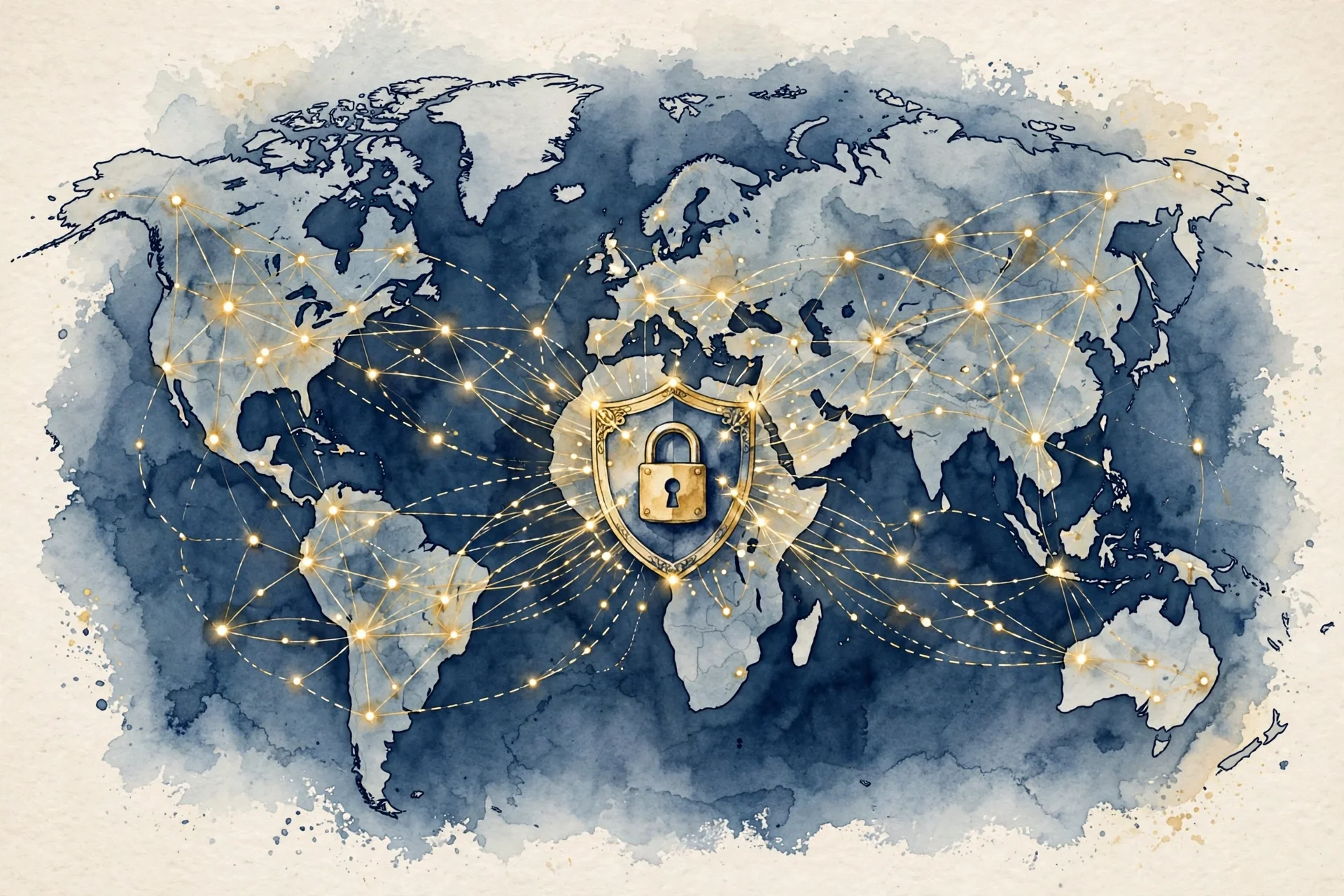
Red mundial de intercambio seguro de inteligencia financiera, ilustración editorial alusiva. · Imagen generada para EPM
Colombia regains access to the Egmont global financial intelligence network
Colombia restored its connection to the Egmont Group secure channel after a two-year suspension over the unauthorized disclosure linked to the Pegasus case.
Colombia rejoins Egmont data sharing after two-year Pegasus suspension
Colombia regained access to Egmont Group data exchange after a two-year suspension imposed following the disclosure of reserved information about Pegasus.
Colombia has restored its connection to the Egmont Group secure channel for financial data and intelligence after a two-year suspension, after completing the strict action plan agreed with the body on data protection and confidentiality. The country kept its membership, but without full access to the platform.
--- The context ---
The Egmont Group is a unified international network made up of the Financial Intelligence Units of 177 countries and jurisdictions. Its main aim is to combat money laundering and terrorist financing globally through the rapid, secure and confidential exchange of financial information.
--- The facts ---
The restriction was imposed on September 23, 2024, following the unauthorized public disclosure of reserved information about the purchase of the Pegasus spyware by then president Gustavo Petro, who revealed confidential financial intelligence documents sent by Israel. Colombia kept its membership status but lost access to the secure platform.
In April, according to the Uiaf, a decree advanced to regulate the handling of information received from international counterparts, as part of the commitments before the organization. In May, the Egmont leadership approved the action plan presented and, in August, the lifting of the sanction was officially confirmed after all technical and institutional security guarantees were verified.
--- The positions ---
Marta Luz Reyes Cerros, director general of the Uiaf, described the restoration as a global seal of guarantee for Colombia. In reported terms, she stressed that exchange with more than 186 financial intelligence units restores the trust of international allies and makes it possible to identify movements of resources linked to illicit activities.
--- What remains unknown ---
The source does not detail the full content of the action plan or the final text of the decree mentioned in April, nor does it specify which permanent audit mechanisms will remain in force. It also reports no concrete cases in which the restored exchange has already produced results, so the practical impact should be measured by effective use of the channel.
--- Unanswered questions ---
What permanent safeguards will prevent reserved information from being disclosed again without authorization? How will continued compliance with the confidentiality commitments before Egmont be audited? What concrete results will renewed access allow against illicit resources? Will periodic reports be published on the use of the secure channel?
--- EPM analysis ---
The case shows the value of multilateral mechanisms when they work with rules and verification. The suspension did not expel Colombia, but it limited a central tool against illicit flows, and its lifting came only after dated and verifiable steps. Democratic transparency and legitimate confidentiality are not opposites if there are clear protocols and controls that protect trust among allies.
📌 EPM Take: In EPM's view, regaining the Egmont channel shows that international cooperation depends on clear rules and on institutions able to correct mistakes without breaking bridges of trust. Colombia kept its membership for two years, but it returned to full exchange only after technical and institutional safeguards were verified. The challenge now is to sustain that standard, protect reserved information and make better use of financial intelligence against money laundering and terrorist financing under verifiable controls.
Colombia has regained access to Egmont Group data exchange after a two-year suspension linked to the Pegasus case. The restoration took place after completion of the strict action plan agreed with the body on data protection and confidentiality, a condition for returning to the secure channel of the network.
--- The context ---
The Egmont Group brings together the Financial Intelligence Units of 177 countries and jurisdictions in a unified network. Its function is to facilitate the rapid, secure and confidential exchange of financial information to combat money laundering and terrorist financing, tasks that depend on every member protecting the information of its allies.
--- The facts ---
The restriction was imposed on September 23, 2024, following the unauthorized public disclosure of reserved information about the purchase of the Pegasus spyware by then president Gustavo Petro, who revealed confidential financial intelligence documents sent by Israel. For two years, Colombia kept its membership status but lost access to the secure platform.
Without the channel, the country could not request or share data with the network on equal terms. After the sanction, according to the Uiaf, in April a decree advanced to regulate the handling of international information; in May, the Egmont leadership approved the plan presented; and in August the lifting was confirmed after all corresponding guarantees were verified.
--- The positions ---
Marta Luz Reyes Cerros, director general of the Uiaf, described the restoration as a global seal of guarantee for Colombia. In reported remarks, she argued that exchange with more than 186 financial intelligence units restores the trust of allies and makes it possible to identify movements of resources linked to illicit activities. That assessment underscores the benefit, although the origin of the suspension remains the central warning.
--- What remains unknown ---
The source does not report responsibilities arising from the disclosure that caused the restriction, nor the full detail of the guarantees verified in August. It also does not specify which new internal controls will govern access to reserved documents. Without that information, the real scope of the institutional correction cannot yet be fully assessed.
--- Unanswered questions ---
Who is accountable for the unauthorized disclosure that caused the suspension on September 23, 2024? What controls will prevent another authority from again revealing reserved information? Will there be verifiable consequences if confidentiality is breached again? How will allies be shown that the guarantees are being maintained?
--- EPM analysis ---
Financial intelligence works on a simple premise: no one shares sensitive data with a partner that does not guarantee its confidentiality. Colombia paid with two years of limited access for a breach of that trust, and it returned only when third parties verified the corrective plan. Order and discipline in handling the state are security conditions, not formalities.
📌 EPM Take: In EPM's view, the return to Egmont is necessary, but it should not be celebrated without remembering its cause: an unauthorized disclosure from the highest authority left Colombia outside full exchange for two years. Regaining access required a strict plan, a decree and technical and institutional verifications. International trust is rebuilt with discipline, reserve and clear consequences when sensitive information is breached. Without that permanent rigor, any progress against money laundering and terrorist financing will remain exposed to avoidable political mistakes.
Colombia recupera el acceso a la red mundial de inteligencia financiera Egmont
Colombia restableció su conexión al canal seguro del Grupo Egmont tras dos años de suspensión por la divulgación no autorizada vinculada al caso Pegasus.
Colombia vuelve a Egmont tras dos años de suspensión por el caso Pegasus
Colombia recuperó el acceso al intercambio de datos del Grupo Egmont después de dos años de suspensión impuestos tras la divulgación de información reservada…
Colombia restableció su conexión al canal seguro de datos e inteligencia financiera del Grupo Egmont tras una suspensión de dos años, luego de cumplir el estricto plan de acción concertado con el organismo sobre protección de datos y confidencialidad. El país mantuvo su condición de miembro, pero sin acceso pleno a la plataforma.
--- El contexto ---
El Grupo Egmont es una red internacional unificada compuesta por las Unidades de Inteligencia Financiera de 177 países y jurisdicciones. Su objetivo principal es combatir el lavado de activos y la financiación del terrorismo a nivel global mediante el intercambio rápido, seguro y confidencial de información financiera.
--- Los hechos ---
La restricción se impuso el 23 de septiembre de 2024, tras la divulgación pública no autorizada de información reservada sobre la compra del software espía Pegasus por parte del entonces presidente Gustavo Petro, quien reveló documentos confidenciales de inteligencia financiera remitidos por Israel. Colombia conservó su estatus de miembro, pero perdió el acceso a la plataforma segura.
En abril, según la Uiaf, avanzó un decreto para reglamentar el tratamiento de la información recibida de sus homólogas internacionales, como parte de los compromisos ante la organización. En mayo, las directivas de Egmont aprobaron el plan de acción presentado y, en agosto, se confirmó oficialmente el levantamiento de la sanción tras verificarse todas las garantías de seguridad técnica e institucional.
--- Las posiciones ---
Marta Luz Reyes Cerros, directora general de la Uiaf, calificó el restablecimiento como un sello de garantía mundial para Colombia. En indirecto, destacó que el intercambio con más de 186 unidades de inteligencia financiera restablece la confianza de los aliados internacionales y permite acceder a información para identificar movimientos de recursos vinculados con actividades ilícitas.
--- Lo que falta saber ---
La fuente no detalla el contenido completo del plan de acción ni el texto final del decreto mencionado en abril, ni precisa qué mecanismos permanentes de auditoría seguirán vigentes. Tampoco informa casos concretos en los que el intercambio restablecido ya haya producido resultados, por lo que el impacto práctico deberá medirse con el uso efectivo del canal.
--- Preguntas sin respuesta ---
¿Qué salvaguardas permanentes evitarán que información reservada vuelva a divulgarse sin autorización? ¿Cómo se auditará el cumplimiento continuo de los compromisos de confidencialidad asumidos ante Egmont? ¿Qué resultados concretos permitirá el acceso renovado contra los recursos ilícitos? ¿Se conocerán informes periódicos sobre el uso del canal seguro?
--- Análisis EPM ---
El caso muestra el valor de los mecanismos multilaterales cuando funcionan con reglas y verificación. La suspensión no expulsó a Colombia, pero limitó una herramienta central contra los flujos ilícitos, y su levantamiento llegó solo tras pasos fechados y comprobables. La transparencia democrática y la reserva legítima no son opuestas si existen protocolos claros y controles que protejan la confianza entre aliados.
📌 Conclusion EPM: A juicio de EPM, la recuperación del canal con Egmont muestra que la cooperación internacional depende de reglas claras y de instituciones capaces de corregir errores sin romper los puentes de confianza. Colombia conservó su membresía durante dos años, pero solo volvió al intercambio pleno cuando verificó garantías técnicas e institucionales. El desafío ahora es sostener ese estándar, proteger la información reservada y usar mejor la inteligencia financiera contra el lavado de activos y la financiación del terrorismo con controles verificables.
Colombia recuperó el acceso al intercambio de datos del Grupo Egmont tras dos años de suspensión vinculados al caso Pegasus. El restablecimiento se produjo tras cumplir el estricto plan de acción concertado con el organismo sobre protección de datos y confidencialidad, condición para volver al canal seguro.
--- El contexto ---
El Grupo Egmont reúne a las Unidades de Inteligencia Financiera de 177 países y jurisdicciones en una red unificada. Su función es facilitar el intercambio rápido, seguro y confidencial de información financiera para combatir el lavado de activos y la financiación del terrorismo, tareas que dependen de que cada miembro proteja la información de sus aliados.
--- Los hechos ---
La restricción se impuso el 23 de septiembre de 2024, tras la divulgación pública no autorizada de información reservada sobre la compra del software espía Pegasus por parte del entonces presidente Gustavo Petro, quien reveló documentos confidenciales de inteligencia financiera remitidos por Israel. Durante dos años, Colombia conservó su estatus de miembro, pero perdió el acceso a la plataforma segura.
Sin el canal, el país no podía solicitar ni compartir datos con la red en igualdad de condiciones. Tras la sanción, según la Uiaf, en abril avanzó un decreto para reglamentar el tratamiento de la información internacional; en mayo, las directivas de Egmont aprobaron el plan presentado; y en agosto se confirmó el levantamiento tras verificarse todas las garantías correspondientes.
--- Las posiciones ---
Marta Luz Reyes Cerros, directora general de la Uiaf, calificó el restablecimiento como un sello de garantía mundial para Colombia. En indirecto, sostuvo que el intercambio con más de 186 unidades de inteligencia financiera restablece la confianza de los aliados y permite identificar movimientos de recursos vinculados con actividades ilícitas. El origen de la suspensión sigue siendo la advertencia central.
--- Lo que falta saber ---
No se conocen en la fuente responsabilidades derivadas de la divulgación que originó la restricción, ni el detalle completo de las garantías verificadas en agosto. Tampoco se precisa qué controles internos nuevos regirán el acceso a documentos reservados. Sin esa información, la corrección aún no puede evaluarse por completo.
--- Preguntas sin respuesta ---
¿Quién responde por la divulgación no autorizada que provocó la suspensión del 23 de septiembre de 2024? ¿Qué controles impedirán que otra autoridad revele de nuevo información reservada? ¿Habrá consecuencias verificables si se incumple otra vez la confidencialidad? ¿Cómo se demostrará a los aliados que las garantías se mantienen?
--- Análisis EPM ---
La inteligencia financiera funciona sobre una premisa sencilla: nadie comparte datos sensibles con quien no garantiza su reserva. Colombia pagó con dos años de acceso limitado una ruptura de esa confianza, y solo volvió cuando terceros verificaron el plan correctivo. El orden y la disciplina en el manejo del Estado son condiciones de seguridad, no formalidades.
📌 Conclusion EPM: A juicio de EPM, el regreso a Egmont es necesario, pero no debe celebrarse sin recordar su causa: una divulgación no autorizada desde la más alta autoridad dejó a Colombia dos años fuera del intercambio pleno. Recuperar el acceso exigió un plan estricto, un decreto y verificaciones técnicas e institucionales. La confianza internacional se reconstruye con disciplina, reserva y consecuencias claras cuando se vulnera información sensible. Sin ese rigor permanente, cualquier avance contra el lavado de activos y la financiación del terrorismo quedará expuesto a errores políticos evitables.