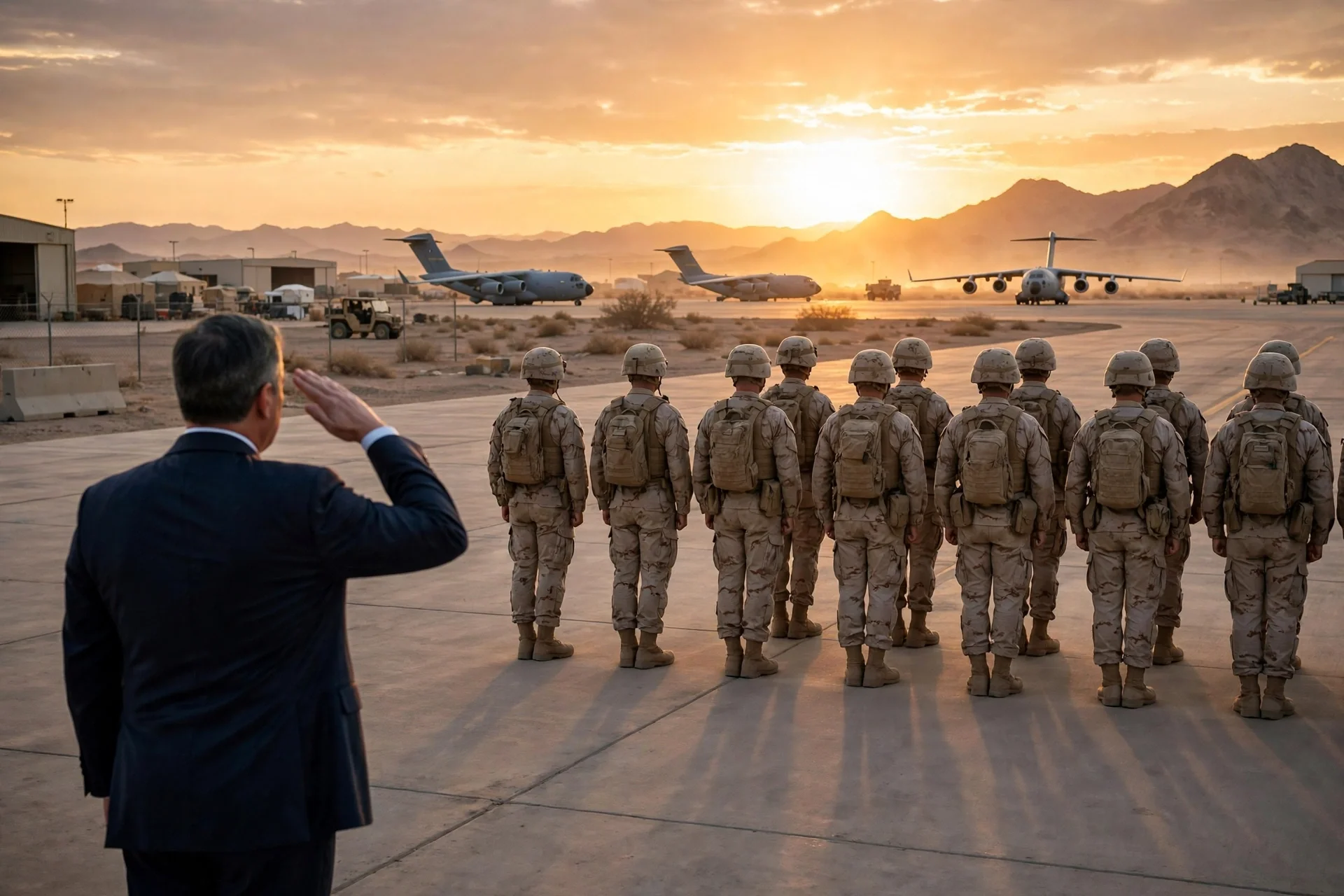
Imagen generada alusiva a la visita a tropas estadounidenses en una base aérea del sur de Israel. · Imagen generada para EPM
Hegseth confirms Netanyahu talks as diplomacy over Hormuz continues
The defense secretary confirmed he spoke with Netanyahu during a visit to troops in southern Israel, praised military cooperation and said at Ovda that troops…
Hegseth in Ovda vows readiness to keep Iran from a nuclear weapon
The Pentagon chief confirmed his conversation with Netanyahu in Israel, highlighted military cooperation and Israeli capability, and reaffirmed at Ovda base…
--- The context ---
The United States defense secretary's visit to troops deployed in southern Israel came amid an open confrontation over control of the Strait of Hormuz. Iran and the United States remain locked in that standoff as Iranian forces continue attacks on ships trying to cross the route and Washington seeks to preserve tanker navigation through that strategic maritime corridor.
--- The facts ---
The Pentagon chief confirmed on Tuesday that he held a conversation with the Israeli prime minister during a visit to United States troops in southern Israel.
He told reporters he had been in Israeli territory and had spoken there with the head of government, although he declined to give details about the content of the meeting. He also highlighted military cooperation between the two countries and praised the Israeli military's capability, thanking its contribution to ensuring Iran never obtains a nuclear weapon.
--- The positions ---
During his visit to the Ovda air base in southern Israel, the secretary said United States fighters are preparing and are ready to ensure Iran never has a nuclear weapon. The meeting took place eight days before elections in Israel and after the United States president again raised a large-scale offensive against Iran, mentioned possible use of the GBU-43/B bomb, known as MOAB, and said in attributed terms that the war will end very soon, one way or another.
--- What remains unknown ---
In parallel, Iran's foreign minister said in attributed terms that Tehran and Washington maintain uninterrupted negotiations through intermediaries such as Pakistan and Qatar to end the war. Those talks include the seven-day plan Iran presented in September to reopen Hormuz, which demands lifting the naval blockade and oil sanctions, ceasing fighting on all fronts and releasing frozen funds, with the waterway fully open on the sixth day.
--- Unanswered questions ---
What additional clauses does Washington want to add to conditions it says it accepts? Will Tehran agree to discuss other issues once the terms of the initial agreement are fulfilled? Can mediation turn the seven-day plan into an effective halt to fighting on all fronts?
--- EPM analysis ---
Pakistan's army chief arrived in Tehran on Tuesday to push peace talks, in a mediation role Islamabad has played since the war began on February 28. The visit came after Iran's foreign ministry spokesman described the United States response to the Iranian plan as insufficient and incomplete, a judgment that shows the distance still separating the sides despite the open channel.
📌 EPM Take: In EPM's view, confirming the Netanyahu dialogue and the readiness message at Ovda strengthens deterrence while the negotiated path remains open but incomplete. Washington says it accepts the basis of the Iranian plan yet wants more clauses, Tehran demands the agreed terms be met first, and Pakistani mediation tries to sustain the process. The outcome will depend on whether military pressure leaves room for a verifiable agreement on Hormuz or escalation closes that narrow door again.
--- The context ---
The United States defense secretary's trip to southern Israel falls within sustained military cooperation between the two countries and the shared goal of preventing Iran from developing nuclear weapons. The backdrop is the confrontation over control of the Strait of Hormuz, where Iranian forces continue attacks on ships and Washington seeks to preserve tanker navigation through the corridor.
--- The facts ---
The Pentagon chief confirmed on Tuesday that he spoke with the Israeli prime minister during a visit to United States troops deployed in southern Israel.
He explained to reporters that he had been in Israeli territory and had talked with the head of government, but he declined to give details about the content. He stressed that both militaries have worked together extensively, praised the Israeli military's extraordinary capabilities and thanked its contribution to ensuring Iran never obtains a nuclear weapon.
--- The positions ---
At the Ovda air base, the secretary said United States fighters are preparing and are ready to ensure Iran never has a nuclear weapon. The meeting came eight days before elections in Israel and after the United States president again raised a large-scale offensive against Iran, with possible use of the GBU-43/B bomb, known as MOAB, and said in attributed terms that the war will end very soon, one way or another.
--- What remains unknown ---
Iran's foreign minister held in attributed terms that negotiations with the United States side continue without interruption through Pakistan and Qatar. The seven-day plan Iran presented in September to reopen Hormuz demands lifting the naval blockade and oil sanctions, ceasing fighting on all fronts and releasing frozen funds, and foresees the waterway fully open on the sixth day, while Washington says it agrees but wants to add clauses.
--- Unanswered questions ---
What are the clauses Washington wishes to add to the seven-day plan? What guarantees will Tehran offer on its nuclear program if the blockade and sanctions are lifted? Can Islamabad's mediation, active since the war began on February 28, bring closer positions that remain far apart today?
--- EPM analysis ---
Pakistan's army chief arrived in Tehran on Tuesday to push peace talks between the two countries. That effort coexists with the assessment by Iran's foreign ministry spokesman, who described the United States response as insufficient and incomplete. Between the firmness shown at Ovda and the open diplomatic channel, the United States position combines military readiness and negotiation, without the secretary revealing what was discussed with the Israeli prime minister.
📌 EPM Take: In EPM's view, the central message of the visit is one of allied firmness: close cooperation with Israel, troops ready at Ovda and a clear red line against a nuclear Iran. That deterrence does not close the diplomatic door, because negotiations continue via Pakistan and Qatar, but it conditions any relief on additional guarantees Washington has not yet detailed. The strategy's credibility will depend on sustaining readiness without abandoning an agreement that safely reopens Hormuz.
Hegseth confirma diálogo con Netanyahu y defiende disuasión frente a Irán
El secretario de Defensa confirmó que conversó con Netanyahu durante una visita a tropas en el sur de Israel, elogió la cooperación militar y aseguró en Ovda…
Hegseth reafirma en Ovda la preparación para impedir un Irán nuclear
El jefe del Pentágono confirmó su conversación con Netanyahu en Israel, destacó la cooperación militar y la capacidad israelí, y reafirmó en la base de Ovda la…
--- El contexto ---
La visita del secretario de Defensa de Estados Unidos a tropas desplegadas en el sur de Israel se produjo en un momento de enfrentamiento abierto por el control del estrecho de Ormuz. Irán y Estados Unidos sostienen ese pulso mientras continúan los ataques contra buques que intentan cruzar la ruta y Washington busca preservar la navegación de petroleros en ese corredor marítimo estratégico.
--- Los hechos ---
El jefe del Pentágono confirmó este martes que mantuvo una conversación con el primer ministro israelí durante su visita a las tropas estadounidenses en el sur de Israel.
Ante la prensa señaló que estuvo en territorio israelí y que allí dialogó con el jefe de Gobierno, aunque evitó dar detalles sobre el contenido del encuentro. Destacó además la cooperación militar entre ambos países y elogió la capacidad del Ejército israelí, cuya contribución agradeció para garantizar que Irán nunca consiga un arma nuclear.
--- Las posiciones ---
Durante su visita a la base aérea de Ovda, en el sur de Israel, el secretario aseguró que los militares estadounidenses están preparándose y listos para garantizar que Irán nunca tenga un arma nuclear. La reunión se produjo ocho días antes de las elecciones en Israel y después de que el presidente estadounidense volviera a plantear una ofensiva a gran escala contra Irán, mencionara el posible empleo de la bomba GBU-43/B, conocida como MOAB, y afirmara en términos atribuidos que la guerra terminará muy pronto, de una forma u otra.
--- Lo que falta saber ---
En paralelo, el canciller iraní afirmó en términos atribuidos que Teherán y Washington mantienen negociaciones ininterrumpidas a través de intermediarios como Pakistán y Qatar para poner fin a la guerra. Esas conversaciones incluyen el plan de siete días presentado por Irán en septiembre para reabrir Ormuz, que exige levantar el bloqueo naval y las sanciones contra el petróleo, cesar los combates en todos los frentes y liberar los fondos congelados, con la vía abierta por completo el sexto día.
--- Preguntas sin respuesta ---
¿Qué cláusulas adicionales quiere añadir Washington a las condiciones que dice aceptar? ¿Aceptará Teherán discutir otros asuntos una vez cumplidos los términos del acuerdo inicial? ¿Logrará la mediación convertir el plan de siete días en un cese efectivo de los combates en todos los frentes?
--- Análisis EPM ---
El jefe del Ejército de Pakistán llegó el martes a Teherán para impulsar las conversaciones de paz, en un papel de mediación que Islamabad ejerce desde el inicio de la guerra, el 28 de febrero. La visita ocurrió después de que el portavoz de la Cancillería iraní calificara la respuesta estadounidense al plan de insuficiente e incompleta, un juicio que muestra la distancia que aún separa a las partes pese al canal abierto.
📌 Conclusion EPM: A juicio de EPM, la confirmación del diálogo con Netanyahu y el mensaje de preparación en Ovda refuerzan la disuasión mientras la vía negociada sigue abierta pero incompleta. Washington dice aceptar la base del plan iraní y a la vez pide más cláusulas, Teherán exige cumplir primero lo pactado y la mediación pakistaní intenta sostener el proceso. El desenlace dependerá de si la presión militar deja espacio a un acuerdo verificable sobre Ormuz o si la escalada vuelve a cerrar esa puerta estrecha.
--- El contexto ---
El desplazamiento del secretario de Defensa de Estados Unidos al sur de Israel se enmarca en la cooperación militar sostenida entre ambos países y en el objetivo compartido de impedir que Irán desarrolle armamento nuclear. El telón de fondo es el enfrentamiento por el control del estrecho de Ormuz, donde las fuerzas iraníes continúan sus ataques contra buques y Washington busca preservar la navegación de petroleros.
--- Los hechos ---
El jefe del Pentágono confirmó este martes que conversó con el primer ministro israelí durante una visita a tropas estadounidenses desplegadas en el sur de Israel.
Explicó ante la prensa que estuvo en territorio israelí y que dialogó con el jefe de Gobierno, pero evitó dar detalles sobre el contenido. Subrayó que ambos ejércitos han colaborado bastante, elogió las capacidades extraordinarias del Ejército israelí y agradeció su contribución para garantizar que Irán nunca consiga un arma nuclear.
--- Las posiciones ---
En la base aérea de Ovda, el secretario aseguró que los combatientes estadounidenses se están preparando y están listos para garantizar que Irán nunca tenga un arma nuclear. El encuentro llegó ocho días antes de las elecciones en Israel y después de que el presidente estadounidense volviera a plantear una ofensiva a gran escala contra Irán, con la posible utilización de la bomba GBU-43/B, conocida como MOAB, y afirmara en términos atribuidos que la guerra terminará muy pronto, de una forma u otra.
--- Lo que falta saber ---
El canciller iraní sostuvo en términos atribuidos que las negociaciones con la parte estadounidense continúan sin interrupción a través de Pakistán y Qatar. El plan de siete días presentado por Irán en septiembre para reabrir Ormuz exige levantar el bloqueo naval y las sanciones al petróleo, cesar los combates en todos los frentes y liberar los fondos congelados, y prevé que la vía quede abierta por completo el sexto día, mientras Washington dice estar de acuerdo pero quiere añadir cláusulas.
--- Preguntas sin respuesta ---
¿Cuáles son las cláusulas que Washington desea añadir al plan de siete días? ¿Qué garantías ofrecerá Teherán sobre su programa nuclear si se levantan el bloqueo y las sanciones? ¿Podrá la mediación de Islamabad, activa desde el inicio de la guerra el 28 de febrero, acercar posiciones que hoy siguen distantes?
--- Análisis EPM ---
El jefe del Ejército de Pakistán llegó el martes a Teherán para impulsar las conversaciones de paz entre ambos países. Ese esfuerzo convive con la valoración del portavoz de la Cancillería iraní, que calificó la respuesta estadounidense de insuficiente e incompleta. Entre la firmeza mostrada en Ovda y el canal diplomático abierto, la posición estadounidense combina preparación militar y negociación, sin que el secretario revelara lo tratado con el primer ministro israelí.
📌 Conclusion EPM: A juicio de EPM, el mensaje central de la visita es de firmeza aliada: cooperación estrecha con Israel, tropas listas en Ovda y una línea roja clara frente a un Irán nuclear. Esa disuasión no cierra la puerta diplomática, porque las negociaciones continúan vía Pakistán y Qatar, pero condiciona cualquier alivio a garantías adicionales que Washington aún no detalla. La credibilidad de la estrategia dependerá de sostener la preparación sin renunciar a un acuerdo que reabra Ormuz con seguridad.