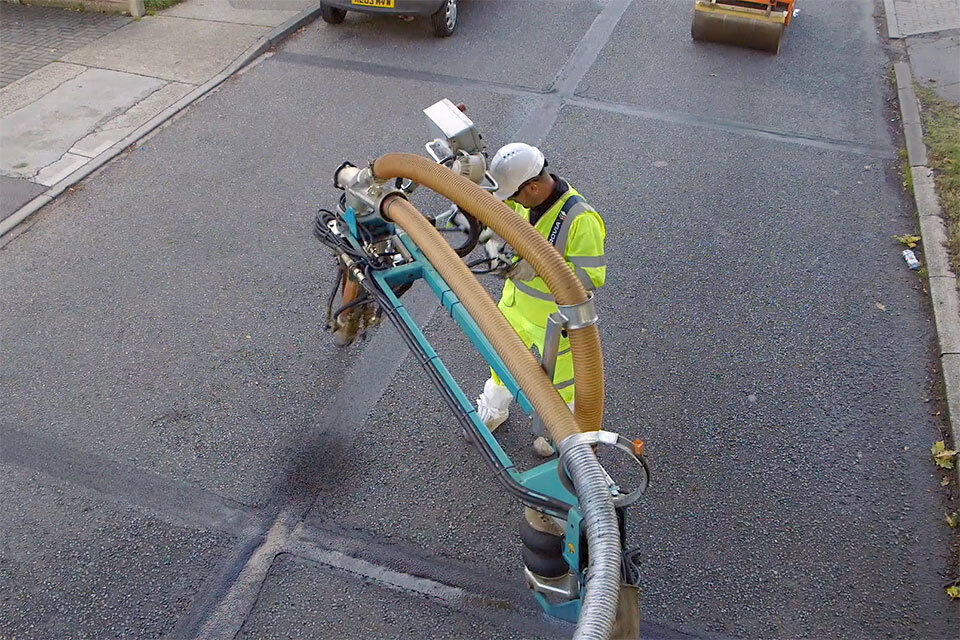
Road maintenance work to repair potholes in England. · GOV.UK / UK Government (OGL)
England resurfaces 7,000 miles and ties new road funds to results
Nearly 7,000 miles will be resurfaced in England this year, up 10% on last year, with councils spending £4.9 billion and a further £220 million unlocked for…
More road funding in England, but only for councils that deliver
Councils will spend £4.9 billion this year and can access £220 million in incentives if they meet targets, in a plan to move from patching to prevention and…
--- The context ---
Potholes have become a daily problem for drivers across England, whether they are travelling to work, doing the school run or heading to a hospital appointment. They damage tyres, wheels and suspension, raise the cost of everyday life and also pose a clear risk to road safety.
For years the response was to patch the hole after it opened, often again and again on the same stretch. The new approach stresses preventing the pothole, with more resurfacing and preventative work.
--- The facts ---
Nearly 7,000 miles of road resurfacing will be completed this year, up 10% on last year and equivalent to travelling between London and Singapore. Councils will spend £4.9 billion in total this year, £800 million more than 2 years ago, before this government came to power.
Behind that effort sits £7.3 billion in government funding for road maintenance. Official figures say the work can help the average driver save up to nearly £600 on costly repairs. A further £220 million in incentive funding is unlocked today for councils across England that meet performance targets, with later funding released only if targets are reached and able to be withheld if they are not.
--- The positions ---
Transport Secretary Heidi Alexander said, in attributed indirect terms, that potholes had been a source of national embarrassment for too long, forcing working people to pay for repairs and posing a danger to all road users, while adding that the figures show a corner is starting to turn and that much more remains to be done.
Dan Joyce, operations director at Kwik Fit, welcomed, in attributed indirect terms, the increased investment and the focus on proactive maintenance, pointing to frequent damage to tyres, wheels and suspension. Simon Williams, head of policy at the RAC, welcomed, in attributed indirect terms, the data, defended surface dressing as cost effective when done properly and warned that the proof will be whether drivers notice the difference.
--- What remains unknown ---
The council by council breakdown of the performance targets is not yet known, nor are the exact consequences for those that miss them. It is also unclear how evenly the estimated saving will reach every region, or whether the improvement in local road conditions in the year ending March 2026, with fewer minor roads needing maintenance, will hold for another year.
--- Unanswered questions ---
Will each council publish its targets and results in a comparable way so residents can check them? What share of the £220 million will reach rural areas with longer networks and fewer resources? Will drivers see fewer breakdowns this winter, or will the change take several seasons to be felt on the street?
--- EPM analysis ---
The incentive change matters because it links money to accountability, two elements that previously moved separately. If 94% of councils complete preventative work this year, up from 76% last year, the signal is that central direction and strict monitoring are changing local behaviour. The risk is mistaking activity for outcome, since resurfacing more miles does not by itself guarantee lasting roads if workmanship and follow up fall short.
📌 EPM Take: In EPM's view, the shift toward prevention is the most valuable part of the announcement, because late repairs cost more for drivers and for public budgets alike. Tying £220 million to performance could push lagging councils forward, provided the measurement is transparent and does not punish areas starting from the worst condition. The promised saving of nearly £600 per driver will only be credible when it shows up in repair bills, insurance costs and daily journeys, not only in official releases celebrating record figures.
--- The context ---
For many drivers, a pothole is not an anecdote but a recurring cost and a source of insecurity on ordinary journeys, from work to school to hospital. The decline of local roads is widely seen as a basic failure of management, the kind that quietly erodes trust in institutions.
The official plan combines more money with a new demand, as councils receive incentives if they meet performance targets and can lose later funding if they do not. The principle is simple, reward maintenance done well and stop paying indefinitely for the permanent patch.
--- The facts ---
Almost 7,000 miles of resurfacing will be completed this year, up 10% on last year and equivalent to the distance between London and Singapore. Councils will spend £4.9 billion in total, £800 million more than 2 years ago, backed by £7.3 billion in government funding for road maintenance.
Today's unlock adds £220 million in incentive funding for councils across England that reach their performance targets. Later releases will follow only if targets are met and can be withheld if they are not. Official figures estimate the average driver can save up to nearly £600 on repairs, and 94% of councils will complete preventative work this year, compared with 76% last year.
--- The positions ---
Transport Secretary Heidi Alexander said, in attributed indirect terms, that potholes had been a national embarrassment for too long and that the figures show the country is starting to turn a corner, while acknowledging that much more remains to be done and defending tougher rules to hold councils to account.
From the sector, Dan Joyce of Kwik Fit backed, in attributed indirect terms, the investment and proactive maintenance, recalling frequent damage to tyres, wheels and suspension and the safety risk involved. Simon Williams of the RAC called, in attributed indirect terms, the data encouraging, defended properly done surface dressing as cost effective and stressed that getting roads to a decent standard is not an overnight job.
--- What remains unknown ---
The fine print of the targets, the verification timetable and the exact consequences for a council that falls short are still to be seen. It also remains to be seen whether the improvement in conditions in the year ending March 2026, with fewer minor roads needing maintenance, reflects a solid trend or a single favourable year.
--- Unanswered questions ---
Will concrete withholdings be published when a council misses its targets? How will the scheme avoid rewarding only those that already started from better roads? How long will it take before drivers notice fewer vehicle repairs and a safer surface on their usual route?
--- EPM analysis ---
Ordering spending around results is the most defensible part of the announcement, because the problem was never only about budgets but about priorities and control. Preventative work over reactive patching is not a slogan but arithmetic, since sealing in time avoids rebuilding later. Even so, the government will be judged on delivery, alongside recent measures against antisocial behaviour on transport, including £100 fines on buses and a crackdown on loud music on trains, by what people experience every day.
📌 EPM Take: In EPM's view, spending more is not enough without demanding results, which is why performance linked funding is the most sensible element of the package. Withholding money from councils that fail protects taxpayers and rewards those that maintain their streets properly, which is a basic duty rather than a favour. The test must be demanding and public, because nearly £600 in savings per driver and 7,000 miles resurfaced will only matter if they deliver decent, durable roads without repeated patching year after year.
Inglaterra repavimenta 7.000 millas y condiciona fondos a resultados
Casi 7.000 millas serán repavimentadas este año en Inglaterra, un 10% más que el año anterior, con £4.9 billion de gasto de los ayuntamientos y £220 million…
Más dinero para carreteras, pero solo si los ayuntamientos cumplen
Los ayuntamientos gastarán £4.9 billion este año y podrán acceder a £220 million en incentivos si cumplen sus metas, en un plan que busca pasar del parche a la…
--- El contexto ---
Los baches se han convertido en un problema cotidiano para quienes conducen en Inglaterra, ya sea para ir al trabajo, llevar a los niños a la escuela o acudir a una cita hospitalaria. Dañan neumáticos, ruedas y suspensión, encarecen la vida diaria y representan además un riesgo para la seguridad vial.
Durante años predominó tapar el agujero ya abierto, una y otra vez sobre el mismo tramo. El nuevo enfoque pone el acento en evitar que el bache aparezca, con más repavimentación y obras preventivas.
--- Los hechos ---
Casi 7.000 millas de carreteras serán repavimentadas este año, un 10% más que el año anterior, una distancia equivalente a viajar entre Londres y Singapur. Los ayuntamientos gastarán en total £4.9 billion este año, £800 million más que hace 2 años, antes de que llegara este gobierno.
El respaldo central es una financiación gubernamental de £7.3 billion para mantenimiento vial, que puede ayudar al conductor medio a ahorrar hasta casi £600 en reparaciones. Hoy se desbloquean además £220 million por incentivos para ayuntamientos de Inglaterra que cumplan objetivos de rendimiento, y los fondos posteriores solo se liberarán si se cumplen esas metas.
--- Las posiciones ---
La secretaria de Transporte, Heidi Alexander, sostuvo en términos atribuidos que los baches han sido durante demasiado tiempo una vergüenza nacional, que obligan a la gente trabajadora a pagar reparaciones y que suponen un peligro para todos los usuarios, aunque añadió que las cifras muestran que se empieza a dar un giro y que aún queda mucho por hacer.
Dan Joyce, director de operaciones de Kwik Fit, celebró en términos atribuidos el aumento de la inversión y el énfasis en el mantenimiento proactivo, al señalar que sus equipos reparan con frecuencia daños en neumáticos, ruedas y suspensión. Simon Williams, responsable de política del RAC, valoró en términos atribuidos los datos, defendió el sellado superficial como una opción rentable si se hace bien y advirtió que la prueba será si los conductores notan la diferencia.
--- Lo que falta saber ---
No se conoce todavía el desglose por ayuntamiento de los objetivos de rendimiento ni qué ocurrirá en concreto con quienes no los cumplan. Tampoco está claro cuánto del ahorro estimado llegará de forma uniforme a todas las regiones, ni si la mejora registrada en el año terminado en marzo de 2026, con menos carreteras menores necesitando mantenimiento, se mantendrá otro año consecutivo.
--- Preguntas sin respuesta ---
¿Publicará cada ayuntamiento sus objetivos y sus resultados de forma comparable para que los vecinos puedan comprobarlos? ¿Qué parte de los £220 million llegará a las zonas rurales con redes más extensas y menos recursos? ¿Notarán los conductores menos averías este invierno o el cambio tardará varias temporadas en sentirse en la calle?
--- Análisis EPM ---
El cambio de incentivos vincula dinero y rendición de cuentas. Si el 94% de los ayuntamientos realiza obras preventivas este año, frente al 76% del año anterior, la señal es que la dirección central modifica conductas locales. El riesgo es confundir actividad con resultado: repavimentar más no garantiza carreteras duraderas si fallan la calidad y el seguimiento.
📌 Conclusion EPM: A juicio de EPM, el giro hacia la prevención es la parte más valiosa del anuncio, porque reparar tarde sale más caro para el conductor y para el erario público. Condicionar 220 millones de libras a resultados puede empujar a los ayuntamientos rezagados, siempre que la medición sea transparente y no castigue a las zonas con peor punto de partida. El ahorro prometido de casi £600 por conductor solo será creíble cuando se note en talleres, seguros y tiempos de viaje, no solo en comunicados oficiales con cifras récord.
--- El contexto ---
Para muchos conductores, el bache no es una anécdota sino un gasto recurrente y una fuente de inseguridad en trayectos ordinarios. El deterioro de las carreteras locales se percibe como un fallo básico de gestión, de esos que erosionan la confianza en las instituciones.
El plan combina más dinero con una exigencia nueva: incentivos si se cumplen objetivos y posible retención si no. La idea es premiar el mantenimiento bien hecho y dejar de financiar el parche permanente.
--- Los hechos ---
Este año se completarán casi 7.000 millas de repavimentación, un 10% más que el año anterior y el equivalente a la distancia entre Londres y Singapur. Los ayuntamientos gastarán £4.9 billion en total, £800 million más que hace 2 años, con una financiación gubernamental de £7.3 billion para mantenimiento vial detrás del esfuerzo.
El desbloqueo anunciado hoy suma £220 million en financiación por incentivos para ayuntamientos de Inglaterra que alcancen sus metas de rendimiento. Los tramos posteriores solo se liberarán si se cumplen los objetivos y podrán retenerse en caso contrario. Las cifras oficiales estiman que el conductor medio puede ahorrar hasta casi £600 en reparaciones, y los datos añaden que el 94% de los ayuntamientos hará obras preventivas este año, frente al 76% del año anterior.
--- Las posiciones ---
La secretaria de Transporte, Heidi Alexander, afirmó en términos atribuidos que los baches han sido una vergüenza nacional durante demasiado tiempo y que las cifras indican que se empieza a cambiar el rumbo, aunque reconoció que queda mucho por hacer y defendió reglas más duras para exigir cuentas a los ayuntamientos.
Desde el sector, Dan Joyce, de Kwik Fit, respaldó en términos atribuidos la inversión y el mantenimiento proactivo, recordando los daños frecuentes en neumáticos, ruedas y suspensión y el riesgo para la seguridad. Simon Williams, del RAC, consideró en términos atribuidos alentadores los datos, defendió el sellado superficial bien ejecutado como rentable y subrayó que dejar las carreteras en un nivel decente no es tarea de una noche.
--- Lo que falta saber ---
Falta por ver la letra pequeña de los objetivos y las consecuencias para quien incumpla. También falta saber si la mejora en el año terminado en marzo de 2026, con menos carreteras menores necesitando mantenimiento, es tendencia sólida o un solo ejercicio favorable.
--- Preguntas sin respuesta ---
¿Se publicarán sanciones o retenciones concretas cuando un ayuntamiento no alcance sus metas? ¿Cómo se evitará que el incentivo premie solo a quienes ya partían de mejores carreteras? ¿Cuánto tiempo tardará el conductor en notar menos daños en su vehículo y un firme más seguro en su ruta habitual?
--- Análisis EPM ---
Ordenar el gasto alrededor de resultados es lo más defendible del anuncio, porque el problema no fue solo de presupuesto sino de prioridades y control. Preventivo frente a reactivo es aritmética: sellar a tiempo evita reconstruir después. El gobierno anunció también medidas contra el comportamiento antisocial en el transporte, con multas de £100 en autobuses y contra la música alta en trenes, y el público juzgará el conjunto por lo que vea cada día.
📌 Conclusion EPM: A juicio de EPM, gastar más no basta si no se exige resultado, y por eso la financiación condicionada es el elemento más sensato del paquete. Retener fondos a quien no cumpla protege al contribuyente y premia a los ayuntamientos que mantienen bien sus calles, que es una obligación básica y no un favor. La vara de medir debe ser exigente y pública, porque casi £600 de ahorro por conductor y 7.000 millas repavimentadas solo tendrán valor si se traducen en carreteras decentes y duraderas, sin parches repetidos.