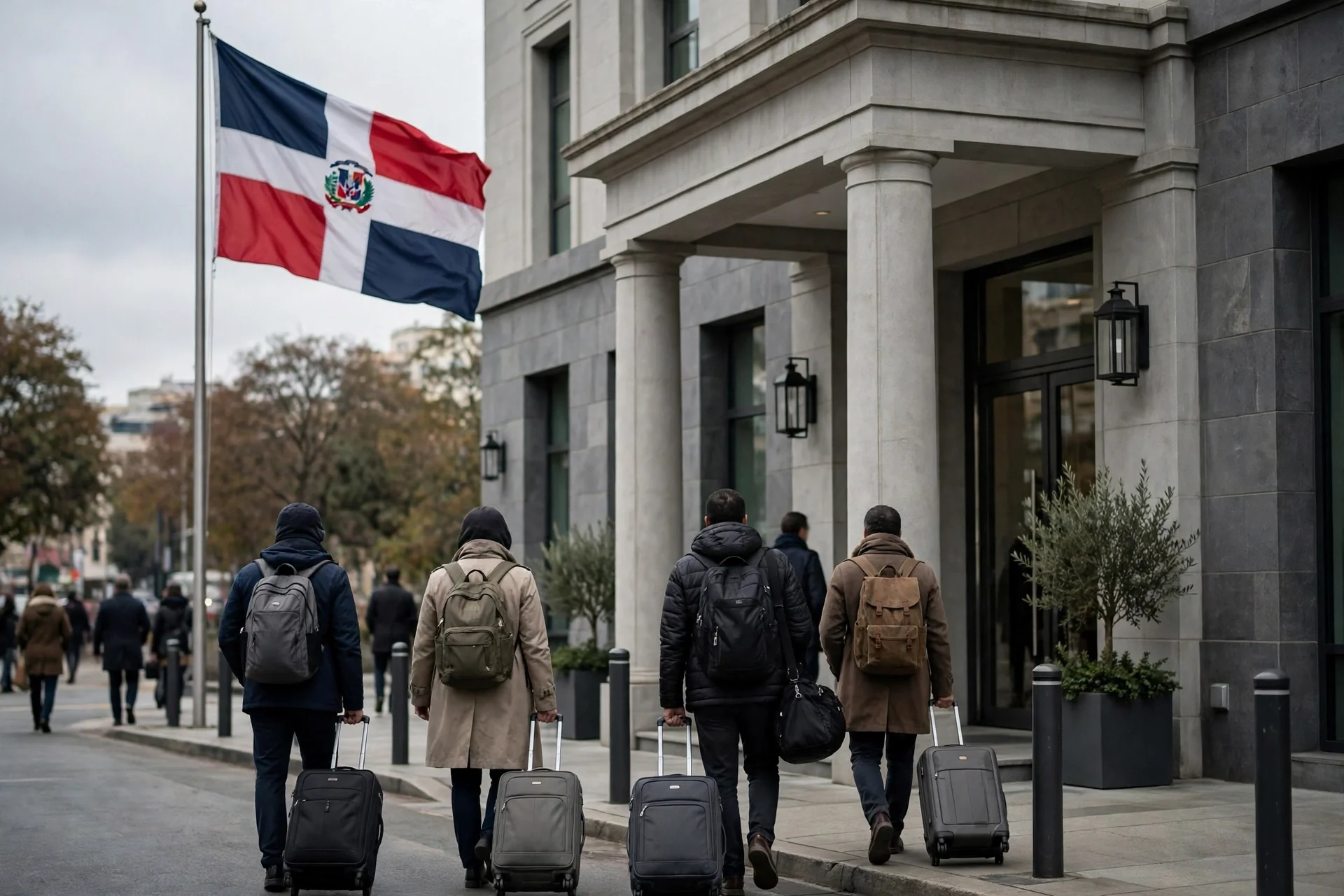
Imagen alusiva a la gestión consular de regreso de cuatro dominicanos desde Rusia, coordinada por la Cancillería. · EPM
Foreign ministry arranges return of four Dominicans who declined in Russia
Four Dominicans who travelled to Russia to enlist in its military forces gave up, contacted the diplomatic representation on the 23rd of this month, and the…
Four Dominicans decline service in Russia and foreign ministry acts
The Foreign Ministry is coordinating the return of four Dominicans who declined to sign a contract with the Russian Ministry of Defence, were received in…
Four Dominicans who travelled to Russia intending to enlist in its military forces gave up that purpose, and the Ministry of Foreign Affairs is now coordinating their return to the Dominican Republic, according to a statement released this Sunday by the Foreign Ministry.
--- The context ---
The case forms part of a broader phenomenon the Foreign Ministry has followed in earlier coverage, when it identified more than 30 Dominicans in the war in Russia. The institution framed this effort as consular protection for its nationals abroad, especially in situations of vulnerability.
--- The facts ---
According to the official note, the approach took place on the 23rd of this month, when the four contacted the Dominican diplomatic representation in Russia, set out their case and warned they would not sign a contract with the Russian Ministry of Defence. After the refusal, the Russian military authorities provided tickets to Moscow, where diplomatic staff received them.
Upon their arrival, according to the institutional account, they were taken to the diplomatic headquarters, where they received lodging, food and logistical support. The purchase of the return tickets was ordered from the office of Foreign Minister Víctor «Ito» Bisonó, with Opinio Díaz, vice minister for Consular and Migration Affairs, as coordinator of the process.
The Foreign Ministry guaranteed that they remained at all times in a protected place, without their integrity being endangered, and that only the completion of the journey to national territory remained. The institution did not disclose the names, the landing date, or how they arrived in Russia.
--- The positions ---
The Ministry presented the effort as consular protection for vulnerable nationals. According to press reports, the young men said they arrived attracted by job promises and exposed to being sent to the conflict with Ukraine, with accounts of threats and alleged pressure from recruiters, recorded as attributed accounts, not confirmed facts.
--- What remains unknown ---
The names of the four and the landing date are not yet known. Nor has it been disclosed how they arrived in Russia or what follow-up they will receive once back.
--- Unanswered questions ---
When exactly will the four Dominicans arrive in the country? How did they arrive in Russia and who contacted them with the job promises that, according to press reports, attracted them? What support will they receive after their return and how will other nationals be kept from similar situations?
--- EPM analysis ---
The sequence described shows a consular response in a few steps: contact with the diplomatic representation, reception in Moscow, shelter at the headquarters and the ordered purchase of the return tickets. Each step was attributed to a specific instance, from the foreign minister's direction to the vice minister's coordination.
The background from press reports, with job promises as the hook according to the young men's accounts, helps explain why the institution speaks of vulnerability. With no names or date disclosed, verification of the return will remain pending until the journey ends.
📌 EPM Take:
In EPM's view, the effort described by the Foreign Ministry fulfils the essential function of consular protection: four Dominicans who declined to enlist in a foreign army were received, sheltered and set on their way back to their country without their integrity being endangered. The pending task is twofold, because the effective arrival still needs to be confirmed and, above all, the causes that, according to the attributed accounts, took them to Russia with job promises that ended in risk must be addressed.
The Ministry of Foreign Affairs is coordinating the return to the Dominican Republic of four Dominicans who travelled to Russia intending to enlist in its military forces and gave up doing so, according to a statement released this Sunday by the Foreign Ministry.
--- The context ---
The institution framed the effort as consular protection for its nationals abroad, especially in situations of vulnerability. This is not an isolated event, because in earlier coverage the Foreign Ministry identified more than 30 Dominicans in the war in Russia.
--- The facts ---
According to the official note, the approach took place on the 23rd of this month, when the four contacted the Dominican diplomatic representation in Russia, set out their case and warned they would not sign a contract with the Russian Ministry of Defence. After the refusal, the Russian military authorities provided tickets to Moscow, where diplomatic staff received them.
Upon their arrival, according to the institutional account, they were taken to the diplomatic headquarters, where they were given lodging, food and logistical support. The purchase of the return tickets was ordered from the office of Foreign Minister Víctor «Ito» Bisonó, with Opinio Díaz, vice minister for Consular and Migration Affairs, as coordinator.
The Foreign Ministry guaranteed that they remained at all times in a protected place, without their integrity being endangered, and that only the completion of the journey to national territory remained. The institution did not disclose the names, the landing date, or how they arrived in Russia.
--- The positions ---
The Foreign Ministry maintained that the effort responds to the consular protection owed to vulnerable nationals. According to press reports, the young men said they arrived attracted by job promises and exposed to being sent to the conflict with Ukraine, with accounts of threats and alleged pressure from recruiters, to be read as attributed accounts, not confirmed facts.
--- What remains unknown ---
The names of the four and the landing date are not known. Nor has it been explained how they arrived in Russia or whether their initial journey will be reviewed.
--- Unanswered questions ---
On what day will the four Dominicans land in the country? How did they arrive in Russia and what promises did they receive, according to their own accounts gathered by press reports? What follow-up will the State give to their case after the return and how will other nationals be protected against similar offers?
--- EPM analysis ---
The institutional account describes an orderly chain: the citizens communicate their refusal, the Russian authorities facilitate their transfer to Moscow, the mission receives them and the headquarters provides lodging, food and support. On that basis, the foreign minister's office ordered the tickets and a vice minister remained as coordinator.
That clarity of command matters because the case combines personal risk, distance and an armed conflict in the background. With names withheld and the date undisclosed, the verifiable closing will depend on the journey being completed as anticipated.
📌 EPM Take:
In EPM's view, what the Foreign Ministry did is what corresponds to a State that protects its own: faced with the refusal of four Dominicans to sign a foreign military contract, there was reception, shelter, food and return tickets ordered from the highest direction. The order and speed of that chain deserve recognition, and the remaining step is to confirm the arrival and strengthen prevention so that no national is again trapped by a job promise that leads to military risk.
Mirex coordina el regreso de cuatro dominicanos que renunciaron en Rusia
Cuatro dominicanos que viajaron a Rusia para enrolarse en sus fuerzas militares desistieron, contactaron a la representación diplomática el 23 de este mes y el…
Cuatro dominicanos desisten en Rusia y la Cancillería gestiona su vuelta
La Cancillería coordina el regreso de cuatro dominicanos que renunciaron a firmar un contrato con el Ministerio de Defensa ruso, fueron recibidos en Moscú y…
Cuatro dominicanos que viajaron a Rusia con la intención de enrolarse en sus fuerzas militares desistieron de su propósito y el Ministerio de Relaciones Exteriores coordina ya su regreso a República Dominicana, según un comunicado de la Cancillería divulgado este domingo.
--- El contexto ---
El caso se inscribe en un fenómeno más amplio que la Cancillería ha seguido en coberturas anteriores, cuando identificó a más de 30 dominicanos en la guerra en Rusia. La institución enmarcó esta gestión en la protección consular a connacionales en el exterior, sobre todo en situaciones de vulnerabilidad.
--- Los hechos ---
Según la nota oficial, el acercamiento ocurrió el 23 de este mes, cuando los cuatro se comunicaron con la representación diplomática dominicana en Rusia, expusieron su caso y advirtieron que no firmarían contrato con el Ministerio de Defensa ruso. Tras la renuncia, las autoridades militares rusas les facilitaron los pasajes hasta Moscú, donde el personal diplomático los recibió.
A su arribo, según el relato institucional, fueron llevados a la sede diplomática, donde recibieron hospedaje, alimentos y apoyo logístico. La compra de los pasajes de vuelta se ordenó desde la dirección del canciller Víctor «Ito» Bisonó, con Opinio Díaz, viceministro de Asuntos Consulares y Migratorios, como coordinador del proceso.
La Cancillería garantizó que permanecieron todo el tiempo en un sitio protegido, sin que peligrara su integridad física, y que solo restaba culminar el trayecto hacia el territorio nacional. La institución no divulgó los nombres, ni la fecha de aterrizaje, ni los pormenores de cómo llegaron a Rusia.
--- Las posiciones ---
El Ministerio presentó la gestión como protección consular a connacionales vulnerables. Según reportes de prensa, los jóvenes contaron que llegaron atraídos por promesas laborales y expuestos a ser enviados al conflicto con Ucrania, con relatos de amenazas y presuntas presiones de sus reclutadores, extremos recogidos como relatos atribuidos y no como hechos confirmados.
--- Lo que falta saber ---
No se conocen los nombres de los cuatro ni la fecha de aterrizaje. Tampoco se ha divulgado cómo llegaron a Rusia ni qué seguimiento recibirán una vez de vuelta.
--- Preguntas sin respuesta ---
¿Cuándo llegarán exactamente los cuatro dominicanos al país? ¿Cómo llegaron a Rusia y quiénes los contactaron con las promesas laborales que, según reportes de prensa, los atrajeron? ¿Qué apoyo recibirán tras su regreso y cómo se evitará que otros connacionales queden expuestos a situaciones similares?
--- Análisis EPM ---
La secuencia descrita muestra una respuesta consular en pocos pasos: contacto con la representación diplomática, recepción en Moscú, resguardo en la sede y compra ordenada de los pasajes. Cada paso quedó atribuido a una instancia concreta, desde la dirección del canciller hasta la coordinación del viceministro.
El trasfondo de los reportes de prensa, con promesas laborales como gancho según los relatos de los jóvenes, ayuda a entender por qué la institución habla de vulnerabilidad. Sin nombres ni fecha divulgados, la verificación del retorno quedará pendiente hasta culminar el trayecto.
📌 Conclusion EPM:
A juicio de EPM, la gestión descrita por la Cancillería cumple la función esencial de la protección consular: cuatro dominicanos que desistieron de enrolarse en un ejército extranjero fueron recibidos, resguardados y encaminados de vuelta a su país sin que su integridad peligrara. La tarea pendiente es doble, porque hace falta confirmar la llegada efectiva y, sobre todo, atender las causas que, según los relatos atribuidos, los llevaron hasta Rusia con promesas laborales que terminaron en riesgo.
El Ministerio de Relaciones Exteriores coordina el regreso a República Dominicana de cuatro dominicanos que viajaron a Rusia con la intención de enrolarse en sus fuerzas militares y desistieron de hacerlo, conforme a un comunicado divulgado este domingo por la Cancillería.
--- El contexto ---
La institución enmarcó la gestión en la protección consular a sus connacionales en el exterior, sobre todo en situaciones de vulnerabilidad. No es un hecho aislado, porque en coberturas anteriores la Cancillería identificó a más de 30 dominicanos en la guerra en Rusia.
--- Los hechos ---
Según la nota oficial, el acercamiento ocurrió el 23 de este mes, cuando los cuatro contactaron a la representación diplomática dominicana en Rusia, expusieron su caso y advirtieron que no firmarían contrato con el Ministerio de Defensa ruso. Tras la renuncia, las autoridades militares rusas les facilitaron los pasajes hasta Moscú, donde el personal diplomático los recibió.
A su arribo, según el relato institucional, fueron llevados a la sede diplomática, donde se les dio hospedaje, alimentos y apoyo logístico. La compra de los pasajes de vuelta se ordenó desde la dirección del canciller Víctor «Ito» Bisonó, con Opinio Díaz, viceministro de Asuntos Consulares y Migratorios, como coordinador del proceso.
La Cancillería garantizó que permanecieron todo el tiempo en un sitio protegido, sin que peligrara su integridad física, y que solo restaba culminar el trayecto hacia el territorio nacional. La institución no divulgó los nombres, ni la fecha de aterrizaje, ni los pormenores de cómo llegaron a Rusia.
--- Las posiciones ---
La Cancillería sostuvo que la gestión responde a la protección consular debida a connacionales vulnerables. Según reportes de prensa, los jóvenes contaron que llegaron atraídos por promesas laborales y expuestos a ser enviados al conflicto con Ucrania, con relatos de amenazas y presuntas presiones de sus reclutadores, datos que deben leerse como relatos atribuidos y no como hechos confirmados.
--- Lo que falta saber ---
No se conocen los nombres de los cuatro ni la fecha de aterrizaje. Tampoco se ha explicado cómo llegaron a Rusia ni si habrá revisión de su viaje inicial.
--- Preguntas sin respuesta ---
¿Qué día aterrizarán los cuatro dominicanos en el país? ¿Cómo llegaron a Rusia y qué promesas recibieron, según sus propios relatos recogidos por reportes de prensa? ¿Qué seguimiento dará el Estado a su caso tras el regreso y cómo se protegerá a otros connacionales frente a ofertas similares?
--- Análisis EPM ---
El relato institucional describe una cadena ordenada: los ciudadanos comunican su renuncia, las autoridades rusas facilitan su traslado hasta Moscú, la misión los recibe y la sede les brinda hospedaje, alimentos y apoyo. Sobre esa base, la dirección del canciller ordenó los pasajes y un viceministro quedó como coordinador.
Esa claridad de mando importa porque el caso combina riesgo personal, distancia y un conflicto armado de fondo. Con nombres reservados y fecha sin divulgar, el cierre verificable dependerá de que el trayecto culmine.
📌 Conclusion EPM:
A juicio de EPM, lo actuado por la Cancillería es lo que corresponde a un Estado que protege a los suyos: ante la renuncia de cuatro dominicanos a firmar un contrato militar extranjero, hubo recepción, resguardo, alimentación y pasajes de vuelta ordenados desde la más alta dirección. El orden y la rapidez de esa cadena merecen reconocimiento, y el paso que falta es confirmar la llegada y reforzar la prevención para que ningún connacional vuelva a quedar atrapado en una promesa laboral que derive en riesgo militar.