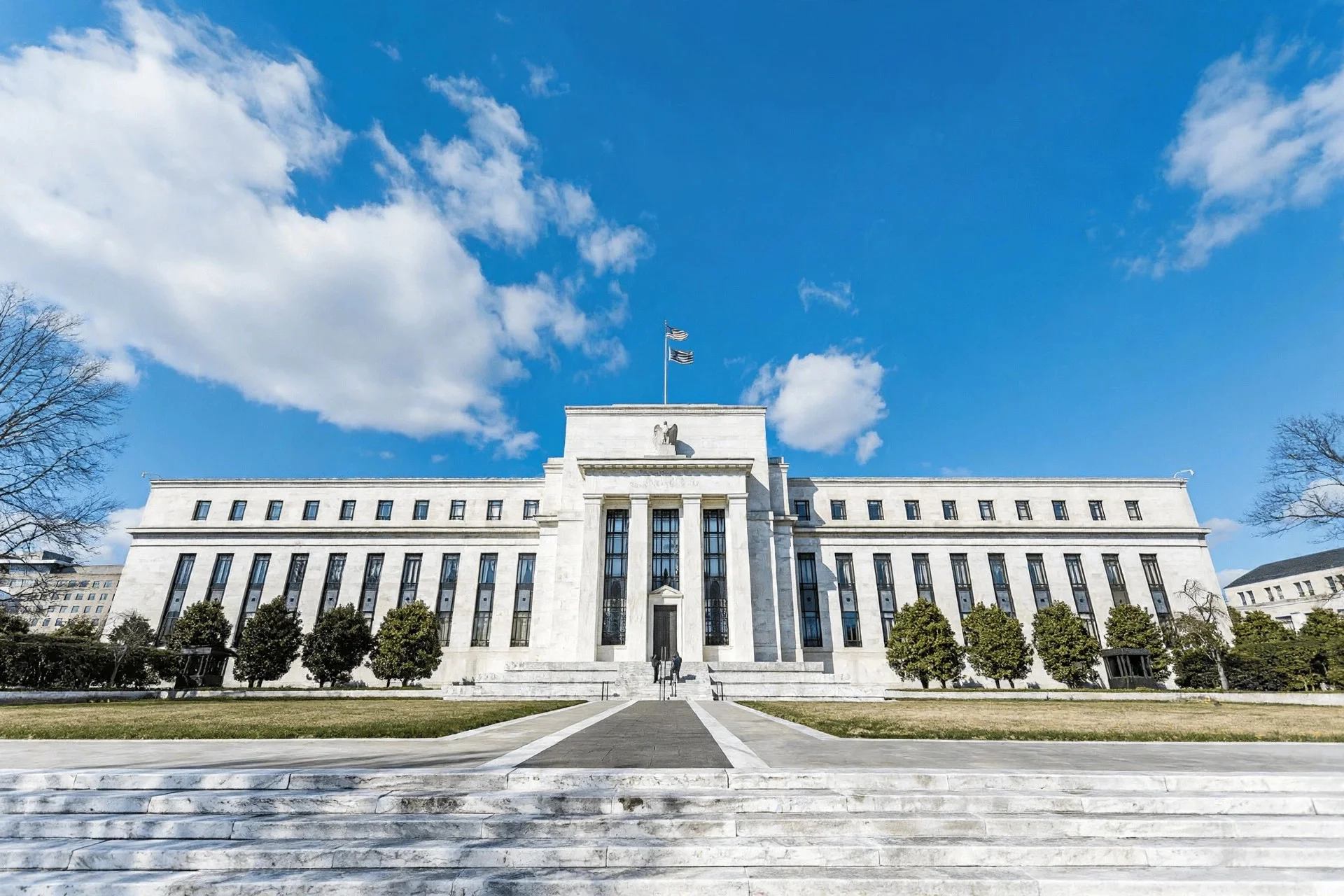
Fachada frontal del edificio de la Reserva Federal en Washington, con su pórtico central de mármol blanco, árboles y cielo azul con nubes. · Imagen generada para EPM
Fed holds its rate and pledges to deliver price stability
The Federal Reserve held its rate range at 3-3/4 to 4 percent by 10 – 2, with inflation still elevated, activity strong and two votes favoring a raise instead.
Fed holds rate despite warning from two dissenting votes
The Committee held the range at 3-3/4 to 4 percent by 10 – 2, while Cook and Hammack preferred a raise of 1/4 percentage point with inflation remaining…
--- The context ---
The Federal Reserve works under a dual mandate that combines price stability and employment, and every decision on its benchmark rate shapes credit, investment and the cost of living for households.
--- The facts ---
The Committee decided to maintain the target range for the federal funds rate at 3-3/4 to 4 percent, in a vote of 10 – 2. It also continues maintaining ample reserves in the banking system, according to the statement.
--- The positions ---
The majority backed holding the rate while gathering more information. Voting against were Lisa D. Cook and Beth M. Hammack, who, the statement says, preferred to raise the target range by 1/4 percentage point at this meeting instead.
--- What remains unknown ---
Economic activity is expanding at a strong pace, domestic spending has been resilient, productivity growth is strong and capital investment is robust. Job gains have kept pace with the workforce and unemployment has changed little, yet inflation remains elevated and uncertainty stays high, owing in part to geopolitical developments.
--- Unanswered questions ---
What additional information will the Committee weigh before changing its stance? When will it judge that inflation is returning in a timely way toward its goal? What will matter more at the next decision, resilient spending or persistent prices?
--- EPM analysis ---
The hold protects workers and households from a hasty tightening. The danger is that waiting too long prolongs elevated inflation, which burdens first those families with the least room to absorb higher prices.
📌 EPM Take: In EPM's view, holding the rate was a prudent choice because activity and employment show no fragility that would justify an abrupt shift, but prudence expires if inflation remains elevated for long. The Committee promised to deliver price stability and a return to its 2 percent goal, and that promise should be judged by results, not by communicated patience alone.
--- The context ---
For responsible monetary policy, the priority is preserving the value of money and confidence in institutions. Elevated inflation erodes wages, savings and contracts, and demands discipline even when activity looks strong.
--- The facts ---
The Committee decided to maintain the target range for the federal funds rate at 3-3/4 to 4 percent, in a vote of 10 – 2. It continues maintaining ample reserves in the banking system, in support of the dual mandate.
--- The positions ---
The majority chose to wait for more information. Voting against were Lisa D. Cook and Beth M. Hammack, who, the statement says, preferred to raise the target range by 1/4 percentage point at this meeting, a warning signal on prices.
--- What remains unknown ---
Activity is expanding at a strong pace, domestic spending has been resilient, productivity growth is strong and capital investment is robust. Job gains kept pace with the workforce and unemployment changed little, while inflation remains elevated and uncertainty stays high, owing in part to geopolitical developments.
--- Unanswered questions ---
What evidence would convince the majority that waiting is no longer enough? How long can this pause last without losing credibility against elevated inflation? Will the Committee respond firmly if new information confirms that prices are not easing as needed?
--- EPM analysis ---
The dissent raises a serious warning: with strong growth, holding the rate can be read as tolerance toward prices. Monetary discipline requires verifiable decisions taken in time, not hope.
📌 EPM Take: In EPM's view, the divided vote carries a clear lesson in institutional responsibility: holding the rate is justified only if the Committee acts without delay once the information confirms the course. Cook and Hammack recalled that the 2 percent goal is not a decorative statement. Without firmness, promised stability loses value for households and savers.
La Fed mantiene su tasa y promete estabilidad de precios
La Reserva Federal mantuvo el rango de su tasa entre el 3-3/4 y el 4 por ciento por 10 – 2, con la inflación aún elevada, la actividad fuerte y dos votos a…
La Fed sostiene la tasa pese a la advertencia de dos votos
El Comité mantuvo el rango entre el 3-3/4 y el 4 por ciento por 10 – 2, mientras Cook y Hammack preferían subirlo en 1/4 de punto porcentual ante una inflación…
--- El contexto ---
La Reserva Federal actúa bajo un mandato dual que combina estabilidad de precios y empleo, y cada decisión sobre su tasa de referencia ordena el crédito, la inversión y el costo de vida de los hogares en todo el país.
--- Los hechos ---
El Comité decidió mantener el rango objetivo de la tasa de fondos federales entre el 3-3/4 y el 4 por ciento, en una votación de 10 – 2. También continúa su política de mantener reservas amplias en el sistema bancario.
--- Las posiciones ---
La mayoría respaldó sostener la tasa y reunir más información. En contra votaron Lisa D. Cook y Beth M. Hammack, quienes, según el comunicado, preferían elevar el rango objetivo en 1/4 de punto porcentual.
--- Lo que falta saber ---
La actividad se expande a un ritmo fuerte, el gasto interno ha sido resiliente, la productividad es fuerte y la inversión es robusta. El empleo avanzó al ritmo de la fuerza laboral y el desempleo cambió poco, pero la inflación sigue elevada y la incertidumbre permanece alta por desarrollos geopolíticos.
--- Preguntas sin respuesta ---
¿Qué información adicional considerará el Comité antes de cambiar su postura? ¿Cuándo juzgará que la inflación vuelve de forma oportuna hacia su meta? ¿Qué pesará más en la próxima decisión, la fortaleza del gasto o la persistencia de los precios?
--- Análisis EPM ---
La pausa protege a trabajadores y hogares frente a un endurecimiento apresurado. El riesgo es que esperar demasiado prolongue una inflación elevada que castiga primero a quienes tienen menos margen para absorber precios altos.
📌 Conclusion EPM: A juicio de EPM, mantener la tasa fue una decisión prudente porque la actividad y el empleo no muestran fragilidad que justifique un giro brusco, pero la prudencia tiene fecha de vencimiento si la inflación sigue elevada. El Comité prometió entregar estabilidad de precios y volver a su meta del 2 por ciento, y esa promesa deberá medirse con hechos, no solo con paciencia comunicada.
--- El contexto ---
Para una política monetaria responsable, la prioridad es preservar el valor del dinero y la confianza en las instituciones. Una inflación elevada erosiona salarios, ahorros y contratos, y obliga a actuar con disciplina aunque la actividad muestre fortaleza.
--- Los hechos ---
El Comité decidió mantener el rango objetivo de la tasa de fondos federales entre el 3-3/4 y el 4 por ciento, en una votación de 10 – 2. Continúa la política de mantener reservas amplias en el sistema bancario, en apoyo del mandato dual.
--- Las posiciones ---
La mayoría optó por esperar más información. En contra votaron Lisa D. Cook y Beth M. Hammack, quienes, según el comunicado, preferían elevar el rango objetivo en 1/4 de punto porcentual en esta reunión, una señal de alerta sobre los precios.
--- Lo que falta saber ---
La actividad se expande a un ritmo fuerte, el gasto interno ha sido resiliente, la productividad es fuerte y la inversión es robusta. El empleo avanzó al ritmo de la fuerza laboral y el desempleo cambió poco, mientras la inflación permanece elevada y la incertidumbre sigue alta por factores geopolíticos.
--- Preguntas sin respuesta ---
¿Qué datos convencerían a la mayoría de que esperar ya no basta? ¿Hasta cuándo puede sostenerse esta pausa sin perder credibilidad frente a la inflación elevada? ¿Responderá el Comité con firmeza si la información nueva confirma que los precios no ceden?
--- Análisis EPM ---
La disidencia plantea una advertencia seria: con crecimiento fuerte, mantener la tasa puede interpretarse como tolerancia frente a los precios. La disciplina monetaria exige decisiones verificables y a tiempo, no esperanza.
📌 Conclusion EPM: A juicio de EPM, la votación dividida deja una lección clara de responsabilidad institucional: sostener la tasa solo se justifica si el Comité actúa sin demora cuando la información confirme el rumbo. Cook y Hammack recordaron que la meta del 2 por ciento no es un enunciado decorativo. Sin firmeza, la estabilidad prometida pierde valor frente a hogares y ahorradores.