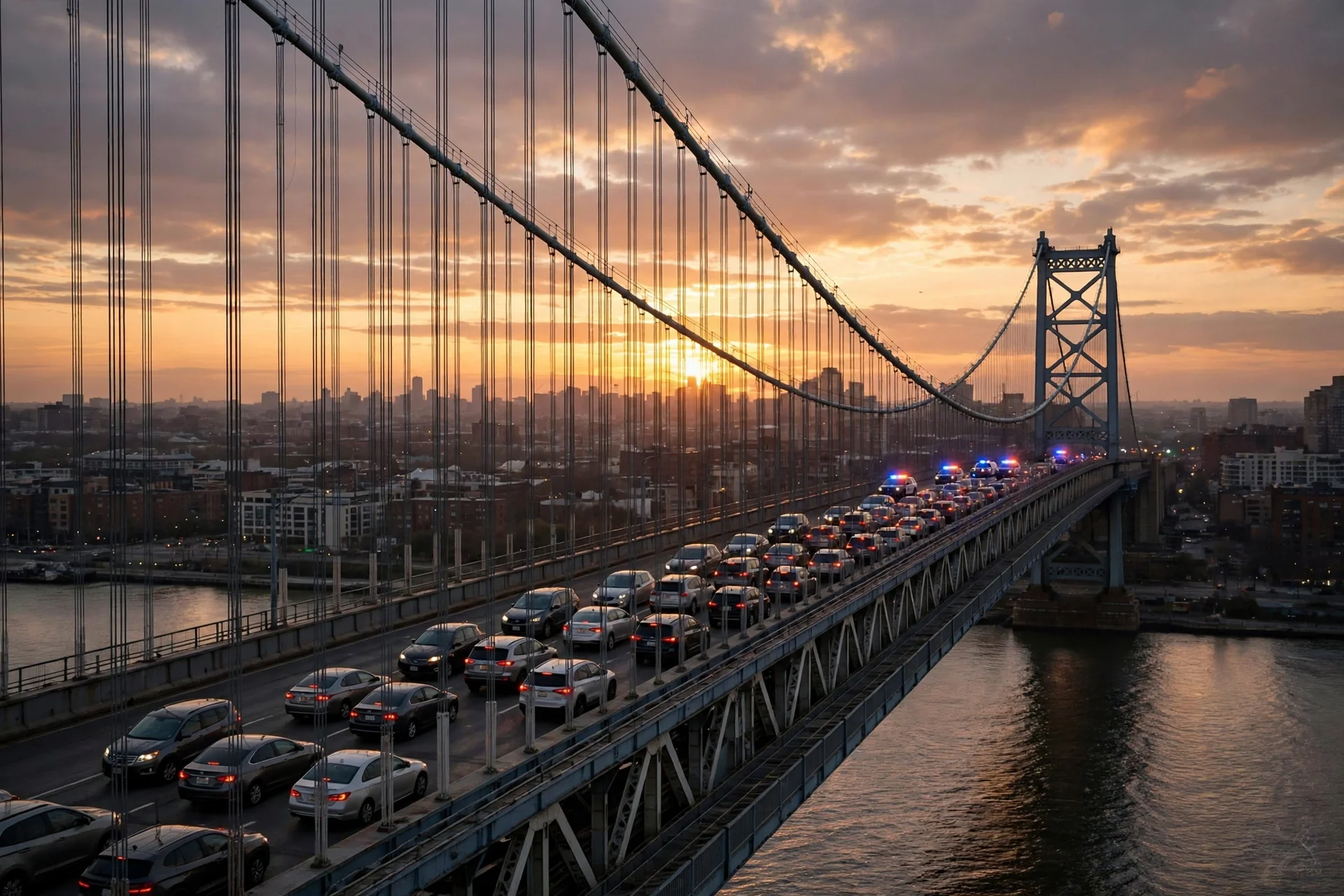
Anti-ICE Activists Block Brooklyn Bridge Entrances in Manhattan
Demonstrators opposed to ICE operations blocked the Manhattan-side entrances to the Brooklyn Bridge on the afternoon of Wednesday, October 28, 2026.
Police Clear Anti-ICE Blockade at Brooklyn Bridge Entrance
Activists opposed to ICE operations blocked the Brooklyn Bridge entrances on the Manhattan side on the afternoon of Wednesday, October 28, 2026.
--- The context ---
On the afternoon of Wednesday, October 28, 2026, the Manhattan-side entrances to the Brooklyn Bridge became the scene of a protest against operations by Immigration and Customs Enforcement, known as ICE.
--- The facts ---
Demonstrators opposed to those operations blocked the roadway entrances to the bridge and displayed banners carrying a slogan against shooting neighbors, in response to a recent shooting by federal agents in the Bronx.
Officers from the New York City Police Department intervened at the scene, detained a group of between 10 and 12 participants, and carried one of them away in their arms to clear the lanes. Vehicle flow over the bridge was restored once authorities removed the signs and secured the entrance area.
--- The positions ---
The demonstrators voiced their rejection of the operations and linked the protest to the recent shooting in the Bronx. On the other side, drivers trapped in the congestion demanded to move forward so they could attend to family and school commitments.
--- What remains unknown ---
The available information does not specify how long the blockade lasted or what happened afterward to the people detained, and it does not detail the circumstances of the shooting cited as the reason for the protest.
--- Unanswered questions ---
How long did the bridge entrances remain closed? What will happen to the people detained after the police intervention? Will there be further protests against the operations in the coming days?
--- EPM analysis ---
The episode shows how a protest action can shift its impact onto the daily travel of people who need to cross the bridge, and how the police response focused on clearing the lanes and restoring traffic at the affected entrance.
📌 EPM Take: In EPM's view, the protest expresses a grievance that deserves to be heard with attention, but blocking a roadway entrance shifts the cost onto drivers who play no part in the decision being challenged. The balance between the right to demonstrate and the right to move freely is at stake in scenes like this one, and the police intervention that cleared the lanes restored traffic at the bridge entrance once the signs were removed.
--- The context ---
On the afternoon of Wednesday, October 28, 2026, a group of demonstrators opposed to operations by Immigration and Customs Enforcement occupied the roadway entrances to the Brooklyn Bridge on the Manhattan side.
--- The facts ---
The demonstrators displayed banners carrying a slogan against shooting neighbors, in response to a recent shooting by federal agents in the Bronx, while drivers trapped in the congestion demanded to move forward to attend to family and school commitments.
Officers from the New York City Police Department intervened at the scene and detained a group of between 10 and 12 participants, carrying one of them away in their arms to clear the lanes. After removing the signs and securing the entrance area, authorities restored the flow of vehicles over the bridge.
--- The positions ---
The activists maintained their rejection of ICE operations and tied the protest to the recent shooting in the Bronx. The affected drivers, by contrast, asked to be let through so they could meet the family and school commitments that the occupation prevented them from attending.
--- What remains unknown ---
It is not known exactly how long the blockade lasted or what the subsequent situation of the detained people is, and the circumstances of the shooting cited as their motive are not detailed.
--- Unanswered questions ---
How long was access to the bridge interrupted? What consequences will the people detained over the occupation face? Will roadway blockades of this kind be repeated in the city?
--- EPM analysis ---
The case raises a familiar tension: the protest sought visibility by occupying a major roadway, but its effect fell on third parties trapped in the congestion. The police intervention, with detentions and the removal of the signs, returned traffic to the bridge.
📌 EPM Take: In EPM's view, demonstrating is a right that must be protected, but occupying a roadway entrance cannot become a mechanism that paralyzes people who are simply trying to reach their family and school commitments. The police action that cleared the lanes and restored the flow over the bridge shows the right path: order, proportionality at the scene, and simultaneous respect for the movement of all affected neighbors.
Activistas contra ICE bloquean accesos al puente de Brooklyn
Manifestantes contra los operativos del ICE bloquearon la tarde del miércoles 28 de octubre de 2026 las entradas al puente de Brooklyn del lado de Manhattan.
Policía despeja el bloqueo contra ICE en el puente de Brooklyn
Activistas contra los operativos del ICE bloquearon la tarde del miércoles 28 de octubre de 2026 los accesos al puente de Brooklyn del lado de Manhattan.
--- El contexto ---
La tarde de este miércoles 28 de octubre de 2026, las entradas al puente de Brooklyn del lado de Manhattan se convirtieron en el escenario de una protesta contra los operativos del Servicio de Inmigración y Control de Aduanas, conocido como ICE.
--- Los hechos ---
Manifestantes opuestos a esos operativos bloquearon los accesos viales al puente y exhibieron mantas con una consigna contra los disparos a vecinos, en respuesta a un reciente tiroteo de agentes federales en el Bronx.
Oficiales del Departamento de Policía de la Ciudad de Nueva York intervinieron en el lugar, detuvieron a un grupo de entre 10 y 12 participantes y retiraron a uno de ellos en brazos para despejar los carriles. El flujo de vehículos quedó restablecido una vez que las autoridades retiraron los carteles y aseguraron la zona de ingreso al puente.
--- Las posiciones ---
Los manifestantes plantearon su rechazo a los operativos y vincularon la protesta con el tiroteo reciente en el Bronx. Del otro lado, los conductores atrapados en la congestión reclamaron poder avanzar para atender compromisos familiares y escolares.
--- Lo que falta saber ---
No se precisa cuánto duró el bloqueo ni qué ocurrió con las personas detenidas, y tampoco detalla las circunstancias del tiroteo mencionado como motivo de la protesta.
--- Preguntas sin respuesta ---
¿Cuánto tiempo permanecieron cerrados los accesos al puente? ¿Qué pasará con las personas detenidas tras la intervención policial? ¿Habrá nuevas protestas contra los operativos en los próximos días?
--- Análisis EPM ---
El episodio muestra cómo una acción de protesta puede trasladar su impacto a los desplazamientos cotidianos de quienes necesitan cruzar el puente, y cómo la respuesta policial se concentró en despejar los carriles y recuperar la circulación.
📌 Conclusion EPM: A juicio de EPM, la protesta expresa un malestar que merece ser escuchado con atención, pero bloquear un acceso vial traslada el costo a conductores que no participan en la decisión cuestionada. El equilibrio entre el derecho a manifestarse y el derecho a circular se juega en escenas como esta, y la intervención policial que despejó los carriles permitió recuperar el tránsito en el ingreso al viaducto una vez retirados los carteles.
--- El contexto ---
La tarde de este miércoles 28 de octubre de 2026, un grupo de manifestantes contrarios a los operativos del Servicio de Inmigración y Control de Aduanas ocupó los accesos viales al puente de Brooklyn del lado de Manhattan.
--- Los hechos ---
Los manifestantes exhibieron mantas con una consigna contra los disparos a vecinos, en respuesta a un reciente tiroteo de agentes federales en el Bronx, mientras los conductores atrapados en la congestión reclamaban avanzar para atender compromisos familiares y escolares.
Oficiales del Departamento de Policía de la Ciudad de Nueva York intervinieron en el lugar y detuvieron a un grupo de entre 10 y 12 participantes, retirando a uno de ellos en brazos para despejar los carriles. Tras retirar los carteles y asegurar la zona de ingreso, las autoridades restablecieron el flujo de vehículos sobre el viaducto.
--- Las posiciones ---
Los activistas sostuvieron su rechazo a los operativos del ICE y ataron la protesta al tiroteo reciente en el Bronx. Los conductores afectados, en cambio, pidieron paso para cumplir compromisos familiares y escolares que la ocupación les impedía atender.
--- Lo que falta saber ---
No se conoce cuánto duró exactamente el bloqueo ni la situación posterior de las personas detenidas, y tampoco se detallan las circunstancias del tiroteo citado como motivo.
--- Preguntas sin respuesta ---
¿Cuánto tiempo estuvo interrumpido el acceso al puente? ¿Qué consecuencias enfrentarán las personas detenidas por la ocupación? ¿Se repetirán bloqueos viales de este tipo en la ciudad?
--- Análisis EPM ---
El caso plantea una tensión conocida: la protesta buscó visibilidad ocupando una vía principal, pero su efecto recayó sobre terceros atrapados en la congestión. La intervención policial, con detenciones y el retiro de los carteles, devolvió la circulación al viaducto.
📌 Conclusion EPM: A juicio de EPM, manifestarse es un derecho que debe protegerse, pero ocupar un acceso vial no puede convertirse en un mecanismo que paralice a quienes solo intentan llegar a sus compromisos familiares y escolares. La actuación policial que despejó los carriles y restableció el flujo sobre el viaducto muestra el camino correcto: orden, proporcionalidad en el lugar de los hechos y respeto simultáneo por la circulación de todos los vecinos afectados.