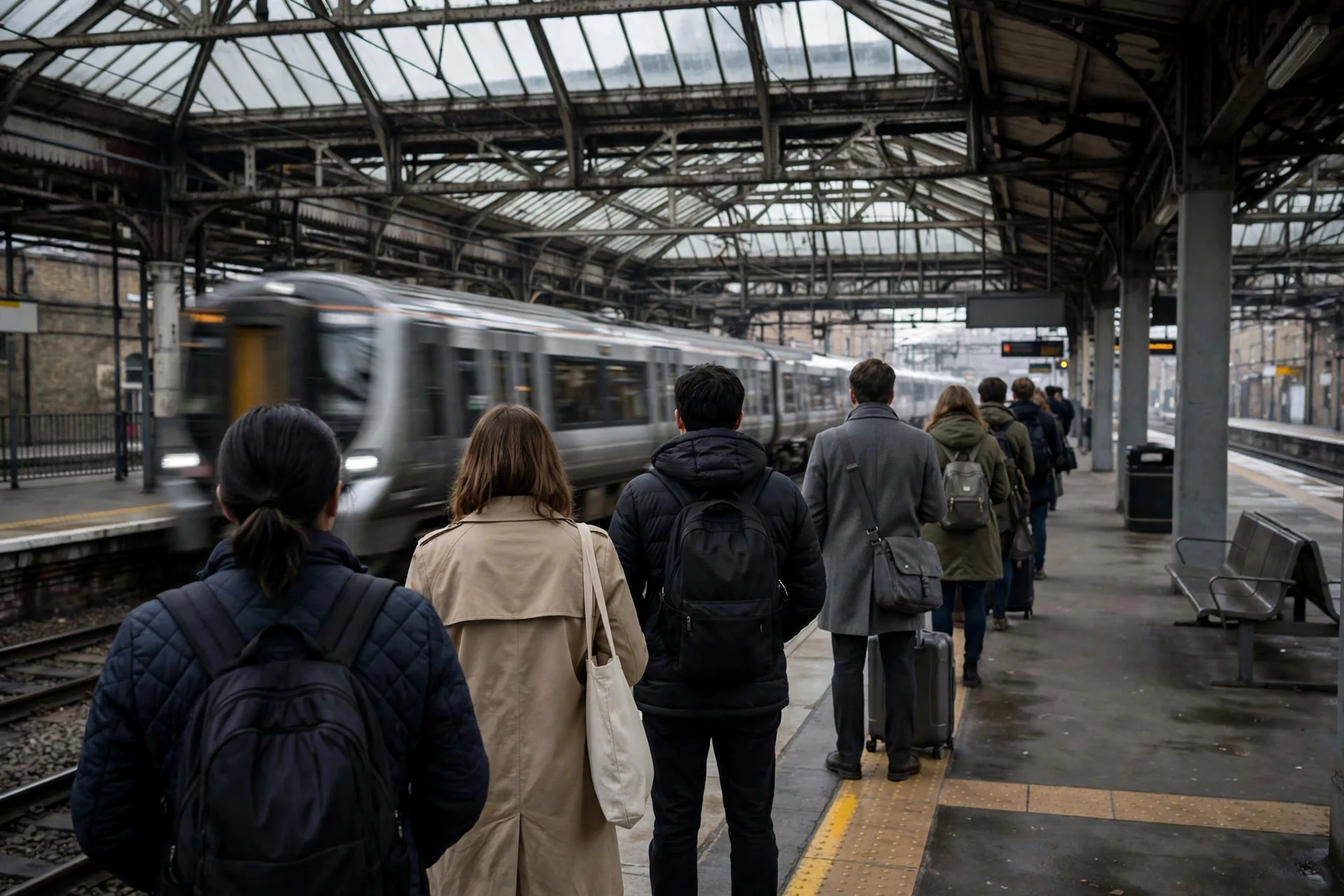
Imagen alusiva: pasajeros en el andén de una estación británica a la llegada de un tren.
A decade of texts that help keep Britain's railways safe
The ‘See it. Say it. Sorted.’ campaign marks ten years: more than 1.5 million texts to 61016 helped record almost 83,000 crimes and prompted 175,000 police…
Ten years of shared vigilance on Britain's railways
In ten years, passenger texts to 61016 helped record almost 83,000 crimes and prompted 175,000 police deployments. The ‘See it. Say it.
--- The context ---
The ‘See it. Say it. Sorted.’ campaign reaches its tenth anniversary since its launch in 2016, having become one of the most recognised public safety messages in the country. Its premise is simple: encourage passengers to trust their instincts and report anything that does not feel right on the railway network.
--- The facts ---
Over that decade, passengers sent more than 1.5 million texts to 61016, helping to record almost 83,000 crimes. Those reports led to 175,000 police deployments across the network, and a single text can lead to an arrest, an investigation and a conviction.
More than 200,000 texts are now sent each year, an almost tenfold increase since 2016, and the service receives more than 25,000 messages every month. The campaign is mandated across every train operator and station in England, Scotland and Wales, and over 60% of people say they feel safer because of visible security measures when travelling.
Primarily a counter-terrorism campaign at the outset, it has since broadened to a wide range of other crimes and safety issues, including sexual harassment. In March 2025, a passenger on a train to London Euston saw a man viewing graphic child abuse material on his phone and discreetly reported it by texting 61016; officers intercepted the train, arrested the man and he was sentenced to over 2 years in prison.
--- The positions ---
Rail Minister Lord Hendy said, in attributed indirect terms, that the government remains committed to making the railways safe and that the campaign has played a vital role for a decade by supporting the transport police and transforming how people report crimes and issues, adding that the almost 83,000 crimes recorded through 61016 prove that reporting leads to real action.
Transport Police Chief Constable Lucy D’Orsi said, in attributed indirect terms, that the free and discreet service lets passengers report crime, suspicious behaviour and sexual harassment directly so that swift action can follow, and that the public are the eyes and ears of the railway. The government is also providing £63 million over 3 years for over 200 additional officers, including 36 in a new team dedicated to reducing violence and intimidation against women and girls, alongside £17 million to improve CCTV at stations.
--- What remains unknown ---
The figures released do not detail how many of the 175,000 deployments ended in an arrest or a conviction, nor how the reports are distributed across regions and types of crime within the network.
--- Unanswered questions ---
How many of the crimes recorded thanks to 61016 ended in a conviction? How will daily work change with the over 200 additional officers planned? Will the sense of safety rise above the level of over 60% already reported?
--- EPM analysis ---
The anniversary comes with concrete investment and one notable first: rail operators are being assessed for the first time on their commitments to tackle violence against women and girls, an area where a discreet reporting channel is especially valuable for victims.
📌 EPM Take: In EPM's view, the strength of this campaign lies in turning a minimal gesture, sending a text, into an everyday infrastructure of shared safety: more than 1.5 million reports in ten years and 175,000 deployments show that passenger participation is not a slogan but an established practice. The next challenge is to sustain that trust with visible responses, with more officers on platforms and with stronger protection for women and girls on every daily journey across the whole British network in the years ahead.
--- The context ---
Since 2016, the ‘See it. Say it. Sorted.’ campaign has been mandated across every train operator and every station in England, Scotland and Wales. Its message appeals to each passenger's responsibility: if something does not feel right during a journey, it should be reported to the transport police through the number 61016.
--- The facts ---
The accumulated results over ten years are striking. Passengers sent more than 1.5 million texts, which helped record almost 83,000 crimes and prompted 175,000 police deployments across the network. More than 200,000 texts are now sent each year, almost ten times the level at the start, and the service receives more than 25,000 messages a month.
Over 60% of people say they feel safer because of visible security measures when travelling. The campaign began with a primarily counter-terrorism focus, but over the years it expanded to a wide range of crimes and safety issues, including sexual harassment, always with discreet text reporting as its central tool.
The system's effectiveness was illustrated in March 2025, when a passenger on a train to London Euston saw a man viewing graphic child abuse material on his phone and reported it by texting 61016. Officers intercepted the train, arrested the man and he was sentenced to over 2 years in prison, a case that shows how a timely report protects everyone on board.
--- The positions ---
Rail Minister Lord Hendy said, in attributed indirect terms, that the government is committed to railway safety and that the campaign has been vital for a decade in supporting the transport police, stressing that the almost 83,000 crimes recorded through 61016 prove that reporting leads to real action and makes a difference.
Transport Police Chief Constable Lucy D’Orsi defended, in attributed indirect terms, the idea that the public are the eyes and ears of the railway and that their vigilance remains essential, and she stressed that the free, discreet service enables swift action against crime and sexual harassment. Institutional backing is completed by £63 million over 3 years for over 200 additional officers, among them 36 in a new team against violence and intimidation towards women and girls, and by £17 million to strengthen CCTV at stations.
--- What remains unknown ---
The known figures do not specify what share of the reports corresponded to each type of crime, nor the exact number of convictions derived from the 175,000 deployments carried out over the decade.
--- Unanswered questions ---
How many convictions in total resulted from the texts sent to 61016? Over what period will the over 200 additional officers announced be recruited? How will operators be assessed for the first time on tackling violence against women and girls?
--- EPM analysis ---
The anniversary coincides with reinforced resources: more officers, better CCTV at stations and, for the first time, an assessment of operators on their commitments against violence towards women and girls, within government work that puts passengers at the heart of transport.
📌 EPM Take: In EPM's view, a decade of results supports a basic principle of public order: safety works best when citizens take part and the authorities respond. The 83,000 crimes recorded and the 175,000 deployments were not born of an advertisement, but of millions of individual decisions not to look the other way. Keeping that circuit alive requires visible police presence, effective sanctions such as that of March 2025 and sustained resources, because passenger trust is earned through facts and lost through everyday impunity on the network.
Una década de mensajes que hacen más seguro el tren británico
La campaña ‘See it. Say it. Sorted.’ cumple diez años: más de 1,5 millones de mensajes al 61016 ayudaron a registrar casi 83,000 delitos y motivaron 175,000…
Diez años de vigilancia compartida en los ferrocarriles británicos
En diez años, los mensajes de los pasajeros al 61016 permitieron registrar casi 83,000 delitos y realizar 175,000 despliegues policiales. La campaña ‘See it.
--- El contexto ---
La campaña ‘See it. Say it. Sorted.’ cumple diez años desde su lanzamiento en 2016 y se ha convertido en uno de los mensajes de seguridad pública más reconocidos del país. Invita a los pasajeros a confiar en su instinto y a avisar ante cualquier situación que no parezca normal.
--- Los hechos ---
En esa década, los pasajeros enviaron más de 1,5 millones de mensajes al número 61016, lo que ayudó a registrar casi 83,000 delitos. Esos avisos derivaron en 175,000 despliegues policiales en toda la red, y un solo mensaje puede terminar en una detención, una investigación y una condena.
Hoy se superan los 200,000 mensajes al año, casi diez veces más que en 2016, y se reciben más de 25,000 cada mes. La campaña es obligatoria en todos los operadores y estaciones de Inglaterra, Escocia y Gales, y más del 60% de las personas dice sentirse más segura con medidas de seguridad visibles al viajar.
Nacida sobre todo como campaña antiterrorista, con el tiempo amplió su alcance a otros delitos y problemas de seguridad, incluido el acoso sexual. En marzo de 2025, un pasajero de un tren hacia London Euston vio a un hombre consultando material gráfico de abuso infantil en su teléfono y lo denunció con discreción escribiendo al 61016; los agentes interceptaron el tren, detuvieron al hombre y este fue condenado a más de 2 años de prisión.
--- Las posiciones ---
El ministro ferroviario, Lord Hendy, sostuvo en términos atribuidos que el Gobierno mantiene su compromiso con unos ferrocarriles seguros y que la campaña ha desempeñado durante una década un papel esencial en la forma de denunciar delitos e incidencias, y añadió que los casi 83,000 delitos registrados mediante el 61016 demuestran que avisar produce resultados reales.
La jefa de la policía de transporte, Lucy D’Orsi, señaló en términos atribuidos que el servicio gratuito y discreto permite denunciar directamente delitos, conductas sospechosas y acoso sexual para actuar con rapidez, y que el público actúa como los ojos y los oídos de la red. El Gobierno destina además £63 million en 3 años a más de 200 agentes adicionales, incluidos 36 de un equipo nuevo contra la violencia y la intimidación hacia mujeres y niñas, y £17 million para mejorar las cámaras de las estaciones.
--- Lo que falta saber ---
Las cifras difundidas no detallan cuántos de los 175,000 despliegues terminaron en detención o condena, ni cómo se reparten los avisos entre regiones y tipos de delito.
--- Preguntas sin respuesta ---
¿Cuántos de los delitos registrados gracias al 61016 terminaron en condena? ¿Cómo cambiará el trabajo diario con los más de 200 agentes adicionales previstos? ¿Mejorará la sensación de seguridad por encima de ese nivel superior al 60% ya declarado?
--- Análisis EPM ---
El aniversario llega con una inversión concreta y una novedad relevante: los operadores serán evaluados por primera vez por sus compromisos frente a la violencia contra mujeres y niñas, un terreno donde el canal discreto de denuncia resulta especialmente valioso.
📌 Conclusion EPM: A juicio de EPM, la fuerza de esta campaña está en haber convertido un gesto mínimo, enviar un mensaje, en una infraestructura cotidiana de seguridad compartida: más de 1,5 millones de avisos en diez años y 175,000 despliegues muestran que la participación del pasajero no es un eslogan, sino una práctica instalada. El reto siguiente es que esa confianza se sostenga con respuestas visibles, con más agentes en los andenes y con una protección reforzada para mujeres y niñas en cada trayecto diario de la red británica entera.
--- El contexto ---
Desde 2016, la campaña ‘See it. Say it. Sorted.’ está presente por obligación en todos los operadores de tren y en todas las estaciones de Inglaterra, Escocia y Gales. Su mensaje apela a la responsabilidad de cada pasajero: si algo no parece correcto, debe comunicarse a la policía de transporte por el 61016.
--- Los hechos ---
Los resultados acumulados en diez años son contundentes. Los pasajeros enviaron más de 1,5 millones de mensajes, que ayudaron a registrar casi 83,000 delitos y provocaron 175,000 despliegues policiales en la red. Hoy se envían más de 200,000 mensajes al año, casi diez veces más que al inicio, y el servicio recibe más de 25,000 mensajes al mes.
Más del 60% de las personas afirma sentirse más segura gracias a las medidas de seguridad visibles cuando viaja. La campaña nació con un enfoque principalmente antiterrorista, pero con los años se amplió a una gama amplia de delitos y de problemas de seguridad, incluido el acoso sexual.
La eficacia del sistema quedó ilustrada en marzo de 2025, cuando un pasajero de un tren hacia London Euston observó a un hombre viendo material gráfico de abuso infantil en su teléfono y lo denunció por mensaje al 61016. Los agentes interceptaron el tren, arrestaron al hombre y la justicia lo condenó a más de 2 años de prisión.
--- Las posiciones ---
El ministro ferroviario, Lord Hendy, afirmó en términos atribuidos que el Gobierno está comprometido con la seguridad ferroviaria y que la campaña ha sido vital durante una década, y destacó que los casi 83,000 delitos registrados por el 61016 prueban que denunciar conduce a una acción real.
La jefa de la policía de transporte, Lucy D’Orsi, defendió en términos atribuidos que el público es los ojos y los oídos de la red ferroviaria y que su vigilancia es esencial, y subrayó que el servicio gratuito y discreto permite actuar con rapidez ante delitos y acoso sexual. El respaldo se completa con £63 million en 3 años para más de 200 agentes adicionales, entre ellos 36 de un equipo nuevo contra la violencia y la intimidación hacia mujeres y niñas, y con £17 million para reforzar las cámaras en las estaciones.
--- Lo que falta saber ---
Las cifras conocidas no precisan la proporción de avisos que correspondió a cada tipo de delito, ni el número exacto de condenas derivadas de los 175,000 despliegues realizados en la década.
--- Preguntas sin respuesta ---
¿Cuántas condenas se derivaron en total de los mensajes enviados al 61016? ¿En qué plazo se incorporarán los más de 200 agentes adicionales anunciados? ¿Cómo se evaluará por primera vez a los operadores en su lucha contra la violencia hacia mujeres y niñas?
--- Análisis EPM ---
El aniversario coincide con un refuerzo de medios: más agentes, mejor videovigilancia en estaciones y, por primera vez, una evaluación de los operadores sobre sus compromisos frente a la violencia contra mujeres y niñas.
📌 Conclusion EPM: A juicio de EPM, una década de resultados respalda un principio básico de orden público: la seguridad funciona mejor cuando el ciudadano participa y la autoridad responde. Los 83,000 delitos registrados y los 175,000 despliegues no nacieron de un anuncio, sino de millones de decisiones individuales de no mirar hacia otro lado. Mantener ese circuito exige presencia policial visible, sanciones efectivas como la de marzo de 2025 y recursos sostenidos, porque la confianza del pasajero se gana con hechos y se pierde con la impunidad cotidiana.