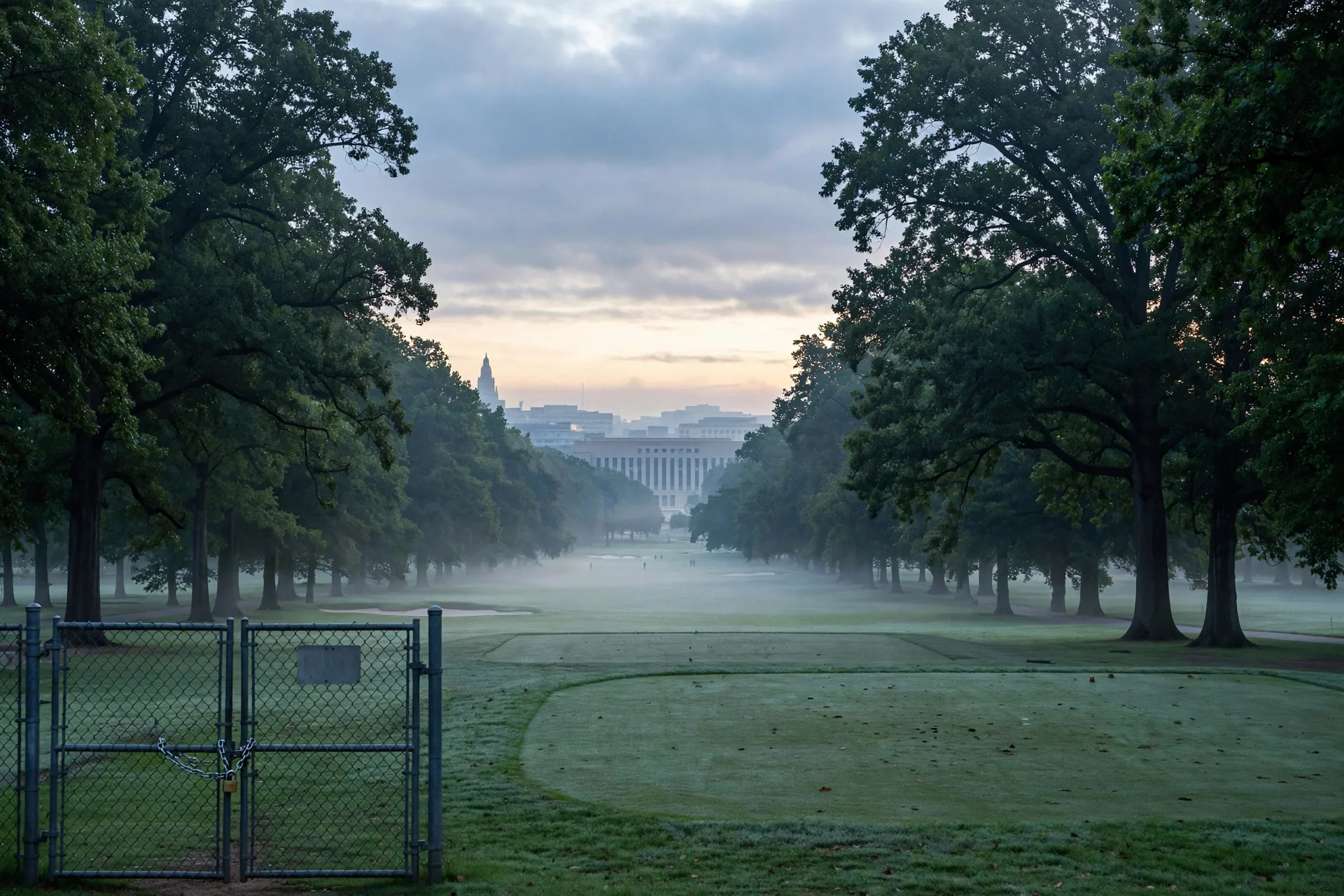
Imagen alusiva de un campo de golf público cerrado, generada para ilustrar el litigio de East Potomac Park. · EPM
Judge Opens Ethics Inquiry Into Statements on East Potomac Golf Course Plan
Judge Ana Reyes opened a formal inquiry into whether government lawyers made false statements in the litigation over the East Potomac Park golf course, whose…
Court Inquiry Tests Government Candor in East Potomac Golf Course Case
A federal judge will examine whether Justice Department lawyers made false statements or withheld information about the East Potomac Park renovation plan…
--- The context ---
The litigation over the future of the East Potomac Park golf course in Washington pits the DC Preservation League and two Washington area golfers against the administration of President Donald Trump. The case is part of a slew of legal challenges to the projects seeking to leave his visual mark on the capital.
--- The facts ---
Judge Ana Reyes of the US District Court for the District of Columbia announced on Friday that she is opening a formal inquiry into whether Justice Department or agency lawyers made false statements, withheld information or otherwise violated ethics rules. She said she could conduct the inquiry herself or it could be conducted by a special master, and she ordered the administration to preserve all documents and communications about the planning process.
The announcement followed a tense three-hour hearing that Reyes opened by reading the DC Bar conduct rules on candor to the court. The Justice Department confirmed on Wednesday that the course and surrounding areas will close on Nov. 15. On Oct. 18, Trump had announced that the Department of the Interior has developed a plan to build a new golf course on the site, with closure on Nov. 15 and an approximately 15-month renovation.
--- The positions ---
Reyes emphasized that opening the inquiry does not mean she has found or will find an ethics violation. She questioned Stanley Woodward, the Justice Department third-ranking official, who had told her on Oct. 19 that there is no plan to close the course. Nine days before the Oct. 28 notice, department lawyers had insisted they were not aware of any plans to close the course, notwithstanding the president social media posts.
Woodward said he could not opine on the meaning behind the president Oct. 18 post and that the matter seems to fall within executive privilege. Reyes appeared incredulous, noted that a submission to the National Capital Planning Commission had been in the works for weeks without the department telling her and ordered the names of everyone who worked on the submission.
--- What remains unknown ---
It remains unknown whether Reyes herself or a special master will conduct the inquiry, and what the preserved documents will show about when the closure plan was first made.
--- Unanswered questions ---
When was the plan to close the course on Nov. 15 first made, and who knew about it before Oct. 19? Why did lawyers tell the court there was no plan while a design submission was being prepared? Will Reyes conduct the inquiry herself or will a special master be appointed?
--- EPM analysis ---
The inquiry is the latest escalation in clashes with Justice Department lawyers. Reyes had rebuked the government for cutting down hundreds of trees without enough notice, cast doubt on attempts to justify those removals as unrelated to the changes Trump wants and barred the government from removing more trees while the case continues, with notice to the court ten days before any closure or major changes.
📌 EPM Take: In EPM's view, this inquiry matters because it protects something basic for residents who use a public space: that the government tell the truth in court when deciding the future of that space. The judge has found no violation and it would be unfair to anticipate one, but the sequence from the presidential announcement on Oct. 18 to the denial on Oct. 19 and the confirmed closure leaves a contradiction that deserves explanation. Preserving documents, identifying its authors and fixing dates will show whether this was confusion or an inaccurate representation.
--- The context ---
The East Potomac Park golf course is a public Washington space whose future is disputed in court. The DC Preservation League and two Washington area golfers brought the case over the renovation project promoted by President Donald Trump. The litigation is part of a slew of legal challenges to the projects to leave his visual mark on the capital.
--- The facts ---
Judge Ana Reyes of the US District Court for the District of Columbia announced on Friday that she is opening a formal inquiry into whether Justice Department or agency lawyers made false statements, withheld information or otherwise violated ethics rules. She said she could conduct the inquiry herself or by a special master. She ordered the preservation of all documents and communications about the planning process and emphasized that opening the inquiry does not prejudge any violation.
The announcement followed a tense three-hour hearing opened with the DC Bar candor rules. The Justice Department confirmed on Wednesday that the course will close on Nov. 15, after Trump posts on Truth Social. On Oct. 18 the president had announced an Interior Department plan to build a new golf course on the site, with closure on Nov. 15 and an approximately 15-month renovation. On Oct. 19, Stanley Woodward told Reyes there is no plan to close the course.
--- The positions ---
Woodward, the department third-ranking official, said he takes issue with hypothesizing what the president meant in the Oct. 18 post and that the matter seems to fall within executive privilege. Department lawyers had insisted, nine days before the Oct. 28 notice, that they were not aware of any plans to close the course, notwithstanding the president social media posts.
Reyes appeared incredulous, described that view of executive privilege as extraordinary and questioned when the Nov. 15 closure plan was first made and whether it was before the Oct. 19 hearing. She also noted that a submission to the National Capital Planning Commission had been in the works for weeks without the department telling her, and she ordered the names of everyone who worked on it.
--- What remains unknown ---
It is not yet known whether Reyes or a special master will conduct the inquiry, or what the preserved documentation will show about the moment the closure plan was adopted.
--- Unanswered questions ---
When was the plan to close the course on Nov. 15 first adopted by the administration? What did government lawyers know on Oct. 19, when the court was told there was no plan? Will the preserved records prove a real contradiction or a difference of interpretation about what was announced?
--- EPM analysis ---
The background includes earlier friction between the judge and the government. Reyes rebuked the administration for cutting down hundreds of trees without enough notice, cast doubt on claims that the removals were unrelated to the changes Trump wants and barred the government from removing more trees while the case continues, and required notice ten days before any closure or major changes.
📌 EPM Take: In EPM's view, renovating a public golf course can be a legitimate government decision, but no project justifies losing precision before a court. The inquiry should be conducted with the caution Reyes announced when opening it: opening it does not prejudge any violation and every lawyer deserves facts established through documents and dates, not impressions from a tense hearing. If the statements were accurate, the record will demonstrate that and the project can be defended without shadows. If there were false statements or withheld information, the institutional correction should be clear and complete.
Jueza abre pesquisa ética por declaraciones sobre el campo de golf de East Potomac
La jueza Ana Reyes abrió una pesquisa formal sobre si abogados del Gobierno hicieron declaraciones falsas en el litigio por el campo de golf de East Potomac…
Pesquisa judicial examina la candidez del Gobierno en el caso del campo de golf
Una jueza federal examinará si abogados del Departamento de Justicia hicieron declaraciones falsas o retuvieron información sobre el plan de renovación del…
--- El contexto ---
El litigio sobre el futuro del campo de golf de East Potomac Park, en Washington, enfrenta a la DC Preservation League y a dos golfistas del área con la administración del presidente Donald Trump. El caso forma parte de una serie de desafíos legales contra los proyectos con los que el presidente busca dejar su marca visual en la capital.
--- Los hechos ---
La jueza federal Ana Reyes, del Tribunal de Distrito para el Distrito de Columbia, anunció el viernes que abre una pesquisa formal para determinar si abogados del Departamento de Justicia o de agencias hicieron declaraciones falsas, retuvieron información o violaron reglas éticas. Podrá conducirla ella misma o un perito especial designado por el tribunal, y ordenó preservar todos los documentos y comunicaciones sobre la planificación del campo.
El anuncio siguió a una tensa audiencia de tres horas abierta con la lectura de las reglas del Colegio de Abogados de DC sobre candidez ante el tribunal. El Departamento de Justicia confirmó el miércoles que el campo cerrará el 15 de noviembre. Trump había anunciado el 18 de octubre un plan del Departamento del Interior para construir un campo nuevo en el sitio, con cierre el 15 de noviembre y renovación de unos 15 meses.
--- Las posiciones ---
Reyes aclaró que abrir la pesquisa no significa que haya concluido ni que concluirá que hubo una violación ética. Cuestionó a Stanley Woodward, tercer funcionario en rango del departamento, quien el 19 de octubre le dijo que no había ningún plan para cerrar el campo. Nueve días antes del aviso del 28 de octubre, los abogados habían insistido en que no conocían planes de cierre, pese a las publicaciones presidenciales.
Woodward sostuvo que no podía opinar sobre el significado de la publicación presidencial del 18 de octubre y que el asunto parece entrar en el privilegio ejecutivo. Reyes se mostró incrédula, señaló que una presentación de diseño ante la Comisión Nacional de Planificación de la Capital llevaba semanas en preparación sin aviso al tribunal y ordenó entregar los nombres de quienes trabajaron en ella.
--- Lo que falta saber ---
No se sabe si la pesquisa la conducirá la propia jueza o un perito especial, ni qué mostrará la documentación preservada sobre cuándo se adoptó por primera vez el plan de cierre del campo.
--- Preguntas sin respuesta ---
¿Cuándo se decidió cerrar el campo el 15 de noviembre y quiénes lo sabían antes del 19 de octubre? ¿Por qué se sostuvo ante el tribunal que no había plan mientras se preparaba una presentación de diseño? ¿Conducirá la jueza Reyes la pesquisa o la asumirá un perito especial?
--- Análisis EPM ---
La pesquisa eleva un choque previo. Reyes ya reprendió a la administración por talar cientos de árboles sin aviso suficiente, dudó de que la tala fuera ajena a los cambios deseados por Trump y prohibió retirar más árboles mientras el caso continúa, con aviso al tribunal diez días antes del cierre o de cambios mayores.
📌 Conclusion EPM: A juicio de EPM, la pesquisa importa porque protege algo básico para cualquier vecino que usa un espacio público: que el Gobierno diga la verdad ante un tribunal cuando decide sobre ese espacio. La jueza no ha declarado violación y sería injusto anticiparla, pero la secuencia entre el anuncio presidencial del 18 de octubre, la negativa del 19 de octubre y la confirmación del cierre deja una contradicción que merece explicación. Preservar documentos, identificar a los autores y fijar fechas permitirá saber si hubo confusión o una representación inexacta ante la corte.
--- El contexto ---
El campo de golf de East Potomac Park es un espacio público de Washington en disputa judicial. La DC Preservation League y dos golfistas del área demandaron por el proyecto de renovación del presidente Donald Trump, en uno de los desafíos legales contra las obras con las que el presidente busca dejar su marca visual en la capital.
--- Los hechos ---
La jueza federal Ana Reyes, del Tribunal de Distrito para el Distrito de Columbia, anunció el viernes una pesquisa formal sobre si abogados del Departamento de Justicia o de agencias hicieron declaraciones falsas, retuvieron información o violaron reglas éticas. Podrá conducirla ella misma o un perito especial designado por el tribunal. La jueza ordenó preservar los documentos y comunicaciones sobre la planificación y aclaró que abrir la pesquisa no prejuzga ninguna violación.
El anuncio llegó tras una tensa audiencia de tres horas abierta con la lectura de las reglas del Colegio de Abogados sobre candidez ante el tribunal. El Departamento de Justicia confirmó el miércoles el cierre del campo el 15 de noviembre, tras publicaciones de Trump en Truth Social. El 18 de octubre el presidente había anunciado un plan del Interior para construir un campo nuevo, con cierre el 15 de noviembre y renovación de unos 15 meses. El 19 de octubre, Stanley Woodward afirmó que no había ningún plan de cierre.
--- Las posiciones ---
Woodward, tercer funcionario en rango del departamento, sostuvo que objeta atribuir un significado hipotético a lo publicado por el presidente el 18 de octubre y que el asunto parece entrar en el privilegio ejecutivo. Los abogados del departamento habían insistido, nueve días antes del aviso del 28 de octubre, en que no conocían planes de cierre, pese a las publicaciones presidenciales.
Reyes se mostró incrédula, calificó de extraordinaria esa visión del privilegio ejecutivo y preguntó cuándo se decidió el cierre del 15 de noviembre y si fue antes del 19 de octubre. Señaló que una presentación de diseño ante la Comisión Nacional de Planificación de la Capital llevaba semanas en preparación sin aviso al tribunal y ordenó entregar los nombres de quienes trabajaron en ella.
--- Lo que falta saber ---
Falta saber si la pesquisa quedará en manos de la jueza o de un perito especial, y qué mostrará la documentación preservada sobre el momento en que se adoptó el plan de cierre.
--- Preguntas sin respuesta ---
¿Cuándo se adoptó el plan de cerrar el campo el 15 de noviembre? ¿Qué sabían los abogados del Gobierno el 19 de octubre, cuando se afirmó que no había ningún plan? ¿Acreditará la documentación una contradicción real o una diferencia de interpretación sobre lo anunciado?
--- Análisis EPM ---
El trasfondo incluye fricciones previas. Reyes reprendió al Gobierno por talar cientos de árboles sin aviso suficiente, dudó de que la tala fuera ajena a los cambios deseados por Trump y prohibió retirar más árboles mientras el caso continúa, y exigir aviso al tribunal diez días antes del cierre o de cambios mayores.
📌 Conclusion EPM: A juicio de EPM, renovar un campo público puede ser una decisión legítima, pero ninguna obra justifica perder precisión ante un tribunal federal. La pesquisa debe conducirse con la cautela que la jueza anunció al abrirla: abrirla no prejuzga ninguna violación y cada abogado merece que los hechos se establezcan con documentos y fechas, no con impresiones de una audiencia tensa. Si las declaraciones fueron exactas, el registro lo demostrará y el proyecto podrá defenderse sin sombras. Si hubo afirmaciones falsas o información retenida, la corrección debe ser clara y completa.