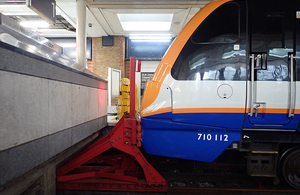
El tren y el tope implicados en el accidente, en la imagen oficial de la investigación. · Rail Accident Investigation Branch, GOV.UK (Open Government Licence)
Liverpool Street buffer stop collision prompts safety digest in coming weeks
An out-of-service train collided at around 00:58 on 15 October 2026 with the buffer stop at platform 1 at Liverpool Street, London.
Out-of-service train hit buffer stop at Liverpool Street, digest to follow
At around 00:58 on 15 October 2026, an out-of-service train hit the buffer stop at platform 1 at Liverpool Street, London, at approximately 7 mph (11 km/h).
--- The context ---
Liverpool Street station, in London, was the scene of a collision now to be examined in a safety digest. The case combines a low-speed impact, material damage and a partial derailment.
--- The facts ---
At around 00:58 on 15 October 2026, an out-of-service passenger train collided with the buffer stop at platform 1. According to the investigators, it was travelling at approximately 7 mph (11 km/h).
The driver was taken to hospital but did not suffer any physical injuries. Damage was sustained by the train and the buffer stop, and the first three vehicles derailed, according to the investigators.
--- The positions ---
The investigators undertook a preliminary examination into the circumstances and, having assessed the evidence gathered to date, decided to publish a safety digest in the next few weeks.
--- What remains unknown ---
What that digest will clarify about how the collision unfolded remains to be seen. For now, any assessment should stay within the confirmed facts and await the announced publication.
--- Unanswered questions ---
What will the safety digest explain about the sequence at platform 1? What precise damage will it detail to the train and the buffer stop? When will it become available on the official website?
--- EPM analysis ---
A collision at 7 mph (11 km/h) may sound minor by speed alone, but the derailment of the first three vehicles shows that speed does not summarise material seriousness.
Announcing a digest brings transparency: it lets the public work from confirmed facts without treating evidence gathered to date as a final conclusion.
📌 EPM Take: In EPM's view, this case should be read with restraint and close attention to evidence: a confirmed collision, damage and a partial derailment are established, but no further conclusion should be treated as proven before the digest appears. Publishing a safety document is itself a form of orderly public scrutiny. When it arrives in the next few weeks, it should allow the accident to be judged on a complete record rather than on assumptions.
--- The context ---
An out-of-service passenger train collided with a buffer stop in London, in an accident investigators have already examined preliminarily. The announced response is measured: assess the evidence and publish a digest.
--- The facts ---
At around 00:58 on 15 October 2026, the train collided with the buffer stop at platform 1 at Liverpool Street station, London. The investigators said it was travelling at approximately 7 mph (11 km/h).
Following the accident, the driver was taken to hospital but did not suffer any physical injuries. The train and the buffer stop sustained damage, and the first three vehicles derailed, according to the investigators.
--- The positions ---
The rail accident investigation body said a preliminary examination into the circumstances had been undertaken. Having assessed the evidence gathered to date, it decided to publish a safety digest in the next few weeks.
--- What remains unknown ---
What conclusions that digest will set out is still unknown. Until then, the responsible course is to keep to the confirmed sequence.
--- Unanswered questions ---
What exact sequence will the digest document for the 00:58 collision? What scale of damage will it describe to the train and the buffer stop? On what date will the safety digest be published?
--- EPM analysis ---
Keeping the facts in order prevents exaggeration: approximate speed, impact with the buffer stop, a hospital transfer without physical injuries, and derailment of the first three vehicles. Everything beyond them still awaits publication.
Publishing a report, rather than offering early explanations, is institutional discipline. It allows one official document to be tested against the evidence gathered.
📌 EPM Take: In EPM's view, the right course now is to wait for the digest without feeding unconfirmed versions. The available facts describe a materially serious accident, although the driver suffered no physical injuries, and an investigation that has taken a verifiable first step. The announced document will need to support every conclusion it presents with evidence. Only then will there be a firm basis to demand accountability or to close the case with confidence.
Choque contra el tope en Liverpool Street: informe de seguridad en semanas
Un tren fuera de servicio chocó hacia las 00:58 del 15 de octubre de 2026 contra el tope del andén 1 de Liverpool Street, en Londres.
Tren sin servicio chocó en Liverpool Street y habrá informe de seguridad
Hacia las 00:58 del 15 de octubre de 2026, un tren fuera de servicio chocó contra el tope del andén 1 de Liverpool Street, en Londres, a unas 7 mph (11 km/h).
--- El contexto ---
La estación Liverpool Street, en Londres, fue escenario de un choque que será objeto de un informe de seguridad. El caso combina impacto a baja velocidad, daños materiales y descarrilamiento parcial.
--- Los hechos ---
Hacia las 00:58 del 15 de octubre de 2026, un tren de pasajeros fuera de servicio chocó con el tope de fin de vía del andén 1. Según los investigadores, viajaba a unas 7 mph (11 km/h).
El maquinista fue llevado al hospital, pero no sufrió lesiones físicas. Hubo daños en el tren y en el tope, y descarrilaron los tres primeros vehículos, según los investigadores.
--- Las posiciones ---
Los investigadores realizaron un examen preliminar de las circunstancias y, valorada la evidencia reunida hasta la fecha, decidieron publicar un informe de seguridad en las próximas semanas.
--- Lo que falta saber ---
Falta conocer qué precisará ese informe sobre el desarrollo del choque. Por ahora, toda valoración debe limitarse a los datos confirmados y esperar la publicación anunciada oficialmente.
--- Preguntas sin respuesta ---
¿Qué explicará el informe sobre la secuencia en el andén 1? ¿Qué daños detallará en el tren y en el tope? ¿Cuándo estará disponible en el sitio web oficial?
--- Análisis EPM ---
Un choque a 7 mph (11 km/h) puede parecer menor por la velocidad, pero el descarrilamiento de los tres primeros vehículos muestra que la velocidad no resume la gravedad material.
Anunciar un informe aporta transparencia: permite conocer hechos confirmados sin adelantar conclusiones que la evidencia presentada hasta ahora todavía no completa de forma definitiva.
📌 Conclusion EPM: A juicio de EPM, este caso debe leerse con contención y atención a la evidencia: hubo un choque confirmado, daños y un descarrilamiento parcial, pero ninguna conclusión adicional debería darse por probada antes del informe. La decisión de publicar un documento de seguridad es una garantía de escrutinio público ordenado. Cuando aparezca, permitirá juzgar el accidente con datos completos y no con suposiciones apresuradas.
--- El contexto ---
Un tren de pasajeros fuera de servicio chocó contra el tope de fin de vía en Londres, en un hecho ya examinado de forma preliminar. La respuesta anunciada es sobria: valorar la evidencia y publicar un informe.
--- Los hechos ---
Hacia las 00:58 del 15 de octubre de 2026, el tren chocó con el tope del andén 1 de la estación Liverpool Street, en Londres. Los investigadores señalaron que viajaba a unas 7 mph (11 km/h).
Tras el accidente, el maquinista fue llevado al hospital, aunque no sufrió lesiones físicas. El tren y el tope resultaron dañados, y descarrilaron los tres primeros vehículos, según los investigadores.
--- Las posiciones ---
El organismo de investigación de accidentes ferroviarios informó que realizó un examen preliminar de las circunstancias. Valorada la evidencia reunida hasta la fecha, decidió publicar un informe de seguridad en las próximas semanas.
--- Lo que falta saber ---
Falta saber qué conclusiones ordenará ese informe. Hasta entonces, lo responsable es atenerse solo a la cronología confirmada oficialmente.
--- Preguntas sin respuesta ---
¿Qué secuencia exacta documentará el informe sobre el choque de las 00:58? ¿Qué alcance tendrán los daños en el tren y en el tope? ¿En qué fecha se publicará el informe?
--- Análisis EPM ---
El orden de los hechos evita exageraciones: velocidad aproximada, impacto contra el tope, traslado hospitalario sin lesiones físicas y descarrilamiento de los tres primeros vehículos. Todo lo demás sigue en espera.
Publicar un informe, en lugar de adelantar explicaciones, es disciplina institucional. Permite contrastar después cada conclusión frente a la evidencia reunida.
📌 Conclusion EPM: A juicio de EPM, lo correcto ahora es esperar el informe sin alimentar versiones no confirmadas. Los datos disponibles describen un accidente materialmente serio, aunque sin lesiones físicas del maquinista, y una investigación que ya dio un primer paso verificable. El documento anunciado deberá sostener con evidencia cada conclusión que presente. Solo entonces habrá base firme para exigir responsabilidades o cerrar el caso con tranquilidad.