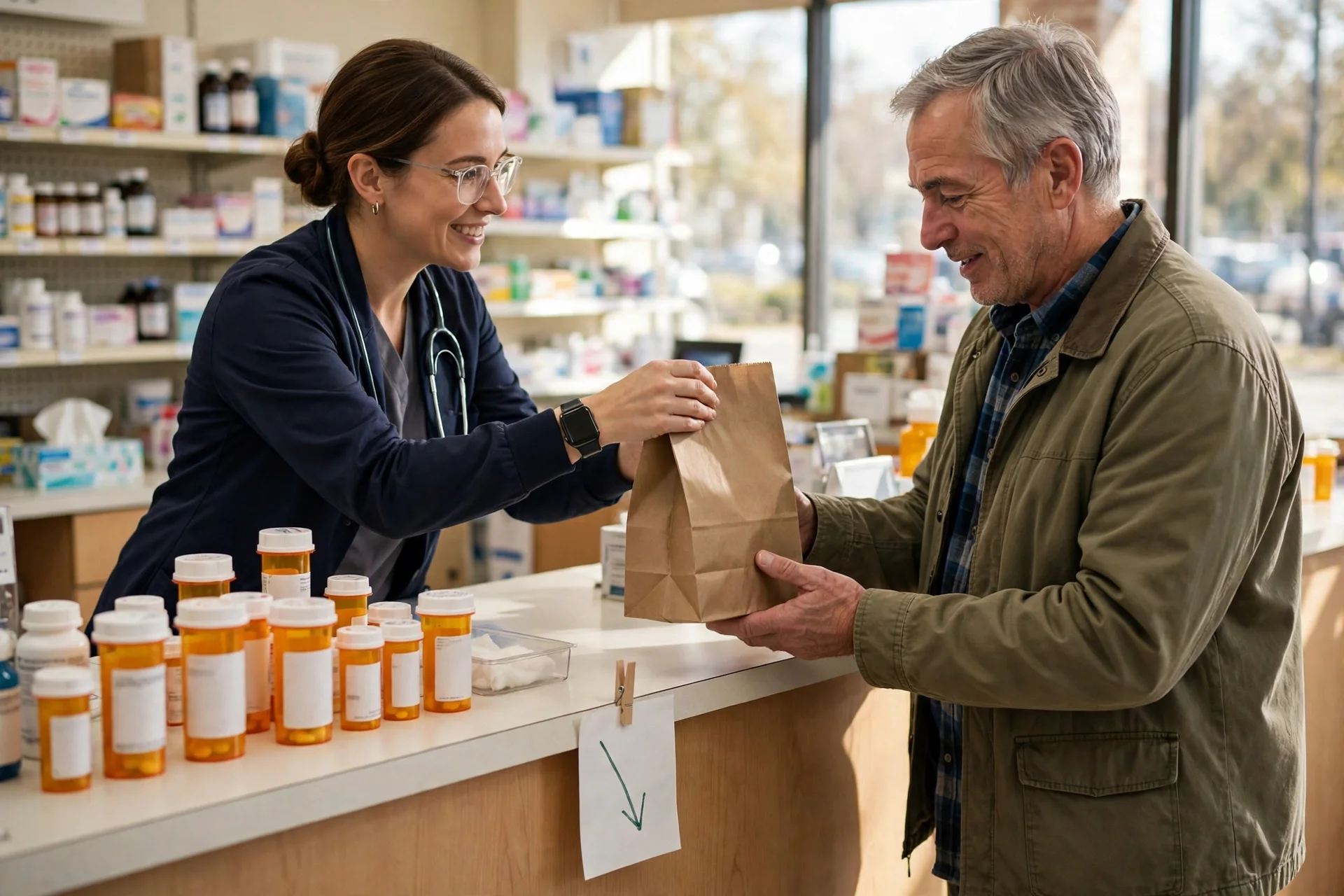
Entrega de medicamentos en el mostrador de una farmacia, con frascos de prescripción alineados y una flecha hacia abajo como símbolo de precios en descenso. · Erick Prometeo Media
Prescription drug prices fall in 2026, White House statement says
A White House statement cites an analysis by Joel Zinberg: Bureau of Labor Statistics data show prescription drug prices fell 4.5 percent year over year, the…
Largest prescription drug price drop since 1963, analysis finds
According to an analysis by Joel Zinberg cited by the White House, prescription drug prices fell 4.5 percent year over year, the largest decline since 1963…
--- The context ---
A White House statement cites an analysis by Joel Zinberg arguing that drug prices are a major complaint among Americans, even though few realize that those prices are actually falling during 2026.
--- The facts ---
According to the analysis, the latest Bureau of Labor Statistics data show that overall CPI rose 3.7 percent year to year, while prescription drug prices fell 4.5 percent, the largest year-over-year decline since 1963, and nonprescription prices fell 0.9 percent. The same analysis notes that the Consumer Price Index for prescription drugs has either fallen or been flat every month of 2026.
The analysis links part of the decline to the use of TrumpRx, launched in February 2026, which provides cash-paying patients with discounts on over 800 drugs. It also states that spending on the GLP-1 drugs tirzepatide and semaglutide reached approximately $60 billion each in 2025, driven by increased utilization.
--- The positions ---
From a progressive reading, the focus is access: a 4.5 percent decline only brings relief if it reaches cash-paying patients, uninsured patients and those whose plans do not cover GLP-1s for obesity. The analysis notes that less than a third of employer-provided health plans cover GLP-1s for obesity.
--- What remains unknown ---
It is not specified how much of the decline corresponds to each measure, nor the exact use of TrumpRx discounts by type of patient, nor how prices will evolve in the coming months across all insurance plans.
--- Unanswered questions ---
How much of the 4.5 percent decline is due directly to TrumpRx? Will the relief also reach patients whose plans do not cover GLP-1s for obesity? Will the flat or falling trend of every month of 2026 hold in the next data?
--- EPM analysis ---
The central contrast lies in the cited data themselves: against a 3.7 percent overall rise, prescription drugs record a 4.5 percent fall. Agreements with Eli Lilly and Novo Nordisk reduce the cost of GLP-1 medications for government programs and TrumpRx, and transparent prices create downward pressure across all plans.
📌 EPM Take: In EPM's view, the value of these figures is that they are measurable and comparable: a 4.5 percent fall against a 3.7 percent overall rise marks a concrete difference for household budgets, but its real reach will depend on whether TrumpRx discounts, expanded Medicare coverage for obesity with a $50 monthly copay and pressure from transparent prices also reach those who are currently left outside coverage for GLP-1 drugs used to treat obesity in their own health plans.
--- The context ---
The White House released an analysis by Joel Zinberg holding that drug prices, a frequent complaint among Americans, are actually falling, even though few realize it. The text places that decline throughout 2026.
--- The facts ---
According to the analysis, the Consumer Price Index for prescription drugs has either fallen or been flat every month of 2026. The latest Bureau of Labor Statistics data show an overall rise of 3.7 percent year to year, a 4.5 percent fall in prescription drug prices, the largest year-over-year decline since 1963, and a 0.9 percent fall in nonprescription prices.
The analysis links the result to TrumpRx, launched in February 2026, which provides cash-paying patients with discounts on over 800 drugs. It adds that spending on the GLP-1 drugs tirzepatide and semaglutide reached approximately $60 billion each in 2025, driven by increased utilization.
--- The positions ---
From a conservative reading, what stands out is the mechanism: low, transparent prices that, according to the analysis, create downward pressure on drug prices in all insurance plans. Agreements with Eli Lilly and Novo Nordisk reduce the cost of GLP-1 medications for government programs and TrumpRx while expanding Medicare coverage for obesity.
--- What remains unknown ---
It is not detailed what share of the 4.5 percent fall corresponds to each program, nor the final effect on each insurance plan, nor whether the trend of every month of 2026 will hold with the next data.
--- Unanswered questions ---
Will the 4.5 percent fall hold in the next year-over-year data? How much will transparent prices press downward across all plans? Will more employers expand coverage of GLP-1s for obesity, today present in less than a third of their plans?
--- EPM analysis ---
The figure that orders the account is verifiable in the cited data: an overall index rising 3.7 percent and, at the same time, prescription drugs falling 4.5 percent and nonprescription prices falling 0.9 percent, with a discount channel active since February 2026.
📌 EPM Take: In EPM's view, the described decline carries weight because it combines a historic figure, the largest year-over-year decline since 1963, with concrete instruments such as TrumpRx, the agreements with Eli Lilly and Novo Nordisk and a $50 monthly copay in Medicare for obesity, although its consolidation will depend on whether pressure from transparent prices reaches all plans and whether the monthly flat or falling trend holds through the rest of 2026 without losing reach among patients.
Los precios de medicamentos con receta caen en 2026 según la Casa Blanca
Un comunicado de la Casa Blanca recoge un análisis de Joel Zinberg: según datos de la Oficina de Estadísticas Laborales, los medicamentos con receta cayeron un…
La mayor caída de precios de recetados desde 1963, según un análisis
Según un análisis de Joel Zinberg recogido por la Casa Blanca, los medicamentos con receta cayeron un 4,5 % interanual, la mayor caída desde 1963, con TrumpRx…
--- El contexto ---
Un comunicado de la Casa Blanca recoge un análisis de Joel Zinberg según el cual los precios de los medicamentos son una queja importante entre los estadounidenses, aunque pocos perciben que esos precios están bajando durante 2026.
--- Los hechos ---
Según el análisis, los últimos datos de la Oficina de Estadísticas Laborales muestran que el índice de precios al consumidor general subió un 3,7 % interanual, mientras el índice de medicamentos con receta cayó un 4,5 %, la mayor caída interanual desde 1963, y el de medicamentos sin receta bajó un 0,9 %. El mismo análisis señala que el índice de medicamentos con receta cayó o se mantuvo plano cada mes de 2026.
El análisis atribuye parte del descenso al uso de TrumpRx, lanzado en febrero de 2026, que ofrece descuentos a pacientes que pagan en efectivo en más de 800 medicamentos. También indica que el gasto en los medicamentos GLP-1 tirzepatida y semaglutida rondó aproximadamente 60 mil millones de dólares por medicamento en 2025, con mayor utilización.
--- Las posiciones ---
Desde una lectura progresiva, el foco está en el acceso: un descenso del 4,5 % solo alivia si llega a quienes pagan en efectivo, a quienes no tienen seguro y a quienes tienen planes que no cubren los GLP-1 para la obesidad. El análisis señala que menos de un tercio de los planes de salud de empleadores cubren los GLP-1 para la obesidad.
--- Lo que falta saber ---
No se precisa cuánto del descenso corresponde a cada medida, ni el uso de los descuentos de TrumpRx por paciente, ni cómo evolucionarán los precios en los próximos meses dentro de todos los planes.
--- Preguntas sin respuesta ---
¿Cuánto del descenso del 4,5 % se debe directamente a TrumpRx? ¿Llegará el alivio también a los pacientes cuyos planes no cubren los GLP-1 para la obesidad? ¿Se mantendrá plana o a la baja la tendencia de cada mes de 2026 en los próximos datos?
--- Análisis EPM ---
El contraste central está en los propios datos citados: frente a una subida general del 3,7 %, los medicamentos con receta registran una caída del 4,5 %. Los acuerdos con Eli Lilly y Novo Nordisk reducen el costo de los GLP-1 para programas gubernamentales y TrumpRx, y los precios transparentes presionan a la baja en todos los planes.
📌 Conclusion EPM: A juicio de EPM, el valor de estos datos está en que son medibles y comparables: una caída del 4,5 % frente a una subida general del 3,7 % marca una diferencia concreta para el bolsillo, pero su alcance real dependerá de que los descuentos de TrumpRx, la cobertura ampliada de Medicare con copago mensual de 50 dólares y la presión de los precios transparentes lleguen también a quienes hoy quedan fuera de la cobertura de los GLP-1 para tratar la obesidad.
--- El contexto ---
La Casa Blanca difundió un análisis de Joel Zinberg que sostiene que los precios de los medicamentos, una queja frecuente entre los estadounidenses, están bajando en realidad, aunque pocos lo perciben. El texto sitúa ese descenso a lo largo de 2026.
--- Los hechos ---
De acuerdo con el análisis, el índice de precios al consumidor de medicamentos con receta cayó o se mantuvo plano cada mes de 2026. Los últimos datos de la Oficina de Estadísticas Laborales muestran una subida general del 3,7 % interanual, una caída del 4,5 % en medicamentos con receta, la mayor caída interanual desde 1963, y una bajada del 0,9 % en medicamentos sin receta.
El análisis vincula el resultado con TrumpRx, lanzado en febrero de 2026, que ofrece descuentos a pacientes que pagan en efectivo en más de 800 medicamentos. Añade que el gasto en los GLP-1 tirzepatida y semaglutida rondó aproximadamente 60 mil millones de dólares por medicamento en 2025, impulsado por una mayor utilización.
--- Las posiciones ---
Desde una lectura conservadora, lo destacable es el mecanismo: precios bajos y transparentes que, según el análisis, crean presión a la baja en todos los planes de seguro. Los acuerdos con Eli Lilly y Novo Nordisk reducen el costo de los GLP-1 para programas gubernamentales y TrumpRx y amplían la cobertura de Medicare para obesidad.
--- Lo que falta saber ---
No se detalla qué parte de la caída del 4,5 % corresponde a cada programa, ni el efecto final en cada plan de seguro, ni si la tendencia de cada mes de 2026 se sostendrá con los próximos datos.
--- Preguntas sin respuesta ---
¿Se sostendrá la caída del 4,5 % en los próximos datos interanuales? ¿Cuánto presionarán los precios transparentes a la baja en todos los planes? ¿Ampliarán más empleadores la cobertura de los GLP-1 para la obesidad, hoy presente en menos de un tercio de sus planes?
--- Análisis EPM ---
La cifra que ordena el relato es verificable en los datos citados: un índice general que sube un 3,7 % y, al mismo tiempo, medicamentos con receta que caen un 4,5 % y medicamentos sin receta que bajan un 0,9 %, con un canal de descuentos activo desde febrero de 2026.
📌 Conclusion EPM: A juicio de EPM, el descenso descrito tiene peso porque combina un dato histórico, la mayor caída interanual desde 1963, con instrumentos concretos como TrumpRx, los acuerdos con Eli Lilly y Novo Nordisk y un copago mensual de 50 dólares en Medicare para obesidad, aunque su consolidación dependerá de que la presión de los precios transparentes alcance a todos los planes y de que la tendencia mensual plana o a la baja se mantenga durante el resto de 2026 sin perder alcance entre pacientes.